Identify shapes Adding up to 1000 Worksheets for Ages 3-8
4 filtered results
-
From - To
Our "Identify Shapes Adding up to 1000 Worksheets" are meticulously designed for children ages 3-8 to strengthen math skills through engaging activities. Uncover a blend of fun and learning as kids explore shapes while mastering addition up to 1000. Each worksheet is crafted to promote cognitive development, numerical proficiency, and shape recognition, providing an engaging and educational experience. Perfect for early learners, these worksheets set the foundation for future math success while ensuring children stay motivated and invested in their learning journey. Explore these educational worksheets to enhance your child's math and shape identification skills today!
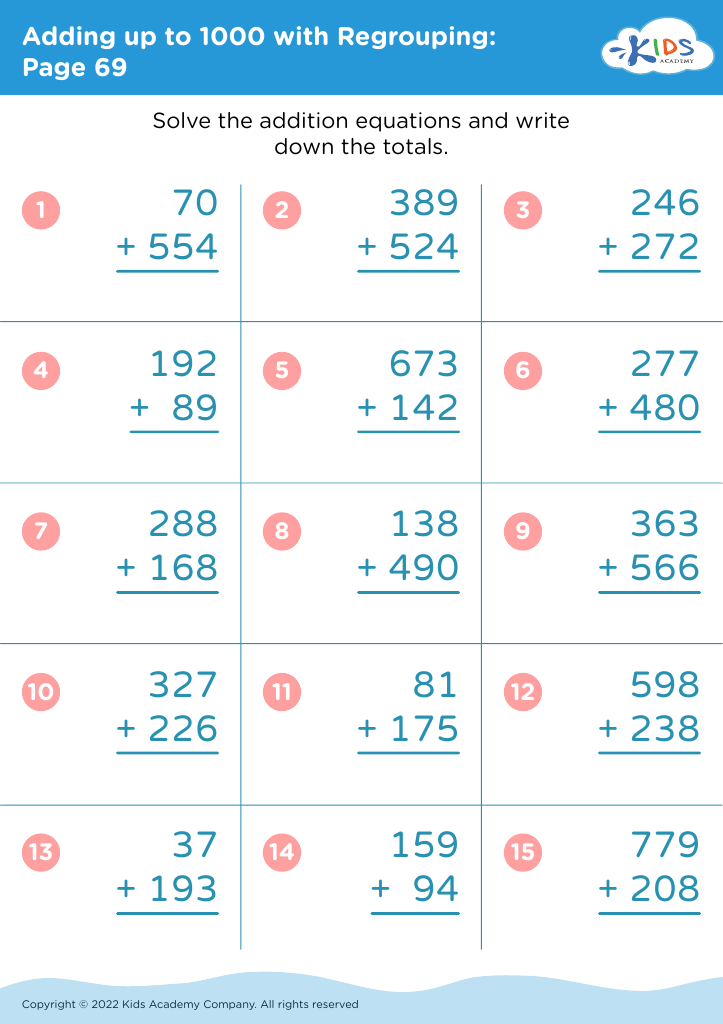
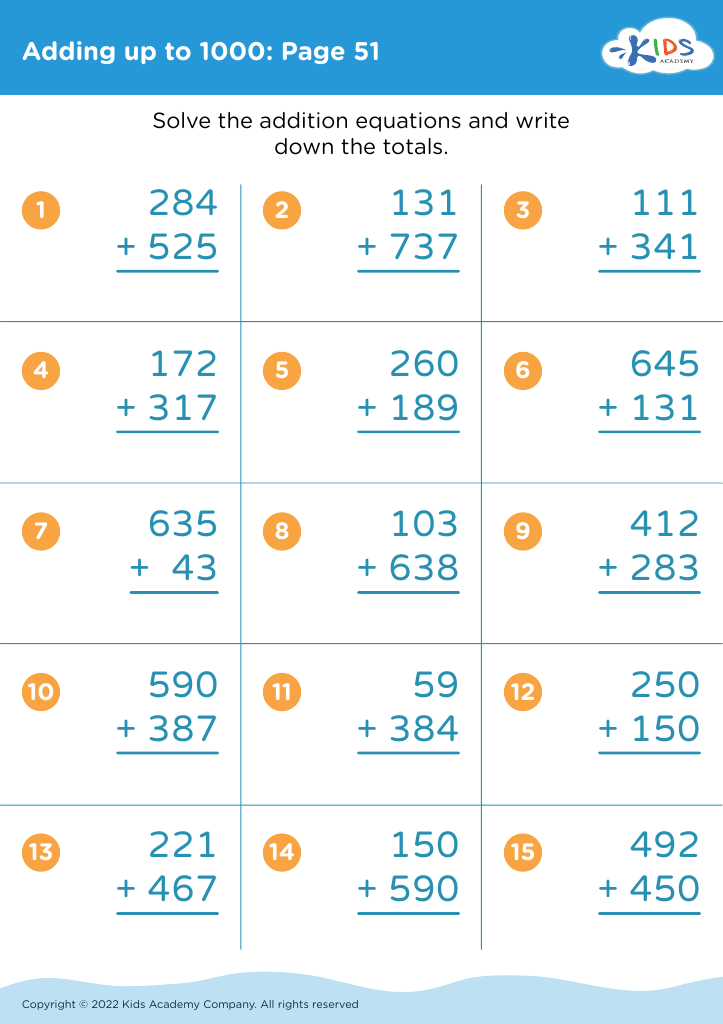
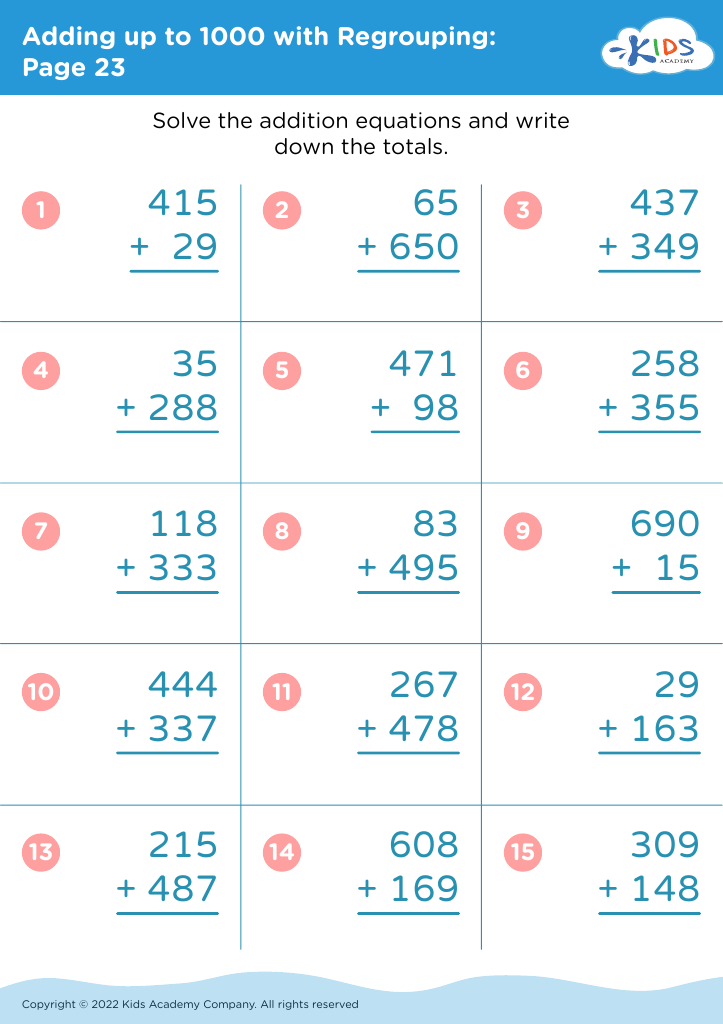
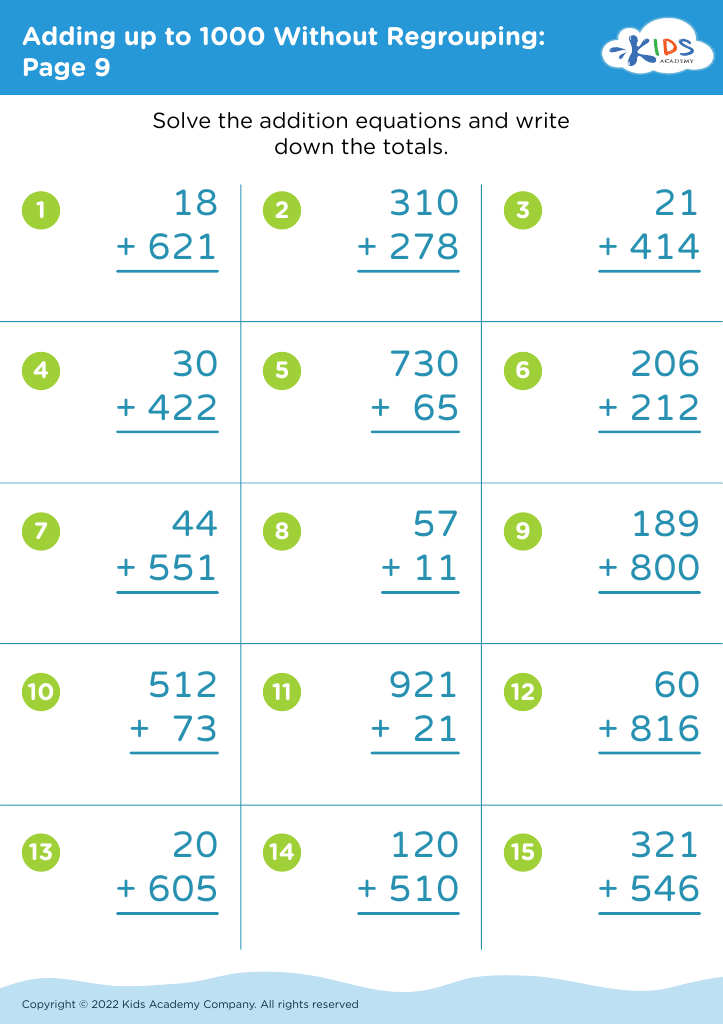



Fostering early math skills in children ages 3-8 is crucial, and understanding key concepts like shapes and addition up to 1000 lays a strong foundation for future learning. Firstly, identifying shapes helps develop spatial awareness and cognitive skills. Recognizing and naming shapes such as squares, circles, and triangles promotes memory and pattern recognition skills crucial for later geometry and problem-solving tasks.
Incorporating advanced counting and basic addition concepts aligns with their developmental growth. Introducing sums up to 1000 broadens their number sense and operational understanding. For young children, comprehending how smaller numbers stack up to form larger ones, through activities like grouping and visual aids, enhances their arithmetic competence. This foundational knowledge translates to practical life skills, such as measuring and comparing.
Additionally, engaging in such math activities builds confidence and enthusiasm for learning through hands-on experiences. Parents and teachers who invest in these learning journeys not only support academic success but also foster a problem-solving mindset and perseverance. Introducing and mastering early math fundamentals ensures children are well-prepared, confident, and capable learners, setting them on a path of lifelong curiosity and achievement.








