Number Recognition Adding up to 1000 Worksheets for Ages 3-8 - Page 2
31 filtered results
-
From - To
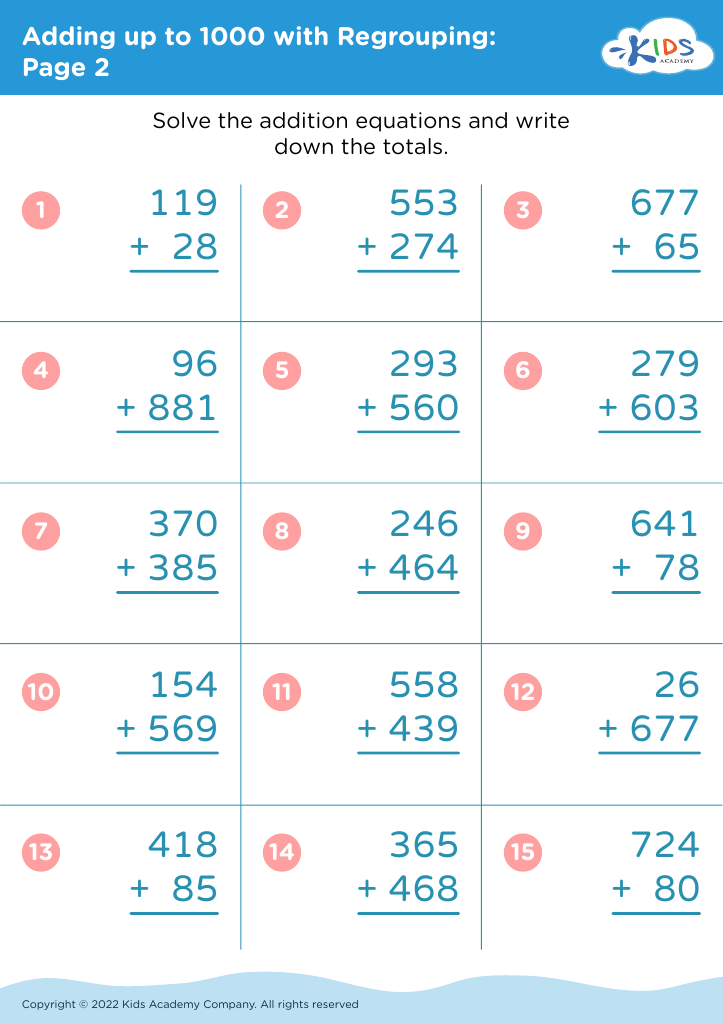
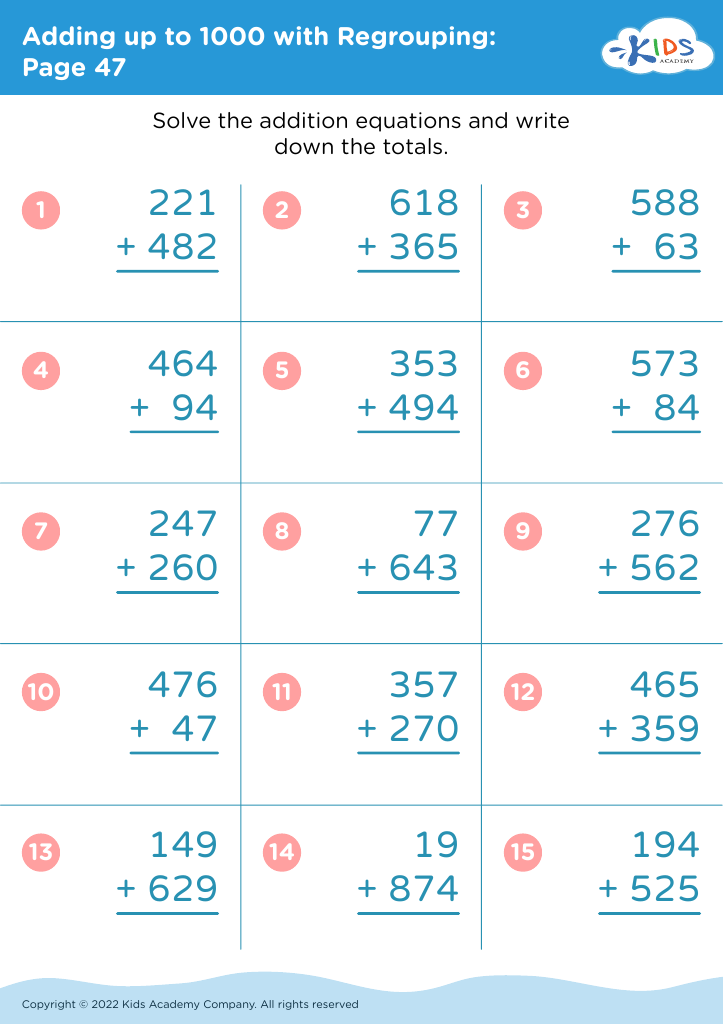
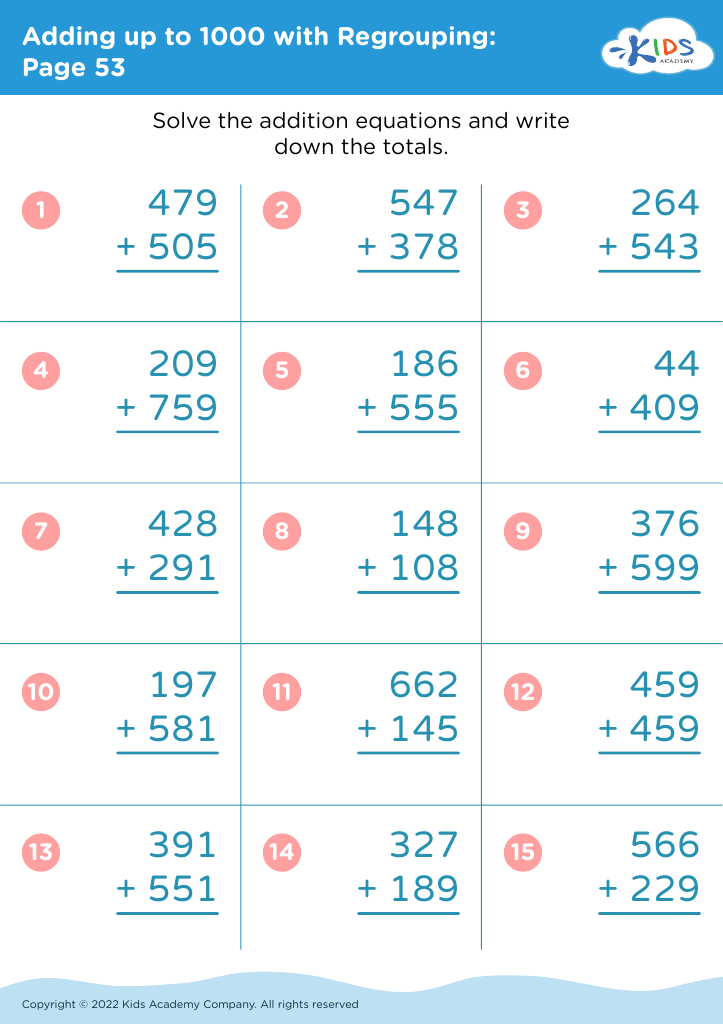
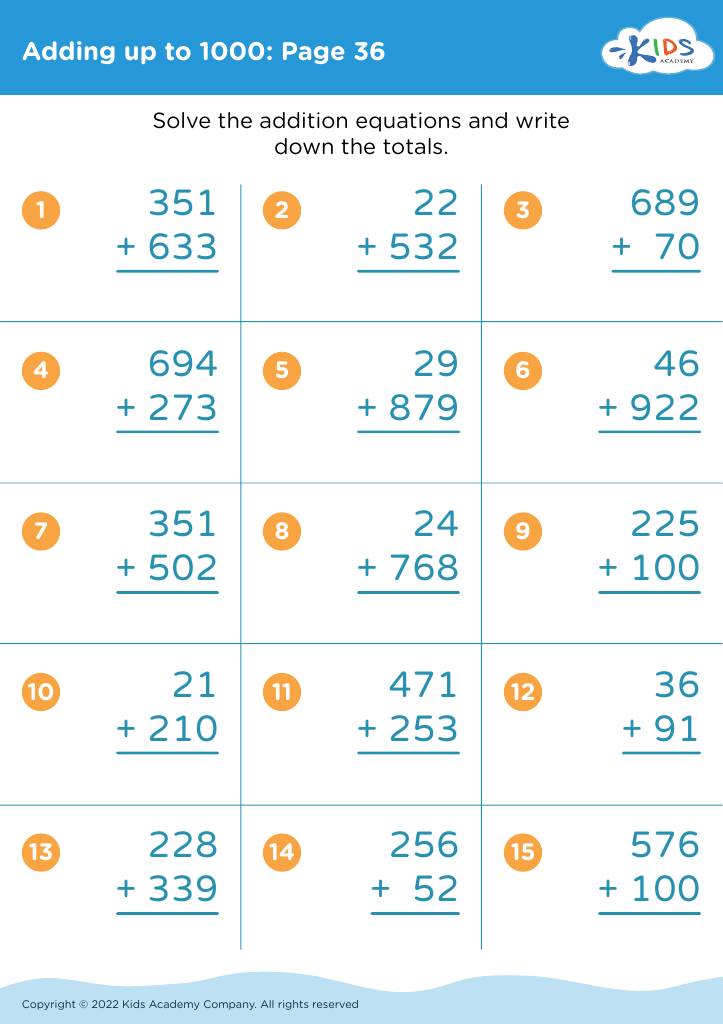
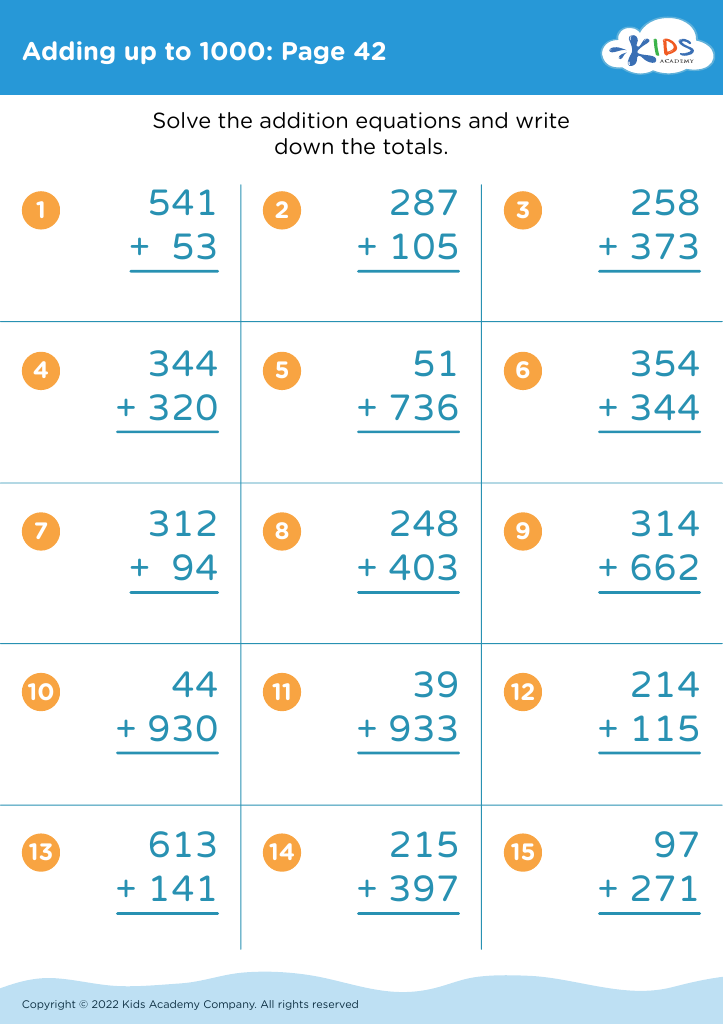
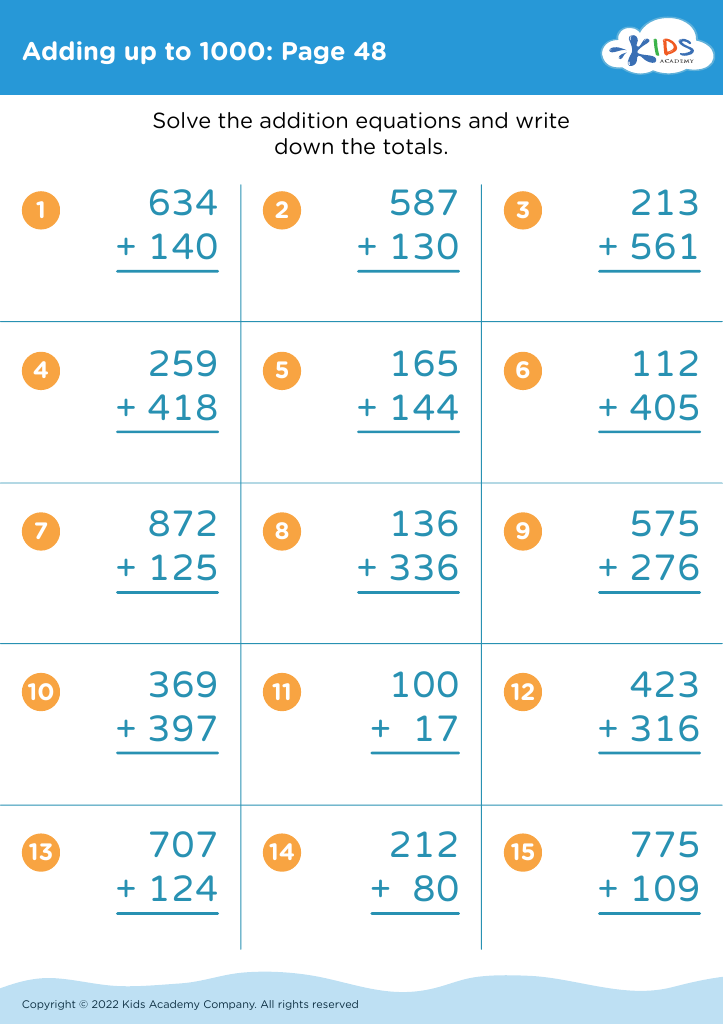
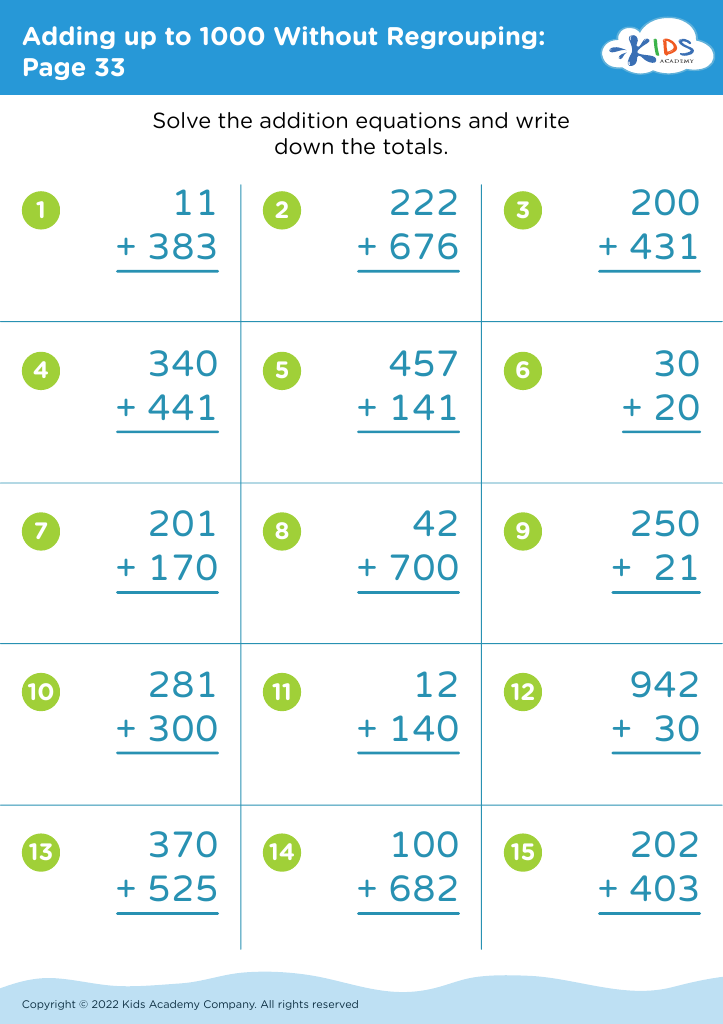




Number recognition is a foundational skill that underpins a child's ability to engage meaningfully with math concepts throughout their education. For children aged 3-8, mastering number recognition up to 1000 lays the groundwork for more complex arithmetic and problem-solving. Recognizing numbers helps children develop a sense of quantity, understand counting, and learn to compare and contrast values. This knowledge also promotes confidence as they encounter math in their daily lives, creating a positive attitude toward learning.
Parents and teachers play a crucial role in nurturing these skills. By actively engaging children in number-related activities—such as games, storytelling, and practical exercises—adults can foster an environment rich in mathematical learning. Understanding numbers up to 1000 not only supports academic growth but also enhances critical thinking and cognitive development.
Moreover, early number recognition is linked to later success in math and other academic areas. It helps children recognize patterns, grasp sequencing, and develop logical reasoning skills. Therefore, cultivating an engagement with numbers from an early age is essential for the holistic development of children, ultimately preparing them for higher-level math and real-life situations involving numerical understanding. Investing in number recognition is an investment in a child's future.








