Practice subtraction Adding up to 1000 Worksheets for Ages 3-8
3 filtered results
-
From - To
Discover a fun and engaging way for children ages 3-8 to practice subtraction with our "Adding Up to 1000 Worksheets." Designed to enhance foundational math skills, these worksheets offer a variety of subtraction exercises that encourage kids to solve problems independently while building their confidence. With colorful graphics and interactive formats, children will stay motivated to tackle challenges, ensuring a joyful learning experience. Our resources cater to different learning styles, making them suitable for both parents and teachers. Perfect for home or classroom use, these worksheets are a valuable tool to help young learners master subtraction and strengthen their overall math abilities.
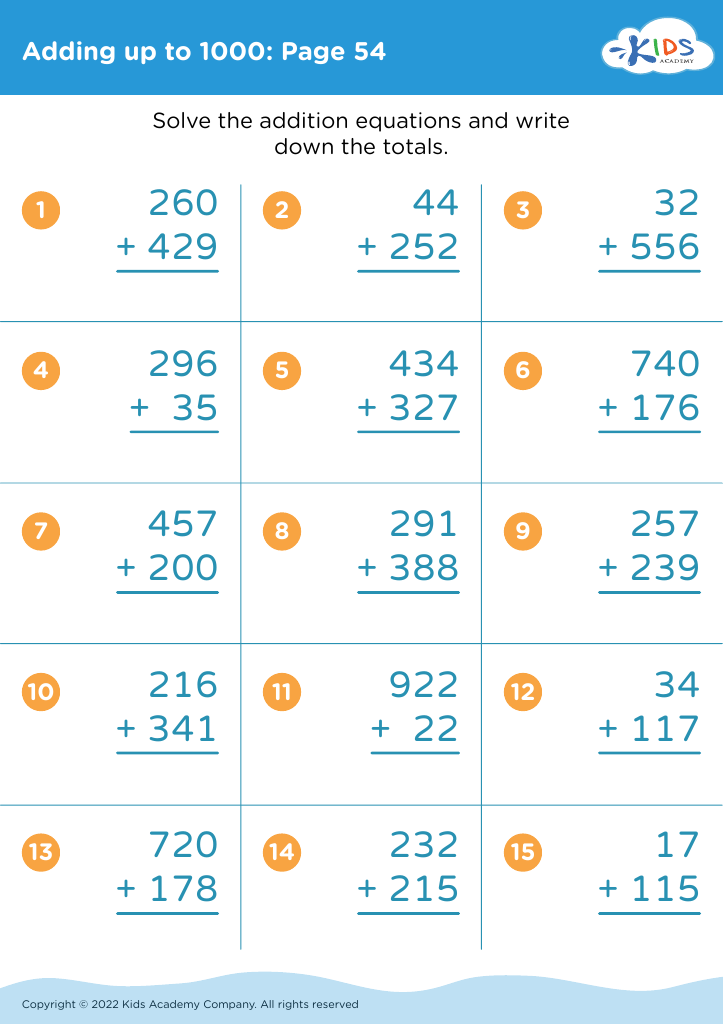
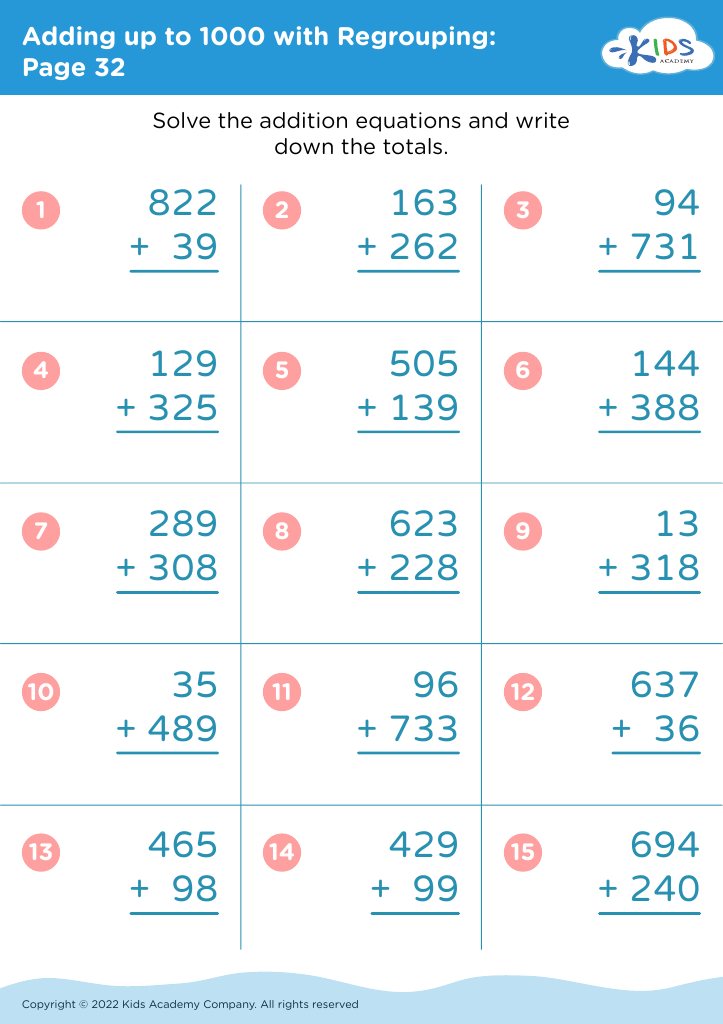
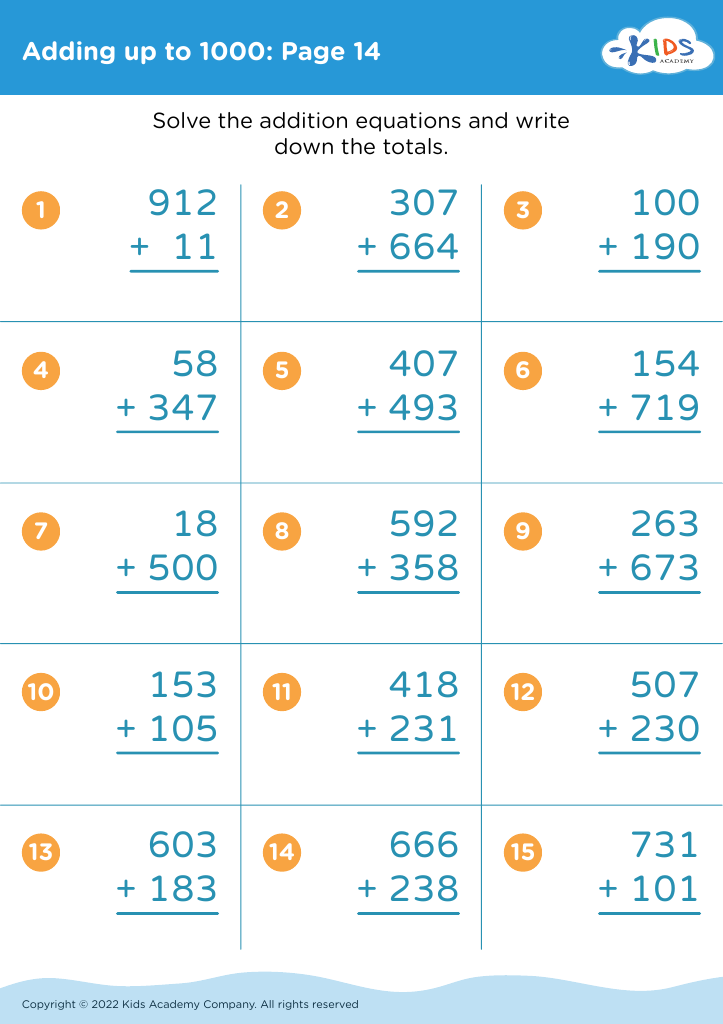



Practicing subtraction, particularly up to 1000, is crucial for children aged 3-8 as it lays the foundation for their mathematical understanding. At this age, children are developing critical cognitive skills, and learning subtraction nurtures these abilities. Subtraction enhances numeric literacy, allowing children to grasp the concept of 'taking away' from a quantity, which is fundamental not only in math but also in everyday problem-solving.
Parents and teachers should be attentive to this practice because it introduces key concepts such as number sense, relationships between numbers, and mental math strategies, which are essential in later grades. Through interactive activities, like games and real-life scenarios, children can experience constructive engagement, fostering a positive attitude towards mathematics.
Moreover, mastering subtraction includes the critical skill of understanding borrowing and regrouping, which is vital as they tackle more complex math operations later on. Early subtraction practice also builds confidence and encourages persistence, as children face and overcome challenges. Ultimately, embracing these activities helps support children's overall academic development, ensuring they not only succeed in mathematics but also in other areas of learning. By caring about their subtraction skills, parents and teachers play an integral role in shaping a proficient and confident learner.








