Practice writing numbers Adding up to 1000 Worksheets for Ages 3-8
3 filtered results
-
From - To
Discover our "Practice Writing Numbers Adding up to 1000" worksheets, designed for children aged 3-8. These engaging and colorful resources help young learners master number recognition and writing skills. Each worksheet guides kids through fun exercises that promote confidence in writing numbers up to 1000, fostering essential early math competencies. With our easy-to-follow instructions and various activities, children will enhance their fine motor skills while enjoying the learning process. Perfect for both classroom and home use, these worksheets make math practice enjoyable and effective. Help your child build a strong foundation in numeracy with our specially crafted worksheets today!
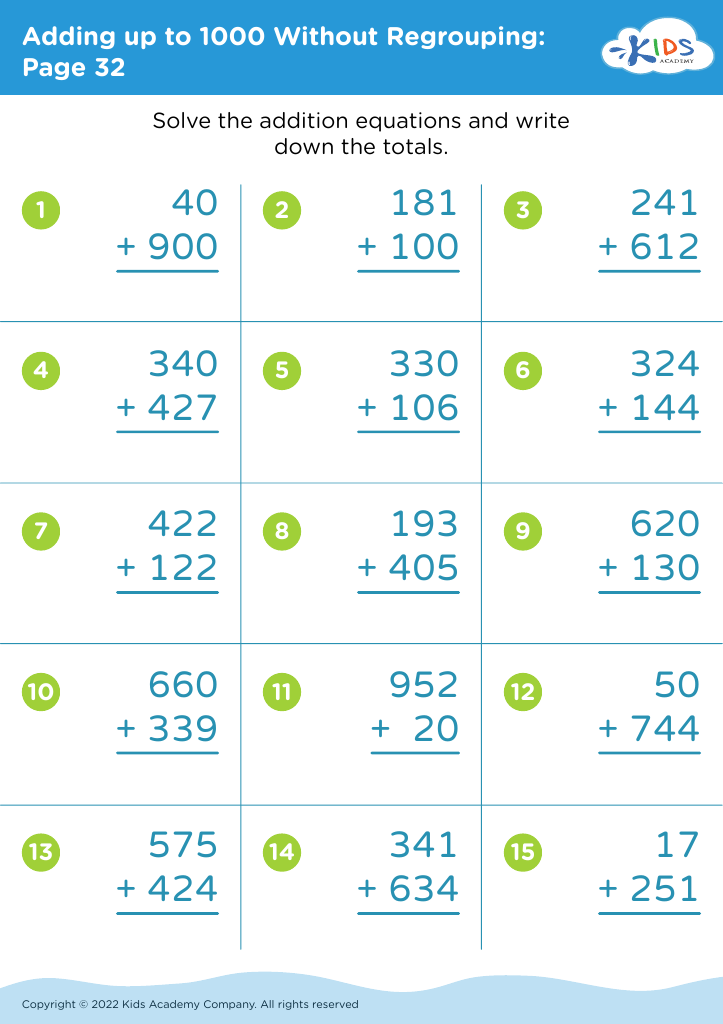
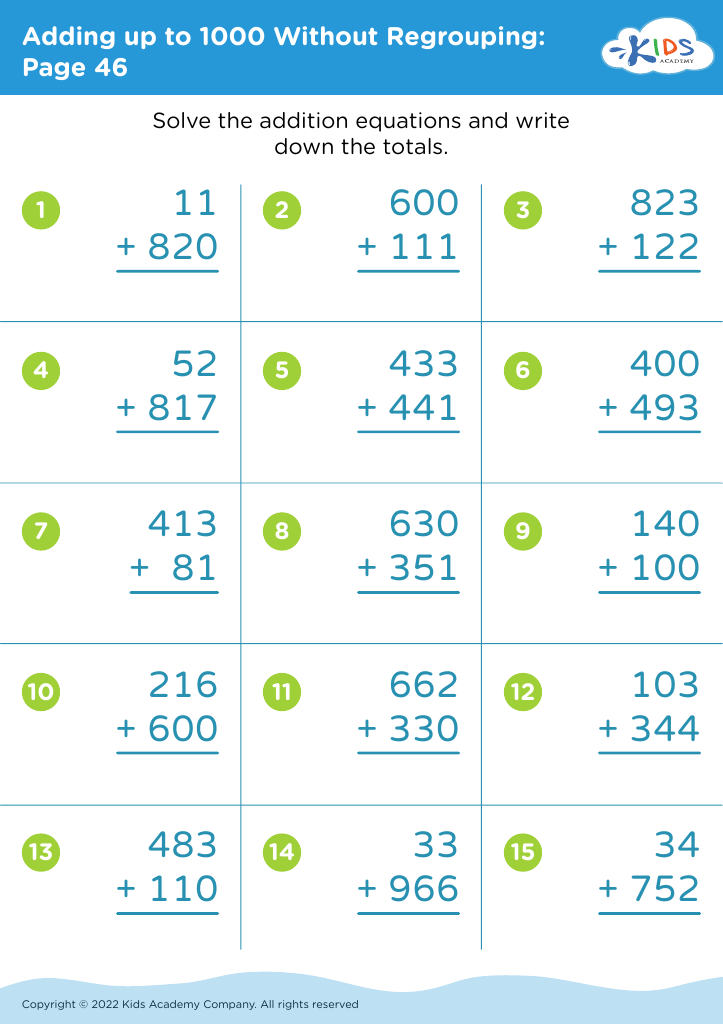
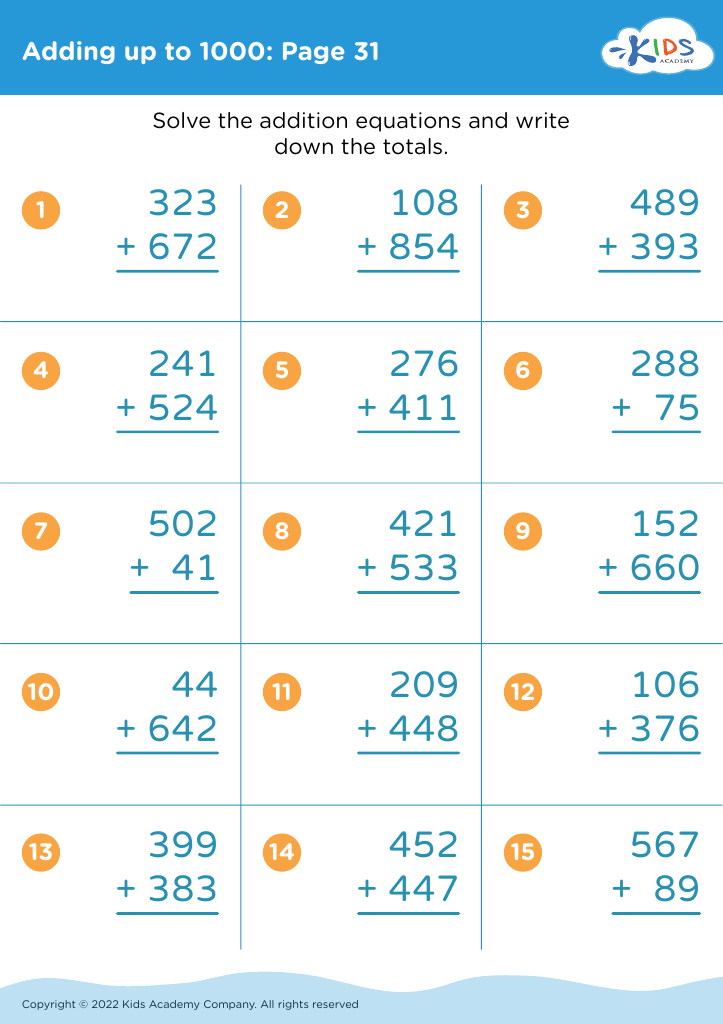



Practicing writing numbers that add up to 1000 is essential for children ages 3-8, as it lays the foundation for their mathematical understanding and confidence. Engaging in this activity not only develops fine motor skills through writing but also helps reinforce number recognition, a crucial component of early math literacy. As children learn to connect written numbers with their corresponding quantities, they build a strong basis for addition, subtraction, and ultimately more complex mathematical concepts.
Additionally, practicing writing these numbers encourages problem-solving abilities and critical thinking. When children work on number combinations that sum to 1000, they begin to understand relationships between numbers, developing a sense of numerical fluency. This can lead to enhanced performance in both math and other subjects as they progress in school.
Moreover, it fosters a positive attitude toward mathematics, showing children that math is not just about rote memorization but also about creativity and exploration. Parents and teachers who prioritize this activity help nurture a child's intrinsic motivation to learn and succeed, setting them up for a lifelong appreciation of math. Ultimately, engaging young learners with meaningful number practice equips them with essential skills for their educational journey and real-life applications.








