Problem Solving Adding up to 1000 Worksheets for Ages 3-8
3 filtered results
-
From - To
Explore our engaging "Problem Solving Adding Up to 1000 Worksheets" designed specifically for children ages 3-8! These fun and interactive worksheets guide young learners through essential math skills while boosting critical thinking. By tackling addition problems that sum to 1000, students will develop their problem-solving abilities in a playful way. Each worksheet includes vibrant illustrations and age-appropriate exercises, making math both exciting and accessible. Perfect for classroom use or at-home practice, our resources help cultivate confidence and proficiency in young mathematicians. Get your little ones started on their math adventure today with our carefully crafted problem-solving worksheets!
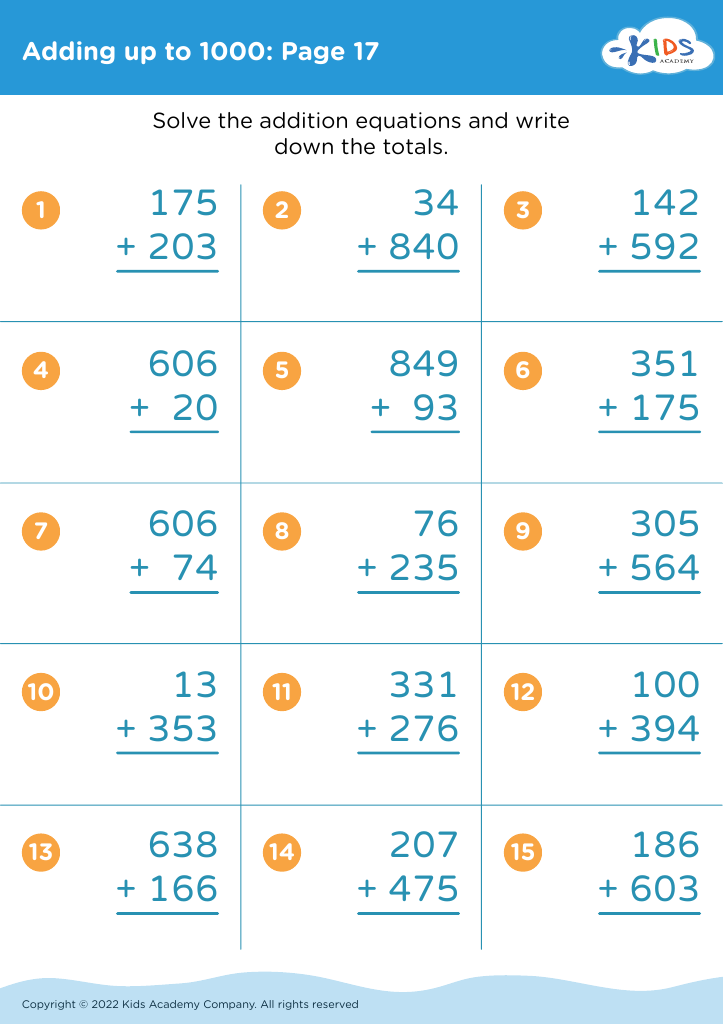
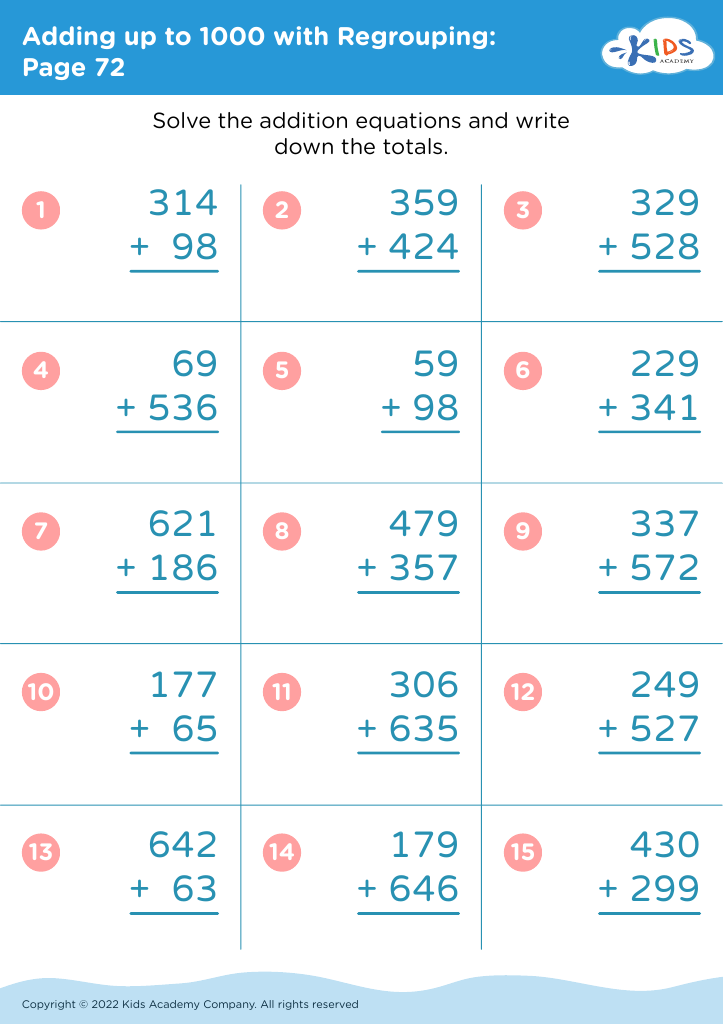
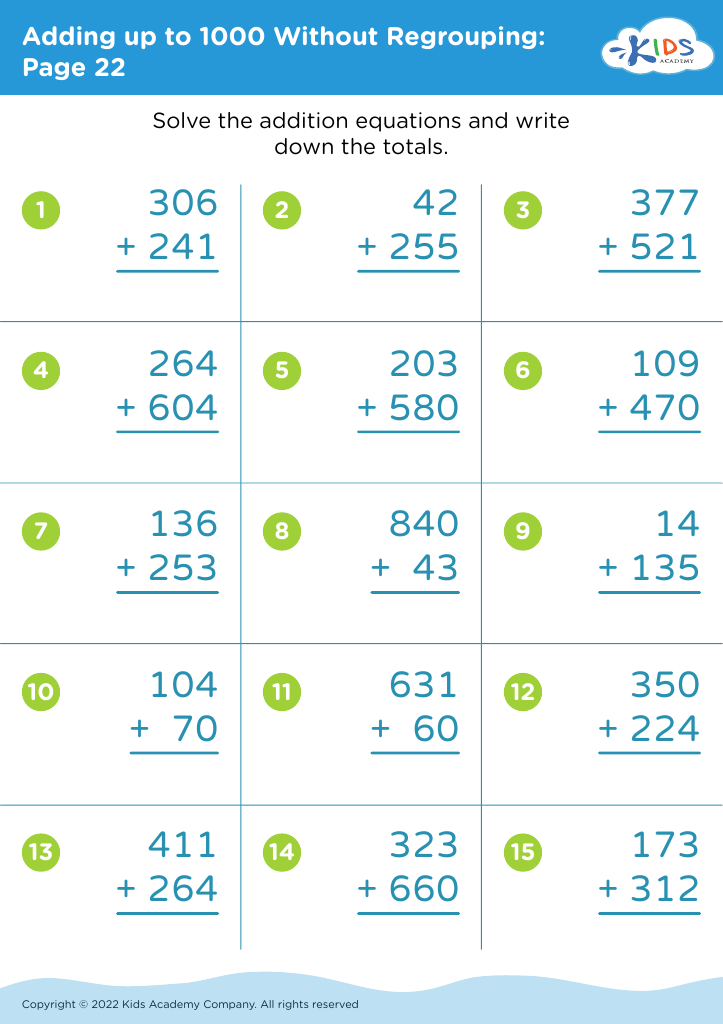



Problem solving, especially activities like "adding up to 1000," plays a crucial role in the cognitive development of children aged 3-8. For parents and teachers, fostering these skills is essential for several reasons.
First, problem-solving helps children develop critical thinking abilities. Learning to construct strategies to reach a specific number, like 1000, enables them to approach challenges methodically—an essential skill across all areas of life and academics.
Moreover, engaging in such activities cultivates a love for math and numeracy. Instead of viewing math as a chore, children learn to appreciate it as a puzzle to solve, paving the way for a positive attitude towards learning in general.
Additionally, problem-solving tasks enhance children's communication and teamwork skills. Collaborative activities often require children to share ideas and explore various solutions collectively, fostering social interaction and cooperative learning.
Furthermore, achieving goals like "adding up to 1000" can significantly boost children’s confidence. As they experience success through problem-solving, they learn persistence and resilience, which are valuable traits that extend beyond the classroom.
In summary, nurturing problem-solving skills in young learners not only shapes their academic abilities but also equips them with essential life skills that will benefit them for years to come.








