Reading analog clocks Adding up to 1000 Worksheets for Ages 3-8
3 filtered results
-
From - To
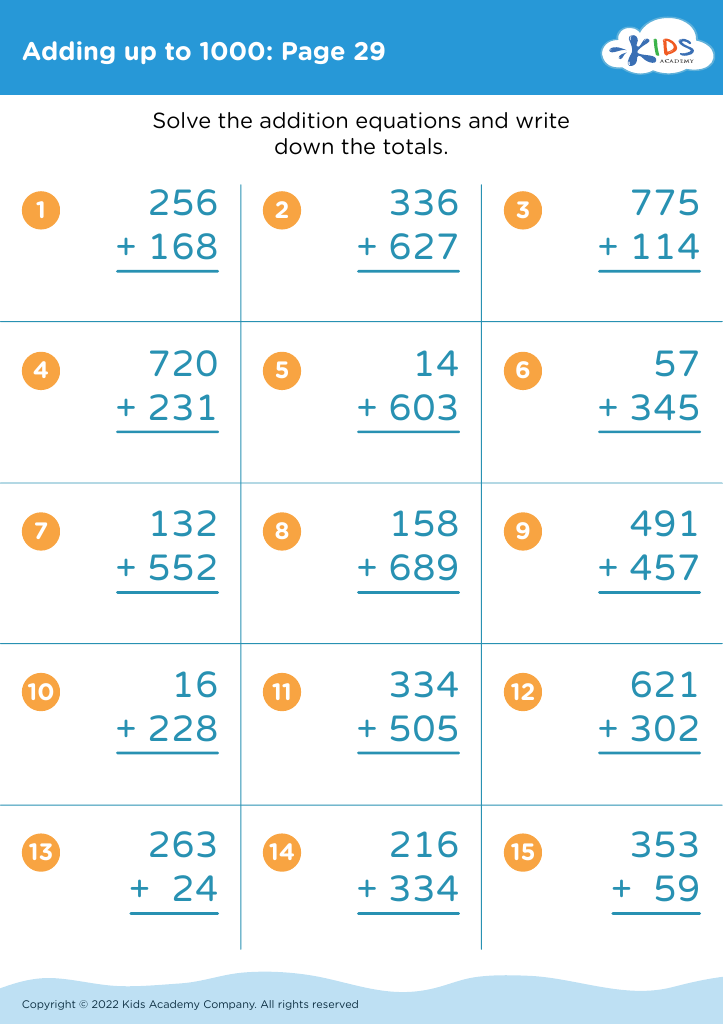
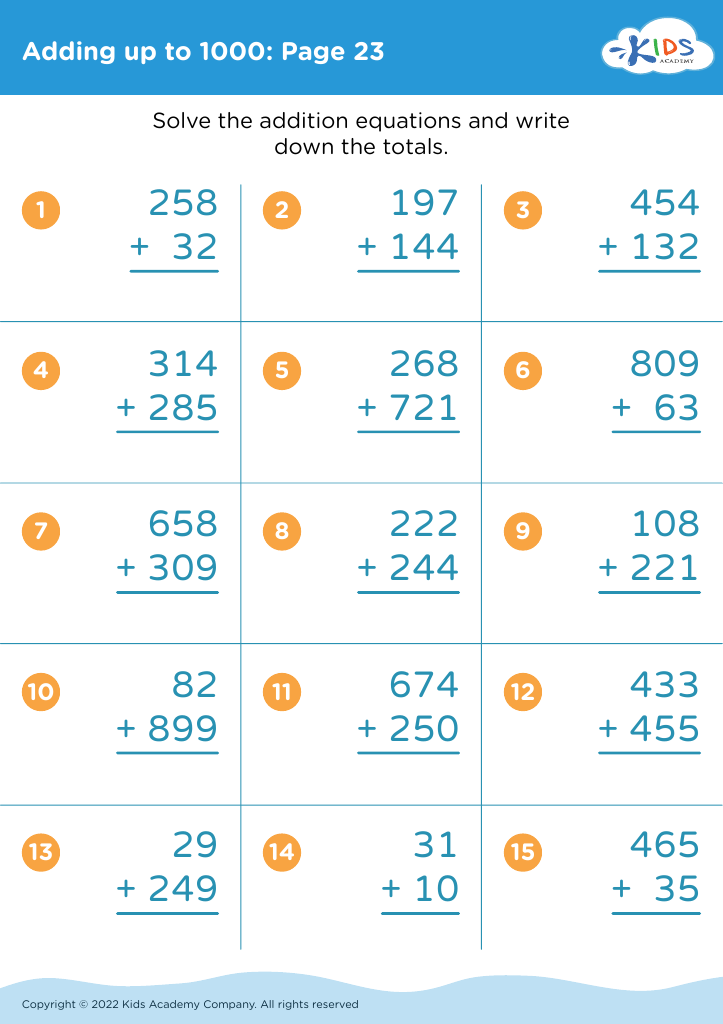
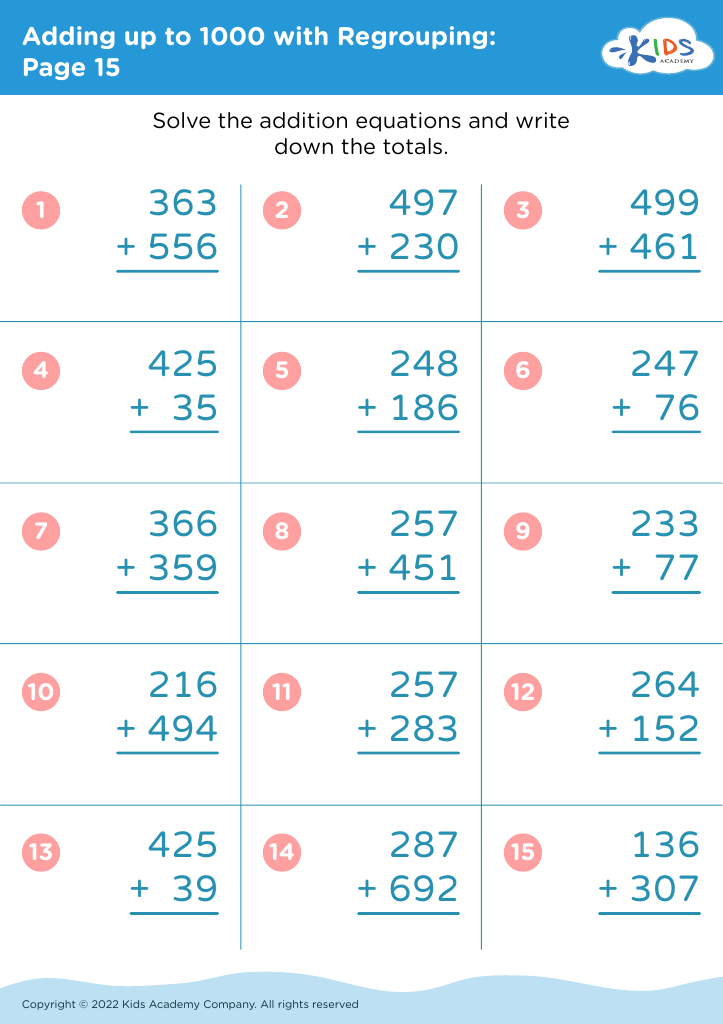
Introduce your young learners to the fundamental skill of reading analog clocks with our engaging "Reading Analog Clocks Adding Up to 1000 Worksheets" designed for ages 3-8. These printable worksheets offer a fun and interactive way for children to understand time-telling while practicing addition with numbers up to 1000. With colorful visuals and age-appropriate exercises, kids will not only enhance their math skills but also gain confidence in understanding how clocks work. Perfect for classroom use or home learning, these worksheets provide a seamless blend of mathematical concepts and practical life skills, making learning effortless and enjoyable! Download now to get started!



Teaching children to read analog clocks is vital for their development, particularly for ages 3-8. Understanding how to read clocks promotes numeracy skills, enhances cognitive development, and builds a foundation for time management. Analog clocks provide a visual representation of time, helping children grasp concepts like hours, minutes, and the relationship between them.
Parents and teachers should care because mastering this skill instills a sense of independence in children. Knowing how to tell time empowers them to manage their activities without constant supervision, fostering responsibility. Moreover, this skill enhances their problem-solving abilities as they learn to navigate schedules, routines, and responsibilities.
Additionally, reading analog clocks encourages critical thinking through practical applications, such as calculating time differences and planning daily tasks. It also fosters communication skills; children can express time-related concepts effectively.
Another benefit is the cultural relevance of analog clocks in everyday life, teaching kids to appreciate traditional methods alongside digital ones. Ultimately, teaching children to read analog clocks is about more than time; it shapes their overall developmental journey, nurturing essential life skills that will serve them well in the future. Encouraging this skill can be a rewarding experience that supports a child's growth and confidence.








