Subtraction skills Adding up to 1000 Worksheets for Ages 3-8
4 filtered results
-
From - To
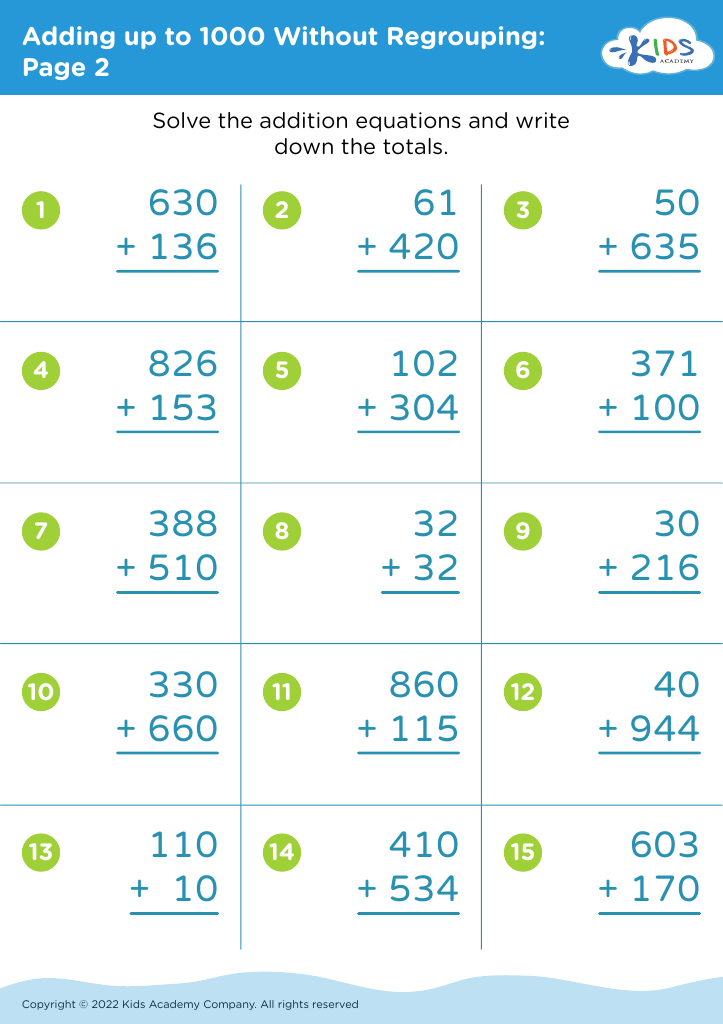
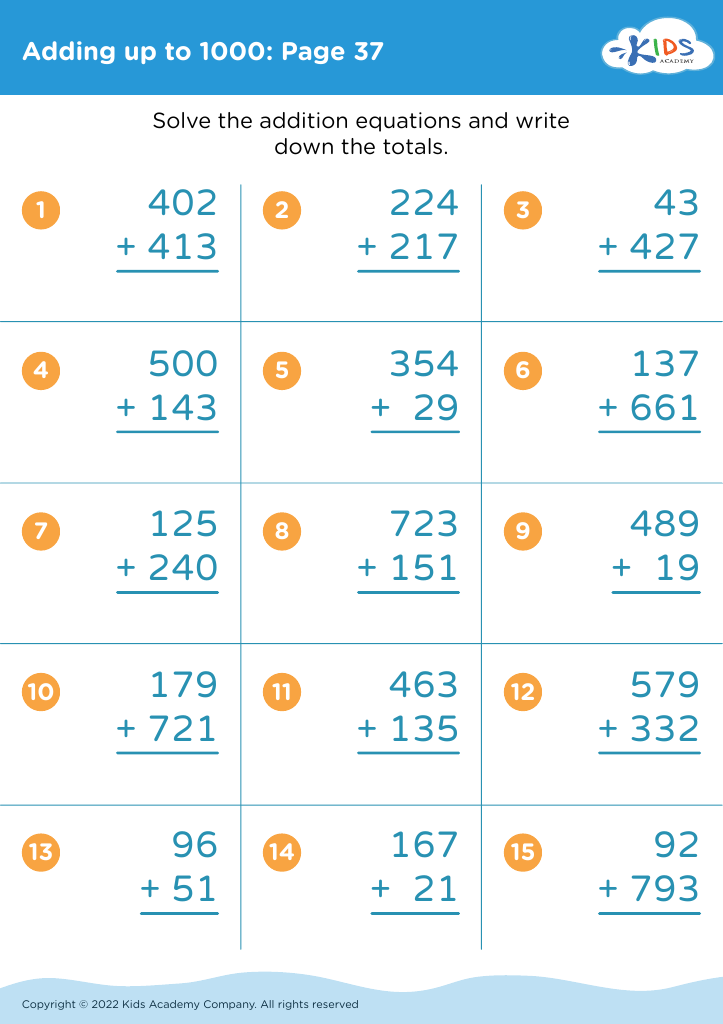
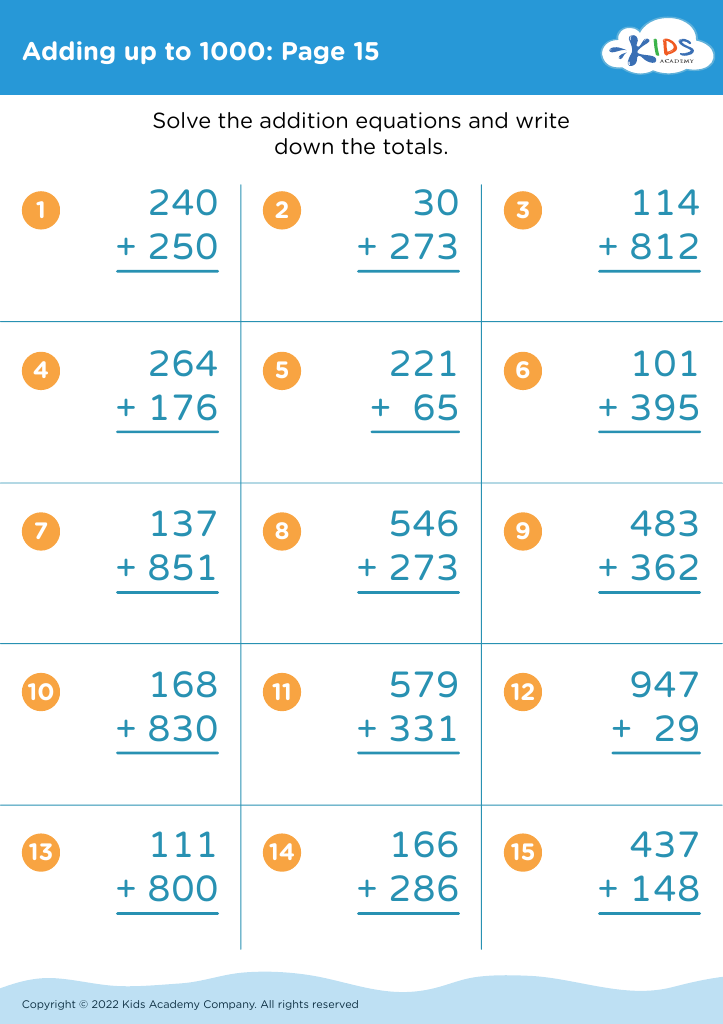
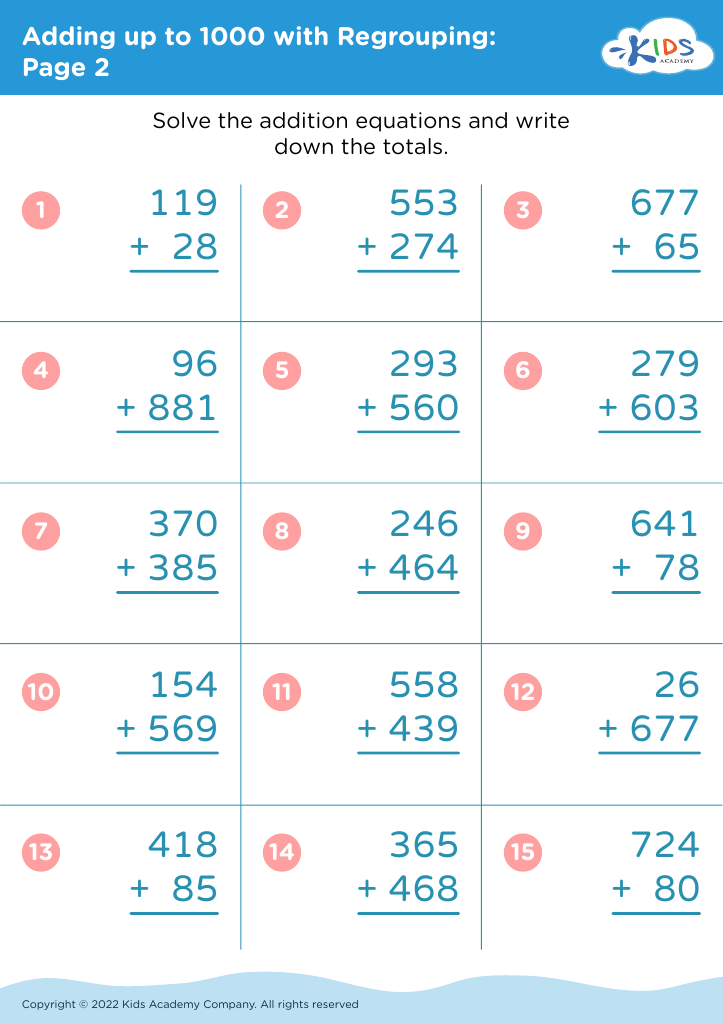
Enhance your child's subtraction skills with our engaging Adding Up to 1000 Worksheets designed for ages 3-8! These printable resources focus on developing a strong foundation in basic subtraction through fun, interactive activities. Our worksheets encourage critical thinking and help young learners grasp the concepts of taking away, number relationships, and problem-solving. With colorful illustrations and step-by-step guidance, children will enjoy practicing subtraction in a playful way. As they work through varying levels of difficulty, kids will build confidence and proficiency in math. Perfect for at-home learning or classroom use, these worksheets make subtraction practice enjoyable and effective!



Subtraction skills are fundamental to early childhood education, especially for children ages 3-8, and they significantly enhance a child’s mathematical foundation. For parents and teachers, fostering subtraction skills leads to improved problem-solving abilities and critical thinking. From a young age, children develop a conceptual understanding of numbers, which sets the stage for more complex calculations as they grow.
Subtraction teaches kids the idea of taking away, which parallelly supports their understanding of addition. This duality allows for a richer grasp of mathematical operations. Furthermore, mastering subtraction up to 1,000 helps children become confident and autonomous thinkers, strengthening their cognitive skills.
In real-world applications, these subtraction skills apply to various life situations, from sharing snacks to understanding basic finances. As children progress, these foundational skills become crucial for handling larger numbers and more complex mathematical concepts.
Supporting subtraction skills through engaging activities also promotes a positive attitude toward math, often reducing math anxiety later in life. By nurturing these skills, parents and teachers empower children with tools essential for academic success and everyday problem-solving, ultimately contributing to their confidence and well-being in learning environments.








