Understand multiplication Adding up to 1000 Worksheets for Ages 3-8
3 filtered results
-
From - To
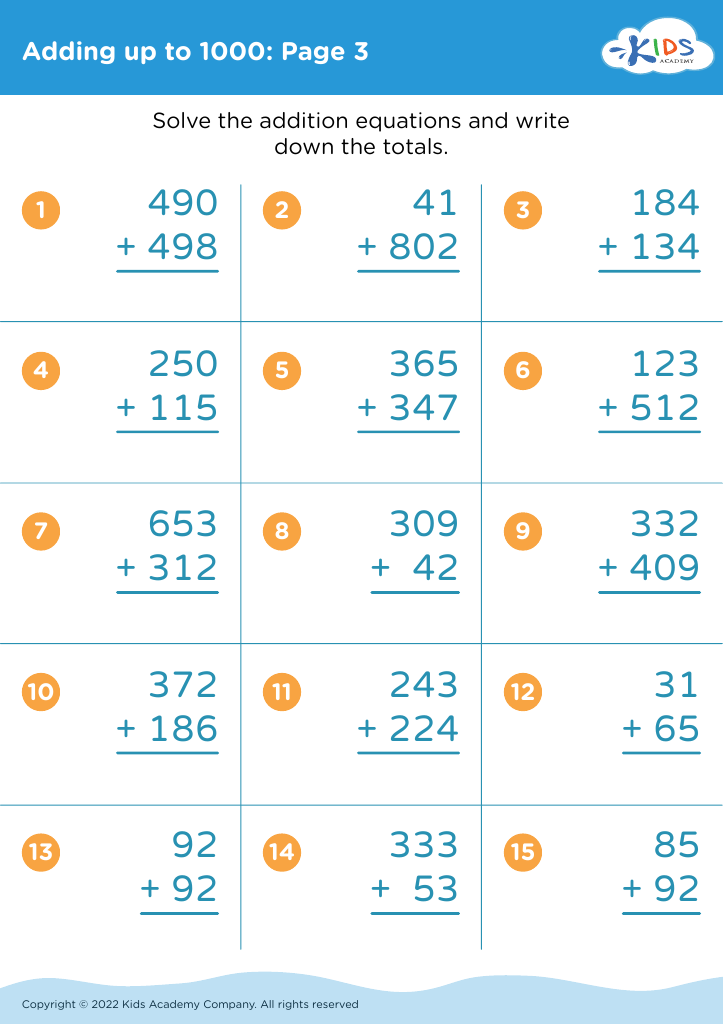
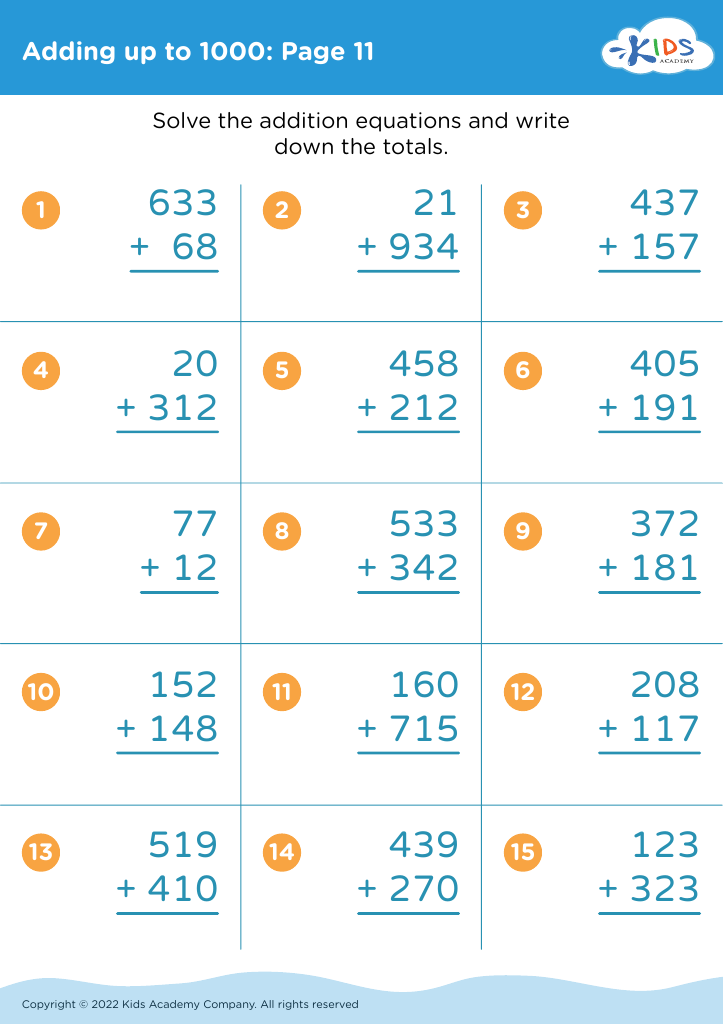
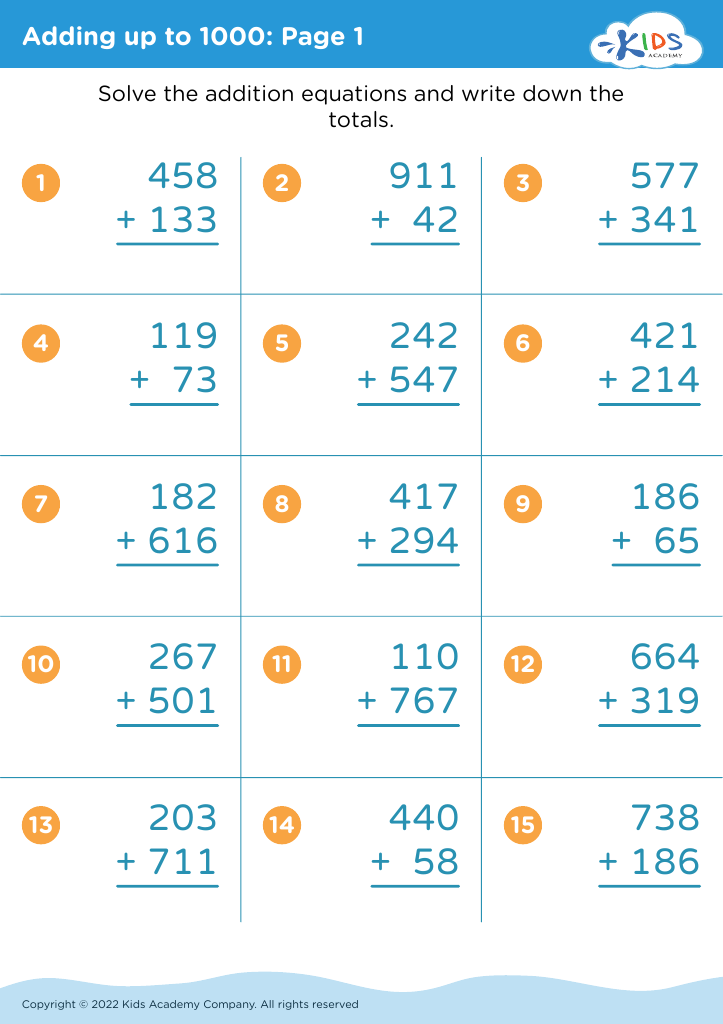
Discover our engaging "Understand Multiplication Adding Up to 1000 Worksheets" tailored for kids aged 3-8! These interactive resources introduce young learners to the foundational concepts of multiplication through fun and relatable activities. Each worksheet is designed to simplify understanding, helping children grasp how multiplication relates to addition and support their numeral comprehension. With colorful graphics and age-appropriate problems, these worksheets make learning multiplication enjoyable and effective. Perfect for teachers and parents alike, our worksheets promote essential math skills and boost confidence in young students. Start your child's math journey today and unlock their potential with our printable worksheets!



Understanding multiplication and concepts related to adding up to 1000 is crucial for children aged 3-8, as these foundational skills significantly contribute to their overall mathematical development. At this stage, children are like sponges, absorbing new concepts that will shape their future learning. Multiplication provides children with tools for quick counting, problem-solving, and grasping systematic ways to understand numbers, enhancing their confidence in math.
Moreover, the concept of adding up to 1000 fosters an understanding of larger numbers, promoting place value knowledge, which is crucial for their mathematical foundation. Mastering these concepts helps students in everyday situations, like budgeting for small purchases or measuring ingredients in cooking.
For teachers and parents, promoting these skills nurtures resilience and a love for learning. Engaging children with fun activities allows them to approach math with creativity, making it less intimidating. By equipping children with these essential skills at an early age, they are more likely to succeed in subsequent math courses and develop critical thinking abilities for life's challenges. Ultimately, fostering a strong grasp of multiplication and larger numbers sets the groundwork for future academic achievement and essential life skills.








