Understanding division Adding up to 1000 Worksheets for Ages 3-8
3 filtered results
-
From - To
Unlock your child's potential with our "Understanding Division: Adding up to 1000 Worksheets for Ages 3-8" by Kids Academy! Tailored for early learners, these engaging worksheets seamlessly introduce the concept of division, enhancing their mathematical skills. Through fun and interactive activities, children will master division basics, build their confidence, and improve their problem-solving abilities. Perfectly designed for ages 3-8, our printable worksheets make learning both enjoyable and effective. Support your child in developing key math skills essential for their academic journey. Visit Kids Academy today to explore our extensive collection and help your child excel in mathematics!
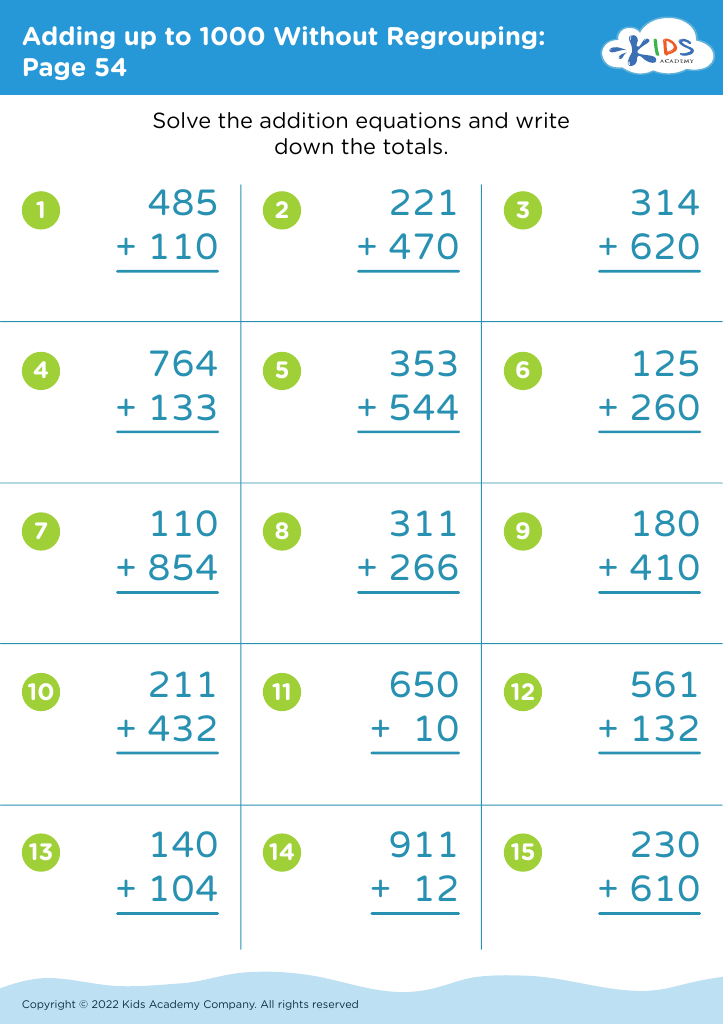
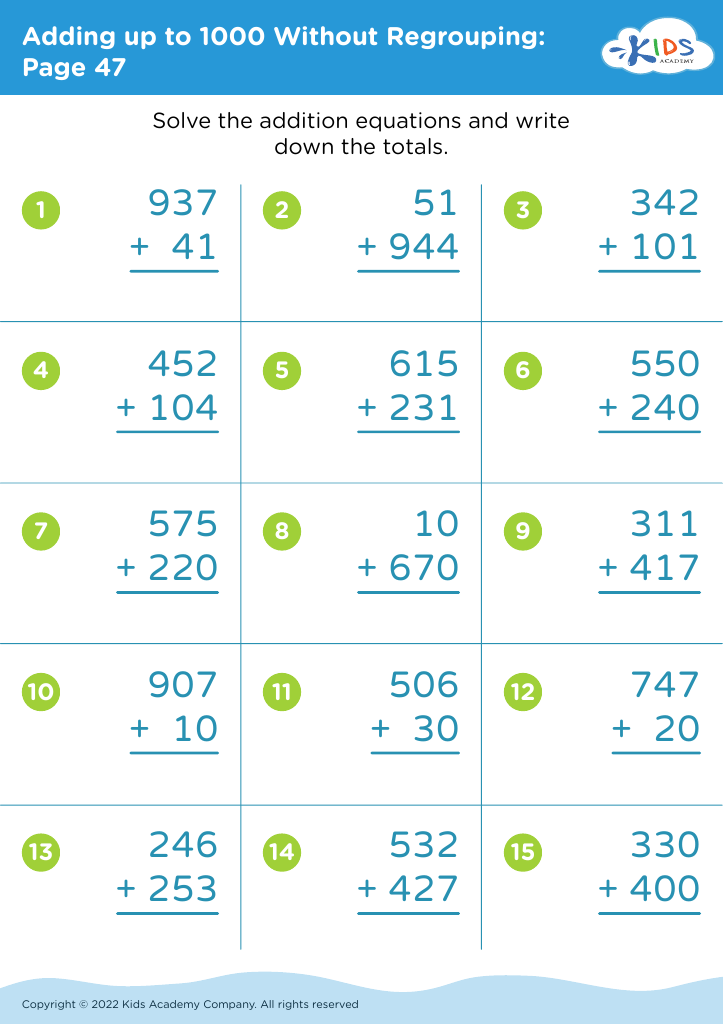
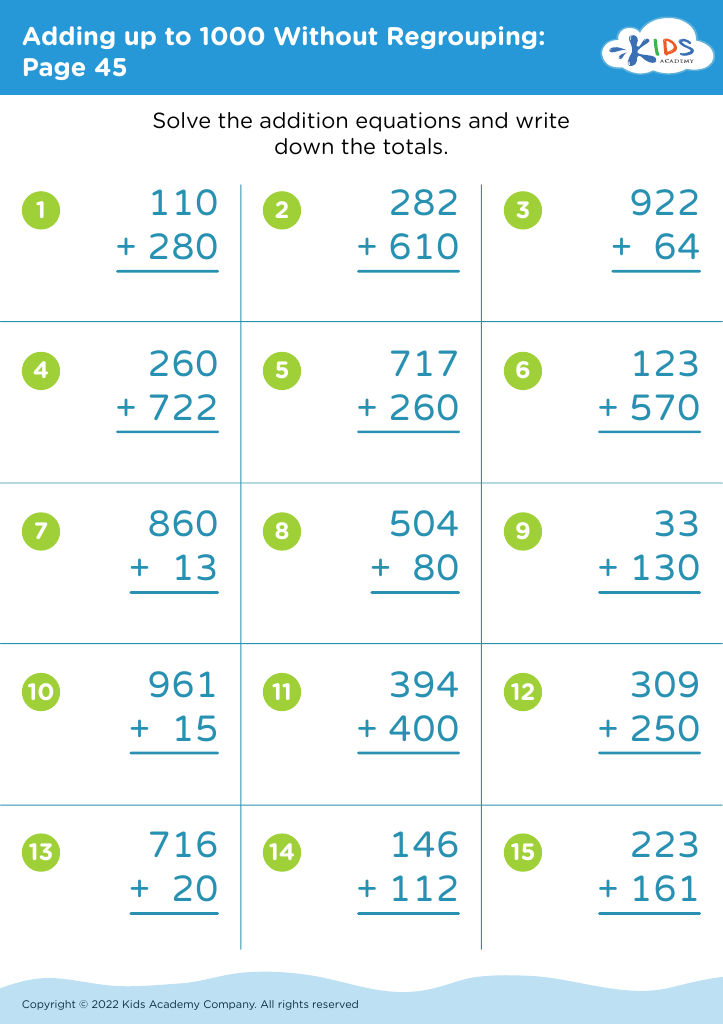



Understanding early math concepts such as division and adding up to 1000 is critical for young children, as it lays the foundation for future mathematical skills and cognitive development. For children aged 3-8, grasping these concepts can significantly impact their problem-solving abilities, logical reasoning, and numerical fluency.
First, early exposure to division helps children comprehend how to equally share or distribute items, which is a practical life skill. By understanding division, kids develop an intuitive sense of fairness and equitable sharing, facilitating social interactions and cooperation in group activities.
Similarly, learning to add up to 1000 not only strengthens basic arithmetic skills but also enhances a child's ability to engage with more complex math problems later in their education. It helps them grasp the concept of place value and the base-ten system, crucial for efficient calculation and understanding of larger numbers.
For parents and teachers, fostering these skills through playful, engaging activities can nurture a child's confidence and curiosity in math. Understanding division and addition comprehensively benefits their academic and intellectual growth, equipping them with tools for critical thinking and everyday decision-making. Therefore, prioritizing the development of these foundational skills can lead to long-term academic success and a positive attitude towards learning.








