Filters

44 filtered results

Clear all filters
Favorites
With answer key
Interactive

44 filtered results

Difficulty Level

Grade


Explore our engaging "Understanding Fractions Adding Up to 1000 Worksheets" designed for children ages 3-8. These worksheets teach young learners the foundational concepts of fractions through fun, interactive activities. Each worksheet is crafted to develop essential math skills, including recognizing fractions, adding and subtracting fractions, and understanding their relationship to whole numbers. With colorful visuals and age-appropriate challenges, children will enjoy honing their math prowess in a hands-on way. Perfect for home or classroom practice, our worksheets ensure that learning fractions becomes an enjoyable and effective experience for early learners. Dive into the world of fractions and watch your child's confidence soar!
Check out this FREE Trial Lesson on Adding up to 1000 for age 3-8!

X

Favorites
With answer key
Interactive
  • 3-8
  • Understanding fractions
  • Adding up to 1000
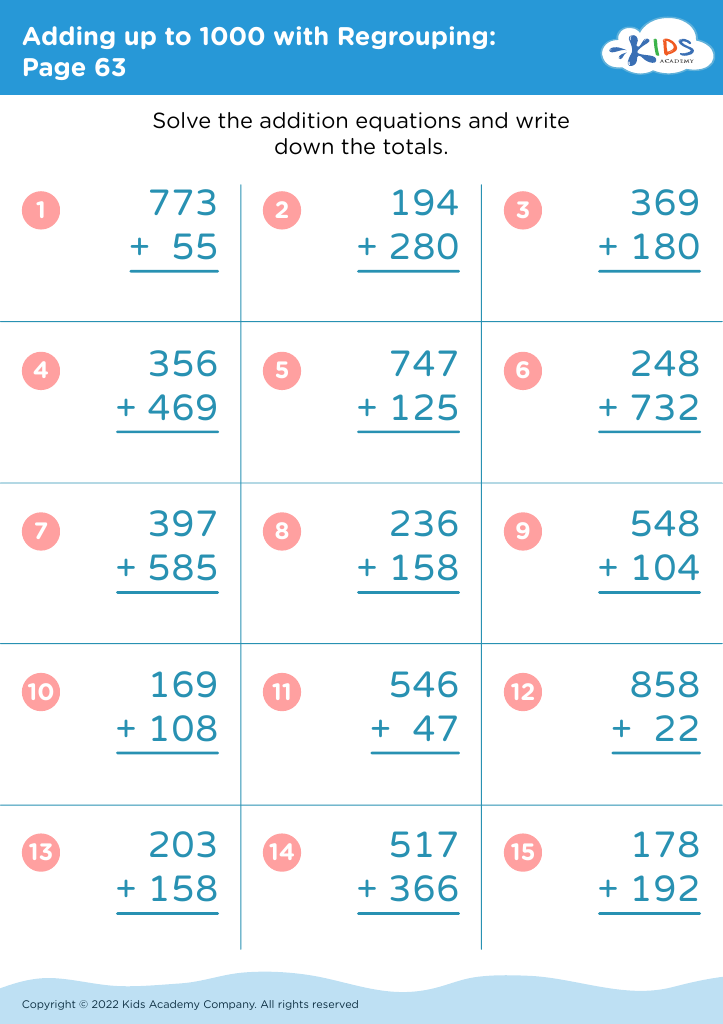
Adding up to 1000 with Regrouping: Page 63
Worksheet
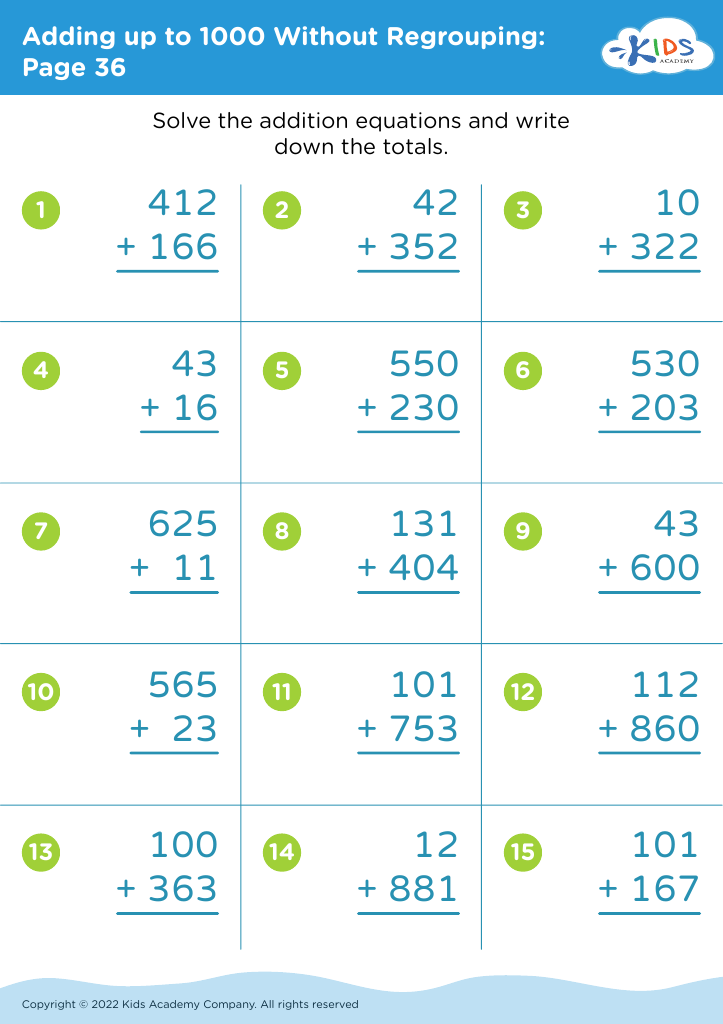
Adding up to 1000 Without Regrouping: Page 36
Worksheet
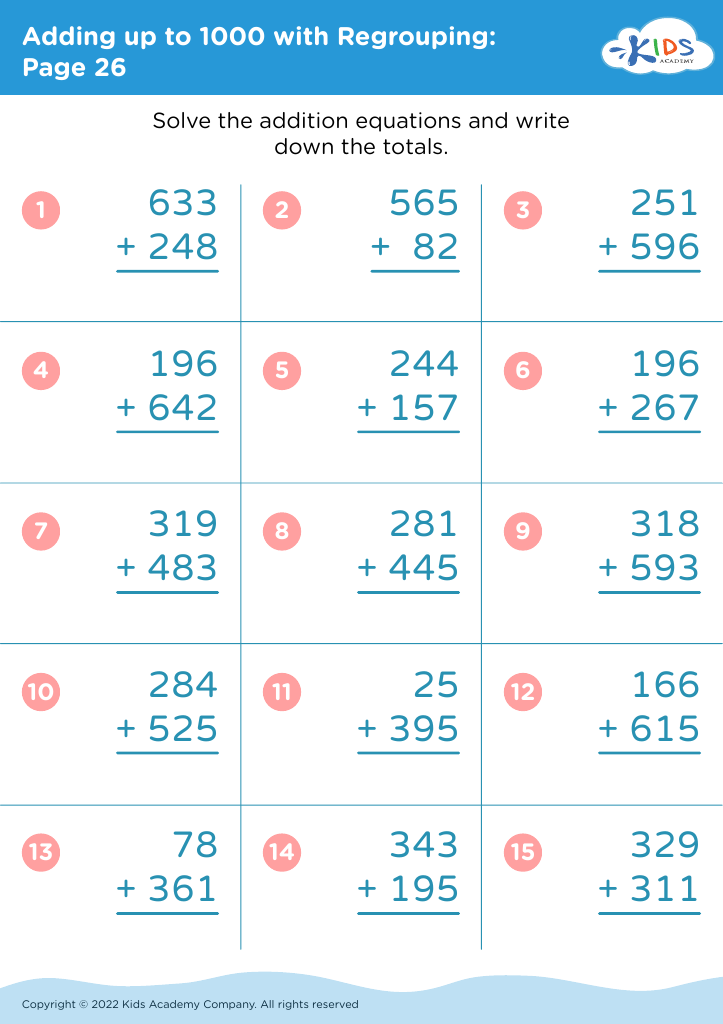
Adding up to 1000 with Regrouping: Page 26
Worksheet
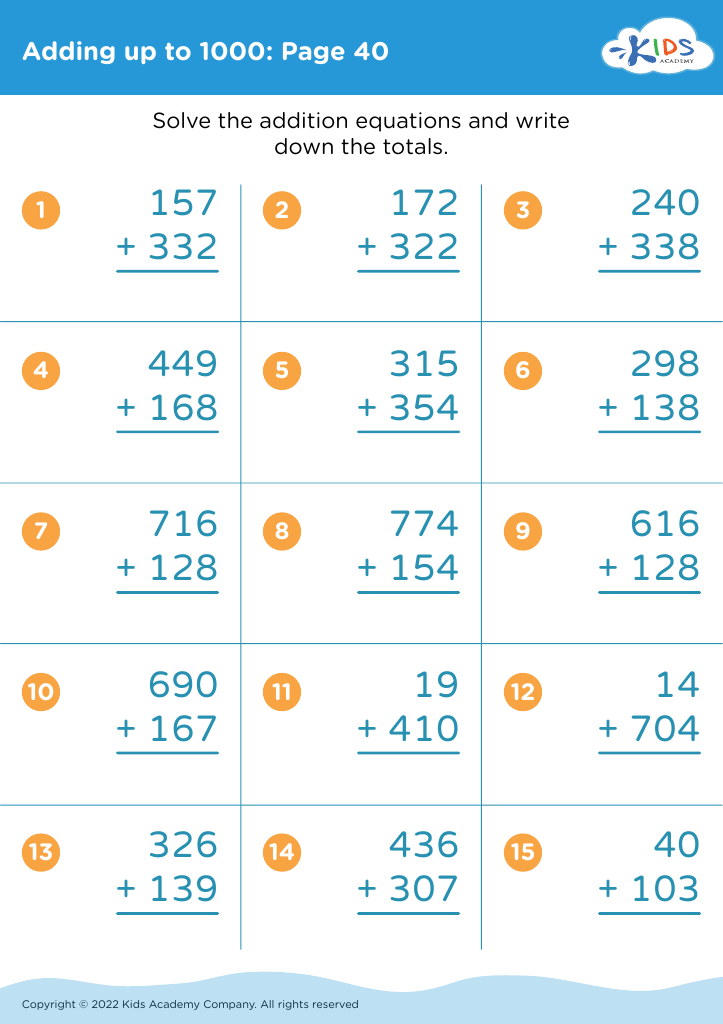
Adding up to 1000: Page 40

Adding up to 1000: Page 40

Adding up to 1000: Page 40
Worksheet
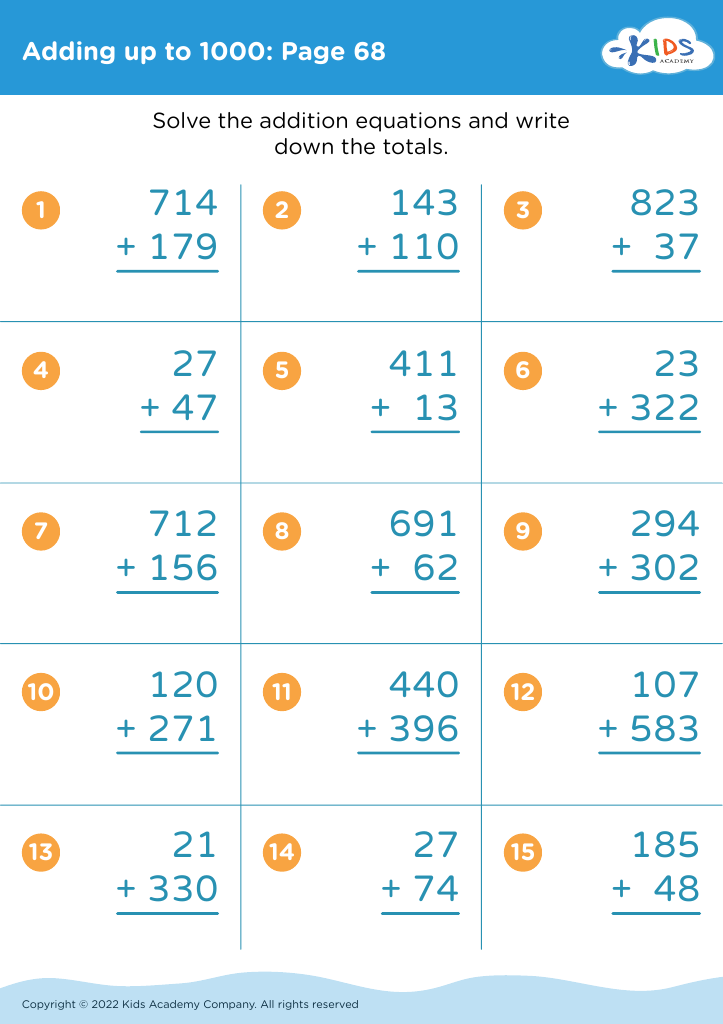
Adding up to 1000: Page 68

Adding up to 1000: Page 68

Adding up to 1000: Page 68
Worksheet
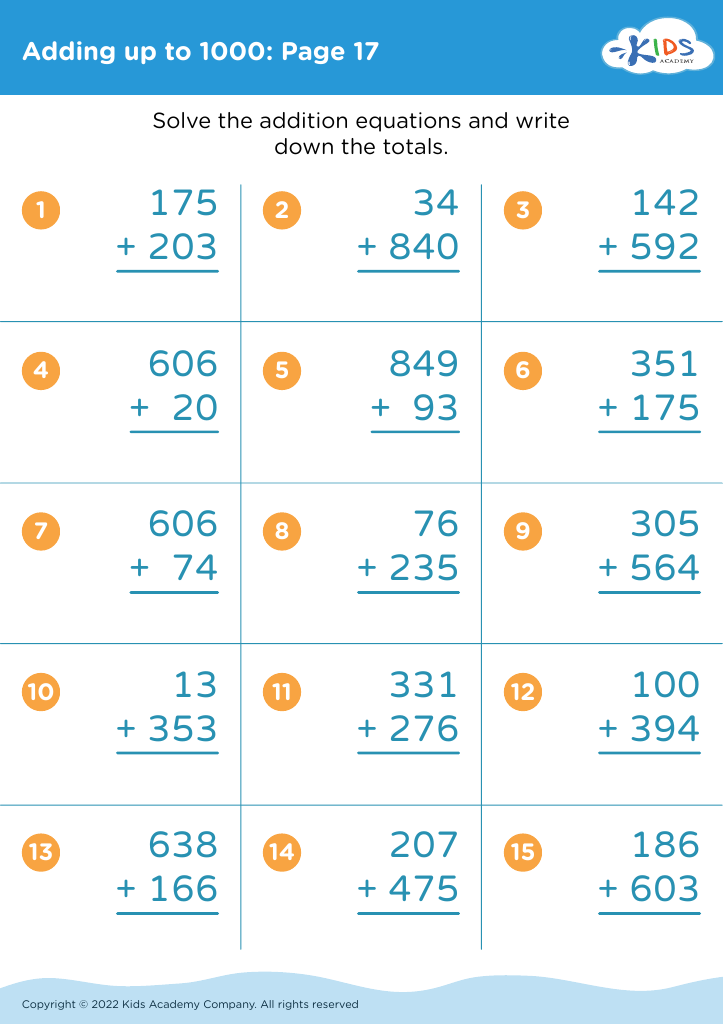
Adding up to 1000: Page 17

Adding up to 1000: Page 17

Adding up to 1000: Page 17
Worksheet
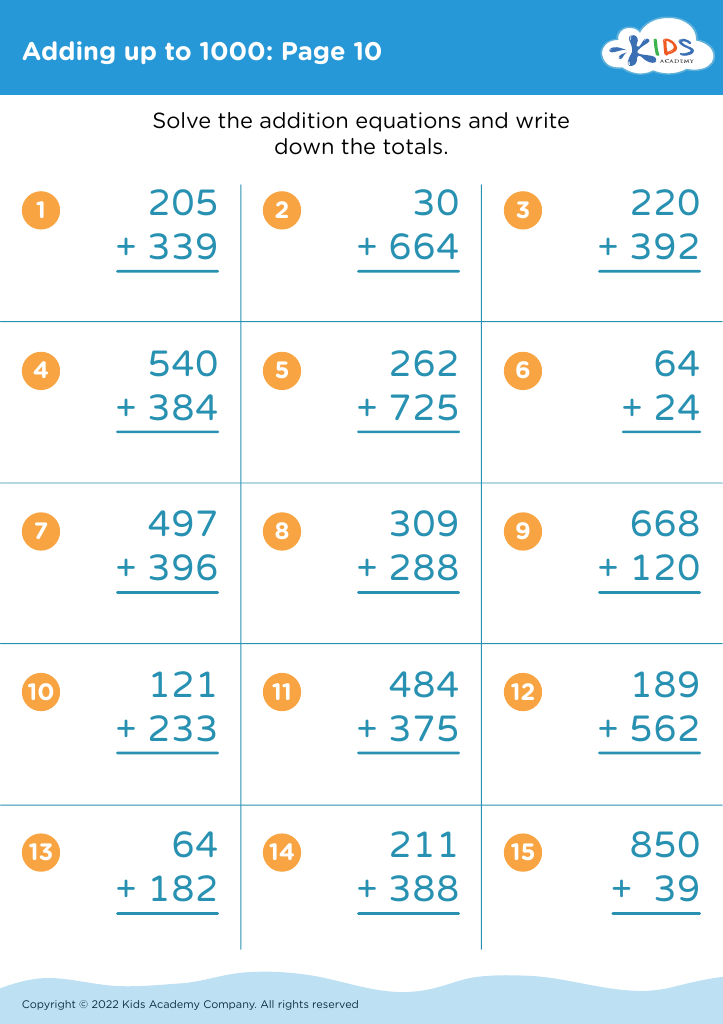
Adding up to 1000: Page 10

Adding up to 1000: Page 10

Adding up to 1000: Page 10
Worksheet
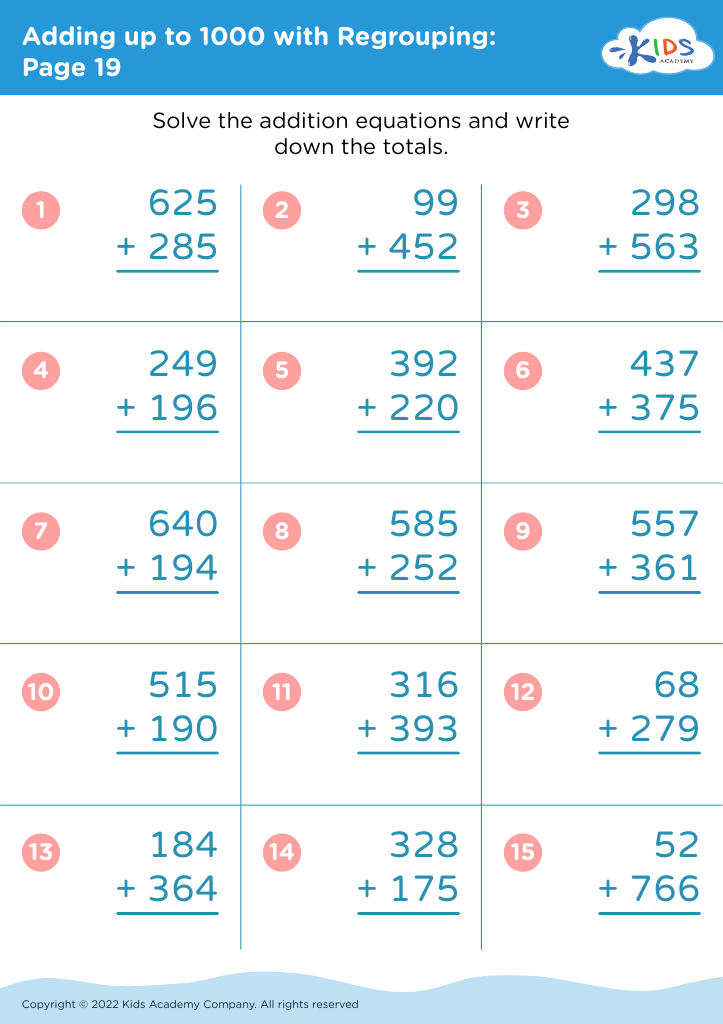
Adding up to 1000 with Regrouping: Page 19
Worksheet
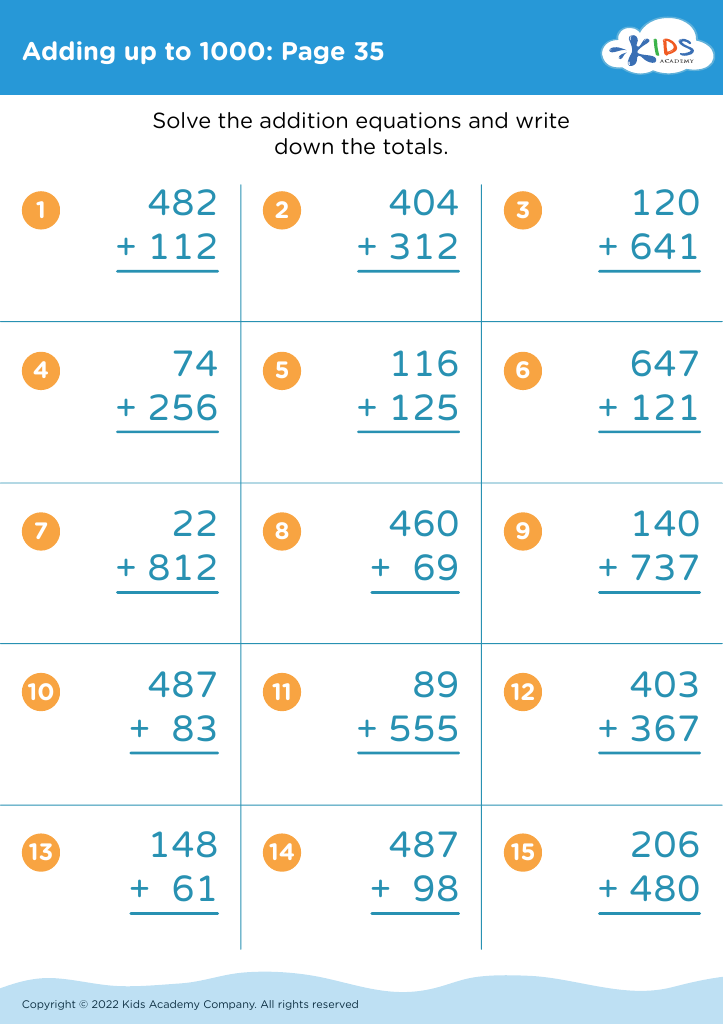
Adding up to 1000: Page 35

Adding up to 1000: Page 35

Adding up to 1000: Page 35
Worksheet
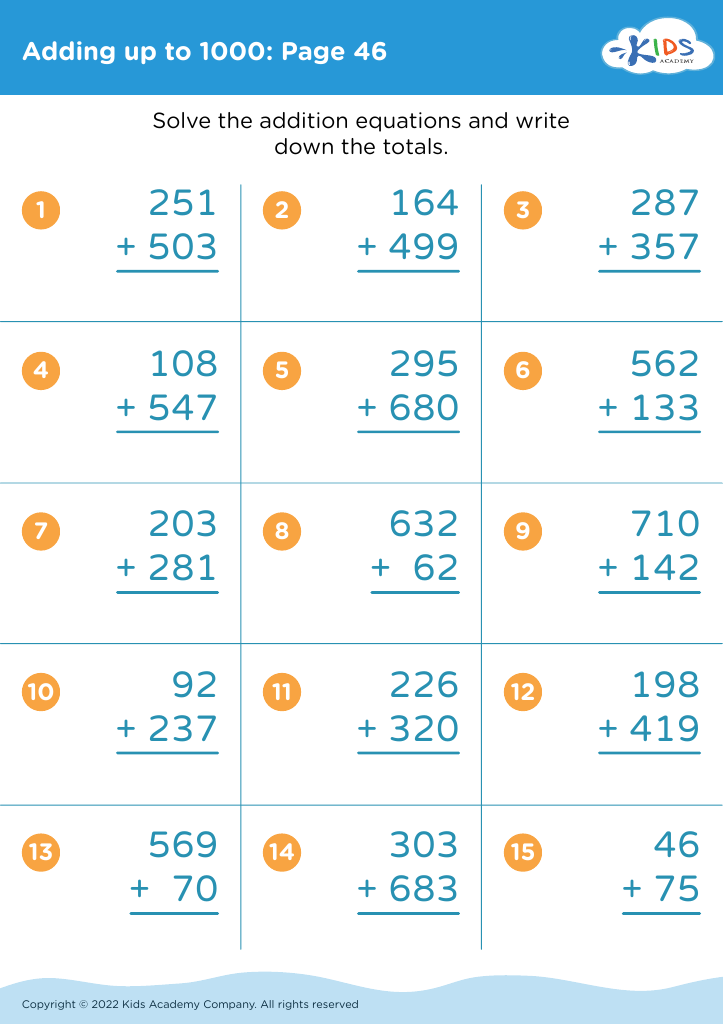
Adding up to 1000: Page 46

Adding up to 1000: Page 46

Adding up to 1000: Page 46
Worksheet
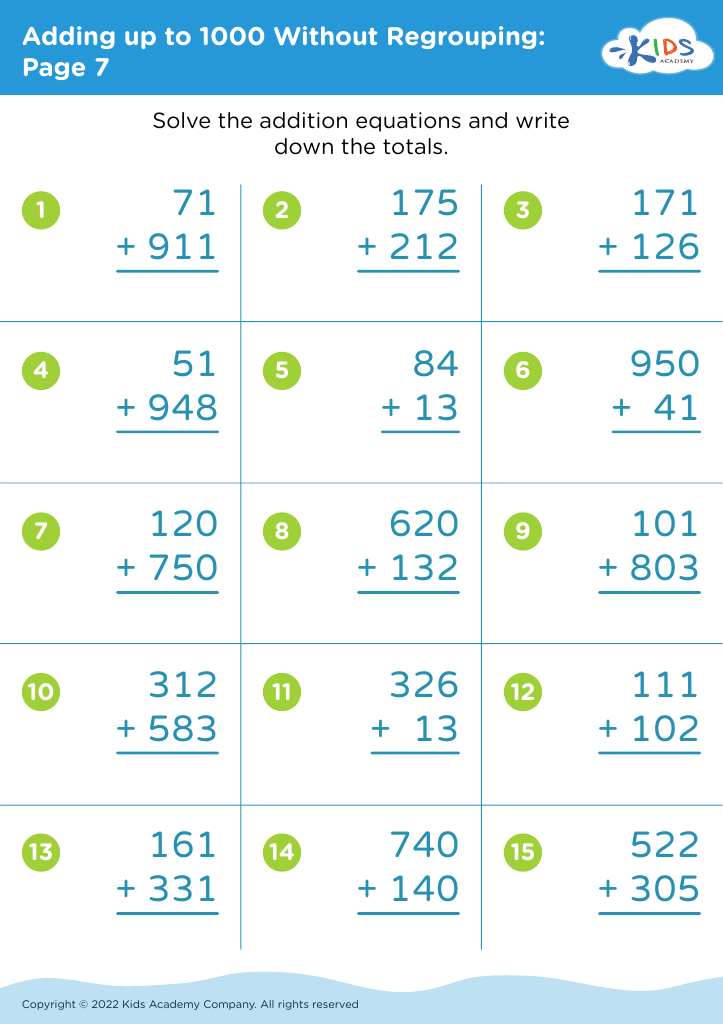
Adding up to 1000 Without Regrouping: Page 7
Worksheet
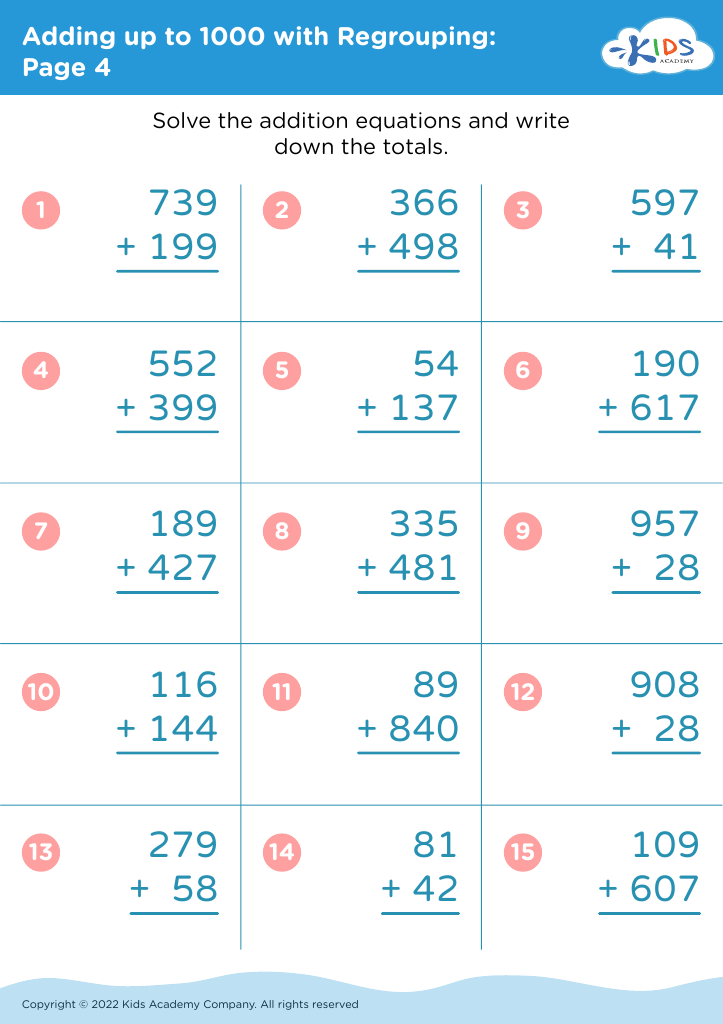
Adding up to 1000 with Regrouping: Page 4
Worksheet
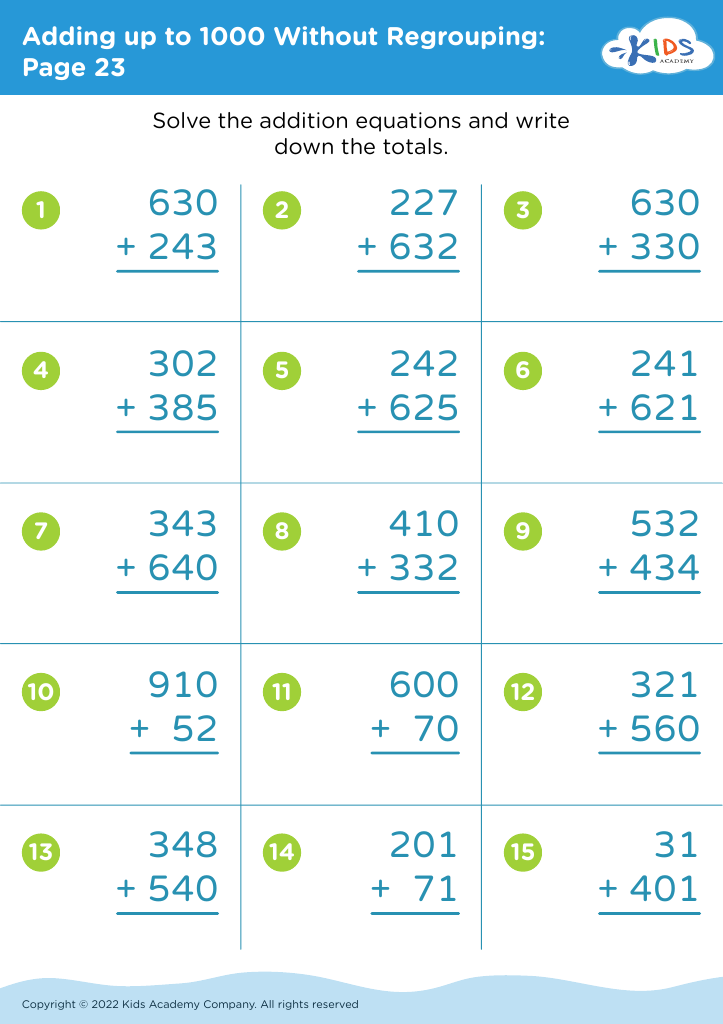
Adding up to 1000 Without Regrouping: Page 23
Worksheet
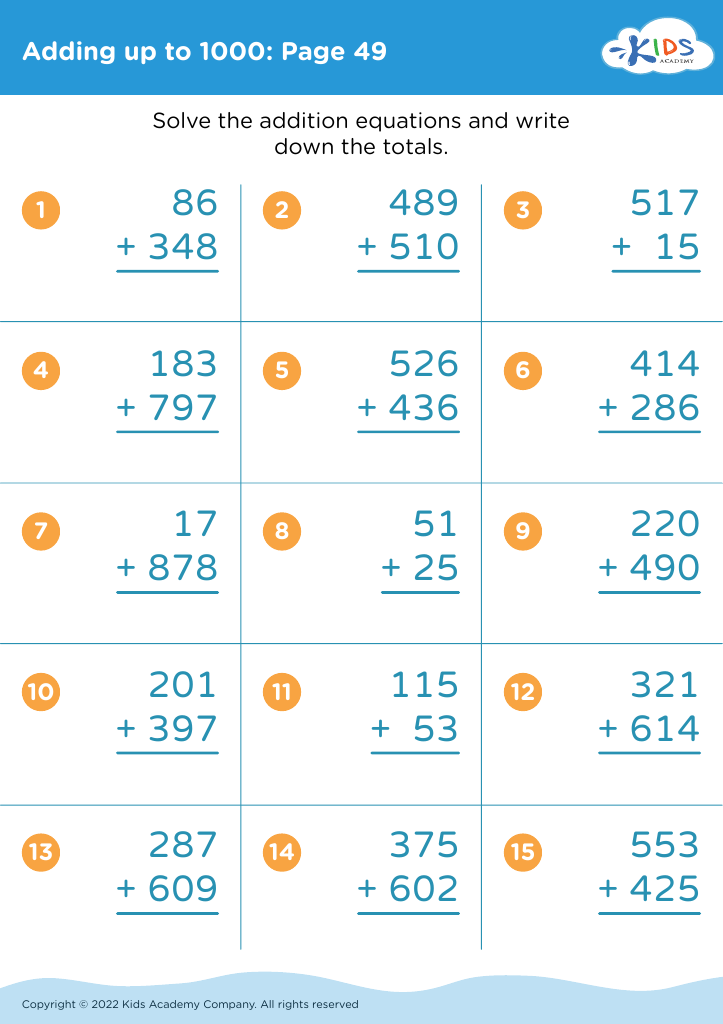
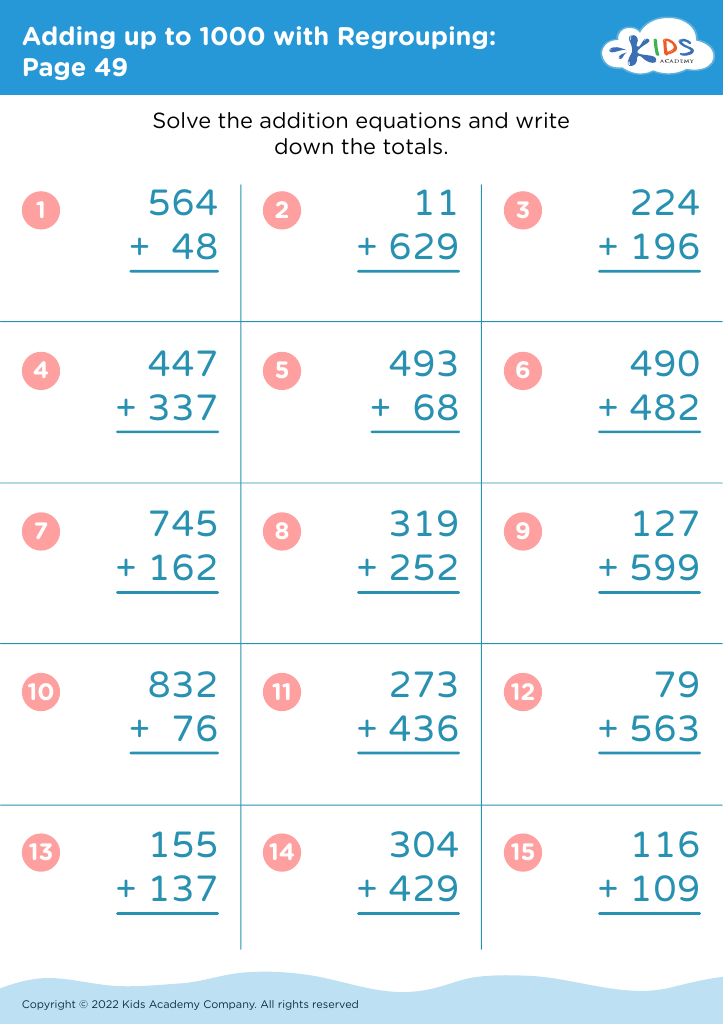
Adding up to 1000: Page 49

Adding up to 1000: Page 49

Adding up to 1000: Page 49
Worksheet
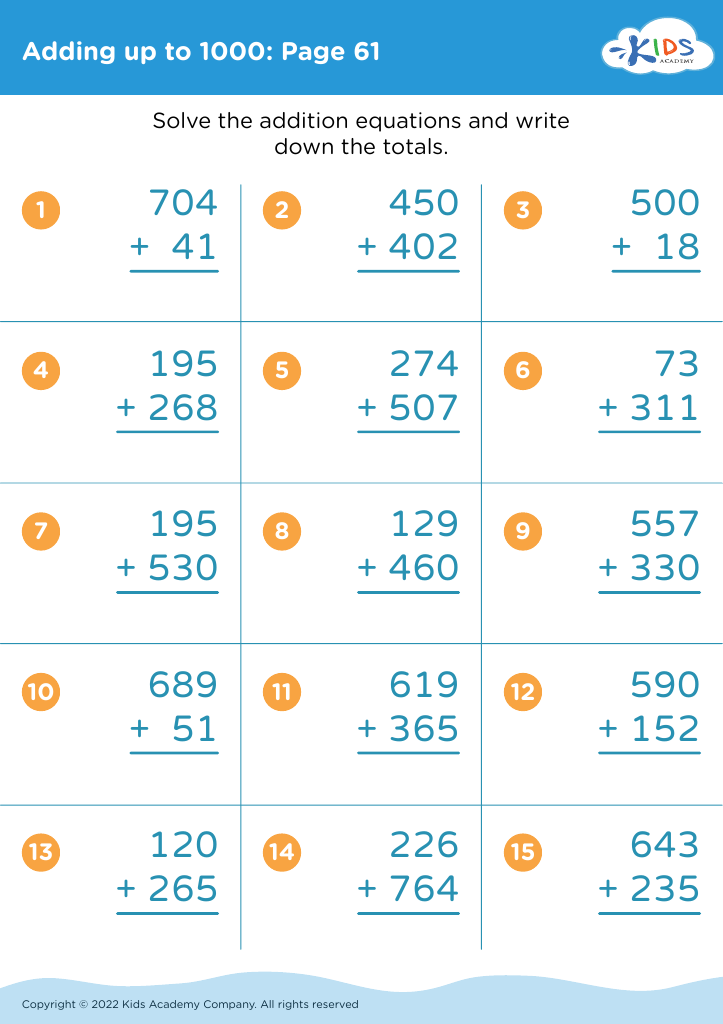
Adding up to 1000: Page 61

Adding up to 1000: Page 61

Adding up to 1000: Page 61
Worksheet
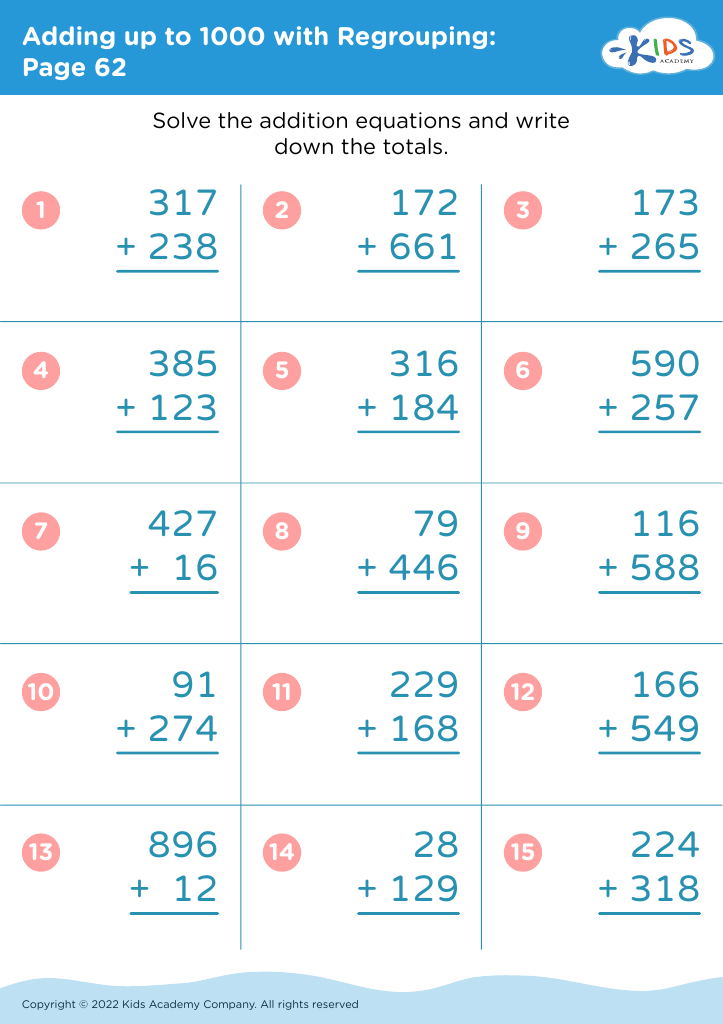
Adding up to 1000 with Regrouping: Page 62
Worksheet
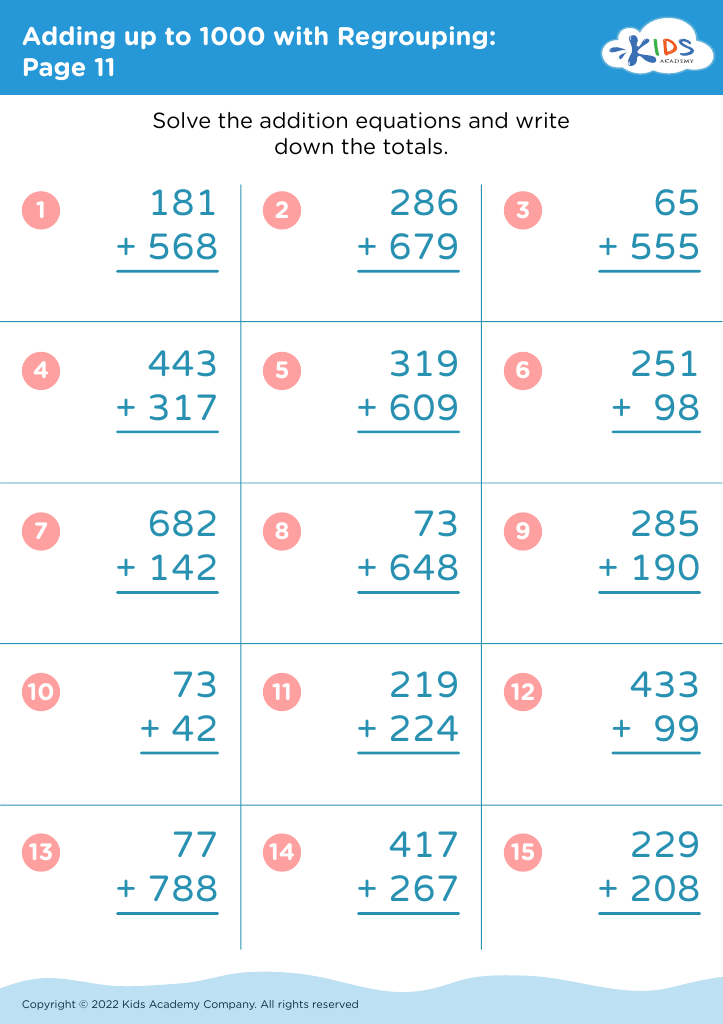
Adding up to 1000 with Regrouping: Page 11
Worksheet
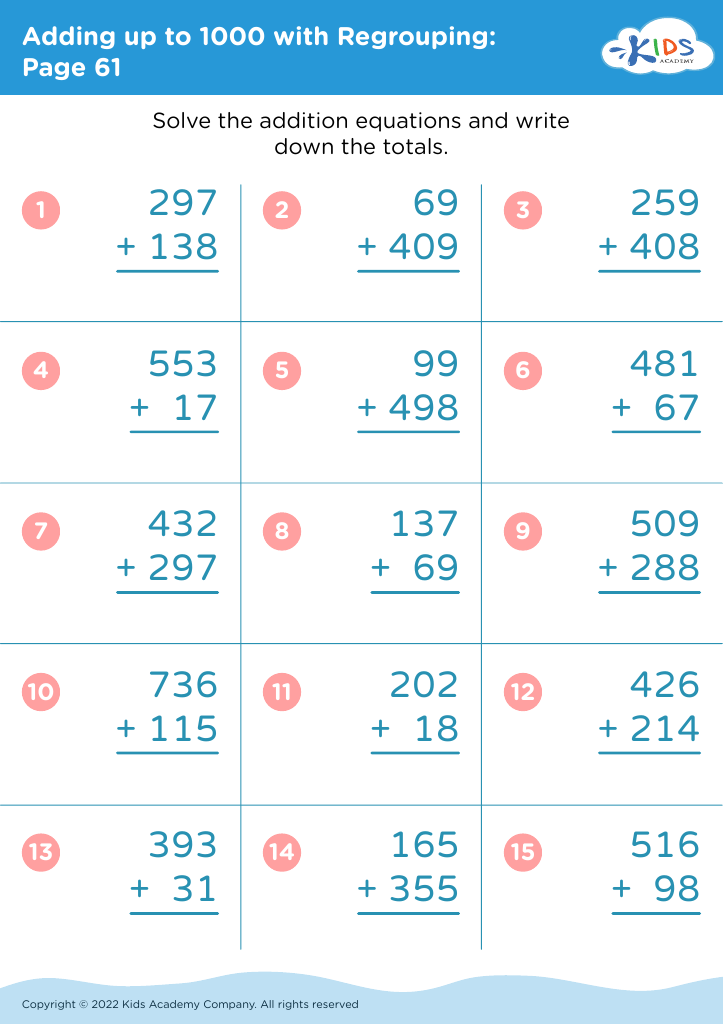
Adding up to 1000 with Regrouping: Page 61
Worksheet
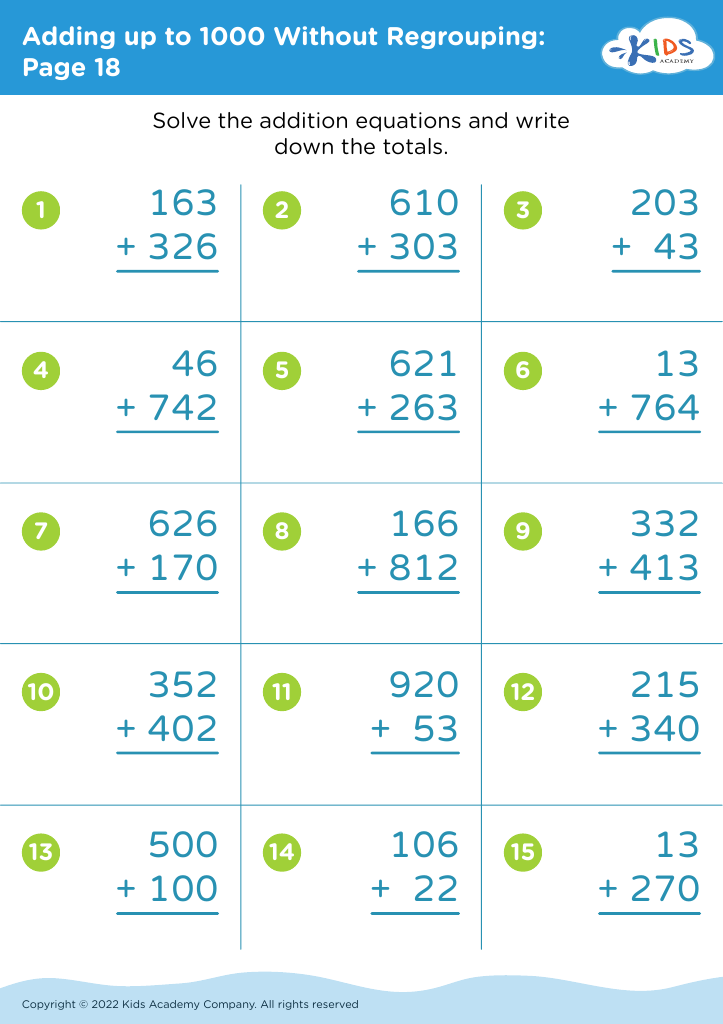
Adding up to 1000 Without Regrouping: Page 18
Worksheet
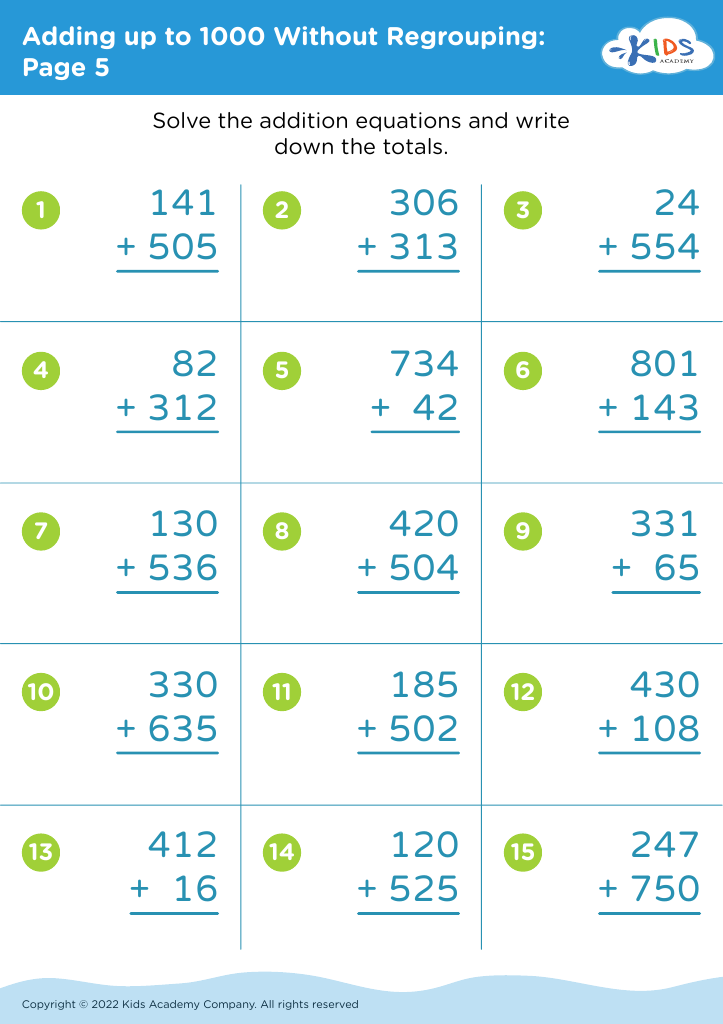
Adding up to 1000 Without Regrouping: Page 5
Worksheet
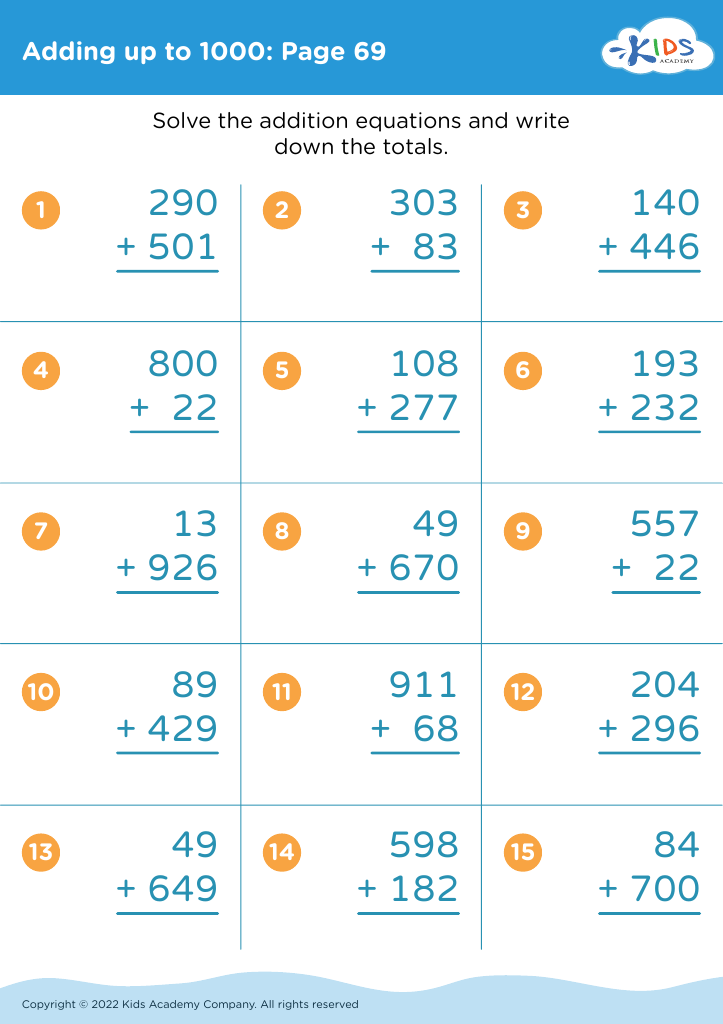
Adding up to 1000: Page 69

Adding up to 1000: Page 69

Adding up to 1000: Page 69
Worksheet
Adding up to 1000 with Regrouping: Page 49
Worksheet
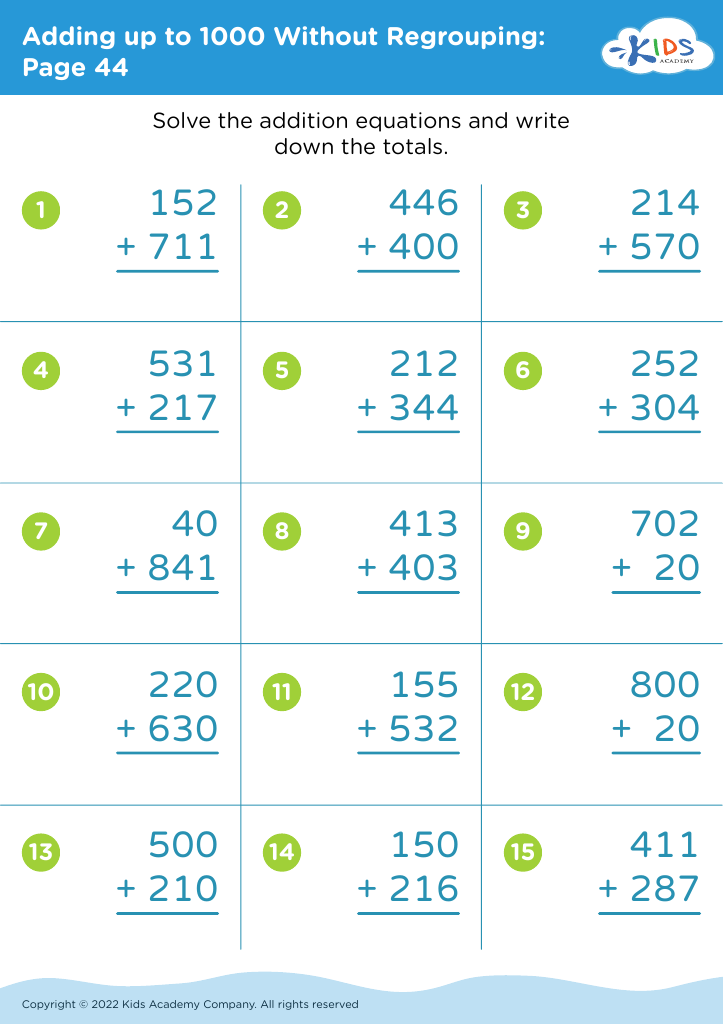
Adding up to 1000 Without Regrouping: Page 44
Worksheet
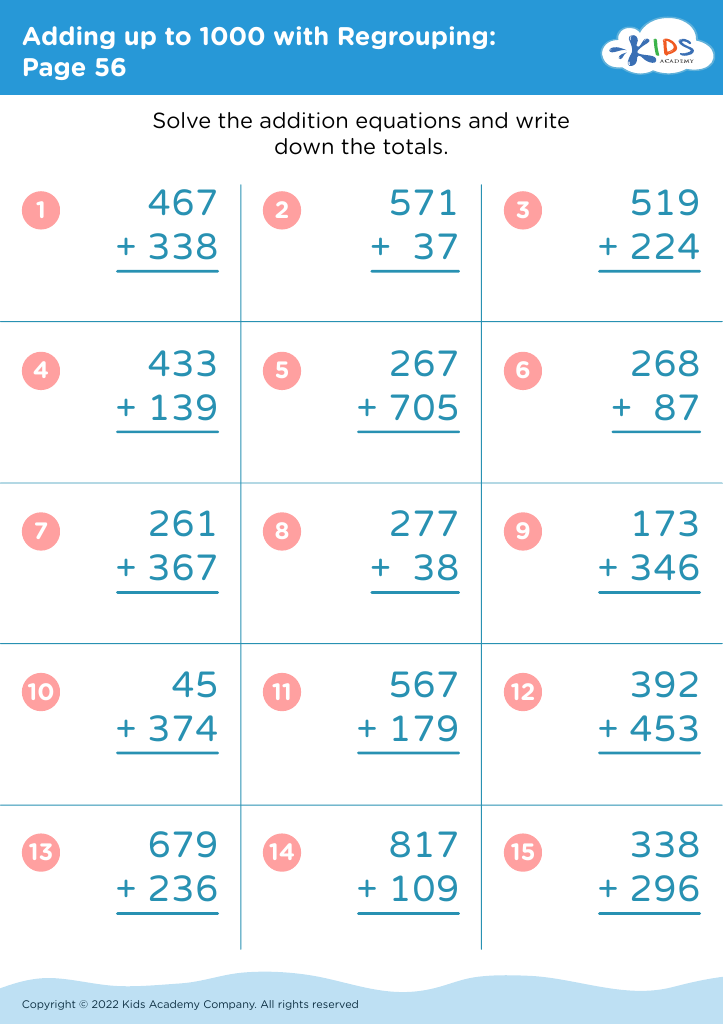
Adding up to 1000 with Regrouping: Page 56
Worksheet


Understanding fractions and their relationships to whole numbers, especially in the context of adding up to 1000, is crucial for young learners aged 3-8 for several reasons. First, early experiences with numbers and basic mathematical concepts lay the foundation for future academic success. Grasping fractions fosters essential skills like critical thinking, problem-solving, and logical reasoning.

In this developmental stage, children are also building their number sense. Recognizing how parts can comprise a whole (or multiple wholes) helps them relate fractions to various real-life contexts, from cooking to sharing. This understanding enhances their ability to approach larger numbers, such as 1000, and comprehend the interconnectedness of different mathematical concepts, a building block for more advanced arithmetic in later years.

Moreover, when teachers and parents emphasize fractions, they help cultivate enthusiasm and confidence in math. Making fractions a fun and engaging topic can reduce math anxiety and encourage children to explore mathematics further. With foundational skills in fractions, children are more prepared for more complex mathematical challenges in their academic journey. In essence, promoting an understanding of fractions aids not only immediate learning but instills long-lasting numerical literacy, essential for navigating everyday life.