Understanding patterns Adding up to 1000 Worksheets for Ages 3-8
5 filtered results
-
From - To
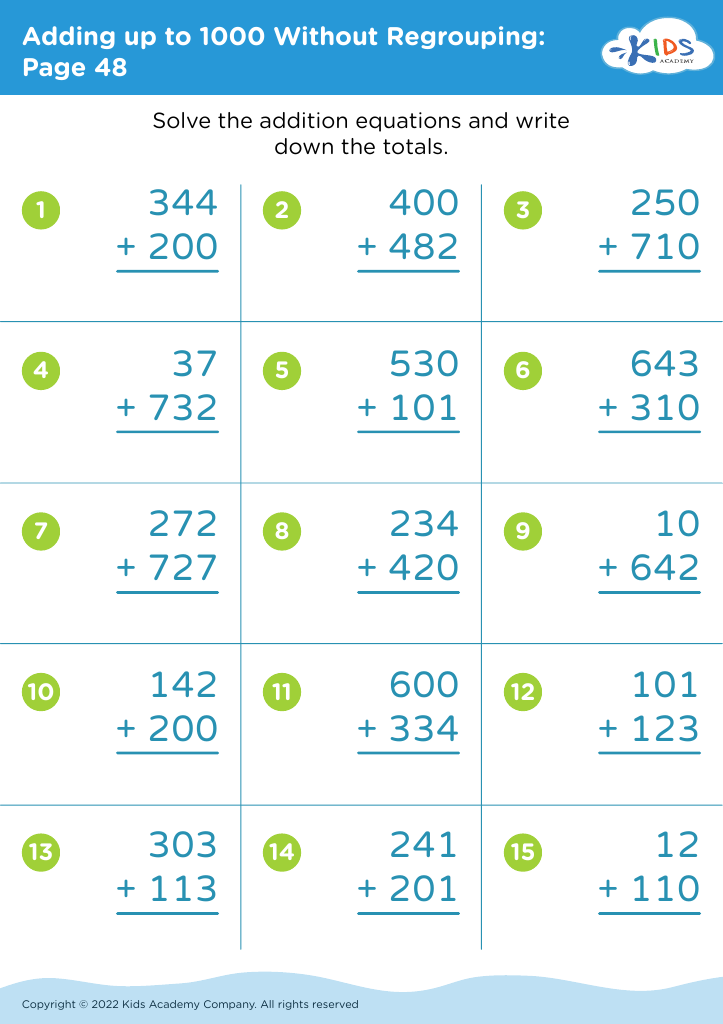
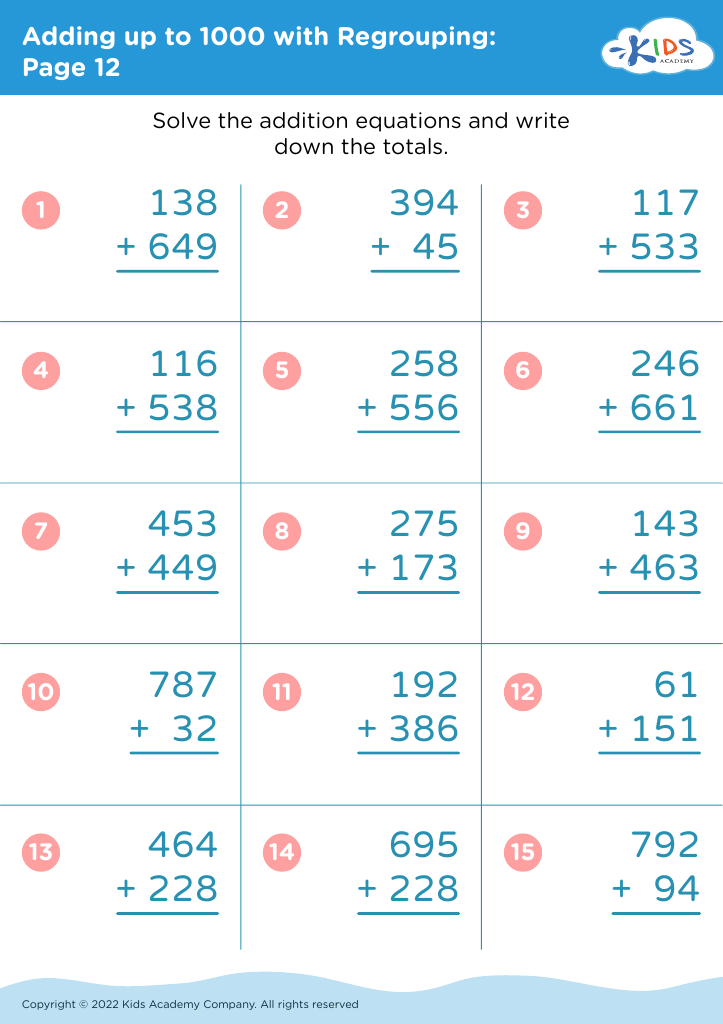
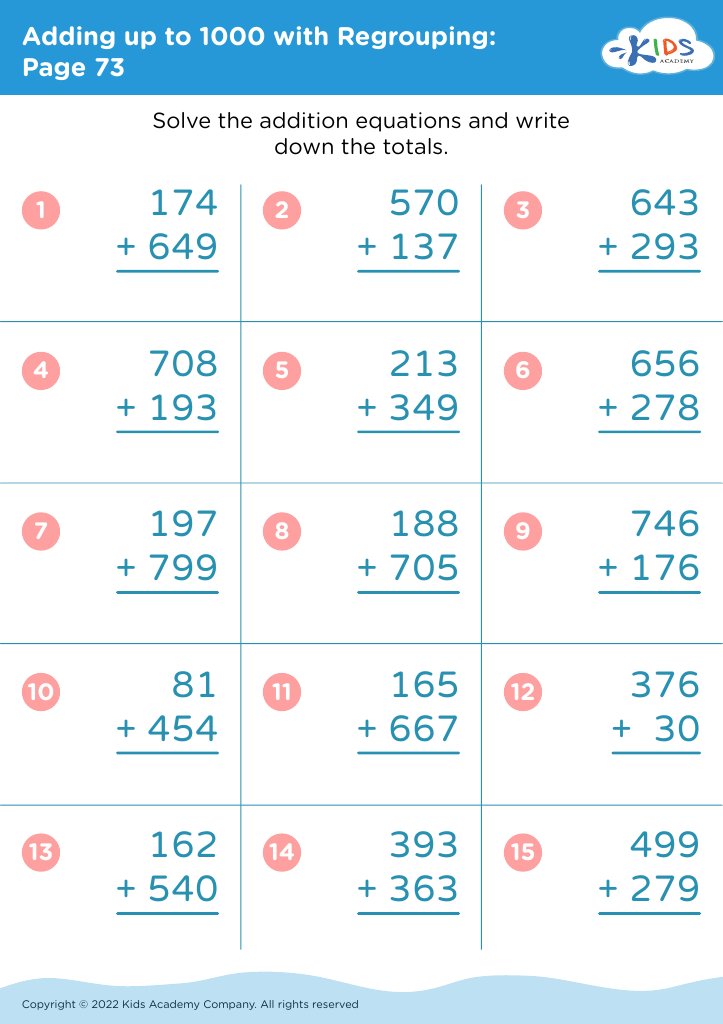
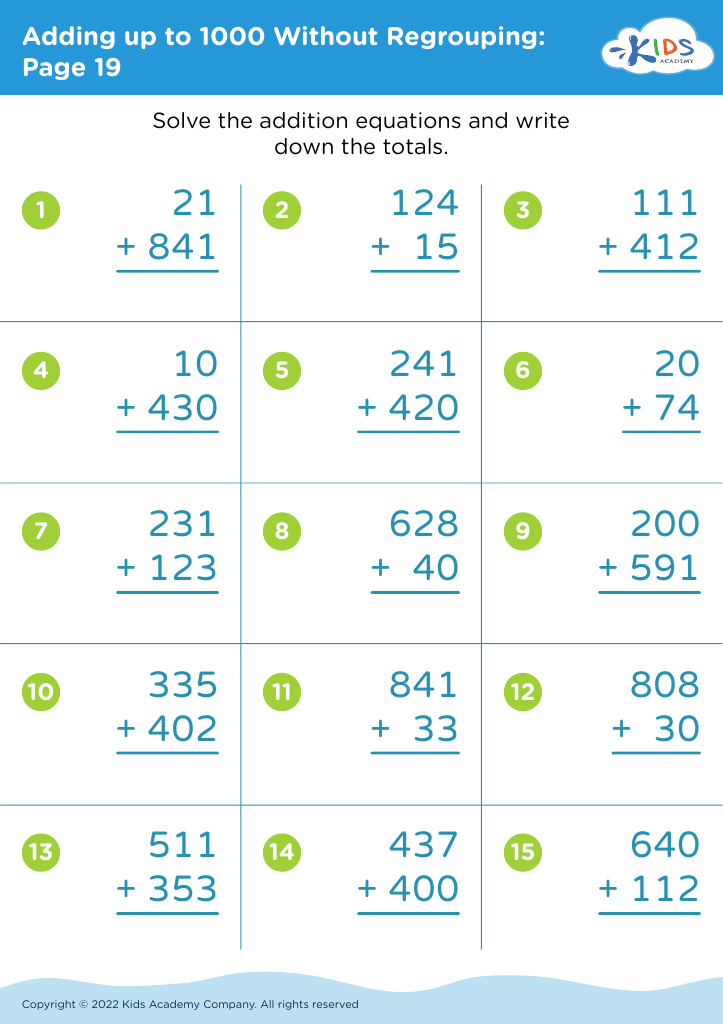
Discover the joy of learning with our "Understanding Patterns Adding up to 1000 Worksheets for Ages 3-8." Perfectly designed for young learners, these engaging worksheets help children master the basics of addition up to 1000 while recognizing essential patterns. Created by Kids Academy, these resources make math fun and accessible, allowing children to build confidence and improve their problem-solving skills. By carefully solving age-appropriate exercises, kids can better understand number patterns and sequences, which are crucial for their future mathematical success. Download today and give your child the tools they need to excel in math!
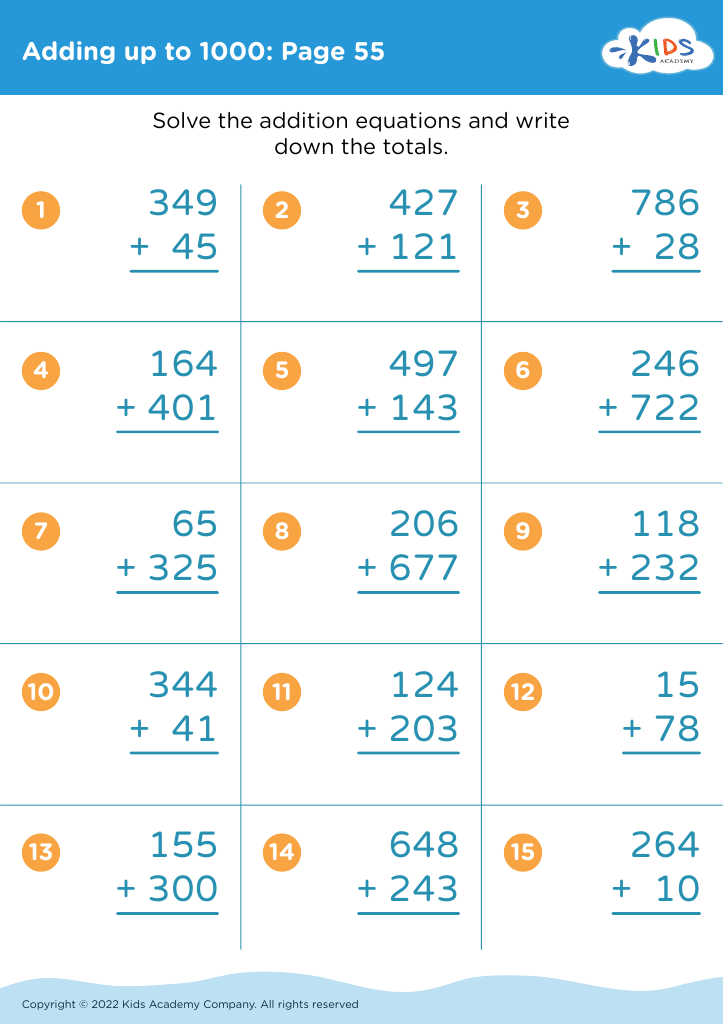



Understanding patterns and early math concepts, such as adding up to 1000, is crucial for young learners aged 3-8 and should be a priority for both parents and teachers. During these early years, children's brains are highly adaptable and capable of absorbing complex information with relative ease. Introducing patterns helps children recognize order and predictability in the world around them, which is foundational for more complex mathematical and logical thinking.
Learning to add up to 1000 takes this a step further by enhancing cognitive skills such as problem-solving, critical thinking, and spatial awareness. These math skills not only provide a strong foundation for future academic success but also for everyday tasks. For example, understanding basic math is essential for managing time, money, and even in scientifically based explorations or technology usage in the future.
Moreover, learning these concepts at an early age boosts children's confidence in their abilities, fostering a positive attitude towards mathematics and learning in general. It allows them to experience success, sparking curiosity and encouraging a growth mindset.
Supporting young learners in grasping these fundamental concepts is an investment in their academic and personal development, ensuring they are well-prepared for the more complex challenges they will face as they grow.








