Understanding Sequences Adding up to 1000 Worksheets for Ages 3-8
6 filtered results
-
From - To
Discover our engaging "Understanding Sequences Adding up to 1000" worksheets designed for children ages 3-8. These printable math activities help young learners develop essential math skills, focusing on understanding numeric sequences and addition up to 1000. With colorful illustrations and fun exercises, kids will enjoy practicing arithmetic while enhancing their number sense. Perfect for homeschooling or supplementing classroom learning, these worksheets support progressive skill-building and encourage confidence in math. Available for free on Kids Academy, our resources make learning enjoyable and effective for early graders. Explore now to boost your child's math proficiency and love for learning!
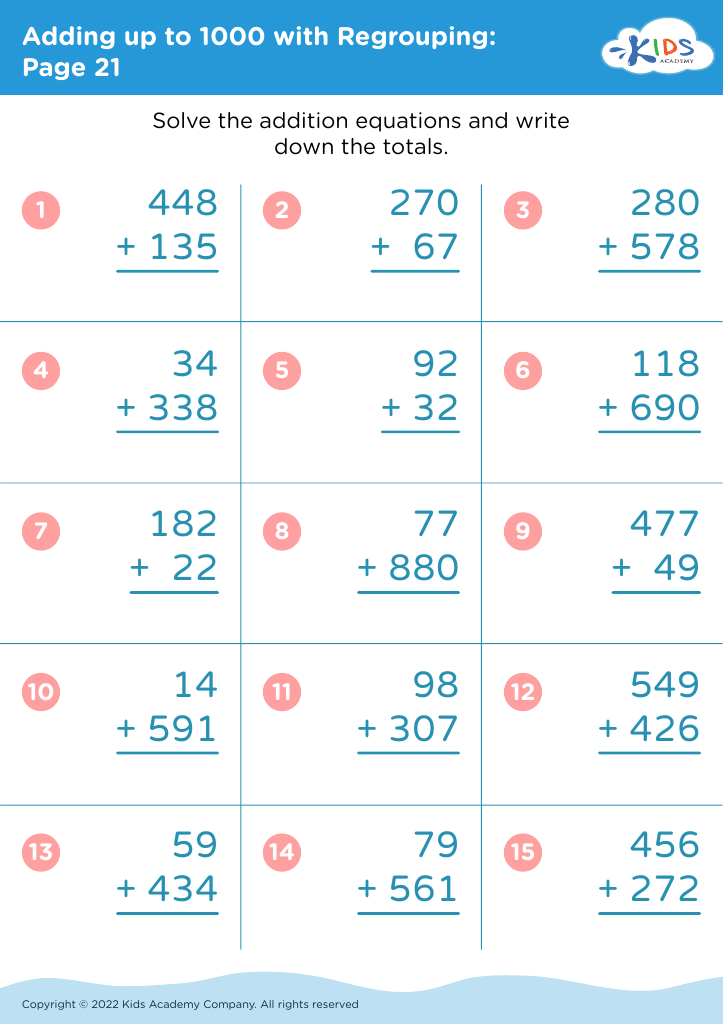
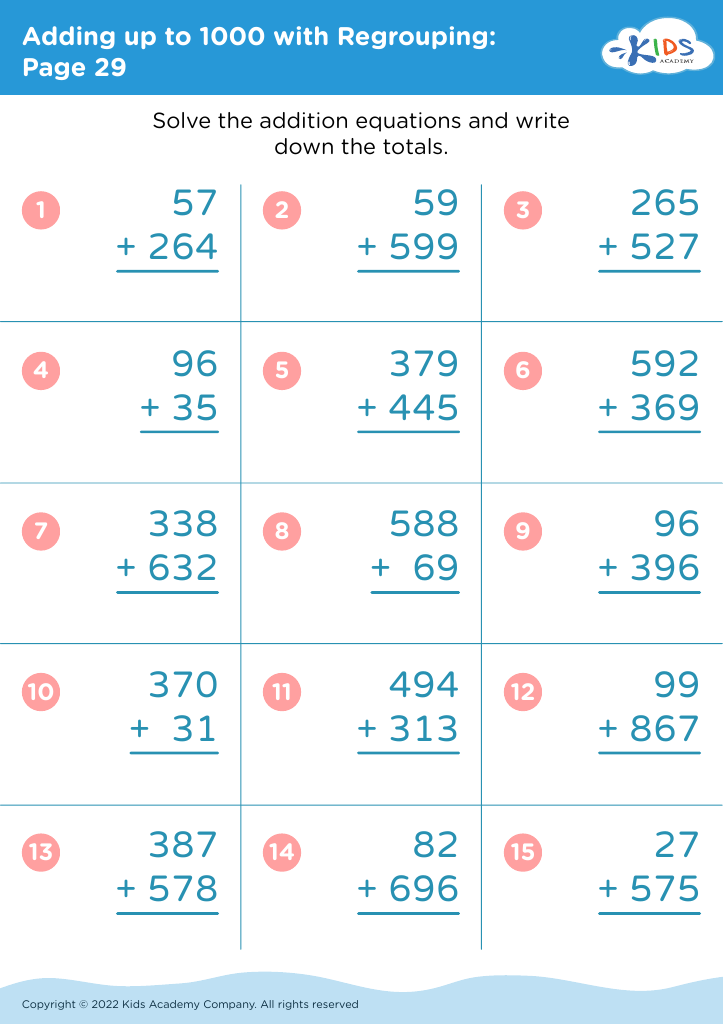
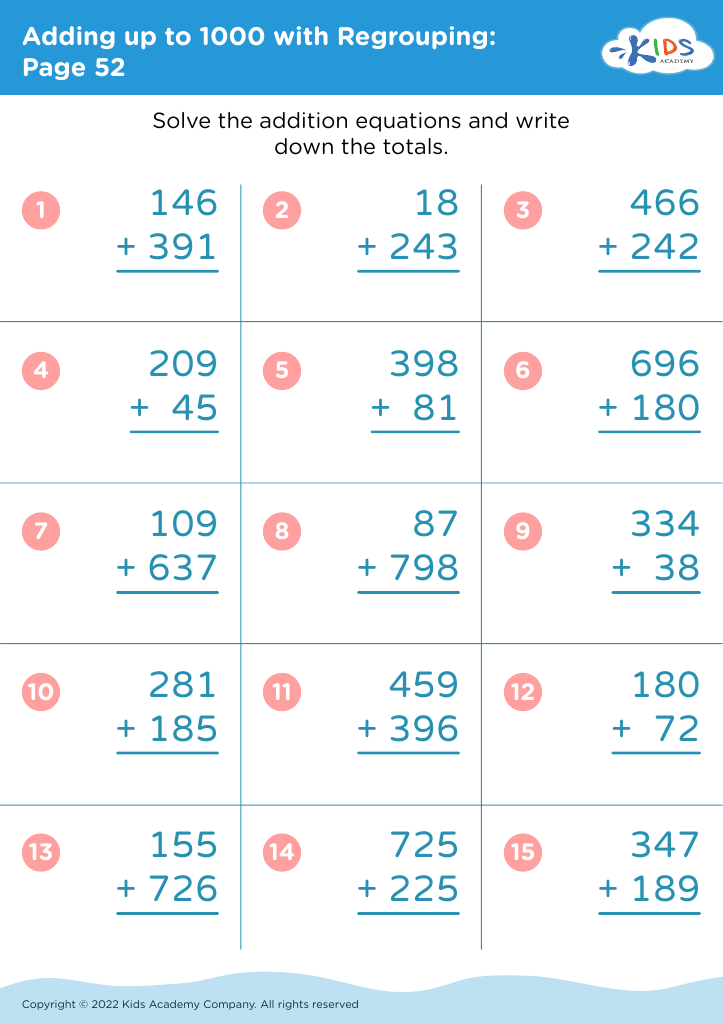
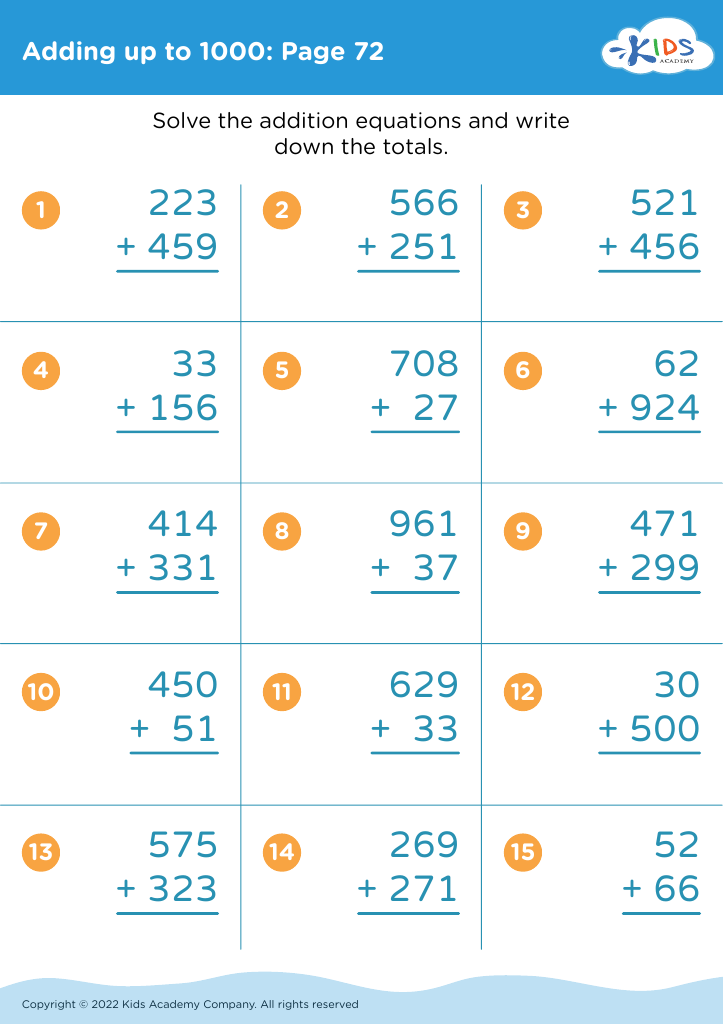
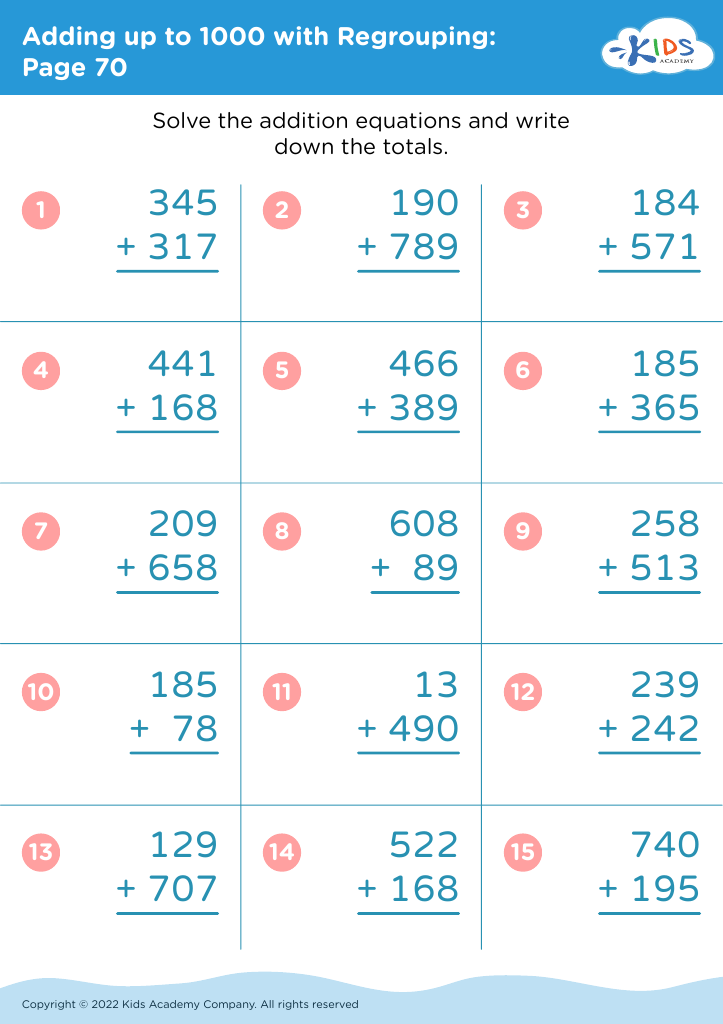
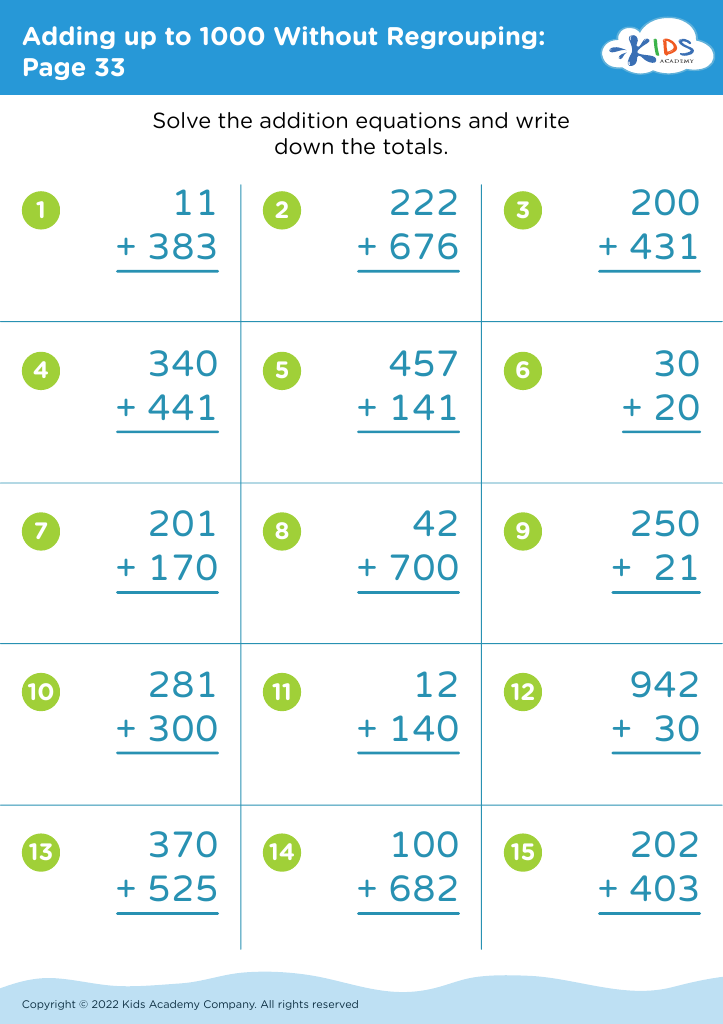



Parents and teachers should care about teaching young children sequences that add up to 1000 because it lays a vital foundation for mathematical understanding and cognitive development. At ages 3-8, children's brains are incredibly receptive to new information and patterns, making it an optimal period for introducing fundamental mathematical concepts. Understanding sequences helps children recognize patterns, which is crucial for arithmetic skills and logical reasoning.
Moreover, engaging children in sequencing and sum exercises nurtures their problem-solving abilities and critical thinking. Breaking down the goal of reaching 1000 into smaller manageable steps encourages meticulous thinking and perseverance. For instance, starting with simpler sequences that sum up to 10, 20, or 100 prepares them incrementally for the larger challenge, thereby reinforcing their counting and addition skills over time.
Sequences up to 1000 can also be linked to practical life situations, such as counting collections of objects, managing simple budgets, or planning small projects, making the learning process meaningful and contextualized. Understanding these sequences boosts confidence and creates a positive attitude towards mathematics, fostering curiosity and enthusiasm for learning. This robust number sense developed early on supports future comprehension of more complex mathematical operations, promoting overall academic success.








