Understanding symmetry Adding up to 1000 Worksheets for Ages 3-8
4 filtered results
-
From - To
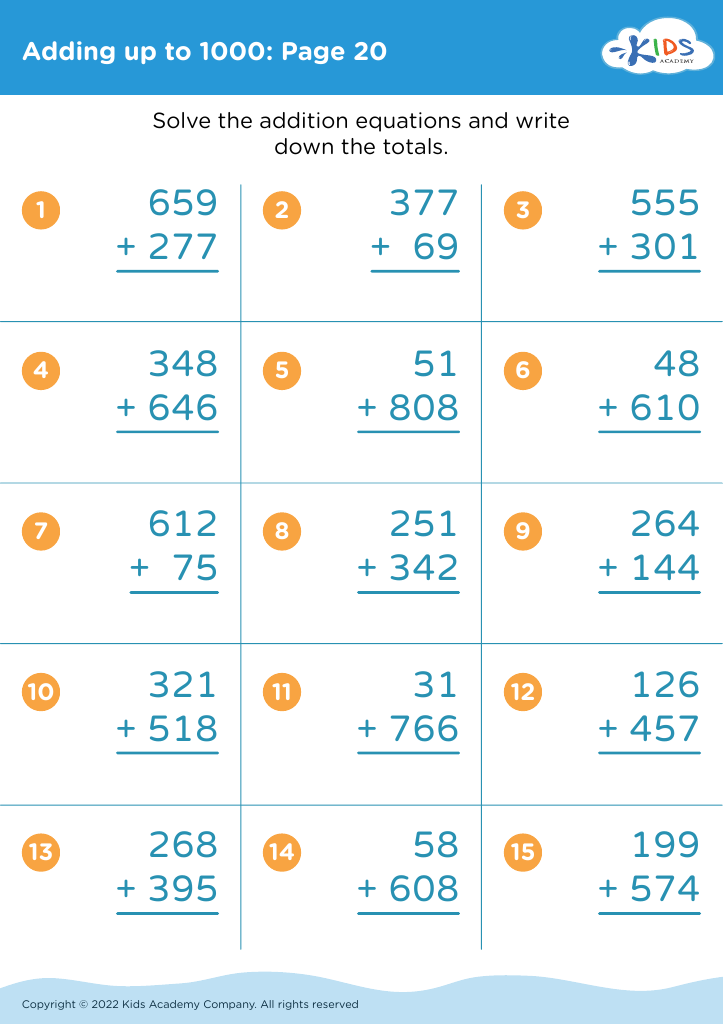
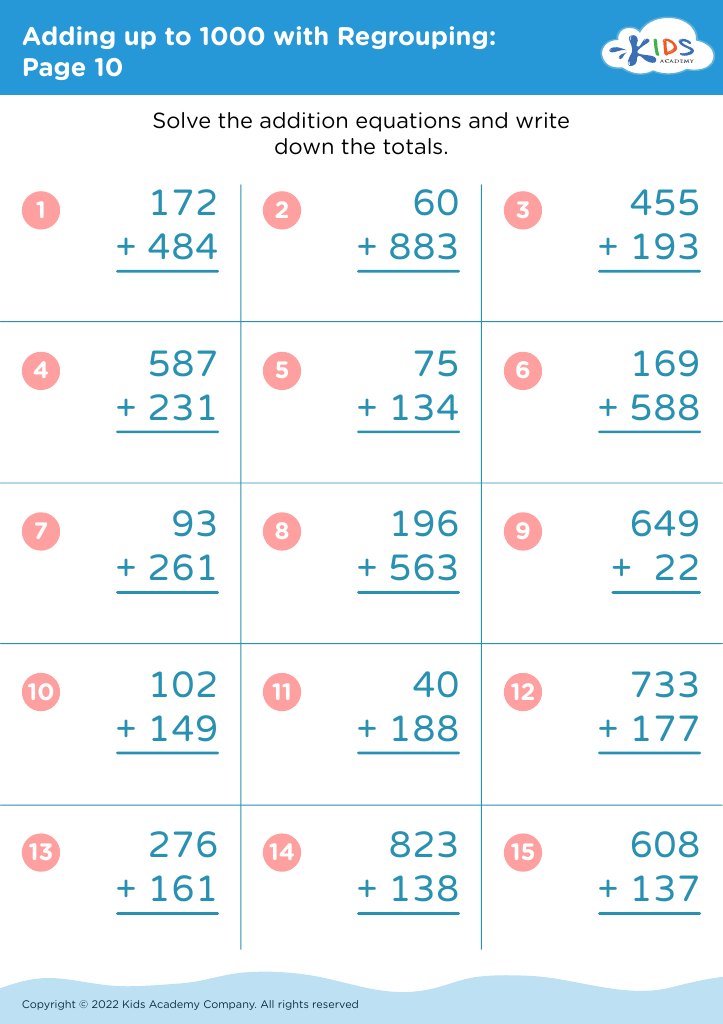
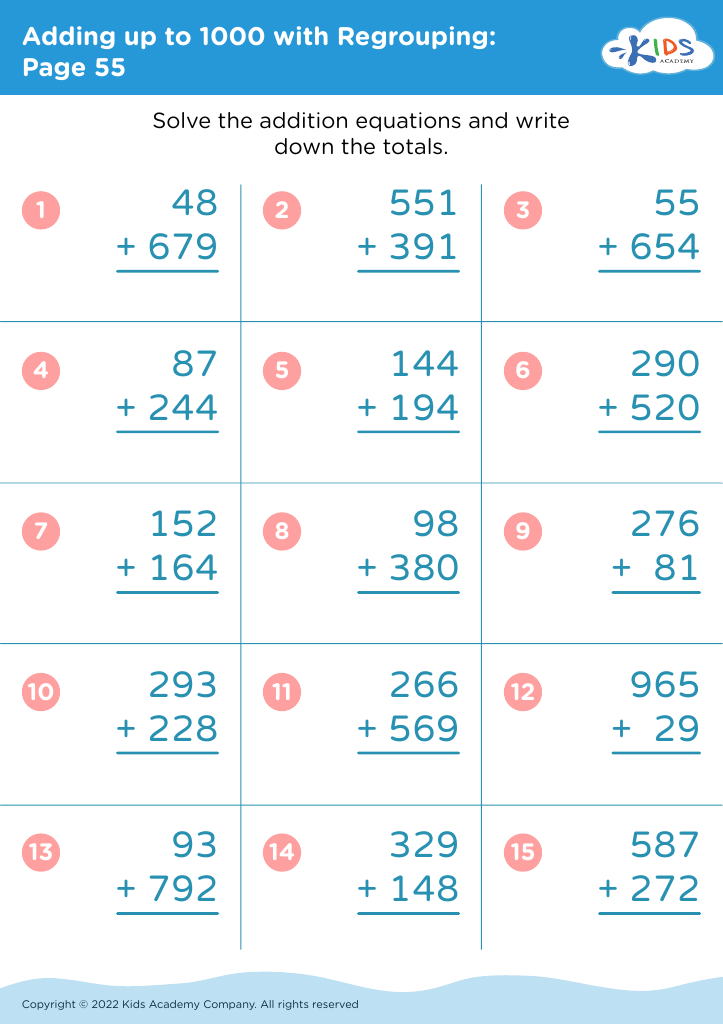
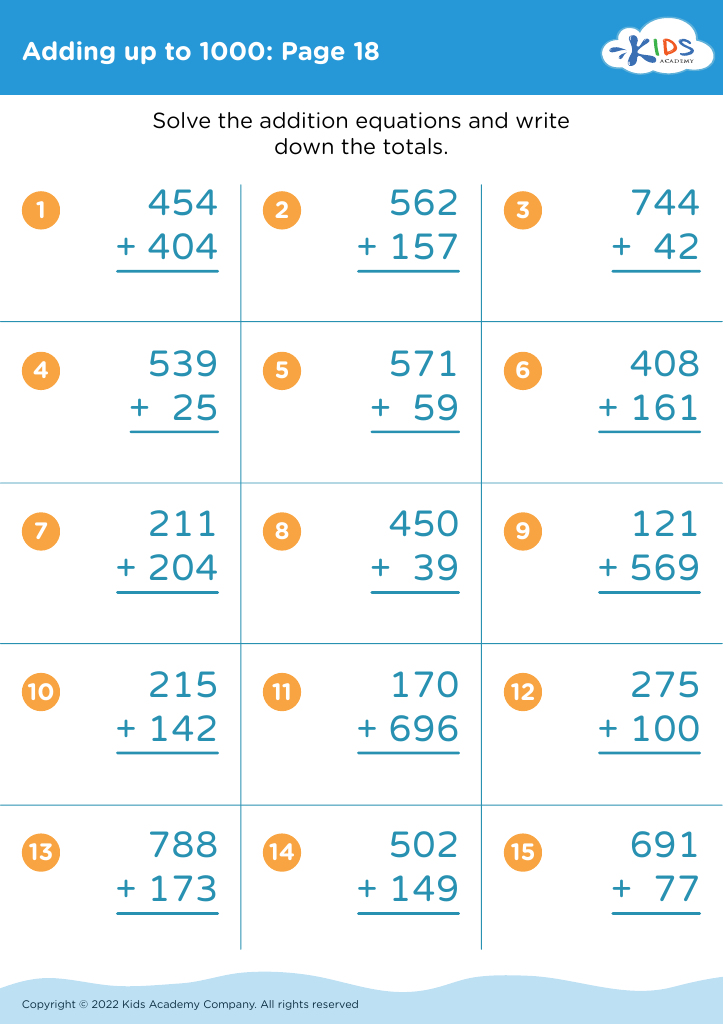
Discover the fascinating world of symmetry with our "Understanding Symmetry: Adding Up to 1000" worksheets, designed for children ages 3-8. These hands-on activities engage young learners as they explore symmetry through fun and interactive exercises. Each worksheet focuses on recognizing symmetrical shapes and patterns, enhancing critical thinking and observational skills while introducing basic math concepts related to numbers up to 1000. Ideal for at-home learning or classroom activities, our resources promote creativity and reasoning in a playful manner. Encourage your child's growth in math and spatial awareness with our thoughtfully crafted worksheets that make learning symmetry both enjoyable and effective!



Understanding symmetry and the concept of adding up to 1000 are crucial skills for children aged 3-8, forming foundational elements in their cognitive development.
Firstly, geometric concepts like symmetry play a vital role in developing spatial awareness, critical thinking, and problem-solving skills. As children explore symmetry in shapes and patterns, they learn to recognize relationships and structures in the world around them, laying the groundwork for more complex mathematical ideas and visualization techniques later on.
Secondly, comprehending addition up to 1000 fosters numerical fluency and basic arithmetic skills. It's important during these formative years when children develop their understanding of numbers, operations, and their interrelationships. By mastering addition, children gain confidence in mathematics, enabling them to tackle more challenging concepts as they progress through school.
Both symmetry and addition up to 1000 encourage creativity and logical thinking. Engaging in activities centered on these themes, such as art projects or math games, enhances children’s motivation and interest in learning such concepts, nurturing a positive attitude toward mathematics.
In short, these skills not only create a robust mathematical foundation but also equip children with essential life skills, ensuring they are well-prepared for future academic challenges.








