Vocabulary expansion Adding up to 1000 Worksheets for Ages 3-8
4 filtered results
-
From - To
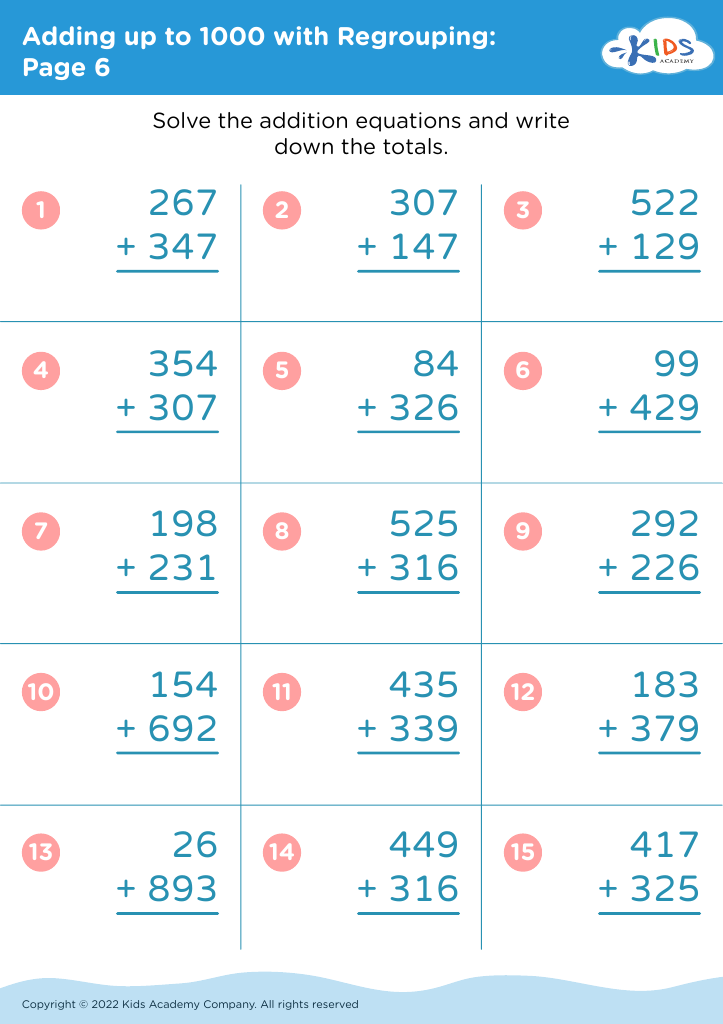
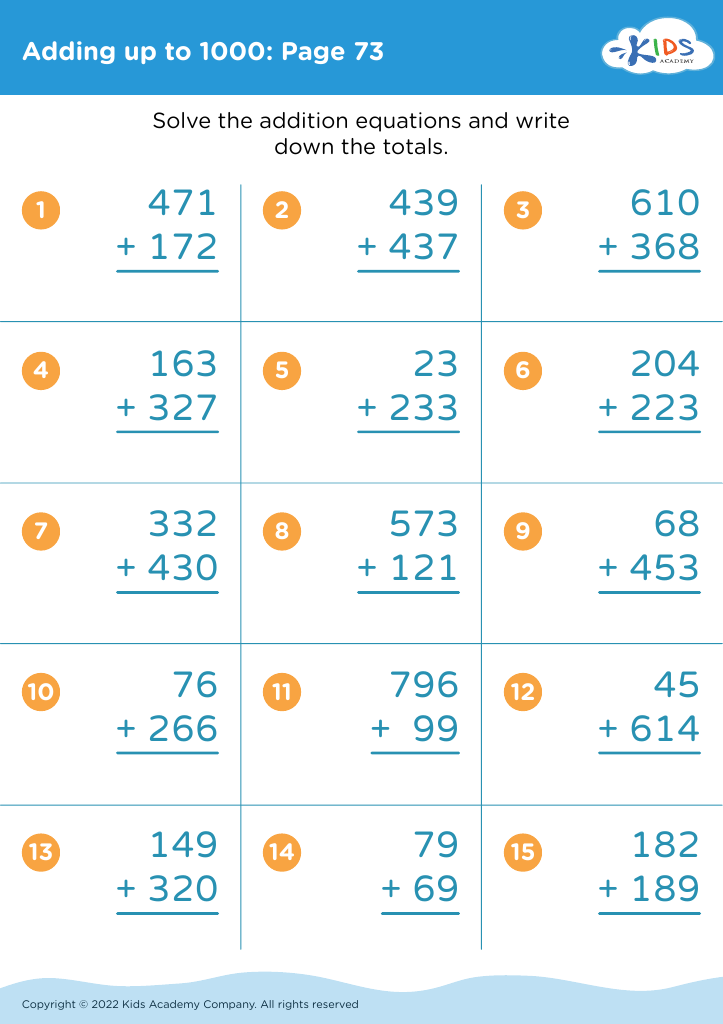
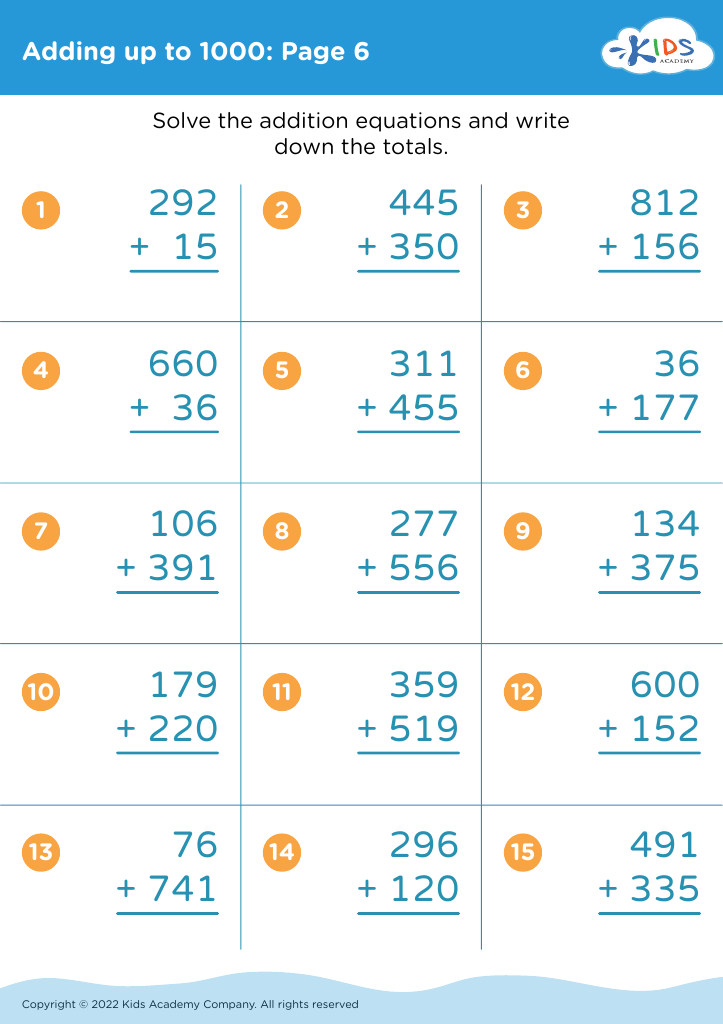
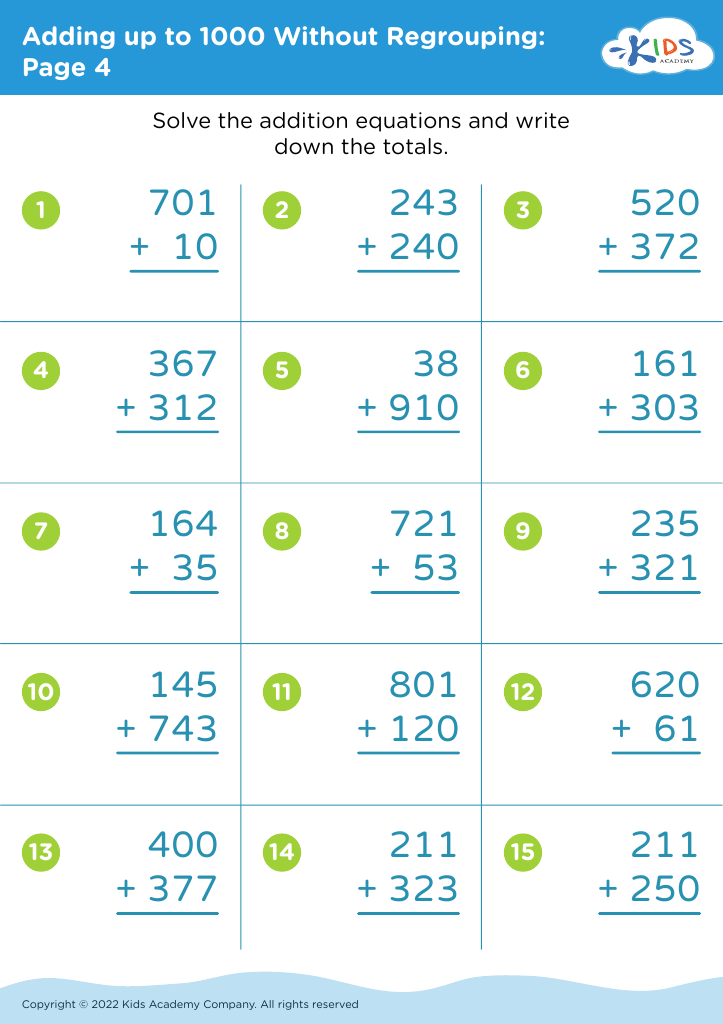
Unlock limitless learning potential with our Vocabulary Expansion Adding up to 1000 Worksheets for Ages 3-8! Crafted to aid young learners in both vocabulary and math, these engaging worksheets make mastering new words and arithmetic skills a breeze. Each activity is uniquely designed to make learning enjoyable and effective, supporting essential cognitive and language development. Whether practicing addition or expanding vocabulary, students will benefit from playful, illustrative content tailored for young minds. Elevate your child’s academic journey with our comprehensive, printable lessons brought to you by professionals dedicated to early education on Kids Academy.



Parents and teachers should care about vocabulary expansion for children aged 3-8 because it fundamentally enhances their cognitive development and lays a solid foundation for future learning. At this stage, children's brains are extraordinarily receptive, and expanding their vocabulary helps in forming neural connections that aid in comprehension and critical thinking.
A robust vocabulary is directly linked to better reading comprehension, which in turn influences overall academic success. When children are familiar with a larger number of words, they can easily decipher written texts and grasp more complex concepts as they progress through their education.
Furthermore, a rich vocabulary enhances communication skills. Children who know more words can express their thoughts, needs, and emotions more clearly and accurately. This ability is crucial for forming social relationships, navigating various life situations, and developing self-confidence.
Engaging in vocabulary-building activities—such as reading aloud, playing word games, and having thoughtful conversations—also strengthens parent-child and teacher-student bonds. These interactions foster an environment of trust and ample opportunity for personalized learning.
Investing in vocabulary expansion during the early years thus equips children with the tools they need for academic achievement and effective communication, setting them on a path to a successful future.








