Filters

21 filtered results

Clear all filters
Favorites
With answer key
Interactive

21 filtered results

Difficulty Level

Grade


Introducing our "Basic Math Skills: Adding Up to 5 Worksheets" designed for children ages 3 to 8. These engaging and interactive worksheets make learning addition fun and effective! Featuring vibrant illustrations and playful themes, kids will discover how to understand numbers and practice basic addition skills, enhancing their confidence in math. The easy-to-follow exercises help little learners grasp concepts of counting and simple calculations while developing fine motor skills. Perfect for parents and educators, these worksheets can be used at home or in the classroom. Help your child build a strong mathematical foundation today with our creative and effective resources!
Check out this FREE Trial Lesson on Adding Up to 5 for age 3-8!

A

Favorites
With answer key
Interactive
  • 3-8
  • Basic Math Skills
  • Adding Up to 5
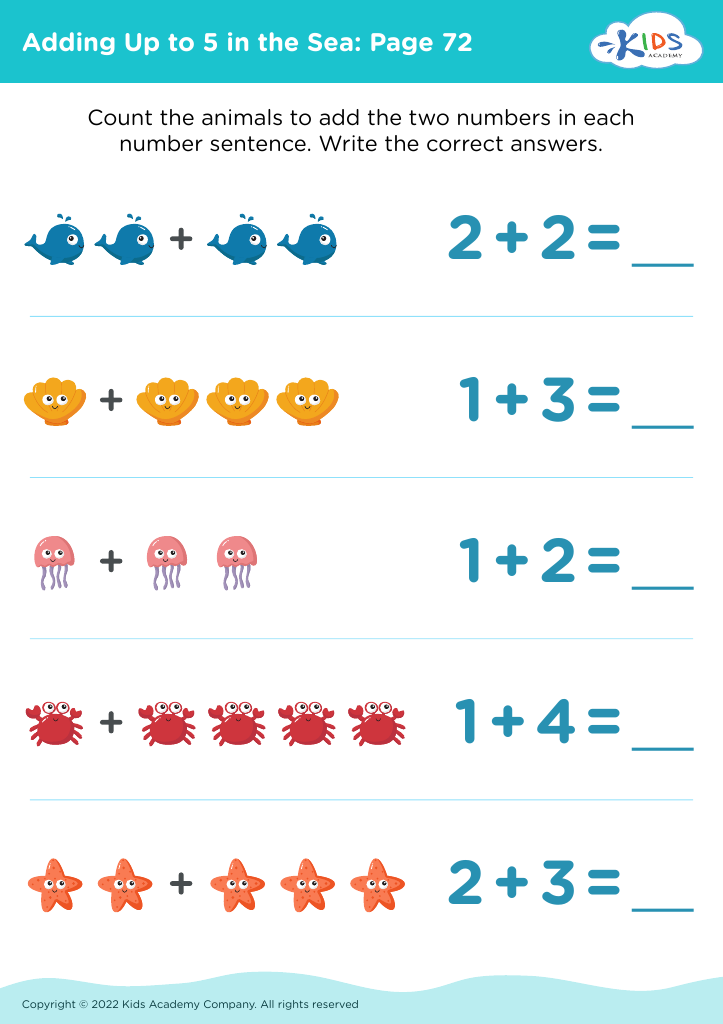
Adding Up to 5 in the Sea: Page 72
Worksheet
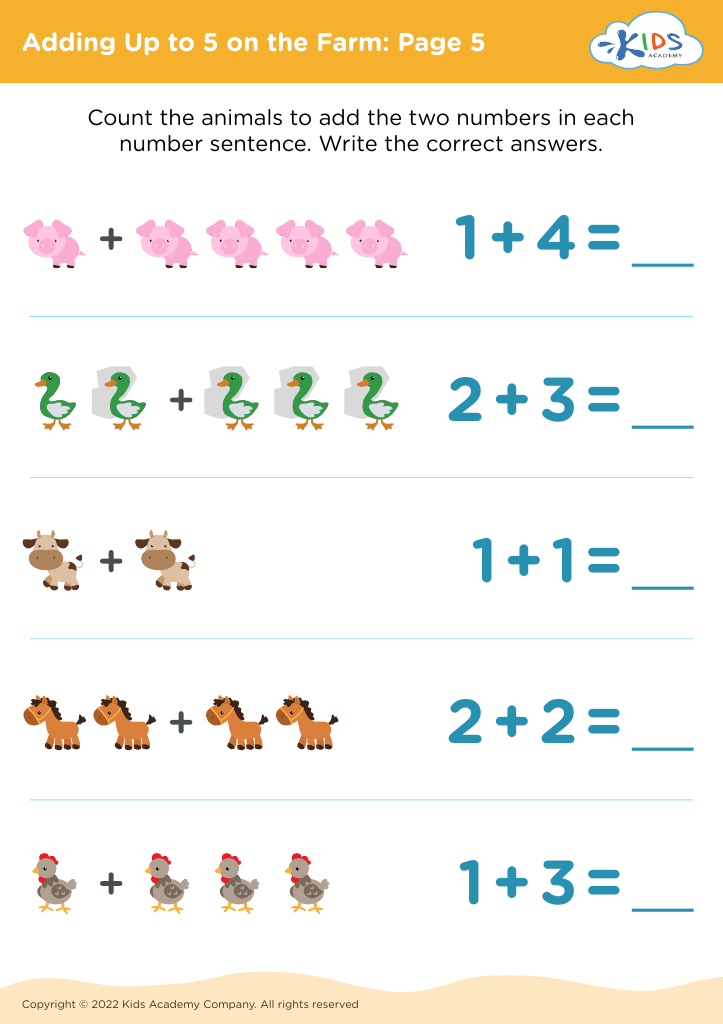
Adding Up to 5 on the Farm: Page 5
Worksheet
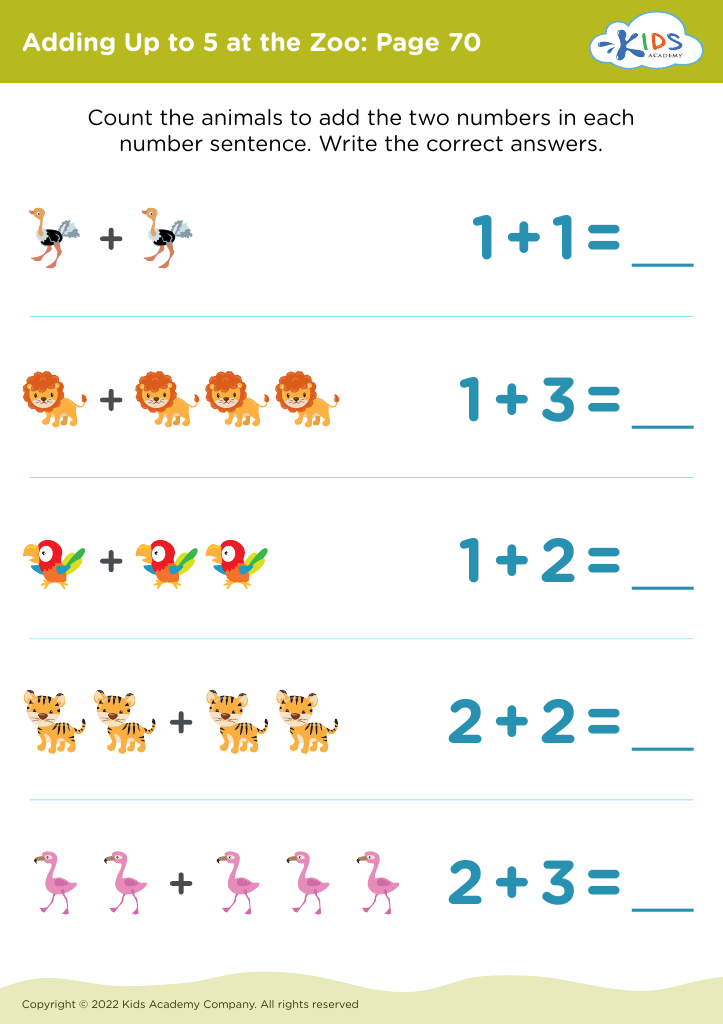
Adding Up to 5 at the Zoo: Page 70
Worksheet
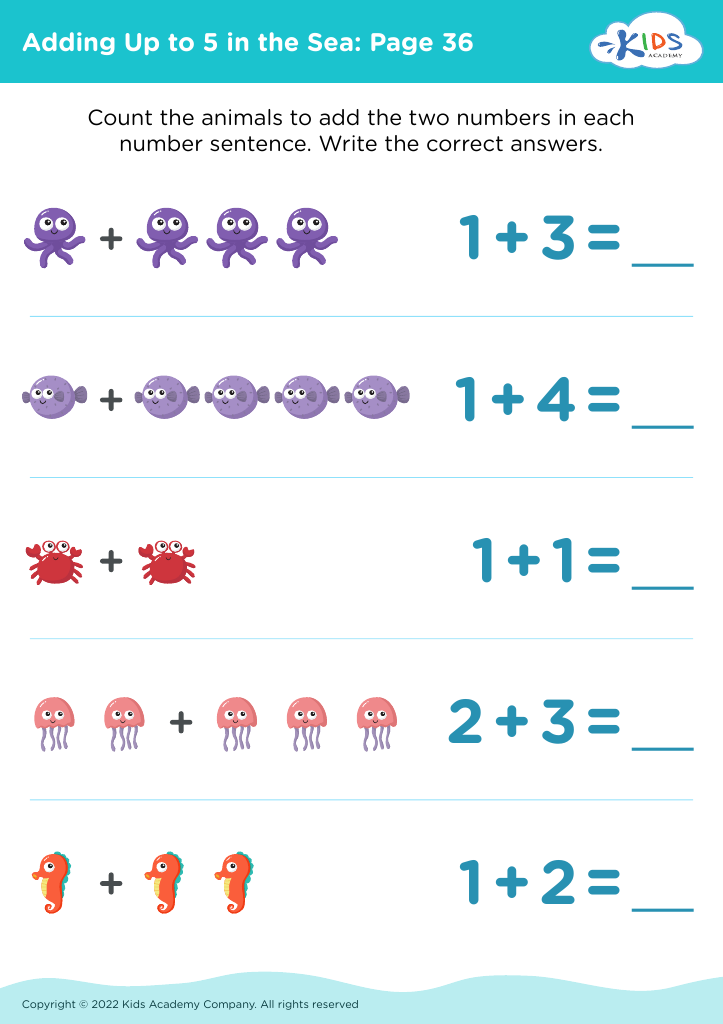
Adding Up to 5 in the Sea: Page 36
Worksheet
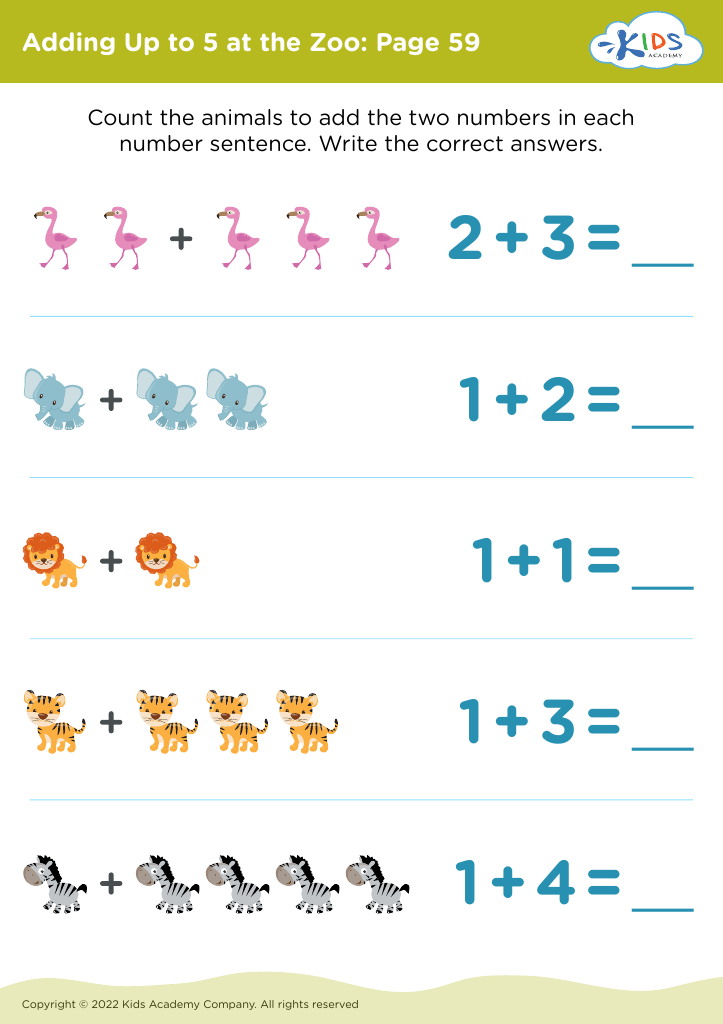
Adding Up to 5 at the Zoo: Page 59
Worksheet
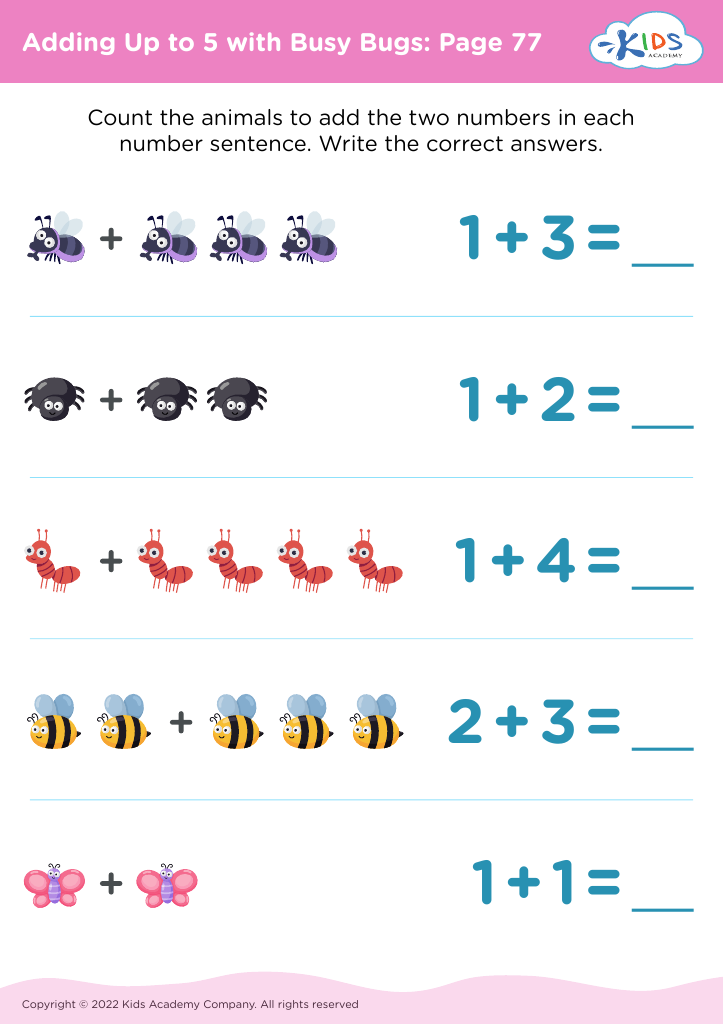
Adding Up to 5 with Busy Bugs: Page 77
Worksheet
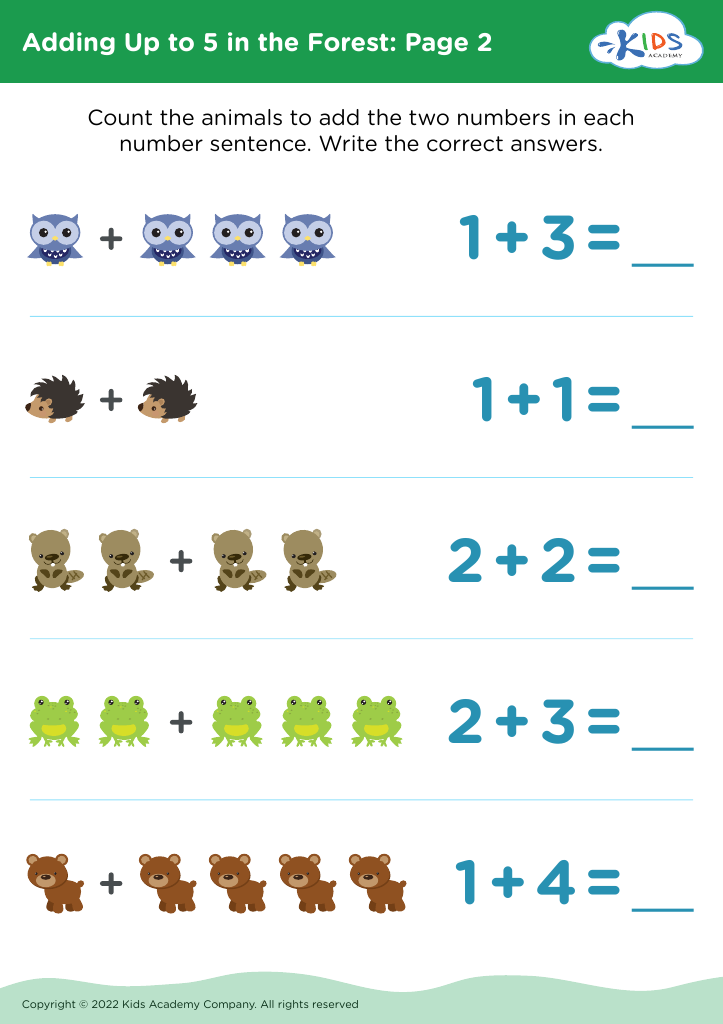
Adding Up to 5 in the Forest: Page 2
Worksheet
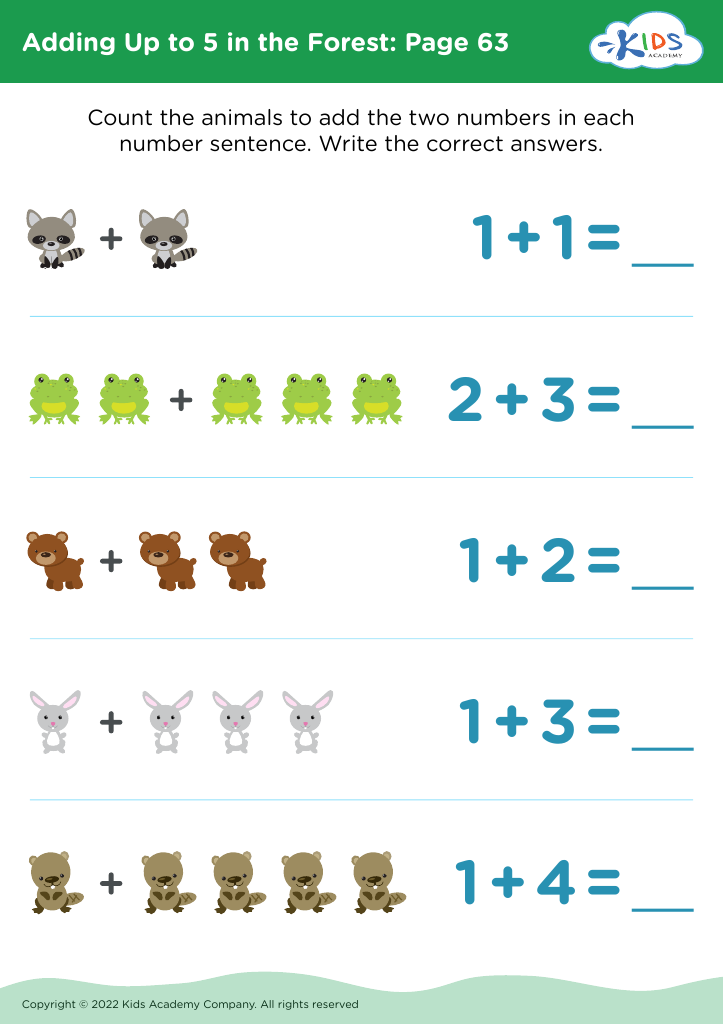
Adding Up to 5 in the Forest: Page 63
Worksheet
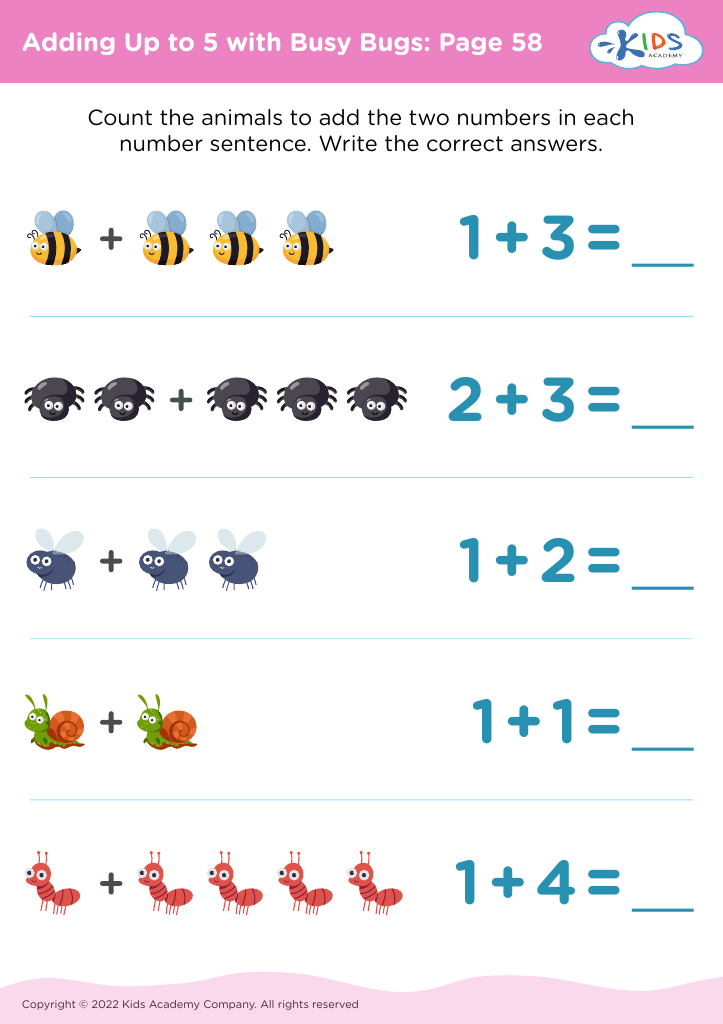
Adding Up to 5 with Busy Bugs: Page 58
Worksheet
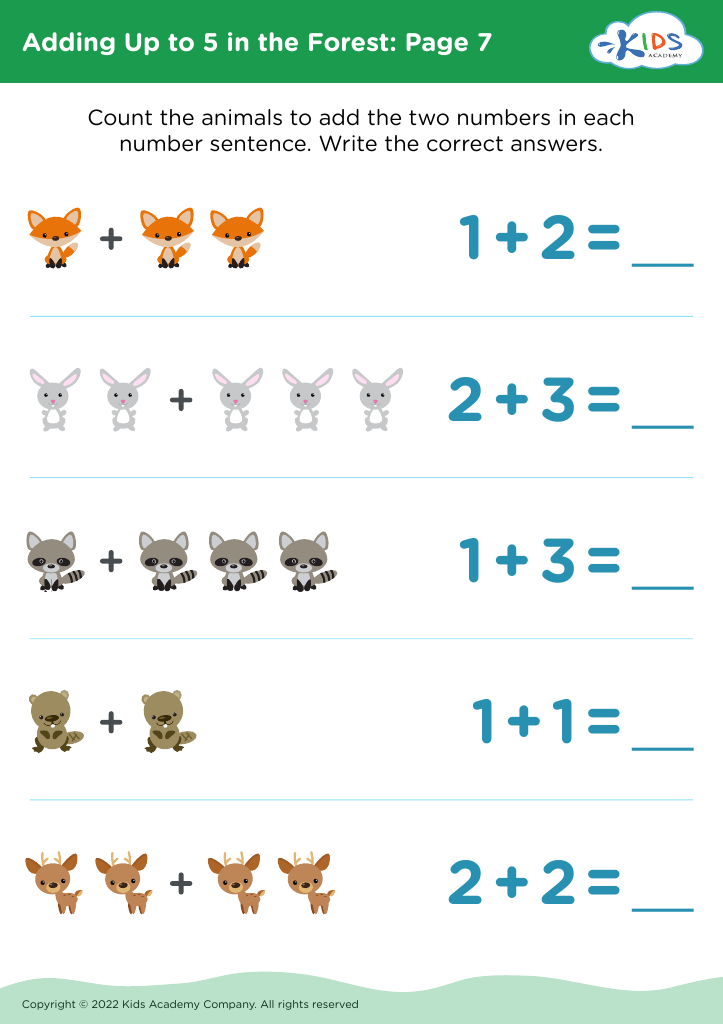
Adding Up to 5 in the Forest: Page 7
Worksheet
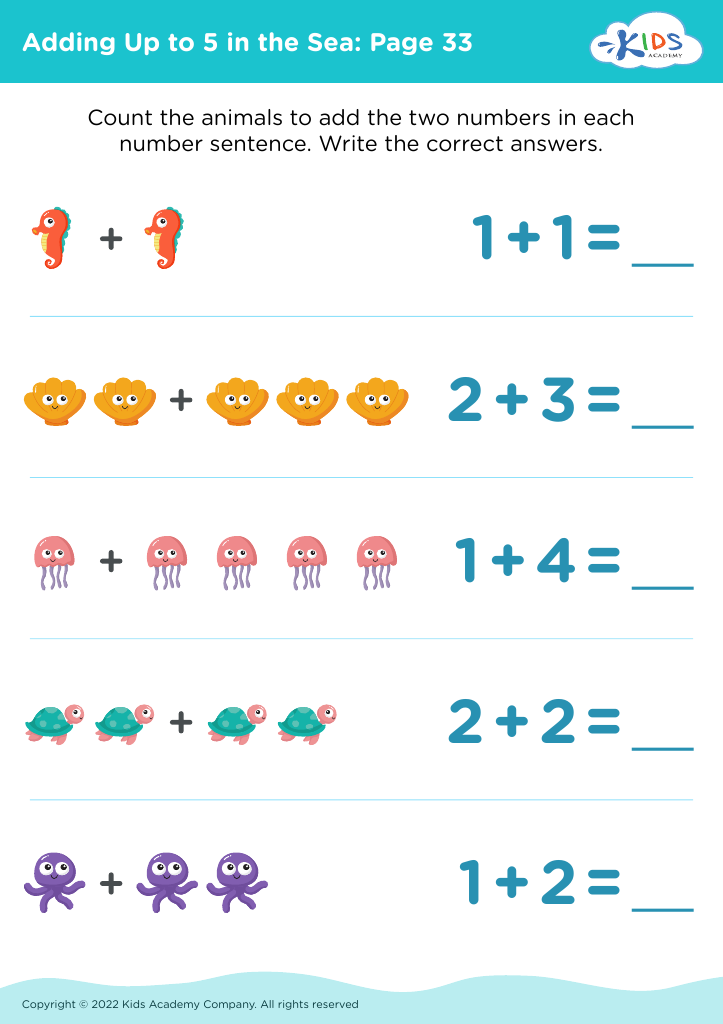
Adding Up to 5 in the Sea: Page 33
Worksheet
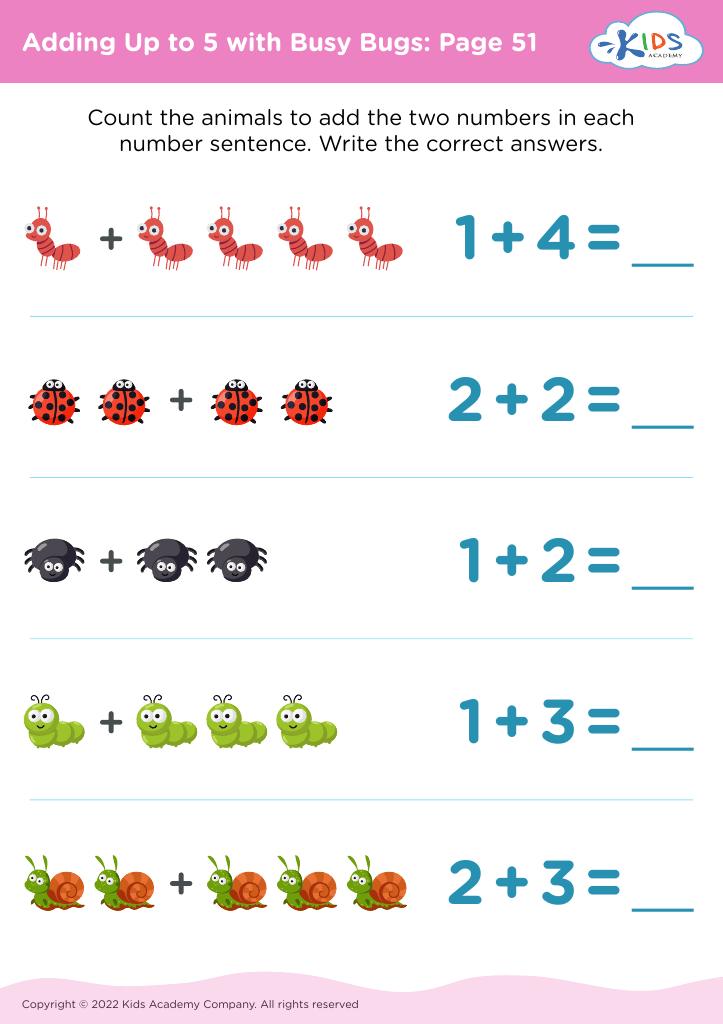
Adding Up to 5 with Busy Bugs: Page 51
Worksheet
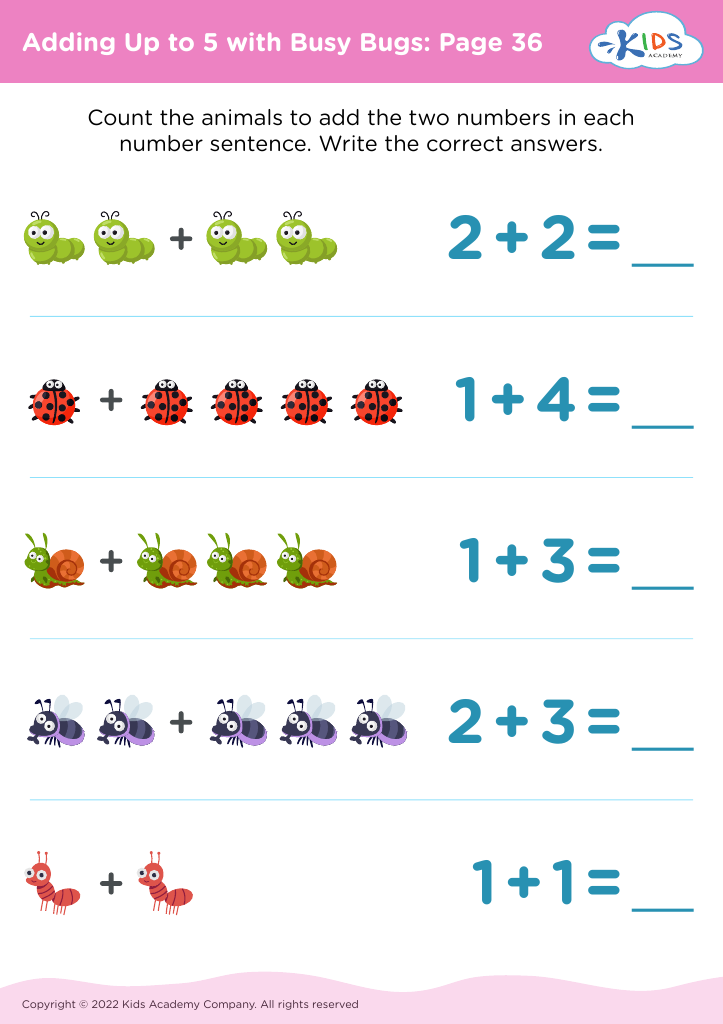
Adding Up to 5 with Busy Bugs: Page 36
Worksheet
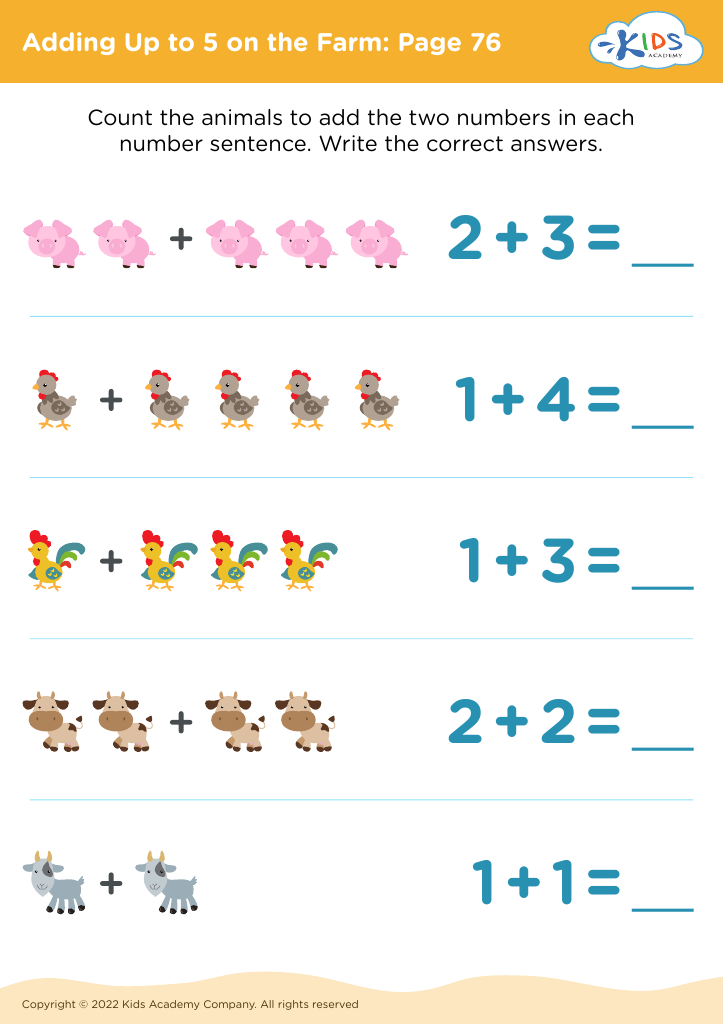
Adding Up to 5 on the Farm: Page 76
Worksheet
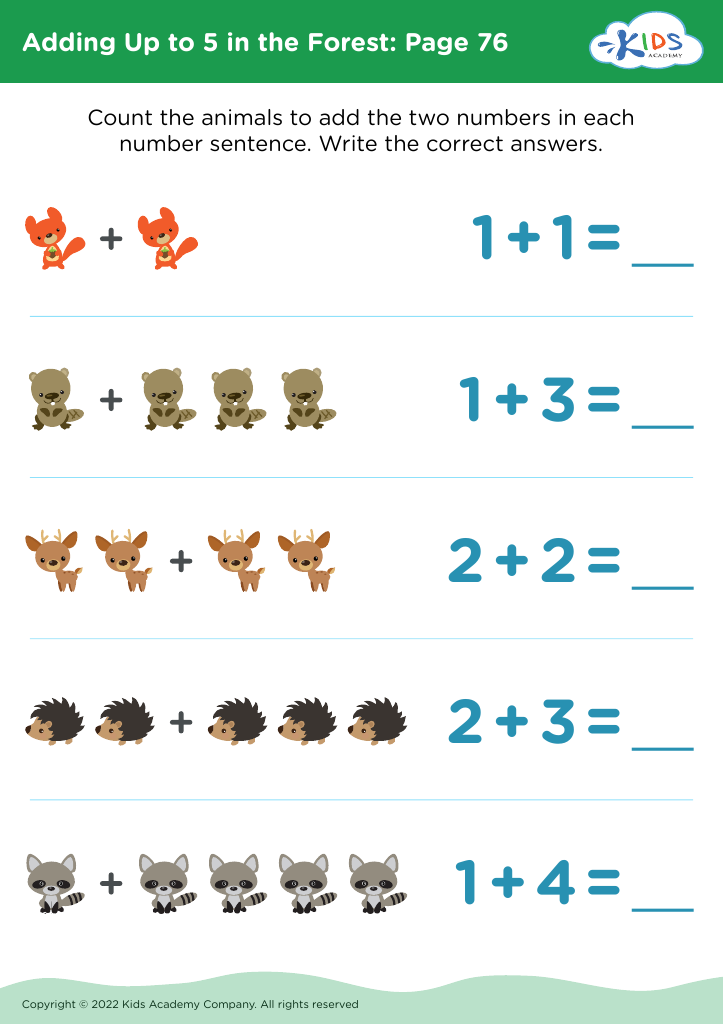
Adding Up to 5 in the Forest: Page 76
Worksheet
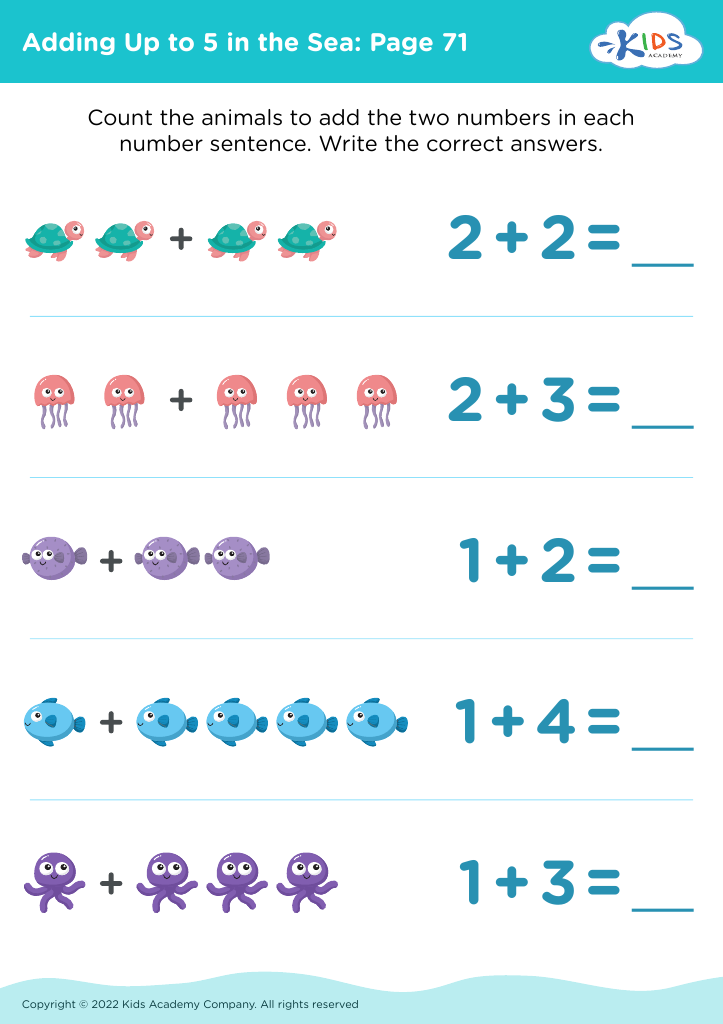
Adding Up to 5 in the Sea: Page 71
Worksheet
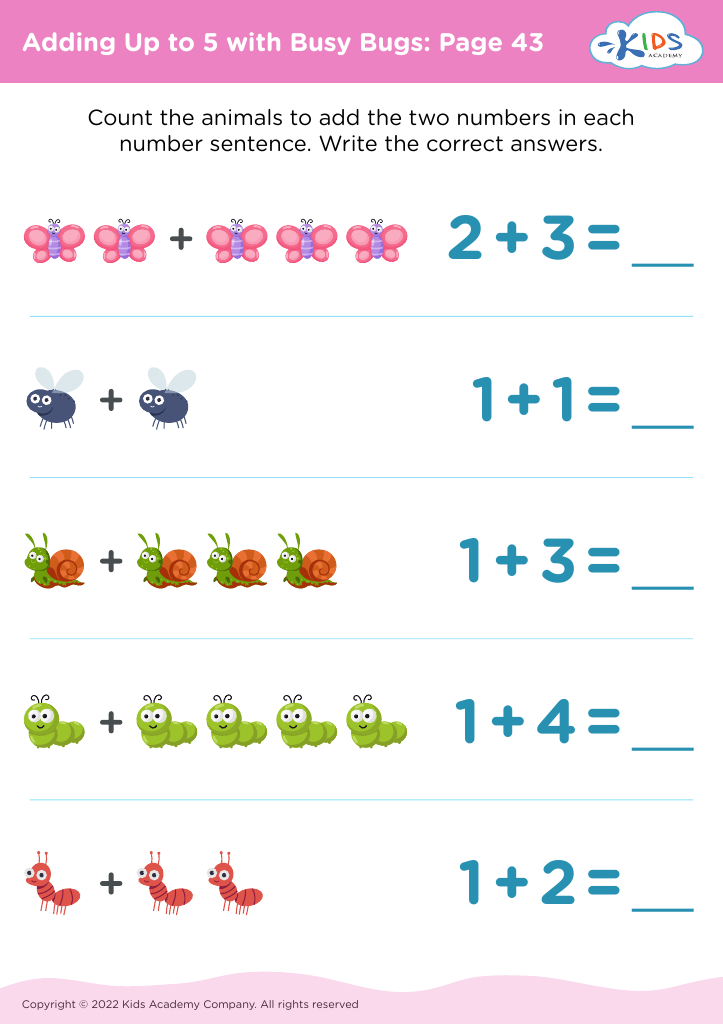
Adding Up to 5 with Busy Bugs: Page 43
Worksheet
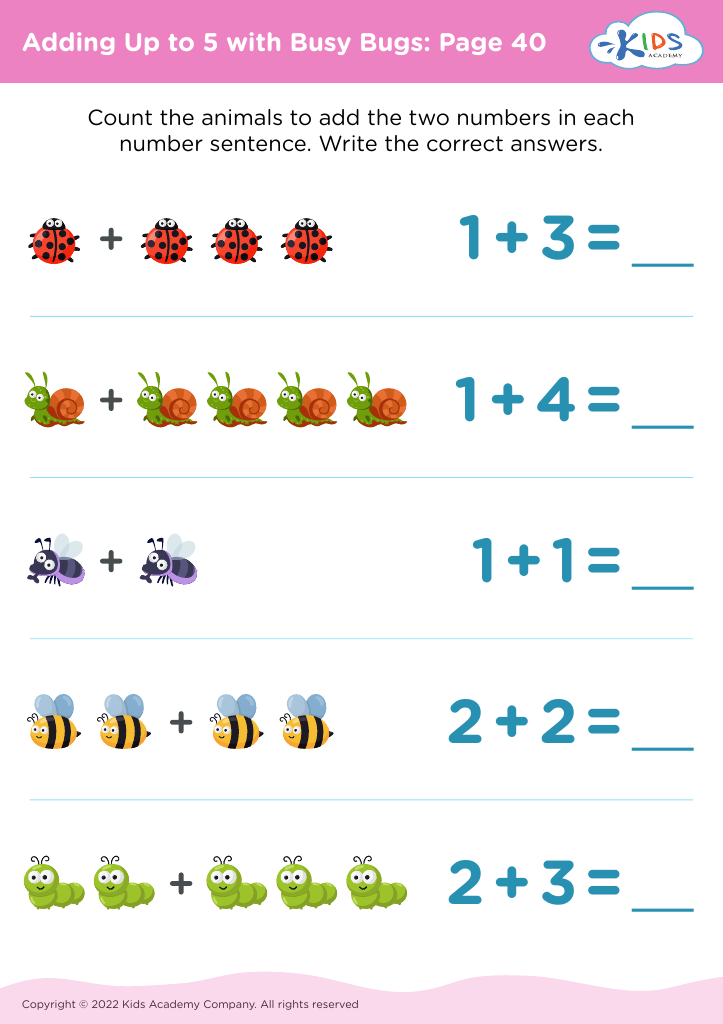
Adding Up to 5 with Busy Bugs: Page 40
Worksheet
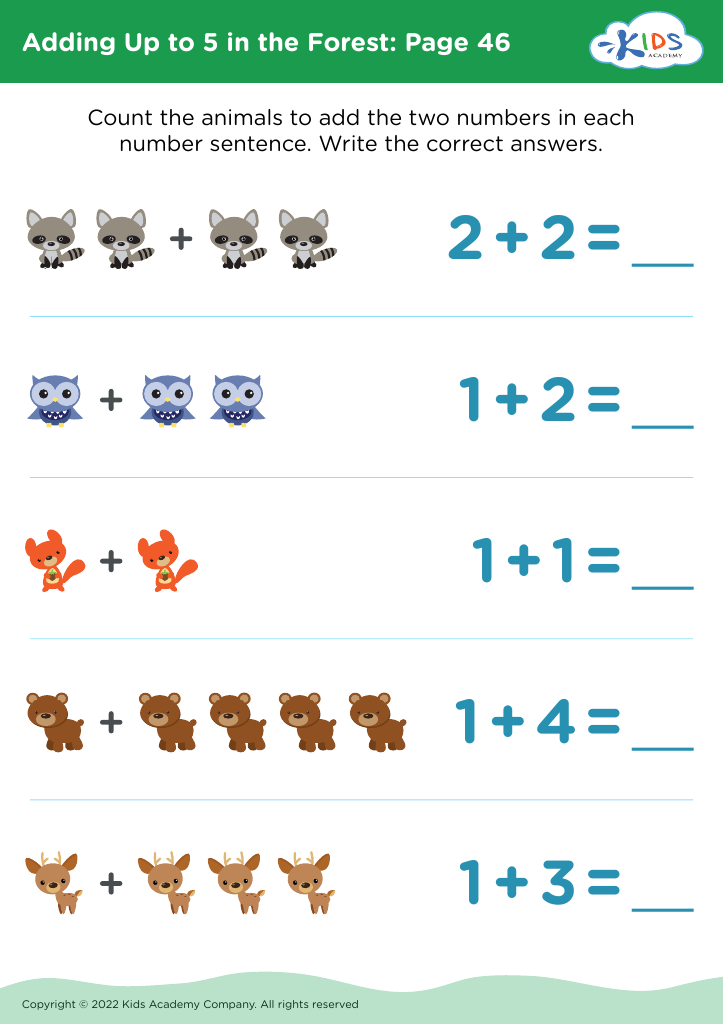
Adding Up to 5 in the Forest: Page 46
Worksheet
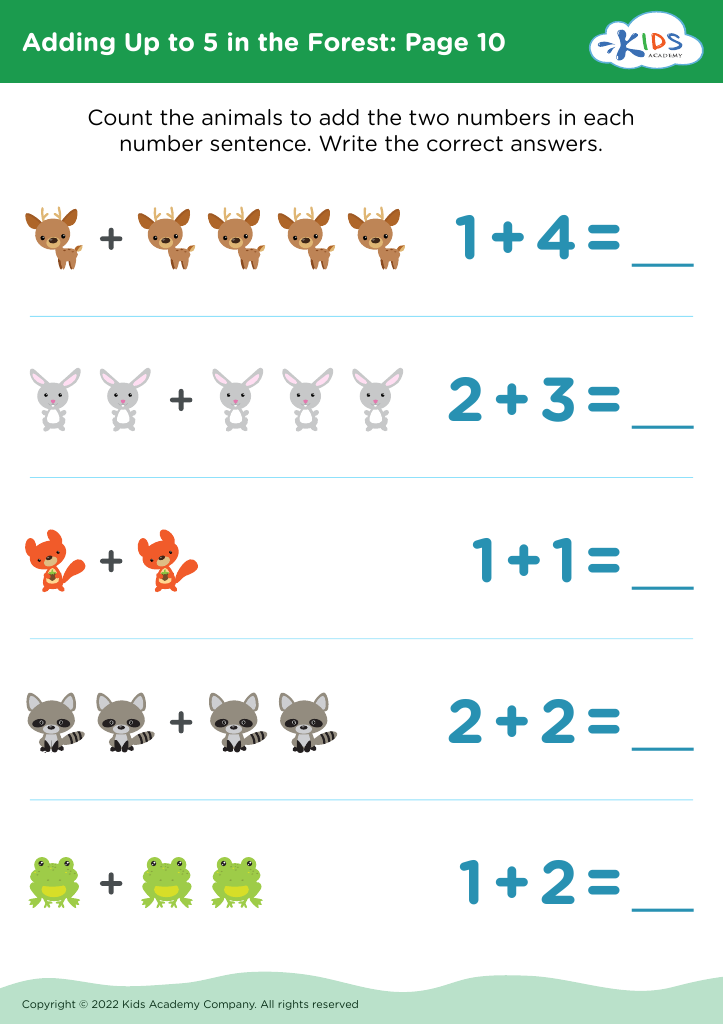
Adding Up to 5 in the Forest: Page 10
Worksheet
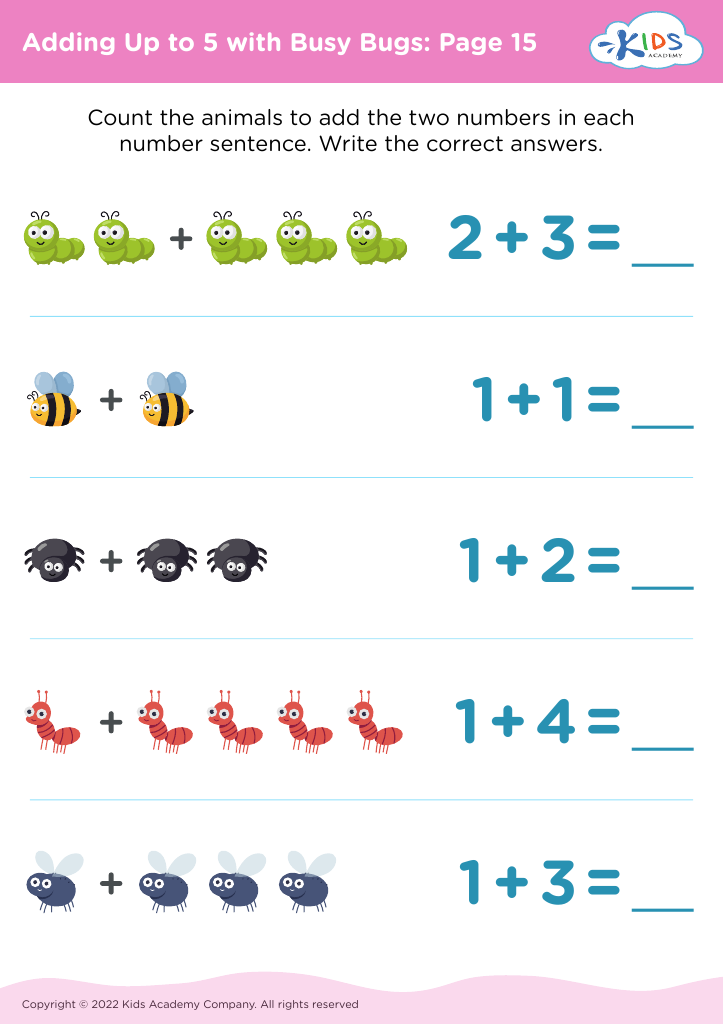
Adding Up to 5 with Busy Bugs: Page 15
Worksheet


Basic math skills, especially the ability to add up to 5, are foundational for children aged 3-8. During these formative years, children develop crucial cognitive abilities and problem-solving techniques that form the building blocks for future mathematics learning. Engaging with simple addition helps young learners grasp the concept of quantity, teaching them the relationship between numbers, enhancing their understanding of sequencing and patterns.

Parents and teachers should prioritize developing these skills as they prepare children for more complex mathematical concepts in later grades. Mastery of addition up to 5 also supports the development of critical thinking. It allows children to approach problems systematically and fosters a sense of accomplishment when they successfully solve them. Moreover, integrating basic math into daily activities promotes engagement, as children can apply learned concepts to real-world situations, reinforcing their relevance and usefulness.

Additionally, early math skills are linked to long-term academic success. Children who understand basic calculations are more likely to excel in math later on, contributing to their overall confidence in learning. In summary, cultivating basic math skills in young children is essential, as it not only supports their current learning but also lays a solid foundation for future educational achievements.