Basic Math understanding Adding Up to 5 Worksheets for Ages 3-8
7 filtered results
-
From - To
Enhance your child's foundational math skills with our "Basic Math Understanding Adding Up to 5 Worksheets" designed for ages 3-8. These engaging, fun-filled worksheets help young learners grasp essential addition concepts, making the learning process effective and enjoyable. Each worksheet focuses on adding numbers up to 5, fostering confidence and proficiency in basic math. Perfect for preschool to early elementary students, these exercises promote a love for math through colorful, kid-friendly designs and interactive challenges. Ideal for both classroom use and at-home practice, our worksheets offer the perfect blend of education and entertainment.
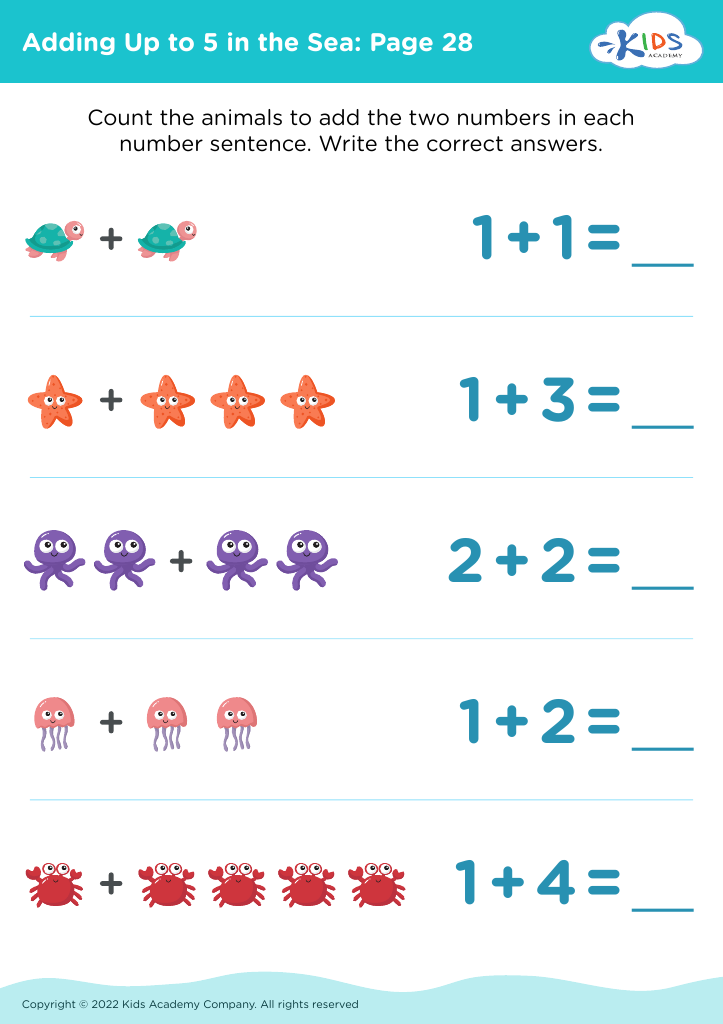
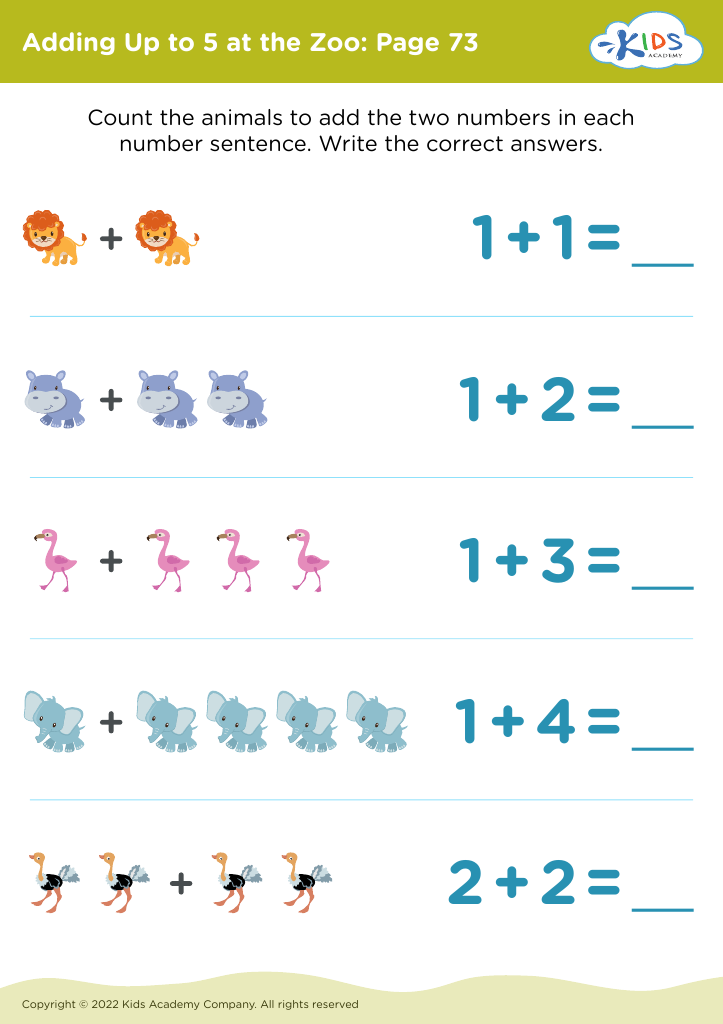
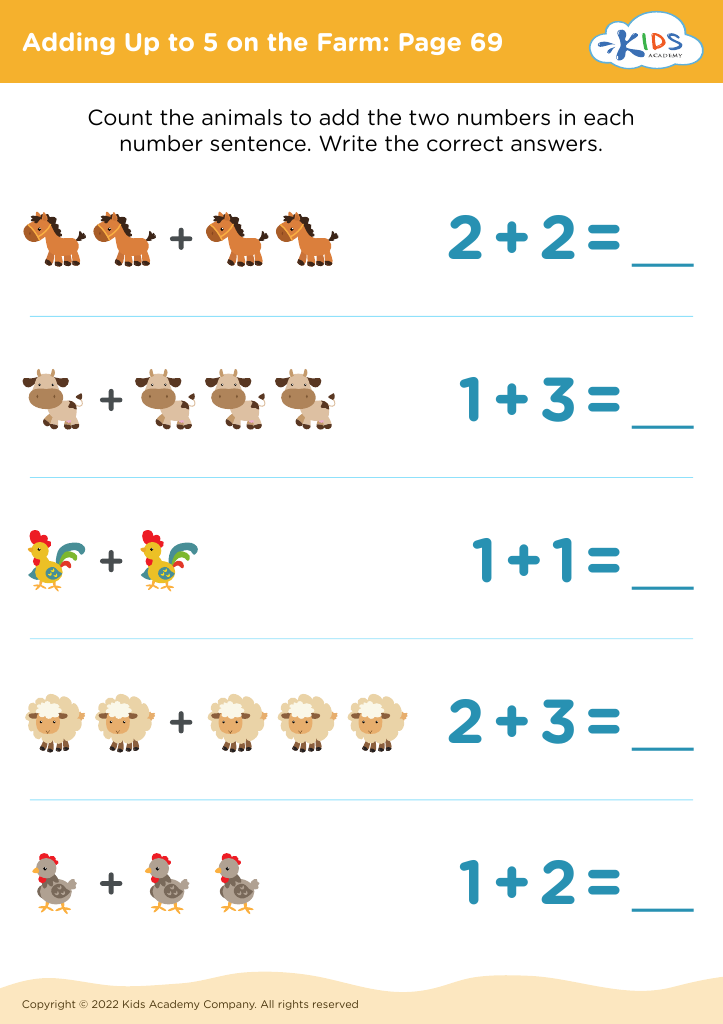
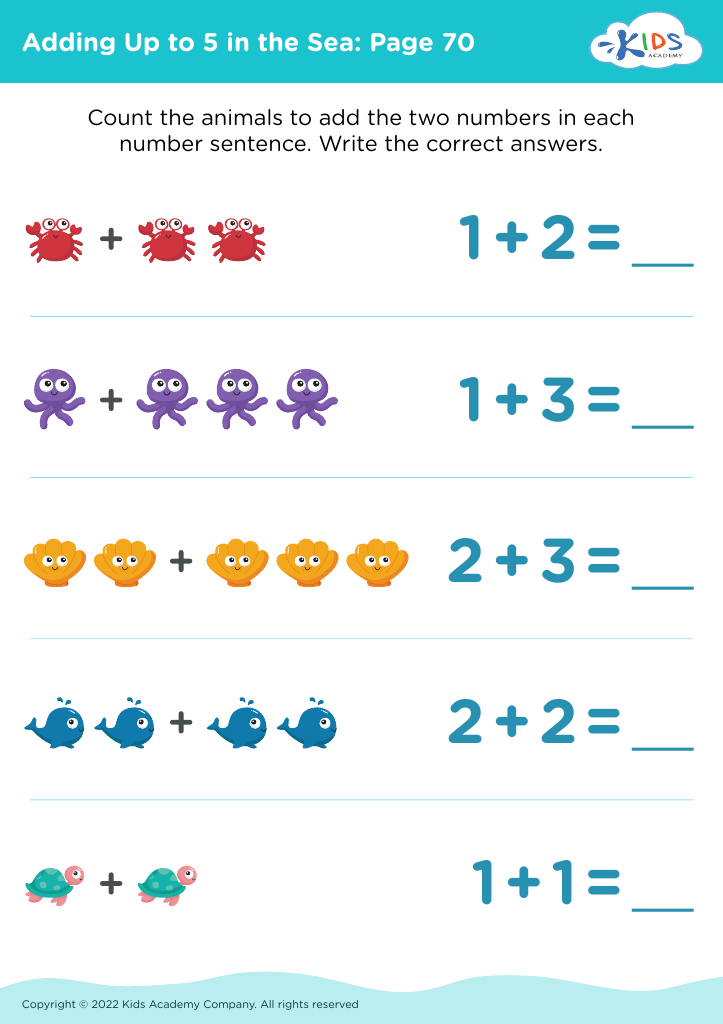
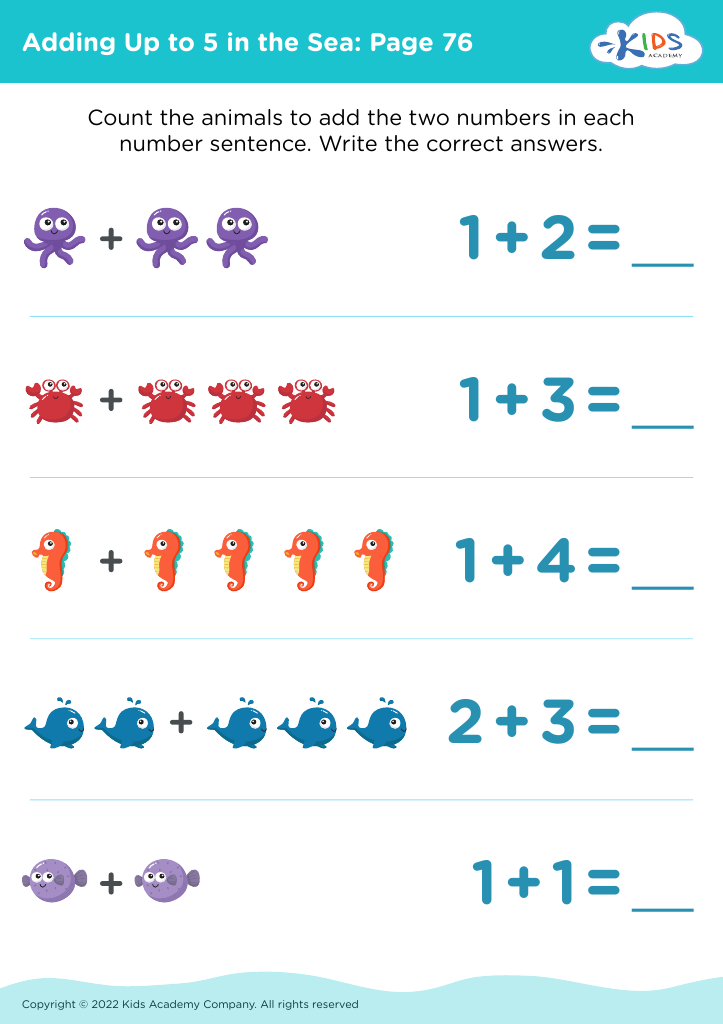
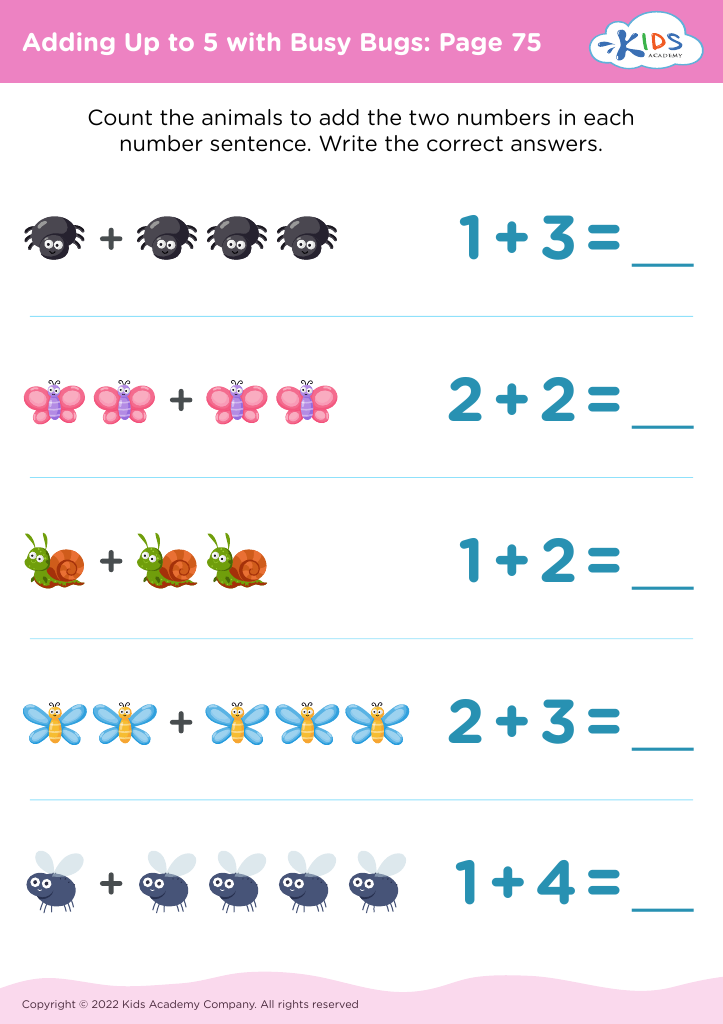
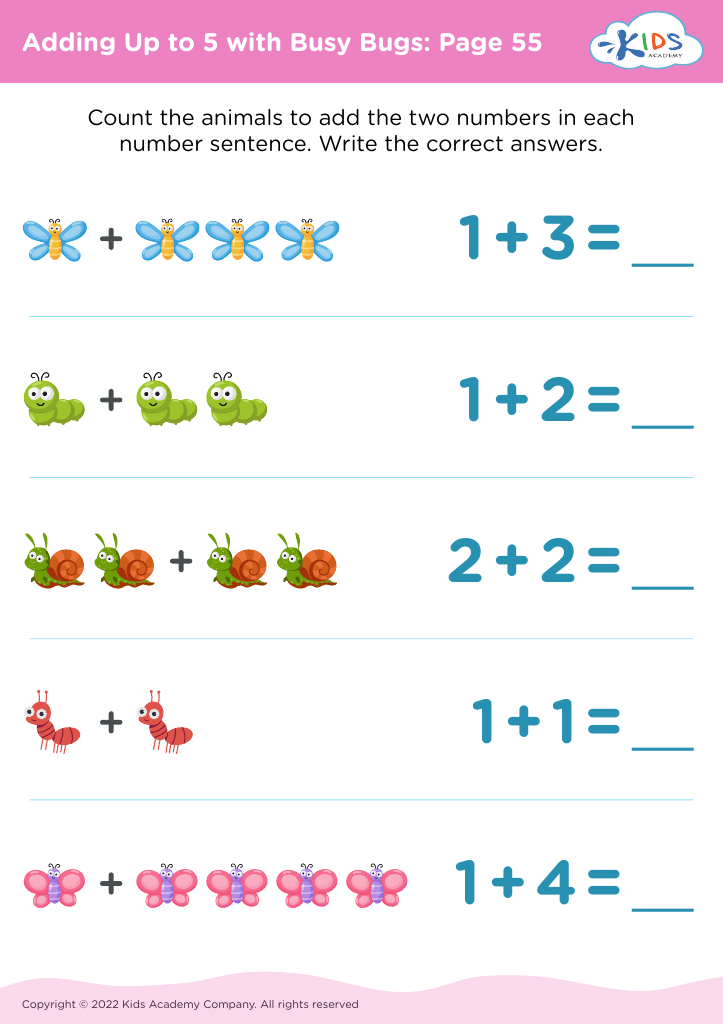








Understanding the foundational concept of adding up to 5 is crucial for children aged 3-8, as it paves the way for their overall math proficiency and cognitive development. For young learners, early interactions with basic arithmetic not only enhance their number sense but also help them grasp more complex mathematical operations in the future.
When parents and teachers prioritize teaching basic math, such as adding numbers up to 5, they are equipping children with essential skills necessary for everyday tasks, from counting objects to making calculations. This can boost a child's confidence and interest in learning, creating a positive association with the subject.
From a cognitive perspective, solving simple addition problems improves memory, logical thinking, and pattern recognition. It's an opportunity for children to understand the concept of quantity and develop critical problem-solving skills.
Moreover, early mastery of basic math principles creates a strong educational foundation, which is instrumental as the curriculum builds into more complicated mathematical theories. Engaging children in fun, hands-on activities that involve addition sets the stage for more advanced learning. Consequently, focus on basic math not only prepares children for academic success but also helps them navigate and understand the world numerically and logically.








