Enhancing focus Adding Up to 5 Worksheets for Ages 3-8
4 filtered results
-
From - To
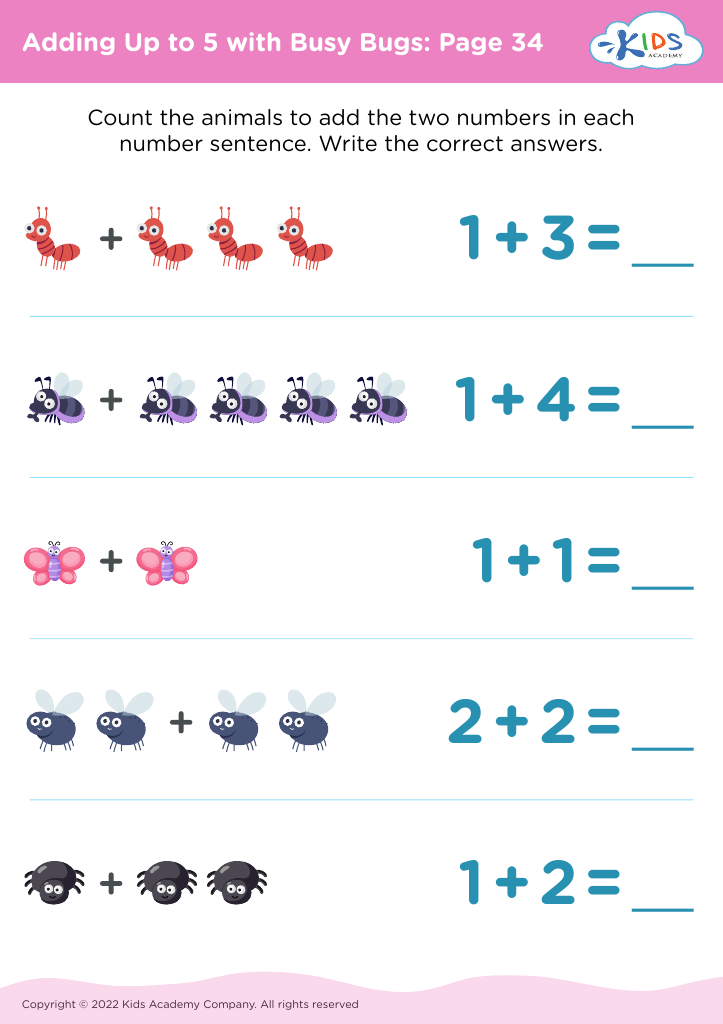
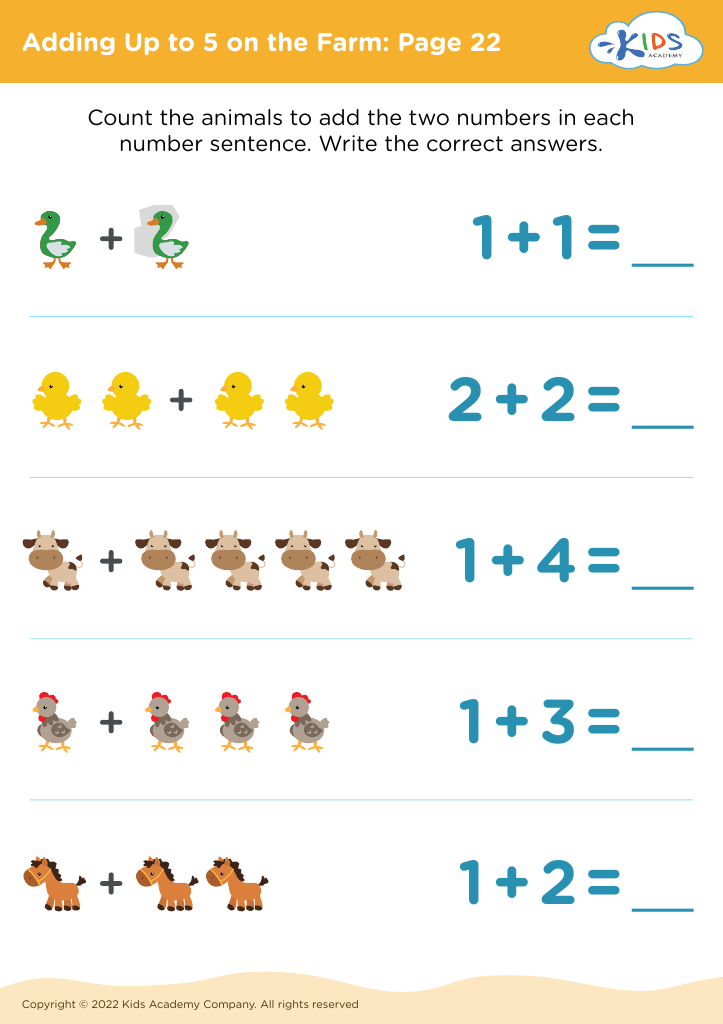
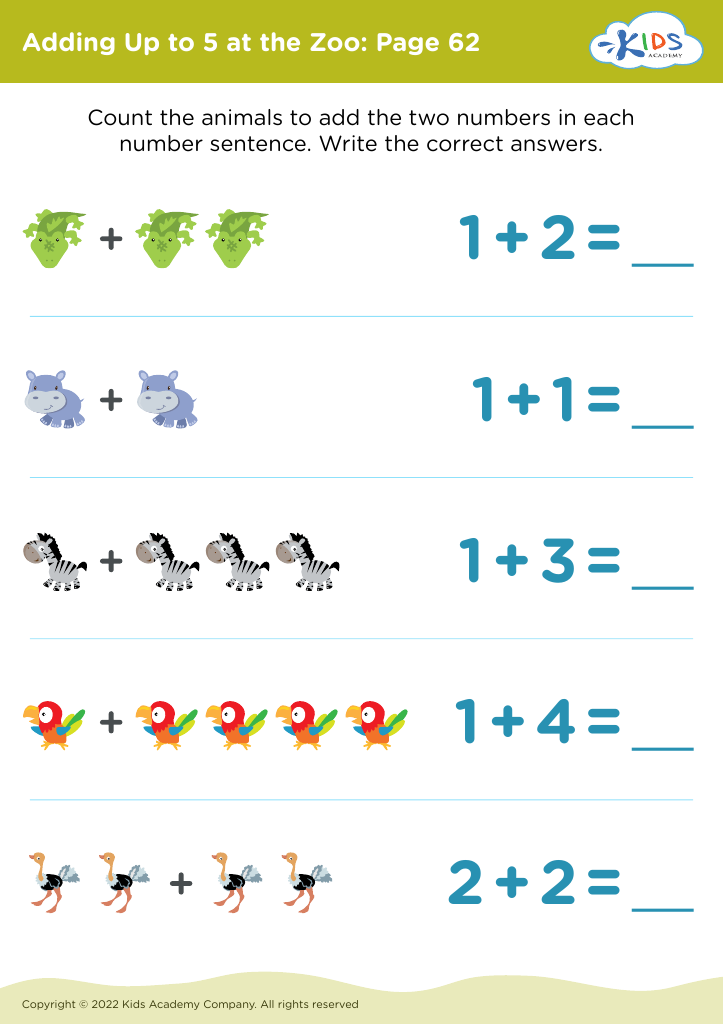
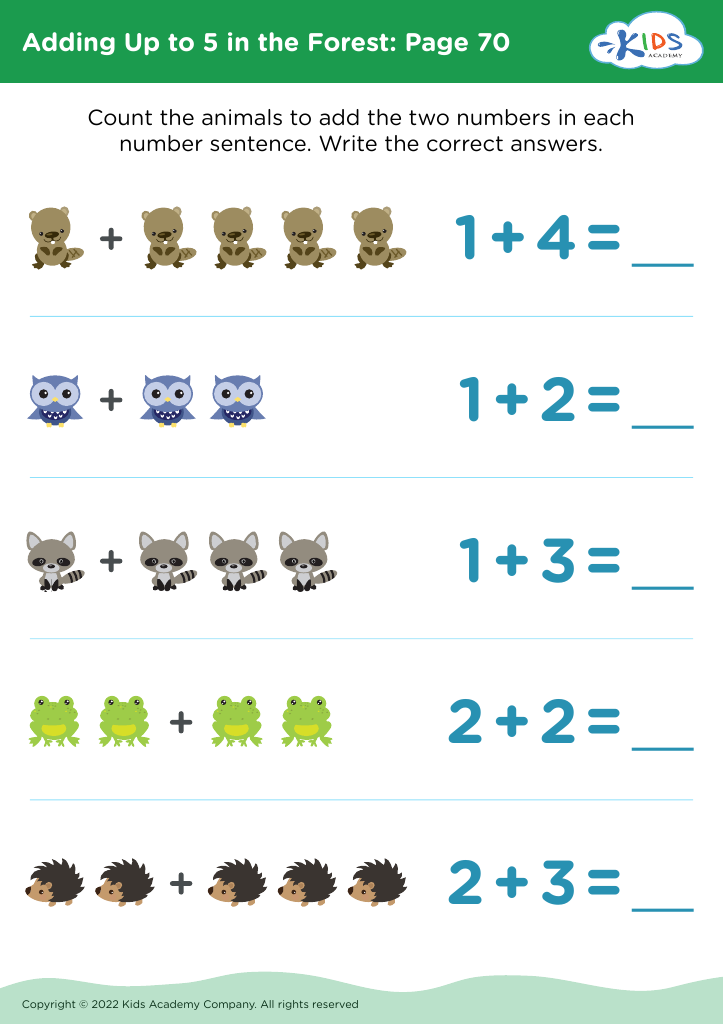
Enhance your child's focus and math skills with our "Adding Up to 5 Worksheets" designed for ages 3-8. These engaging worksheets provide fun and interactive activities that help young learners improve their concentration while mastering basic addition concepts. By incorporating lively illustrations and age-appropriate challenges, children will be motivated to practice their math skills effectively. The diverse exercises promote cognitive development and critical thinking while fostering a positive learning environment. Ideal for homeschooling or supplementary education, these worksheets make math enjoyable and rewarding. Download now and support your child's educational journey, helping them achieve confidence and success in early mathematics!



.jpg)




Enhancing focus and learning foundational math concepts, such as "Adding Up to 5," is crucial for children aged 3-8. This period is a vital stage for cognitive development, where children begin to build essential skills that set the groundwork for future learning. Parents and teachers should prioritize these skills as they foster not only mathematical understanding but also improve overall cognitive abilities.
When children master basic addition, they develop problem-solving skills and gain confidence in their analytical abilities. Enhanced focus during activities, especially when determining sums, allows children to engage more deeply with subject matter and create a love for learning. Engaging in activities that develop focus, such as number games or interactive lessons, can help them cultivate essential concentration skills that benefit all areas of their education.
Moreover, nurturing focus during early mathematics encourages self-discipline and perseverance, key traits that positively influence academic achievement and social interactions. It also allows educators and parents to instill a sense of accomplishment, motivating kids to tackle more challenging concepts in the future. Investing time and resources into enhancing focus and adding abilities equips children with the tools they need to overcome obstacles and succeed in their educational journeys.








