Sea creatures identification Adding Up to 5 Worksheets for Ages 3-8
3 filtered results
-
From - To
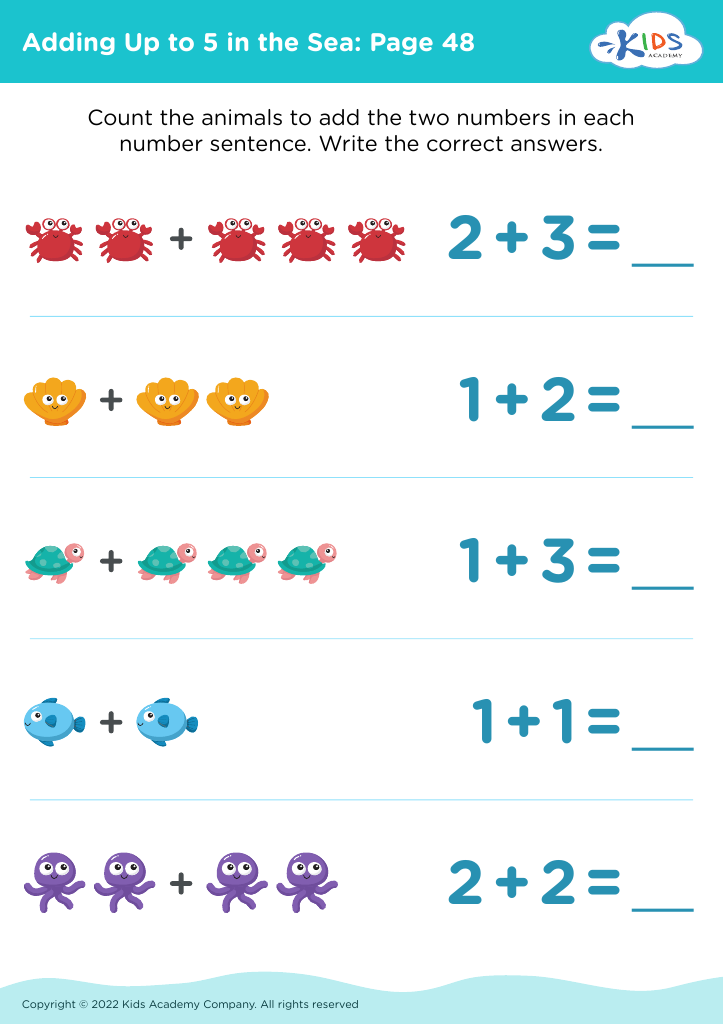
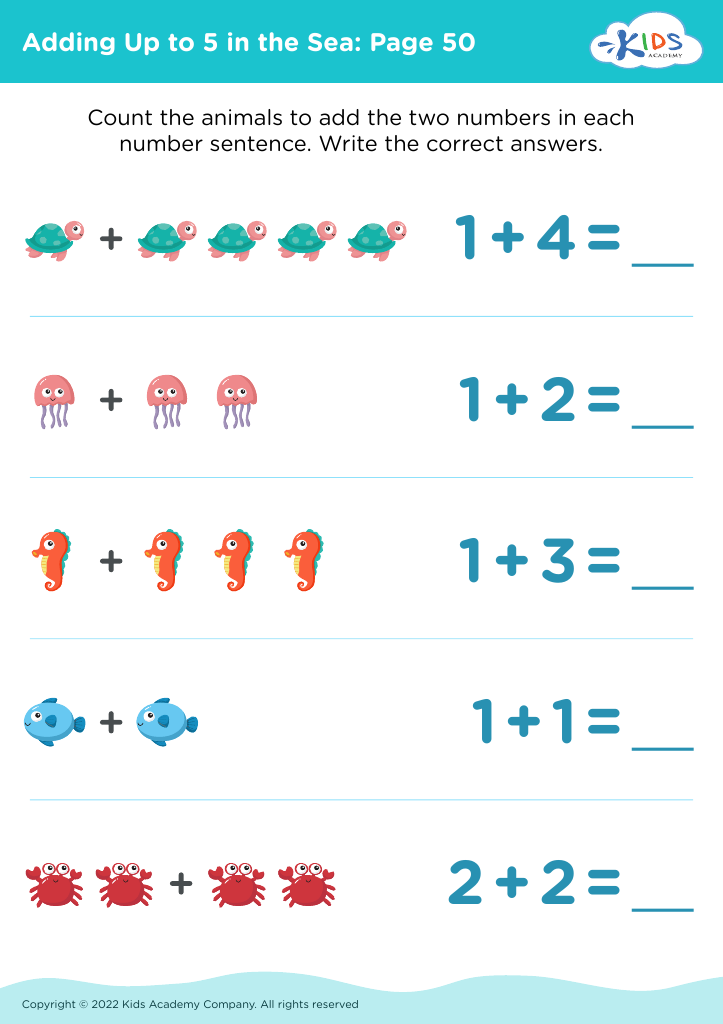
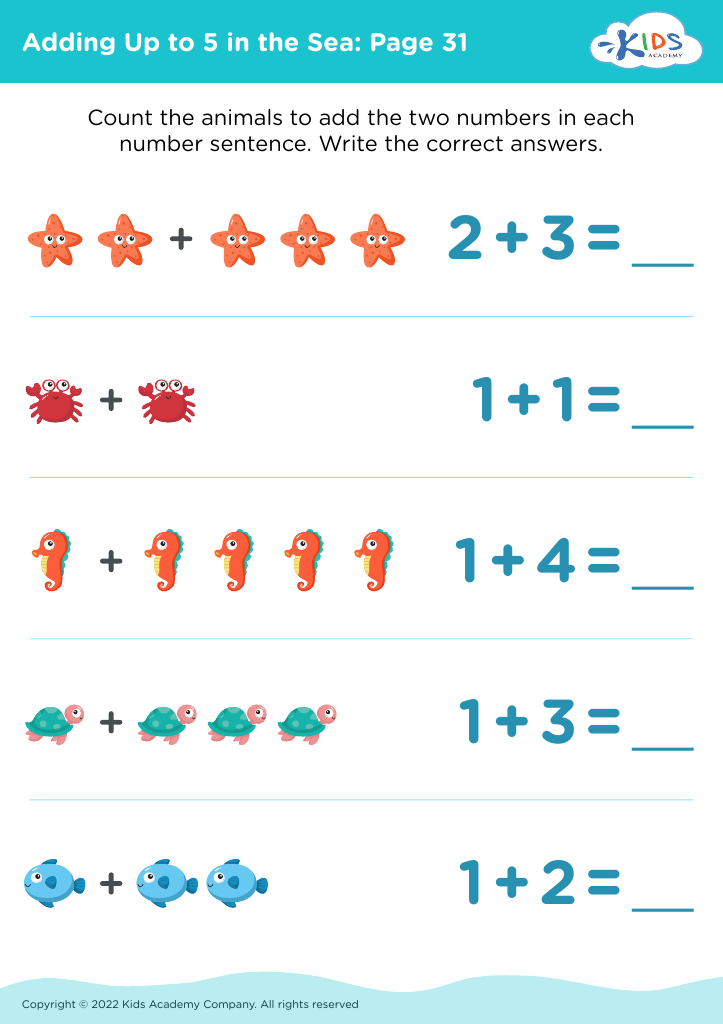
Welcome to our engaging "Sea Creatures Identification: Adding Up to 5" worksheets designed for ages 3-8! These printable resources combine fun ocean-themed illustrations with essential math skills to help young learners identify and count various sea creatures while practicing addition. Each worksheet offers colorful images of sea animals, allowing children to enhance their counting abilities as they solve simple addition problems totaling up to 5. Perfect for parents and educators seeking to reinforce essential math concepts in an interactive way, these worksheets inspire curiosity about marine life while developing foundational math skills. Dive in, and let the learning begin!




%20(1).jpg)



Teaching young children about sea creature identification is vital for several reasons. First, it fosters a connection to nature, helping kids appreciate marine life and understand the importance of preserving aquatic ecosystems. Recognizing different sea creatures can spark curiosity and encourage children to explore their environment, leading to a lifelong love of science and nature.
Second, learning about sea creatures enhances cognitive skills, particularly language development. Children learn new vocabulary related to science and descriptive words that help articulate their thoughts and observations. Simple activities like matching pictures or naming creatures serve as engaging ways to enhance their communication skills.
Additionally, understanding marine biology introduces basic math concepts to make learning fun. For ages 3 to 8, activities such as counting sea creatures or sorting them can seamlessly integrate math skills with environmental education, making learning holistic.
Moreover, teaching these concepts can build empathy and responsibility towards marine life conservation. It empowers children to see themselves as stewards of the environment, cultivating a caring attitude at an early age.
Incorporating sea creature identification into early education enriches children's knowledge while supporting essential developmental milestones, caring relationships with nature, and impactful learning experiences.








