Understanding numerical values Adding Up to 5 Worksheets for Ages 3-8
4 filtered results
-
From - To
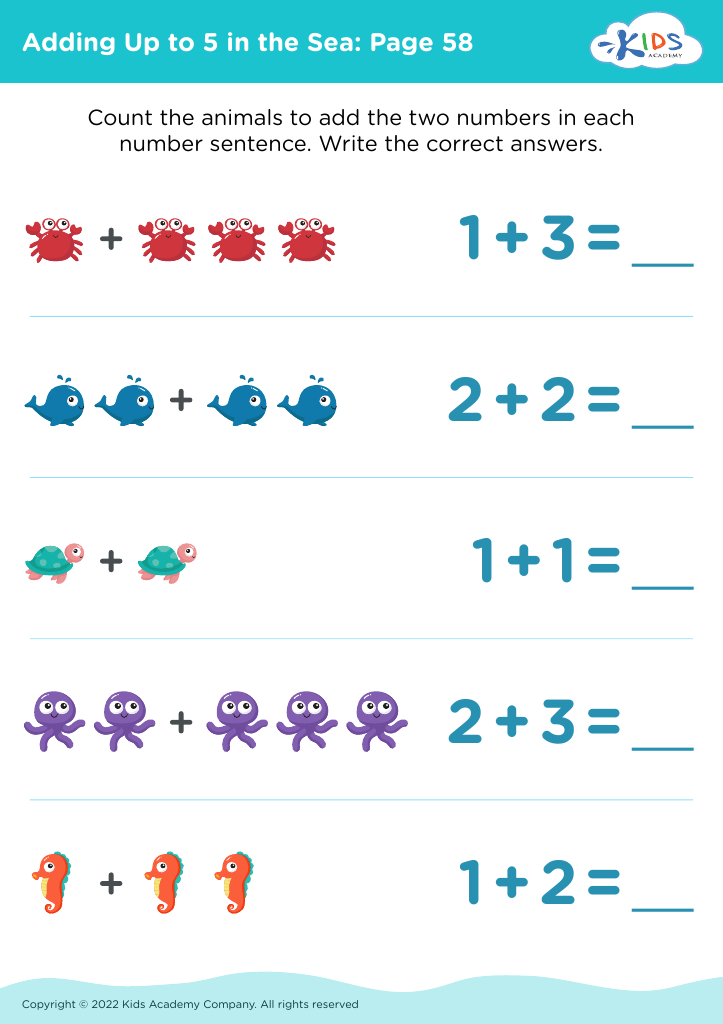
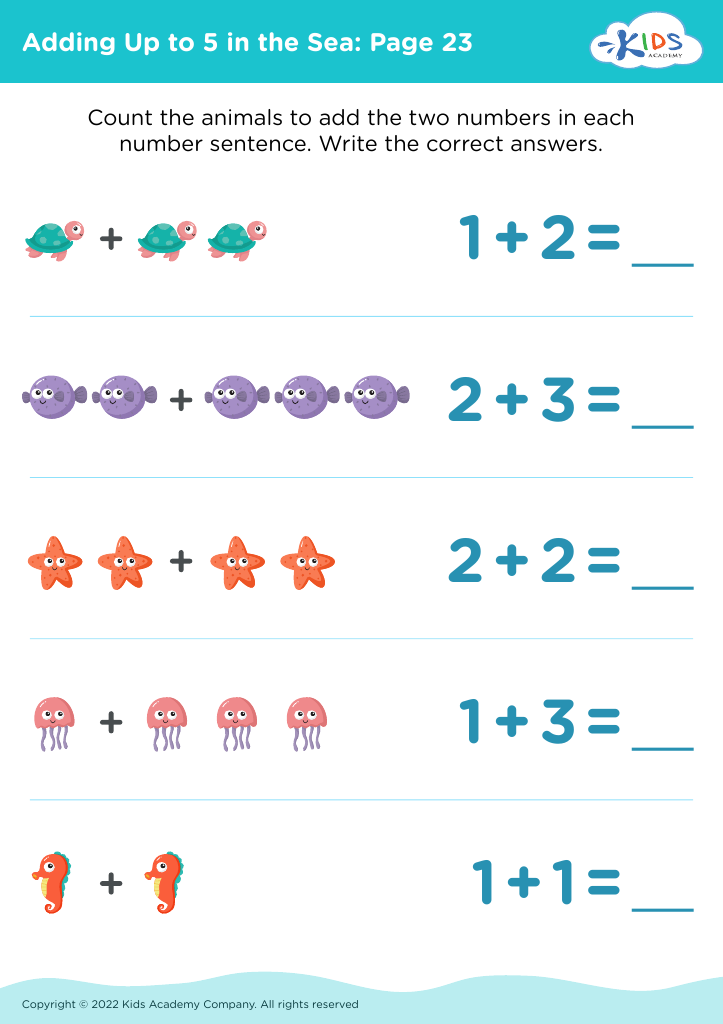
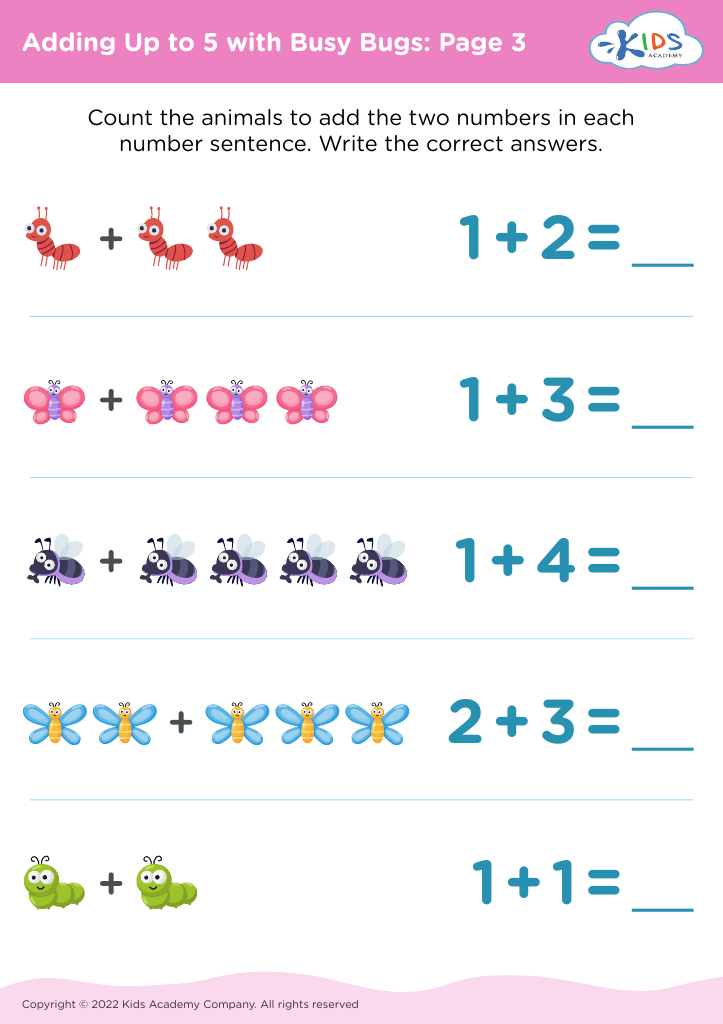
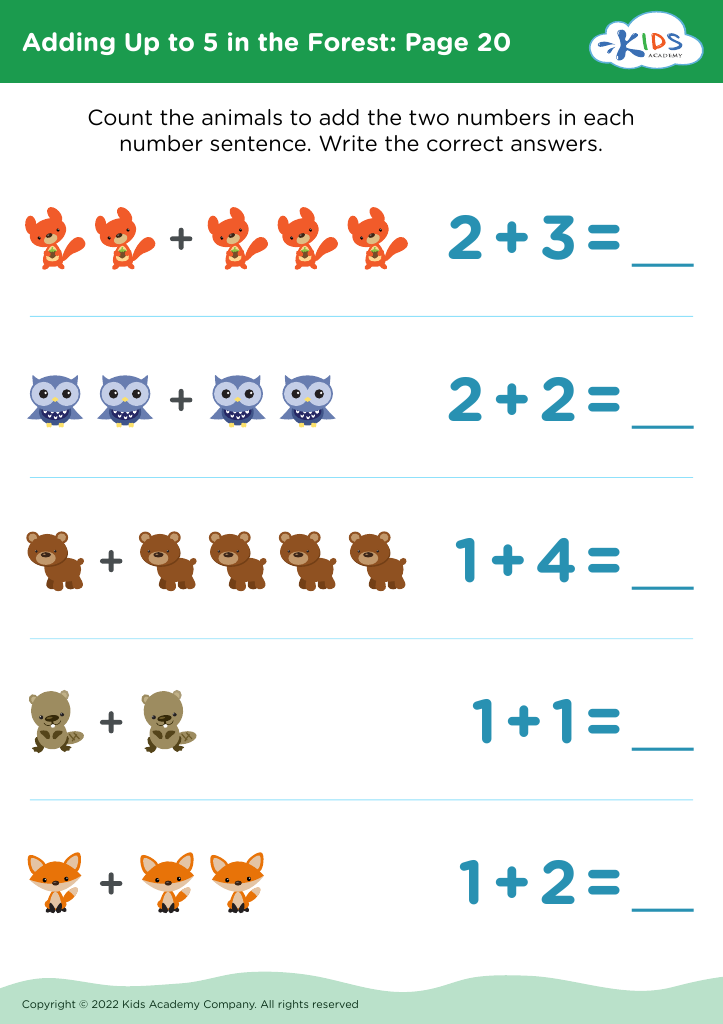
Help young learners grasp the concept of numerical values with our "Understanding Numerical Values: Adding Up to 5 Worksheets." Designed for children ages 3-8, these engaging worksheets promote essential math skills through fun activities centered around counting and basic addition. With colorful visuals and interactive exercises, kids will improve their number recognition and develop a foundational understanding of how numbers combine. Perfect for preschool and early elementary students, these worksheets offer a playful way to support their math journey while encouraging cognitive development. Download now to enhance your child's numerical skills and foster a love for learning!






.jpg)

Understanding numerical values and basic addition, particularly the concept of adding up to 5, is crucial for children ages 3-8 as it lays the foundation for their mathematical skills. At this stage of development, children begin to explore the world of numbers and learn to quantify their surroundings. This early understanding enables them to recognize patterns, solve problems, and develop critical thinking skills.
Adding up to 5 is an essential milestone that reflects a child's grasp of foundational math concepts. It simplifies more complex mathematical operations they will encounter later. When parents and teachers focus on this area, they foster confidence and a positive attitude towards math, which can lead to greater success in academic pursuits.
Moreover, this skill enhances cognitive development. For young children, learning to manipulate small numbers enhances memory, attention, and language development as they learn to verbalize the process of addition. By nurturing these skills, caregivers support overall growth and prepare children for future success. Engaging children with interactive activities, games, and practical experiences reinforces these concepts and makes learning enjoyable. Ultimately, investing time in understanding numerical values strengthens a child's foundational competencies and sets the stage for lifelong learning.








