Visual Perception Skills Adding Up to 5 Worksheets for Ages 3-8
4 filtered results
-
From - To
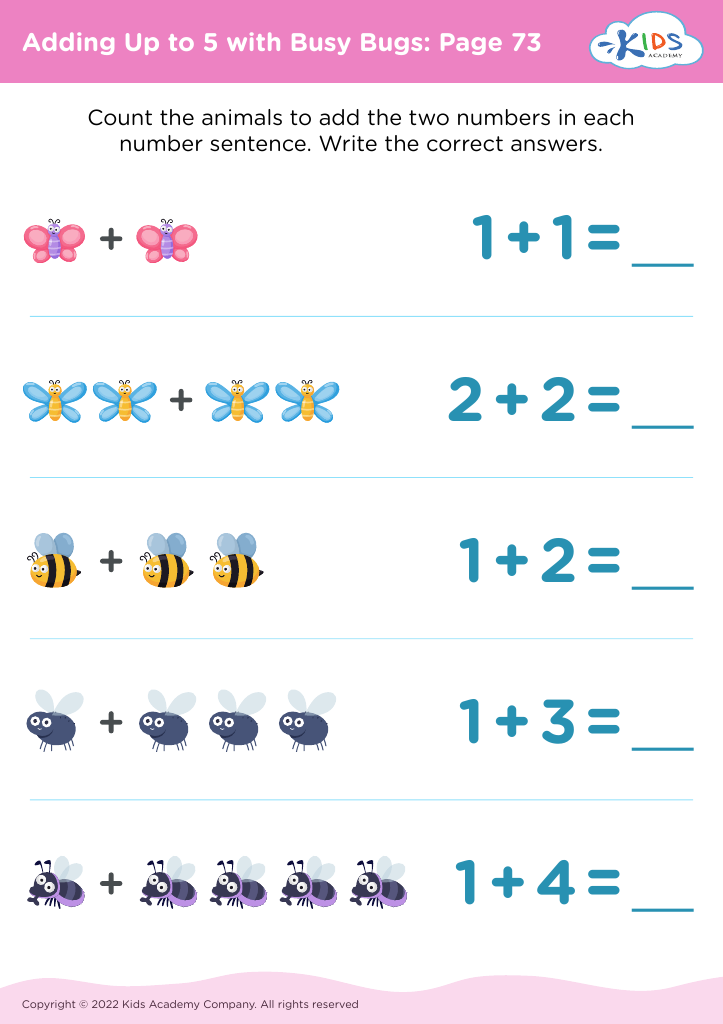
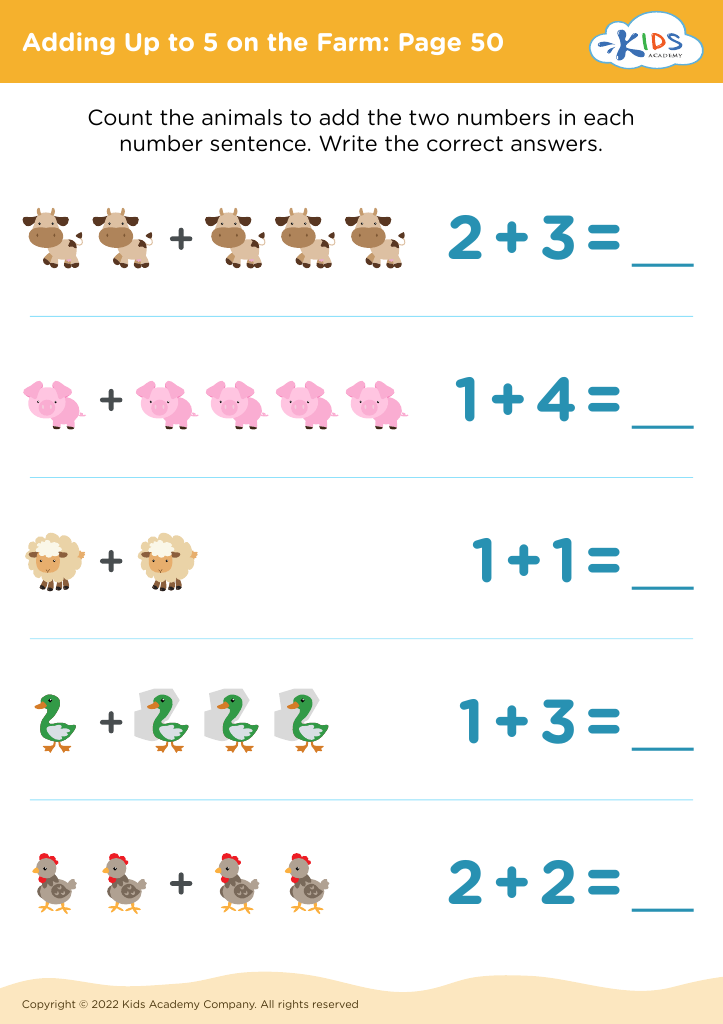
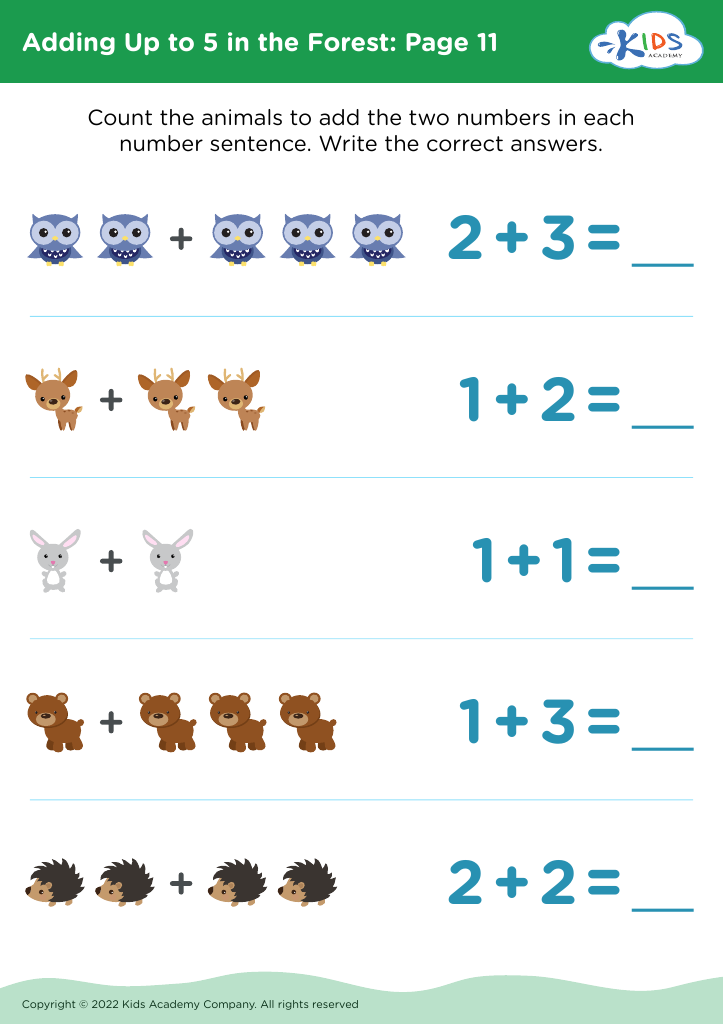
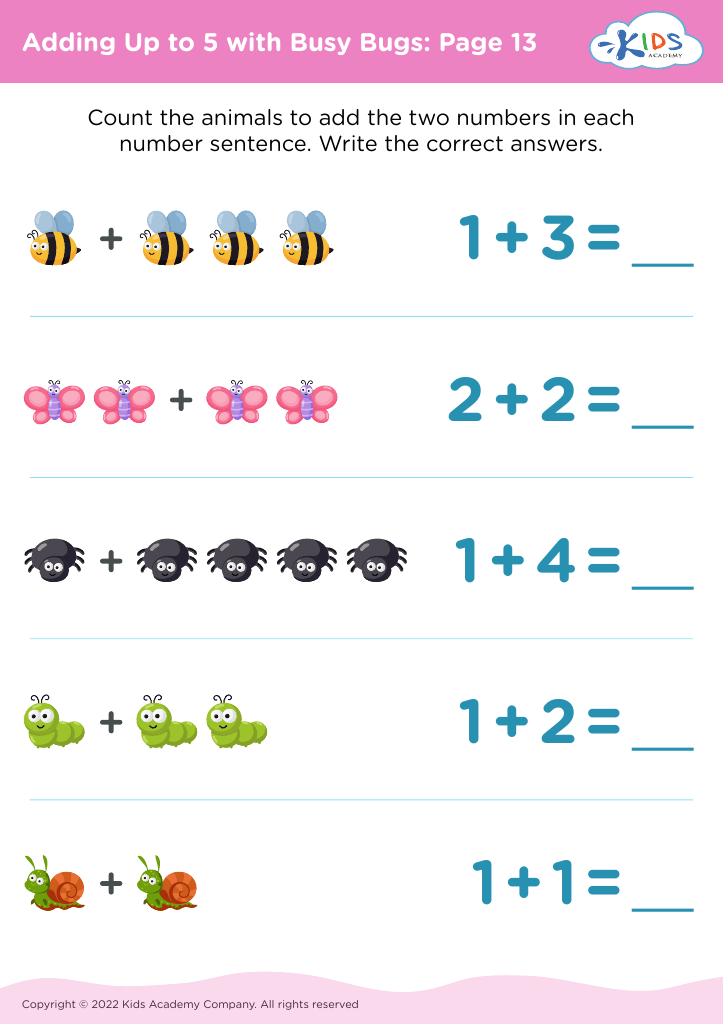
Boost your child's visual perception skills with our engaging “Adding Up to 5 Worksheets” designed for ages 3-8. These worksheets are perfect for reinforcing basic math concepts while enhancing visual discrimination and recognition. By identifying numbers and counting objects, children will develop critical cognitive skills essential for problem-solving. Each sheet features colorful illustrations and easy-to-follow activities that keep your little ones motivated and focused. Ideal for classroom settings or home learning, these resources make math fun and interactive! Help your child build a solid mathematical foundation with our thoughtfully crafted worksheets that blend visual learning and arithmetic practice seamlessly.





%20(1).jpg)


Visual perception skills are crucial for children aged 3 to 8 as they form the foundation for various academics and everyday tasks. These skills help children interpret and organize what they see, which is vital when learning to recognize numbers and understand concepts like adding up to 5. Developing visual perception skills enhances a child's ability to process visual information swiftly and accurately, enabling them to solve problems, decode written language, and identify shapes and patterns.
For parents and teachers, focusing on these skills can help children enhance their mathematical abilities. Activities that enhance visual perception, such as puzzles, matching games, or visual aids, make learning more engaging and effective. Children with strong visual perception skills are more likely to grasp early math concepts, leading to increased confidence and a positive attitude toward learning.
Moreover, these skills also contribute to essential life skills, such as attention to detail, balance, and spatial awareness. By nurturing these abilities, parents and teachers play an instrumental role in setting the stage for children's future academic success and overall development, fostering a love for learning that will benefit them throughout life. Investing in visual perception skills is investing in a child's broader educational journey.








