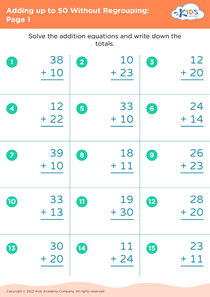
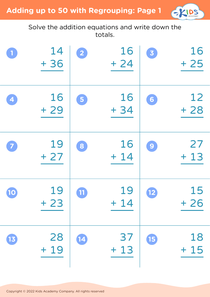
Fraction comparison Adding up to 50 Misc Worksheets for Ages 3-8
4 filtered results
-
From - To
Discover the perfect learning resource for young mathematicians with our "Fraction Comparison Adding up to 50 Misc Worksheets". Tailored for ages 3-8, these engaging and educational worksheets help children build a solid foundation in math. The activities focus on comparing fractions and simple addition up to 50, fostering essential learning skills like analytical thinking and problem-solving. Designed to be both fun and effective, these printables are perfect for supporting classroom lessons or enhancing at-home practice. Watch your child’s confidence soar as they master fractions and addition through our vibrant, user-friendly worksheets. Start exploring now!
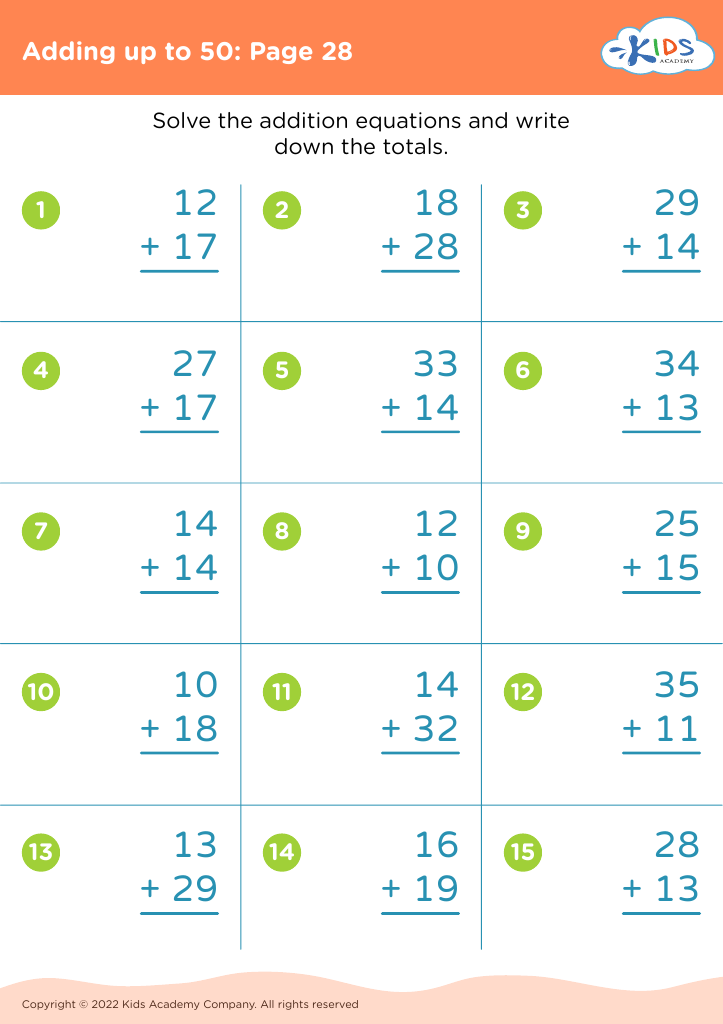
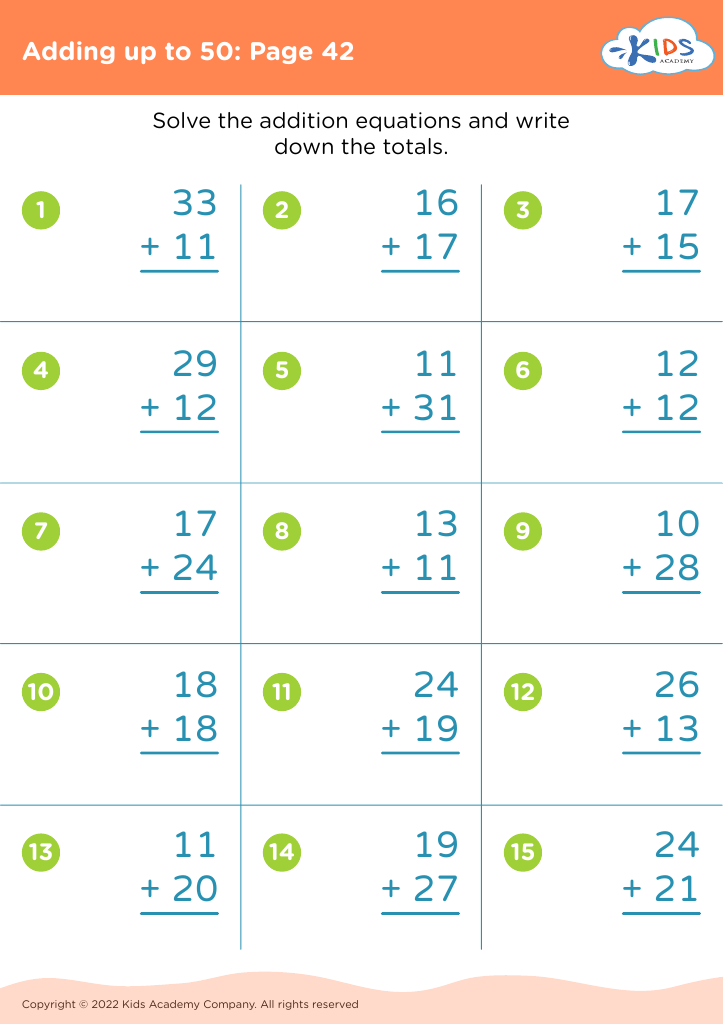
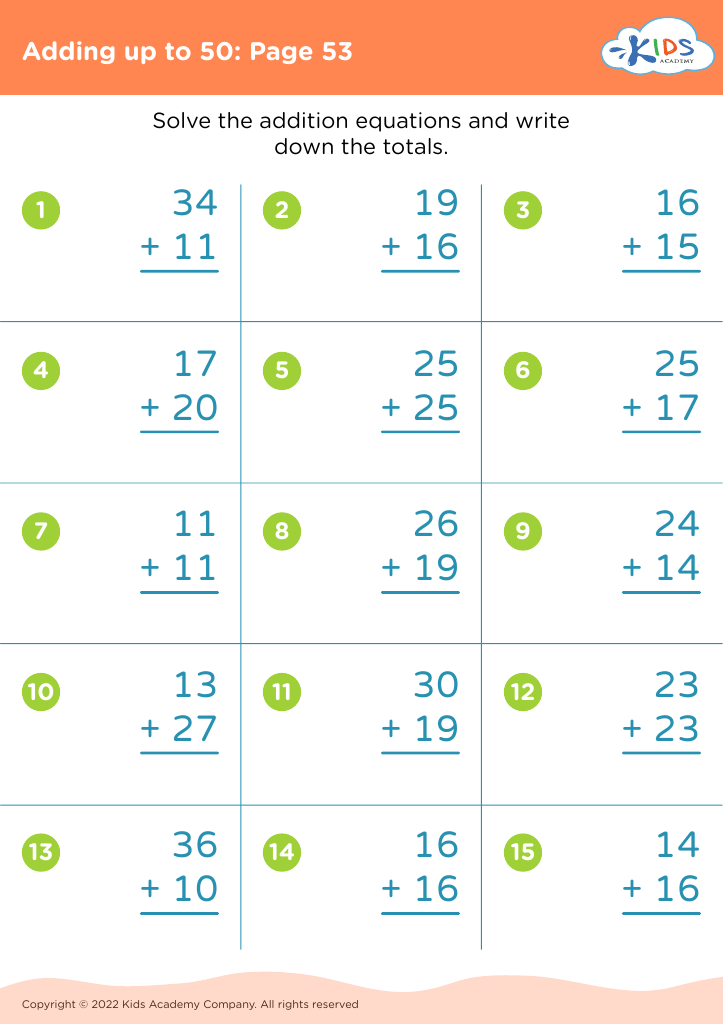
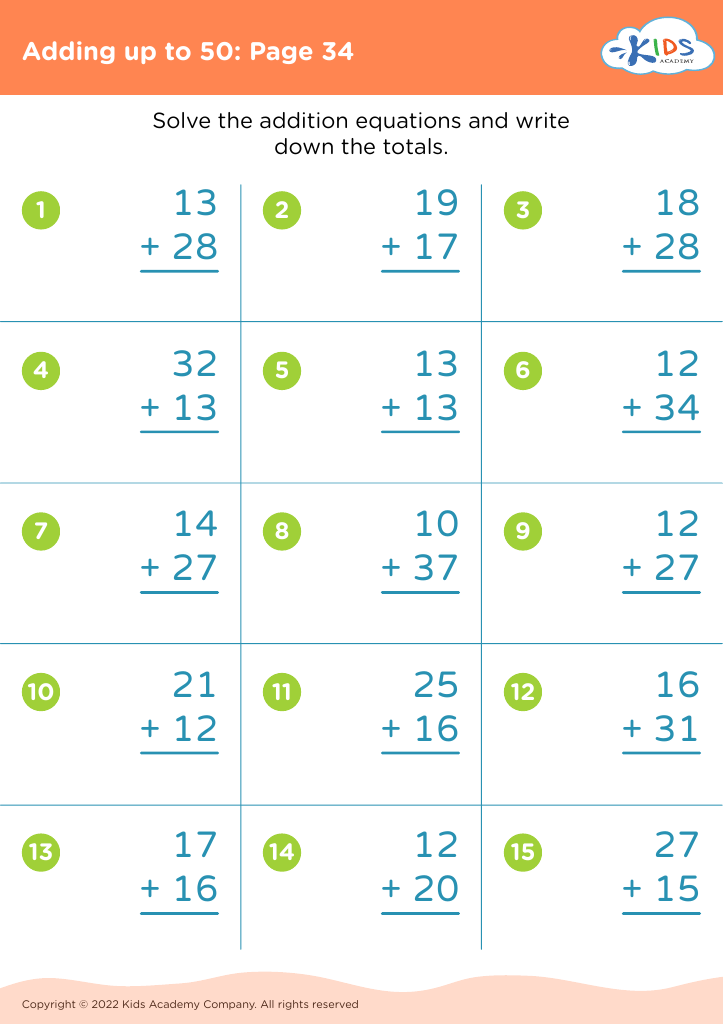


Understanding fractions and learning to add up numbers up to 50 are fundamental math skills that pave the way for more advanced mathematical concepts. For children ages 3-8, mastering these skills early can have a profound impact on their academic success and confidence in math.
Parents and teachers play a crucial role in fostering these skills during these formative years. Fraction comparison helps children grasp the idea of parts making up a whole, which is not just a mathematical concept but also a life skill—think of sharing a pizza or understanding time. Developing proficiency in comparing fractions equips children with the ability to think critically and make informed decisions.
Adding numbers up to 50 builds a strong numerical foundation. This skill is essential not only for more complex arithmetic but also for everyday tasks like counting money or measuring ingredients in a recipe. As children gain confidence and accuracy with these basic math operations, they develop problem-solving skills and logical thinking.
Caring about these math foundations creates a supportive learning environment where children feel encouraged and are more likely to develop a lifelong love for learning. Early engagement with these concepts can set children on a path to academic success and greater enthusiasm for tackling complex challenges in the future.