Improving math skills Adding up to 50 Misc Worksheets for Ages 3-8
5 filtered results
-
From - To
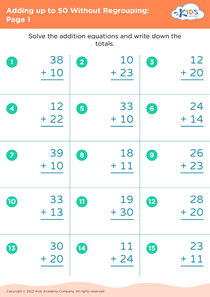
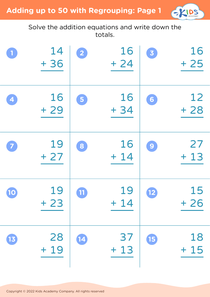
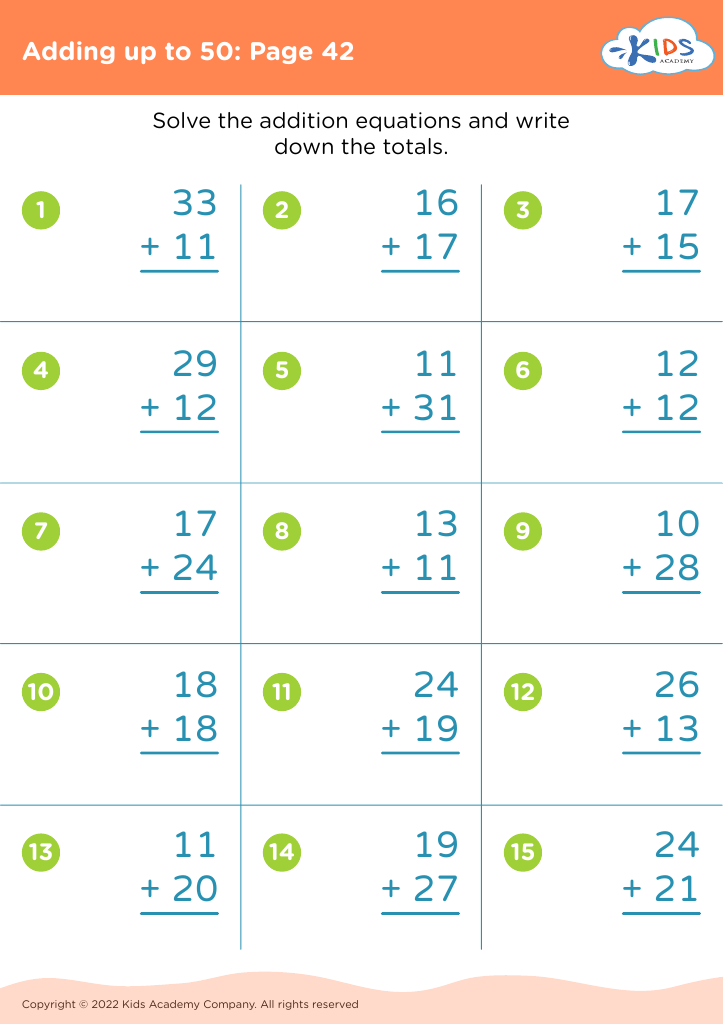
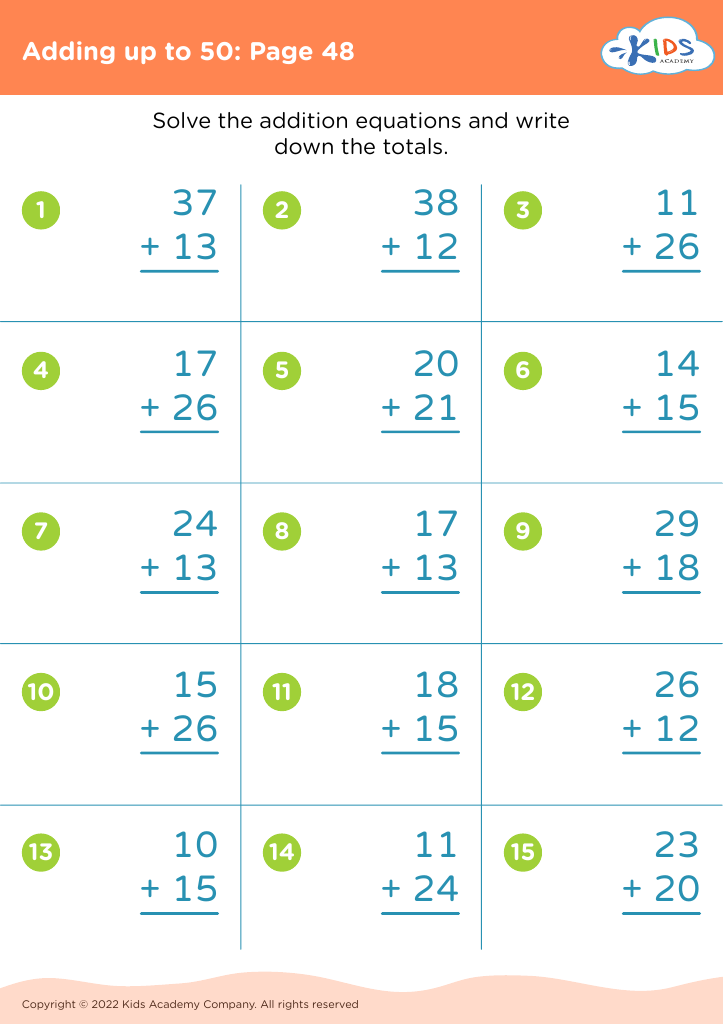
Enhance your child's math skills with our "Adding Up to 50" miscellaneous worksheets, designed for ages 3-8! These engaging and interactive worksheets focus on building a strong foundation in addition, helping young learners tackle fundamental math concepts while having fun. Each activity encourages critical thinking and problem-solving, making math enjoyable and accessible. Our resources cater to various learning styles, ensuring personalized experiences for every child. Perfect for homeschooling or classroom settings, these worksheets strive to boost confidence and proficiency. Watch your young mathematicians soar as they practice adding up to 50 with ease, setting the stage for future mathematical success!
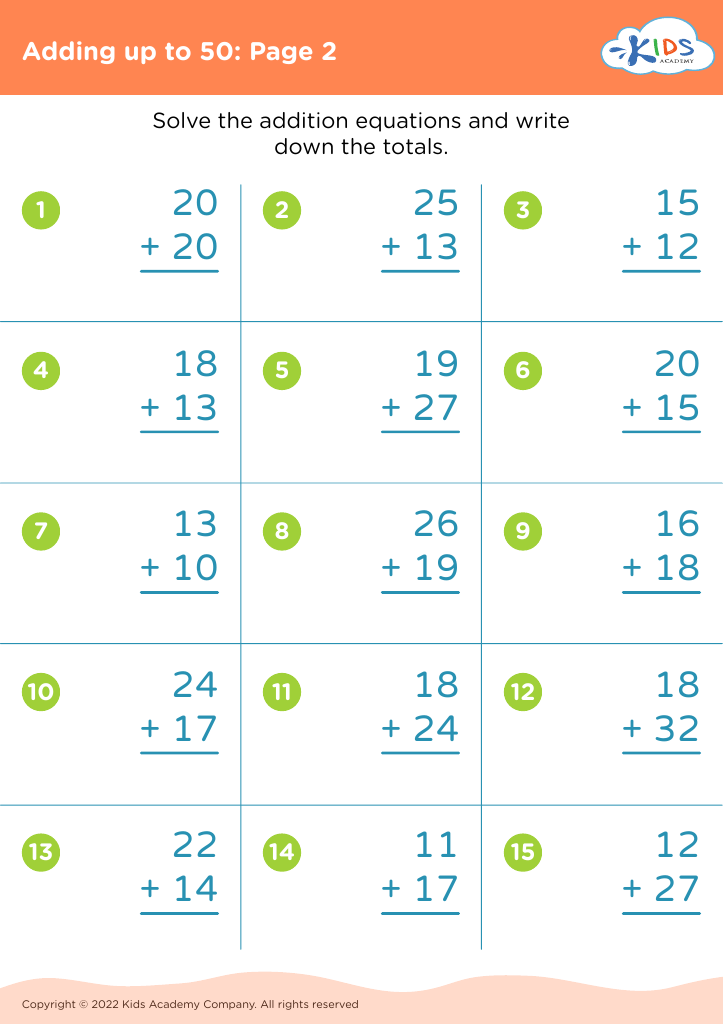
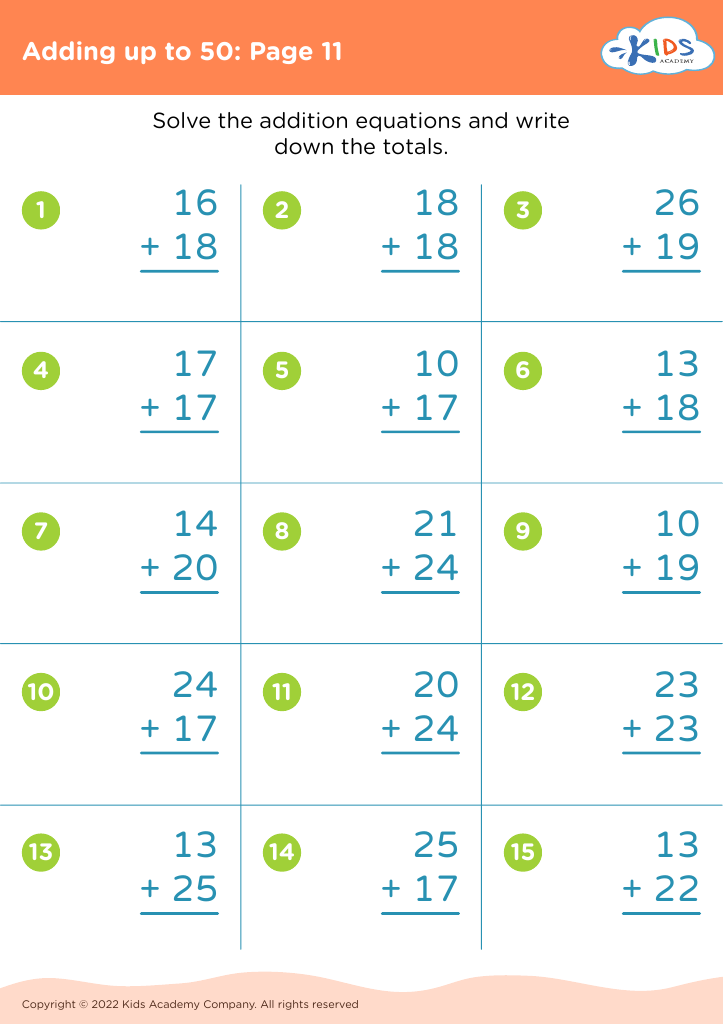
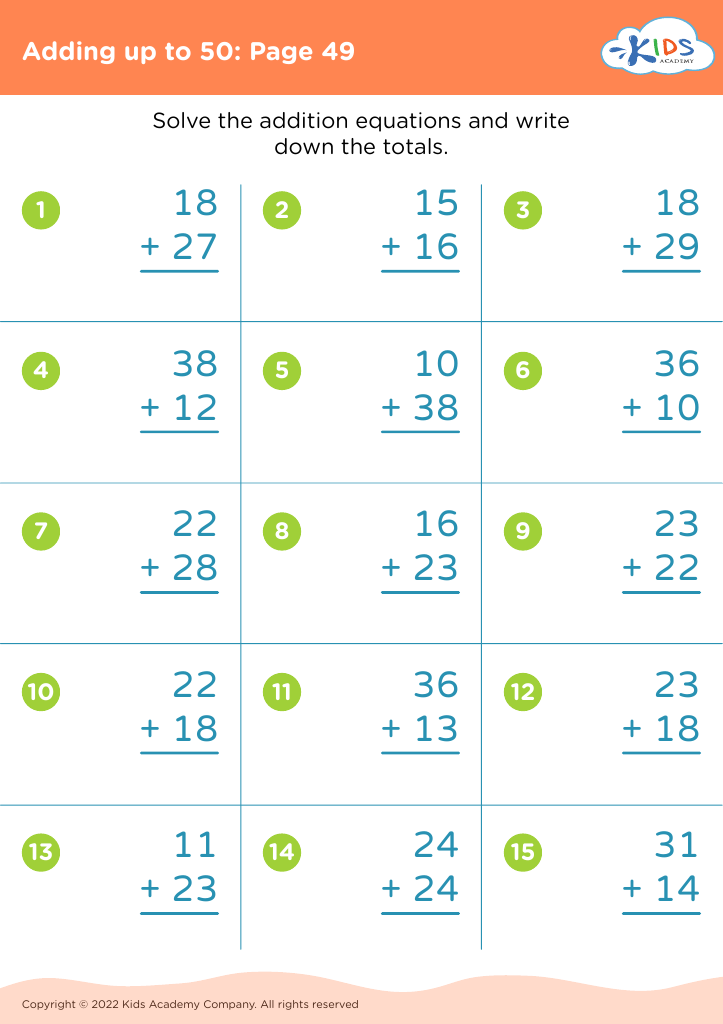


Parents and teachers should prioritize improving math skills, particularly for the foundational concept of adding up to 50, for children aged 3-8 for several compelling reasons. First, early math skills lay the groundwork for future academic success and critical thinking abilities. Understanding numbers, addition, and basic operations is crucial at this age as it enhances cognitive development and logical reasoning.
By focusing on adding up to 50, children begin to grasp important concepts such as number relationships, sequences, and patterns. These skills are essential not just for math, but also for everyday problem-solving and decision-making tasks. For instance, integrating math into daily activities, like grocery shopping, teaches practical applications of addition.
Additionally, improving math skills fosters confidence and a positive attitude toward learning. Engaging young learners with playful and interactive activities can make math enjoyable and reduce any anxiety associated with the subject.
Furthermore, parents and teachers play vital roles in creating a supportive environment for math learning. Consistent encouragement and reinforcement will help nomify a love for numbers that can last a lifetime. Ultimately, investing time and effort into math skills now will pay off in the children’s academic journey and beyond.