Reading comprehension Adding up to 50 Misc Worksheets for Ages 3-8
4 filtered results
-
From - To
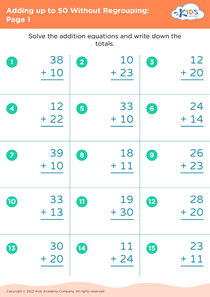
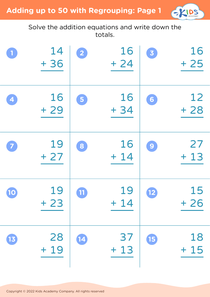
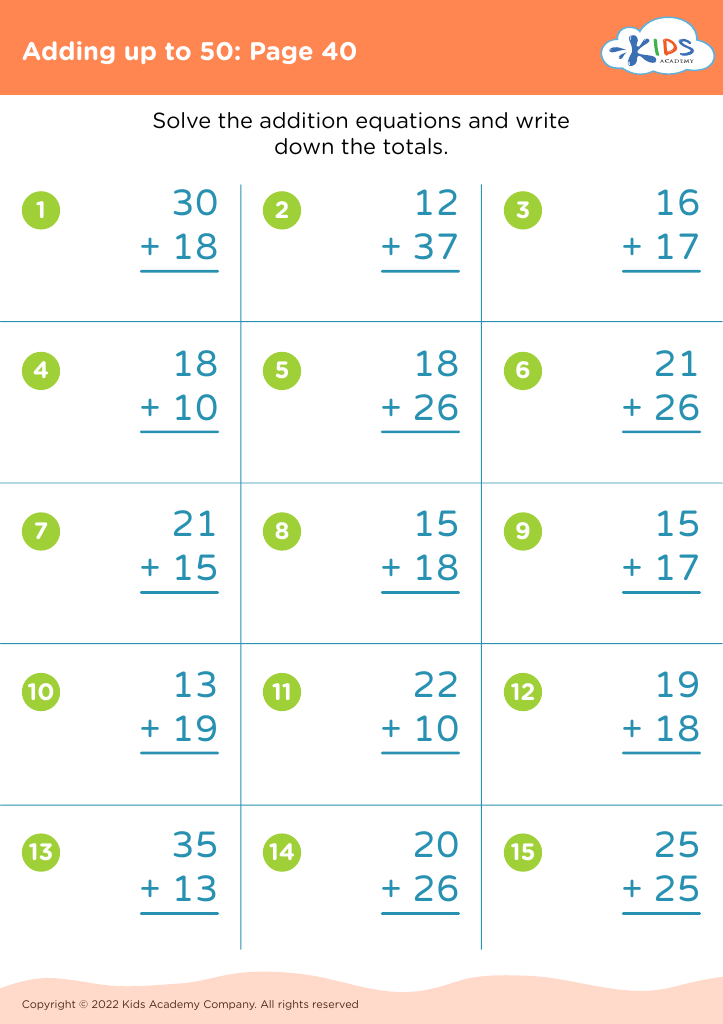
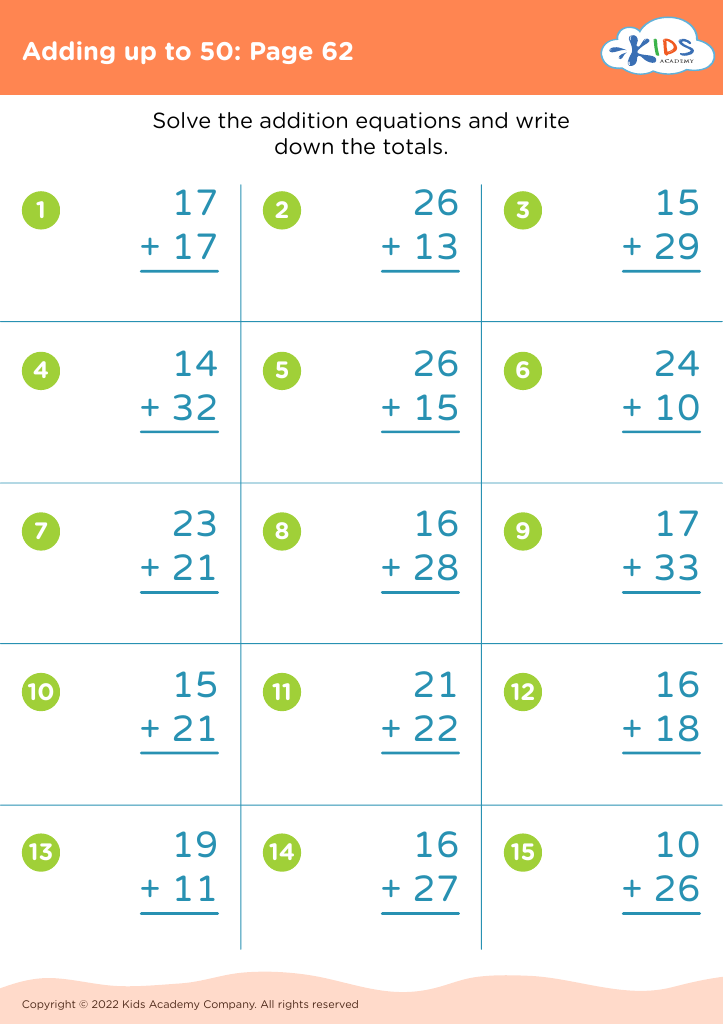
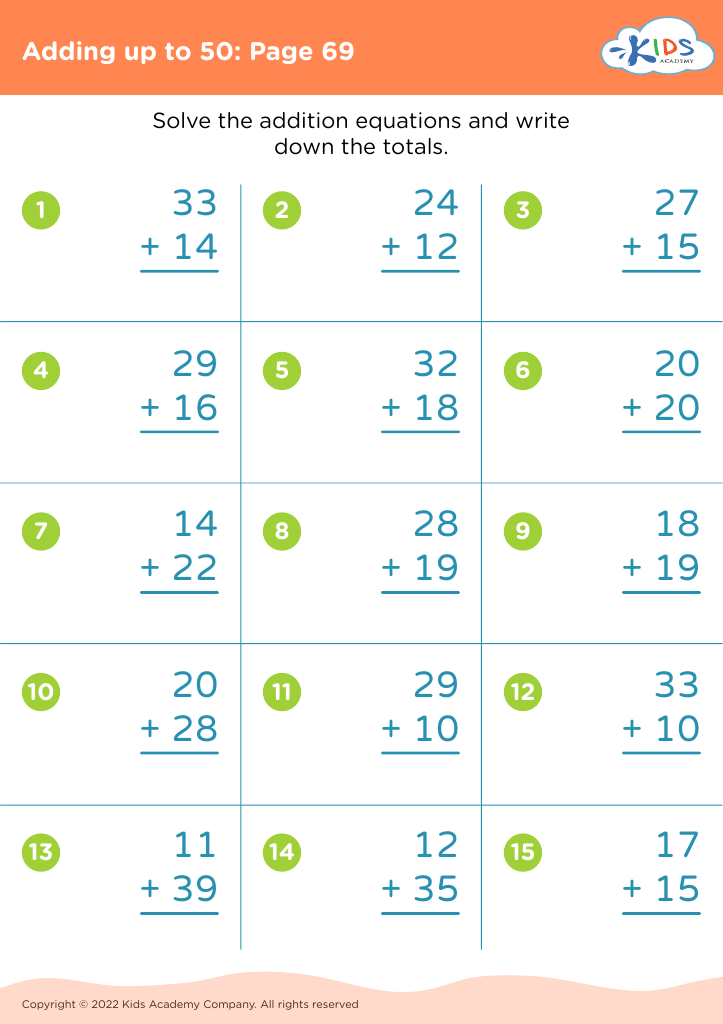
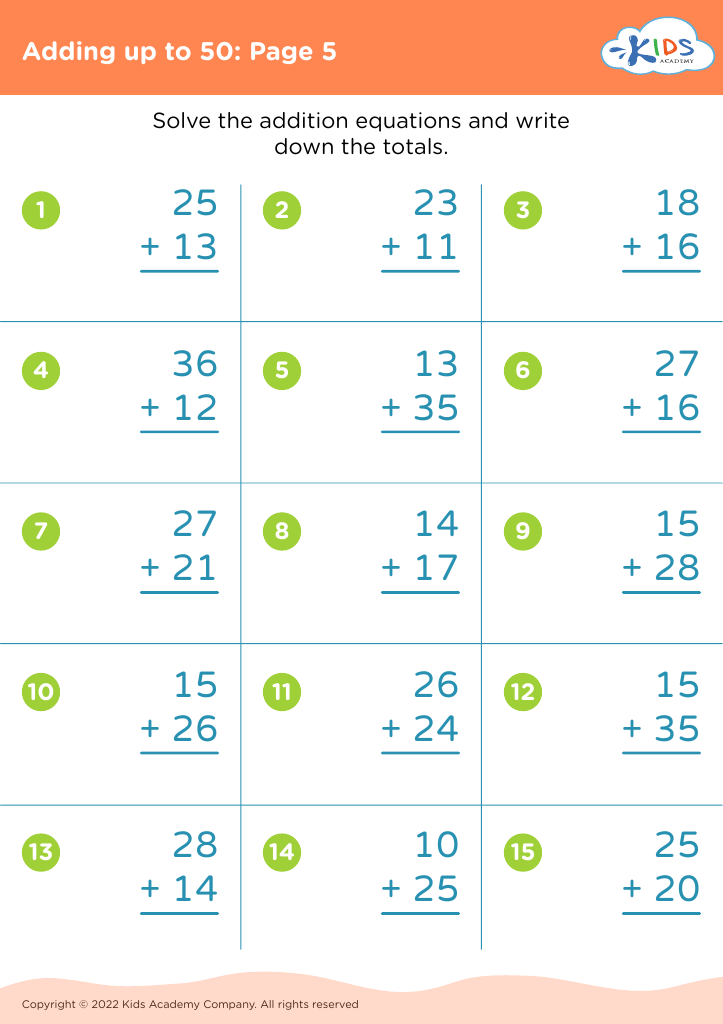
Explore our engaging collection of "Reading Comprehension Adding Up to 50 Misc Worksheets" designed specifically for children aged 3-8. These worksheets seamlessly blend math and reading skills, providing a fun and interactive way to enhance young learners' comprehension abilities while they tackle addition problems up to 50. Each worksheet encourages critical thinking and strengthens math vocabulary through engaging stories and scenarios that require reading and problem-solving skills. Perfect for home or classroom use, these resources create a supportive learning environment that fosters curiosity and confidence in early learners. Boost your child's academic journey with these thoughtfully crafted worksheets today!


Reading comprehension is crucial for young children because it acts as the foundation for all future learning. Between the ages of 3 to 8, children are at a pivotal stage where they begin to understand words and their meanings. When parents and teachers prioritize reading comprehension, they empower children to make sense of information, think critically, and develop better communication skills.
Fostering reading comprehension helps improve vocabulary and enhances cognitive abilities, which are essential for academic success across all subjects. Young readers learn not just to decode text but to infer meaning, draw conclusions, and connect ideas—all essential skills for effective problem-solving and reasoning.
Adding educational materials such as “50 Miscellaneous” activities can enrich a child's reading experience. These varied and engaging activities offer children opportunities to practice comprehension in diverse contexts, making learning fun and relatable. They reinforce skills in a hands-on manner, ensuring concepts are better retained.
When parents and teachers consciously engage children in reading activities focused on comprehension, they ignite a lifelong love for reading and learning. This foundational skill not only supports academic achievement but also cultivates a strong sense of curiosity and imagination in young minds.