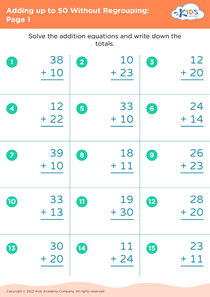
Basic Math Skills Adding up to 50 with Regrouping Worksheets for Ages 3-8
5 filtered results
-
From - To
Enhance your child's math abilities with our "Basic Math Skills Adding up to 50 with Regrouping Worksheets," designed for ages 3-8! These expertly crafted worksheets make learning fun, focusing on essential addition skills and regrouping techniques. Perfect for early learners, they promote confidence and accuracy in math. By engaging with these worksheets regularly, young students will develop a solid foundation in basic arithmetic, paving the way for future success in mathematics. Ideal for both classroom and at-home practice, these entertaining exercises make mastering addition up to 50 an enjoyable experience for children. Start building math confidence today!
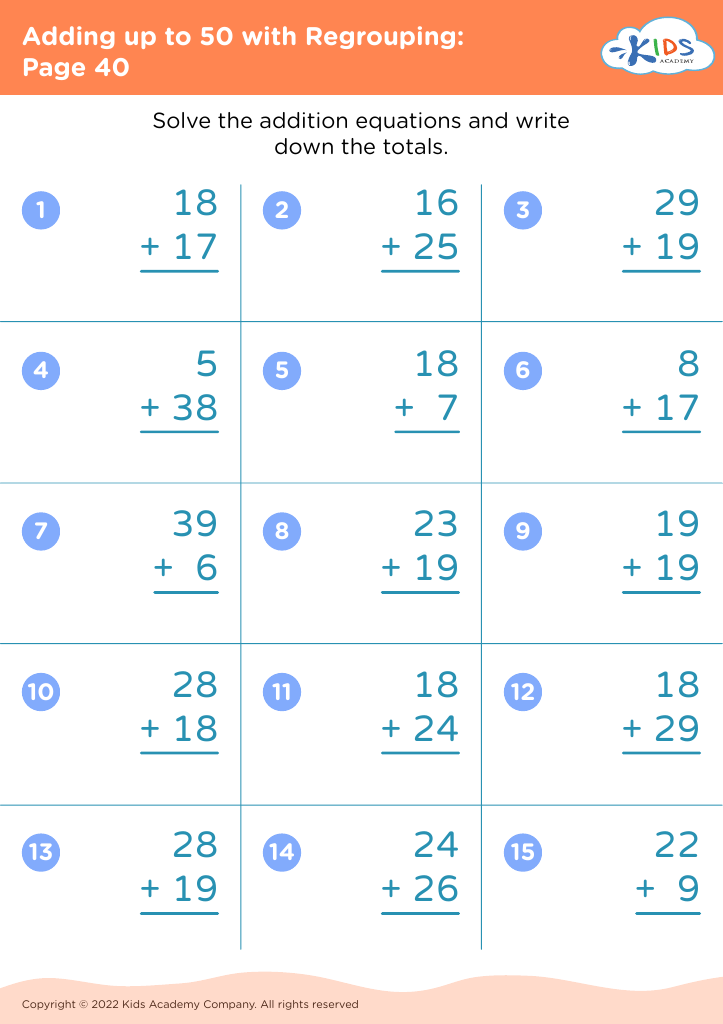
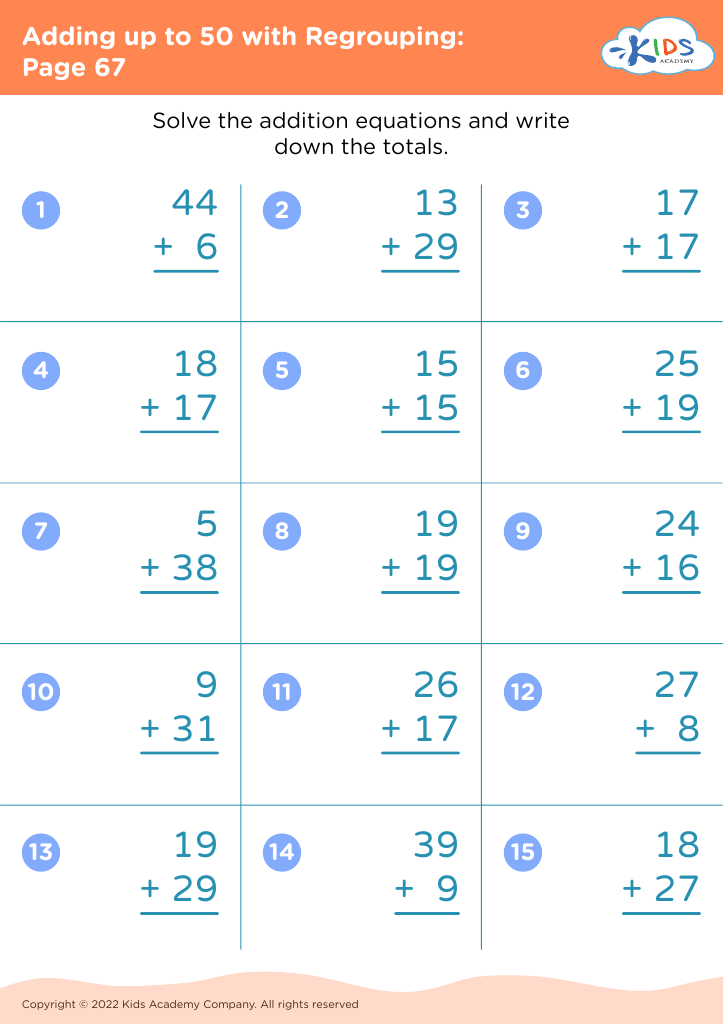
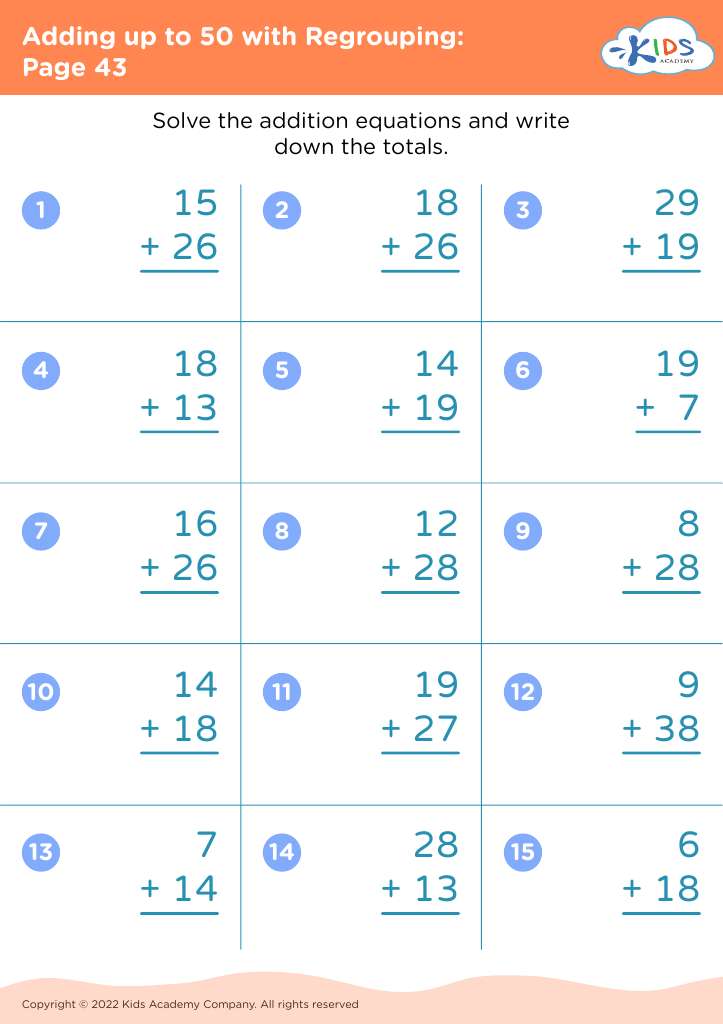
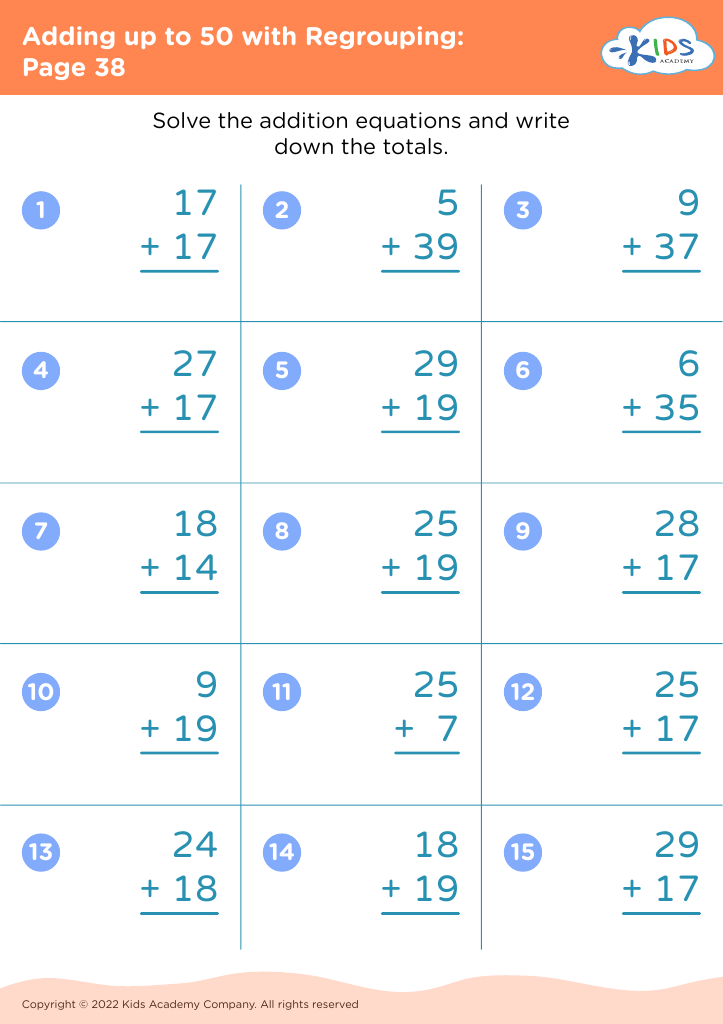
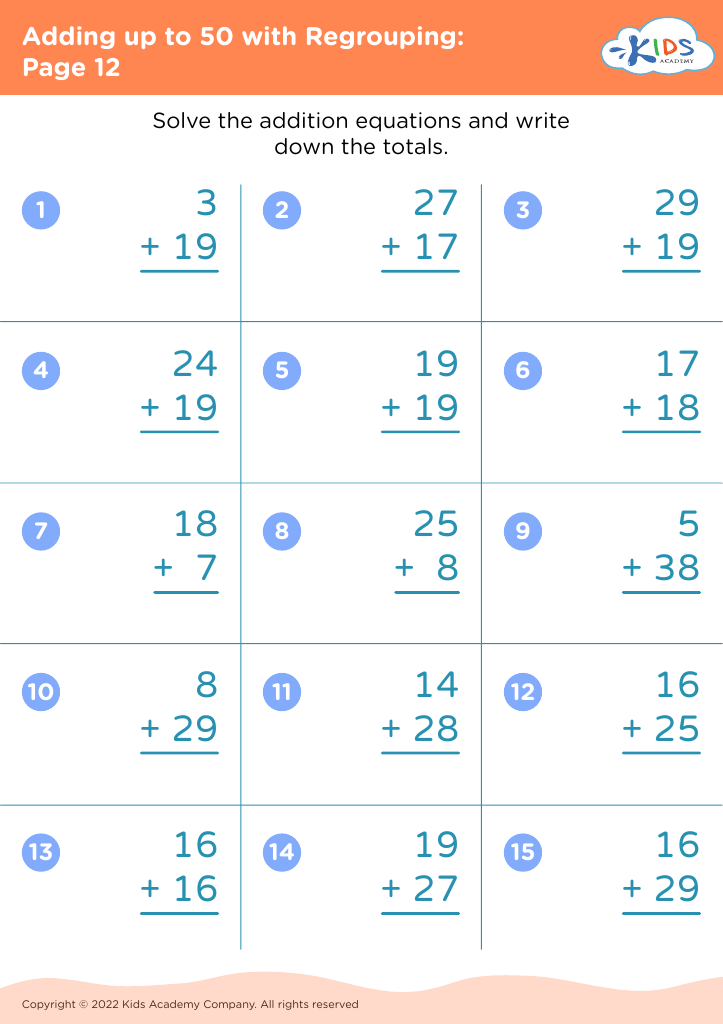


Basic math skills, such as adding up to 50 with regrouping, are fundamental building blocks for children's overall cognitive development and future academic success. Mastery of these skills by ages 3-8 sets a strong foundation for more advanced mathematical concepts and problem-solving abilities. Regrouping, or carrying over numbers in addition, enhances children's understanding of place value—a crucial concept in mathematics. This knowledge not only helps in achieving proficiency in arithmetic but also translates into skills needed for daily life, such as handling money or reading time.
Moreover, early success in navigating math challenges builds confidence and positive attitudes towards learning, which can inspire curiosity and perseverance in young learners. When parents and teachers prioritize these basic skills, they are fostering an environment where children feel supported and capable, reducing math anxiety and the likelihood of struggling in later grades.
Investing time in teaching these essential skills also encourages the development of logical thinking, concentration, and attention to detail. By emphasizing and nurturing early math proficiency, parents, and teachers are setting the stage for lifelong skills that contribute to numerous areas of personal growth and practical living, empowering children to navigate the world with competence and confidence.