Simplifying Fractions Adding up to 50 with Regrouping Worksheets for Ages 3-8
4 filtered results
-
From - To
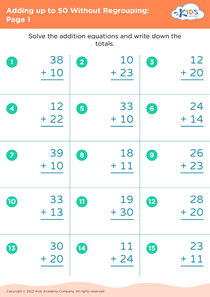
Discover our engaging "Simplifying Fractions Adding Up to 50 with Regrouping" worksheets tailored for children ages 3-8. These expertly designed activities introduce young learners to the foundational concepts of fractions and arithmetic in a fun and interactive way. With colorful illustrations and relatable examples, children will practice simplifying fractions while exploring addition up to 50, using regrouping strategies. Our worksheets promote independent learning and critical thinking, making math enjoyable and approachable. Ideal for home or classroom use, these resources encourage a solid understanding of fractions, setting kids on a path to mathematical success. Start your child's math journey today!
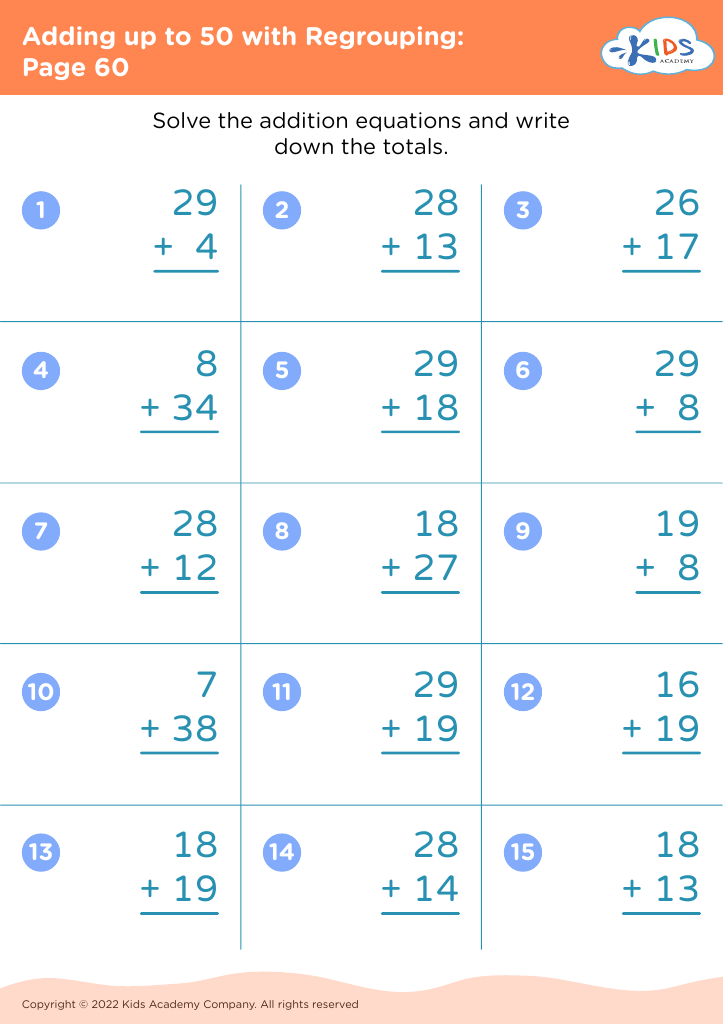
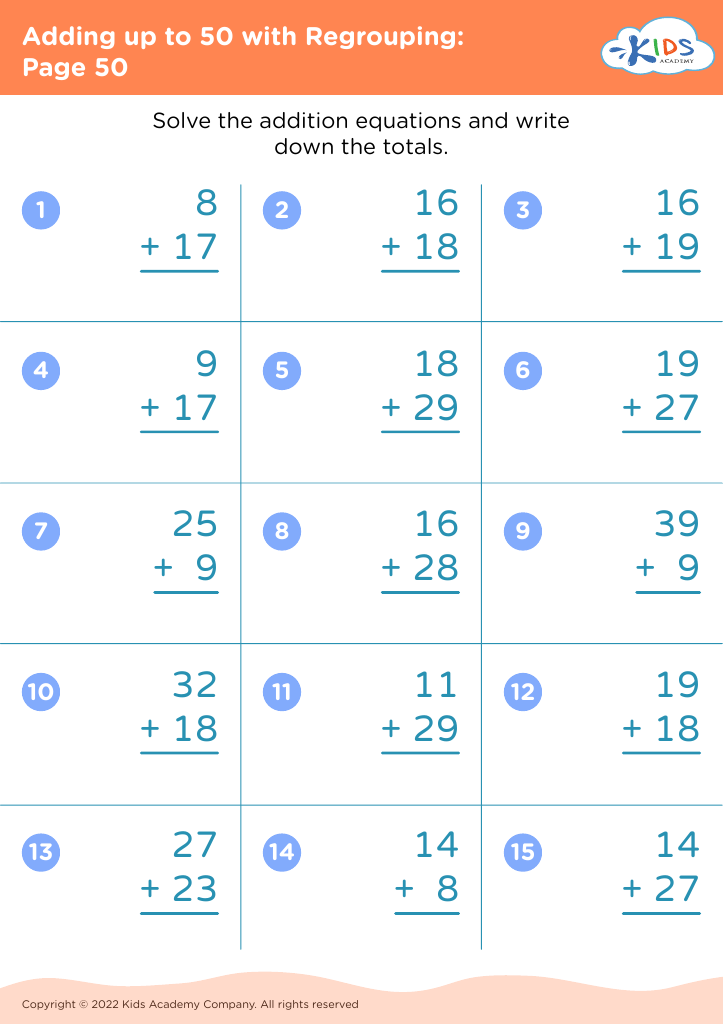
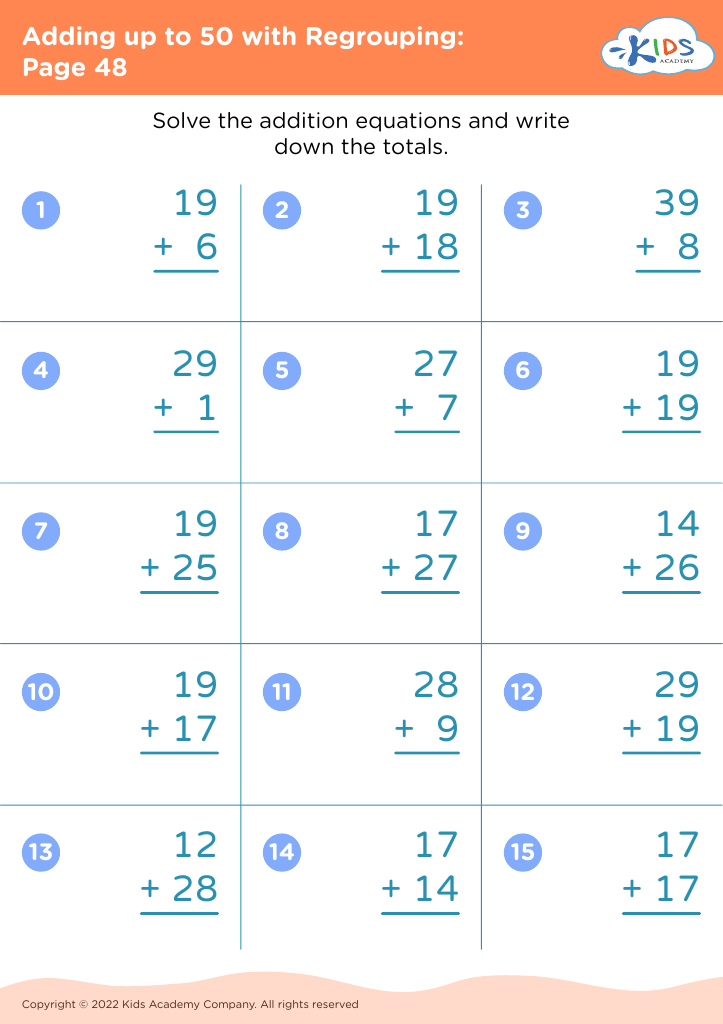
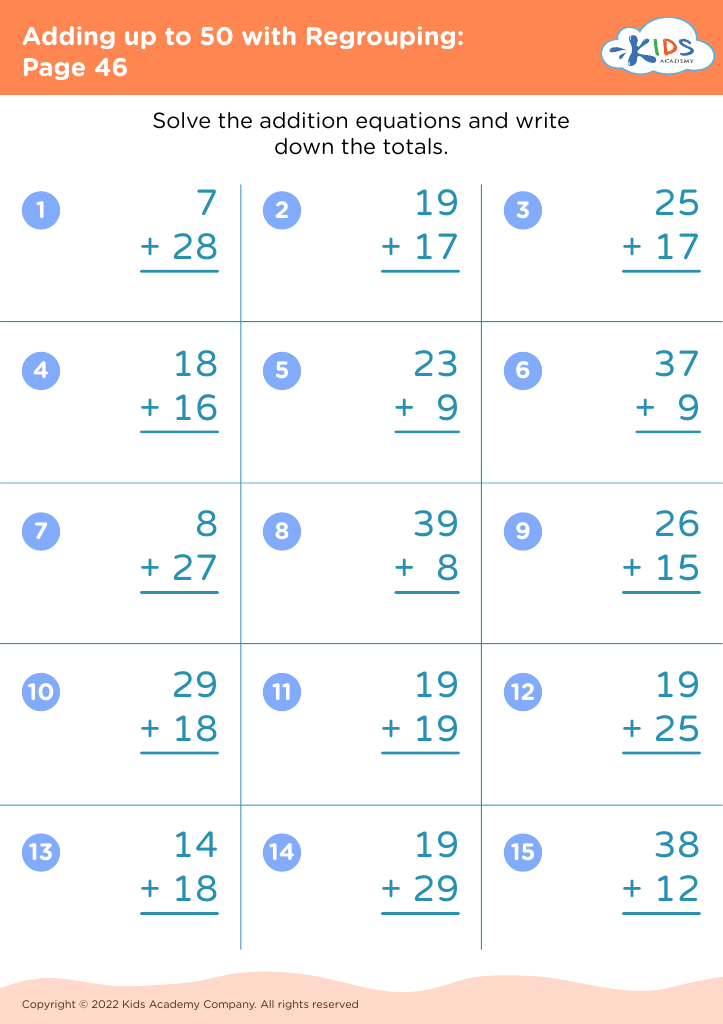


Simplifying fractions and adding them using regrouping are essential skills that lay a strong foundation for early mathematical understanding. For children ages 3-8, engaging with these concepts helps develop their number sense and promotes critical thinking. Understanding fractions introduces kids to the idea of parts and wholes, which is key in daily life scenarios, from sharing food to measurement.
By simplifying fractions that add up to a whole number, children learn to identify equivalent values, enhancing their ability to reason about numbers and relationships. Regrouping teaches them how to manipulate numbers flexibly and empowers them to tackle more complex math problems as they advance in school.
For parents and teachers, supporting kids through this process nurtures confidence and a positive attitude toward math. Approaching numbers with curiosity, rather than fear, fosters a lifelong love for mathematics. These foundational skills encourage logical reasoning and problem-solving, crucial competencies not just in math but in everyday decision-making.
Moreover, fostering collaboration between teachers and parents ensures children receive consistent messages about learning. Together, they can create engaging, hands-on activities that make the process enjoyable and meaningful, turning math learning into a delightful adventure for kids.