Identifying shapes Adding up to 50 Without Regrouping Worksheets for Ages 3-8
6 filtered results
-
From - To
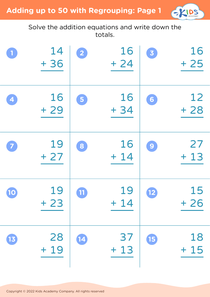
Welcome to our "Identifying Shapes Adding Up to 50 Without Regrouping Worksheets" designed for ages 3-8! These engaging worksheets blend math and shape recognition, helping young learners enhance their skills in a fun and effective way. Children will explore various shapes while practicing addition problems that sum up to 50, encouraging critical thinking and problem-solving without the complexity of regrouping. Perfect for educators and parents, this resource fosters early mathematical understanding and spatial awareness. Support your child's learning journey with our easy-to-use, interactive materials that make math exciting and enjoyable! Start shaping their math skills today!
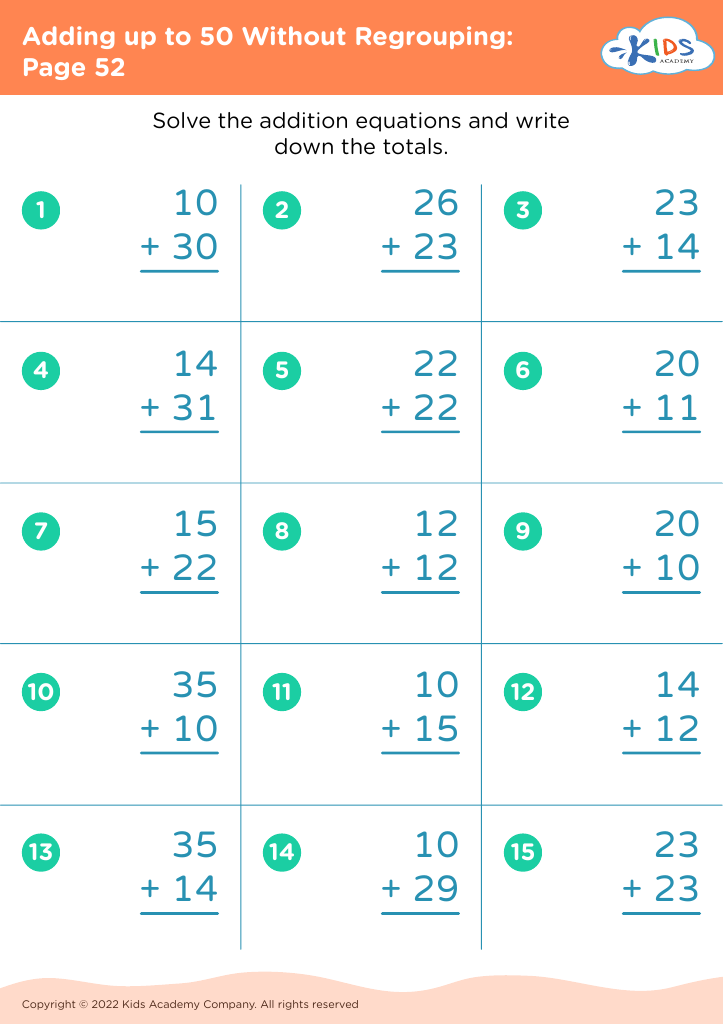
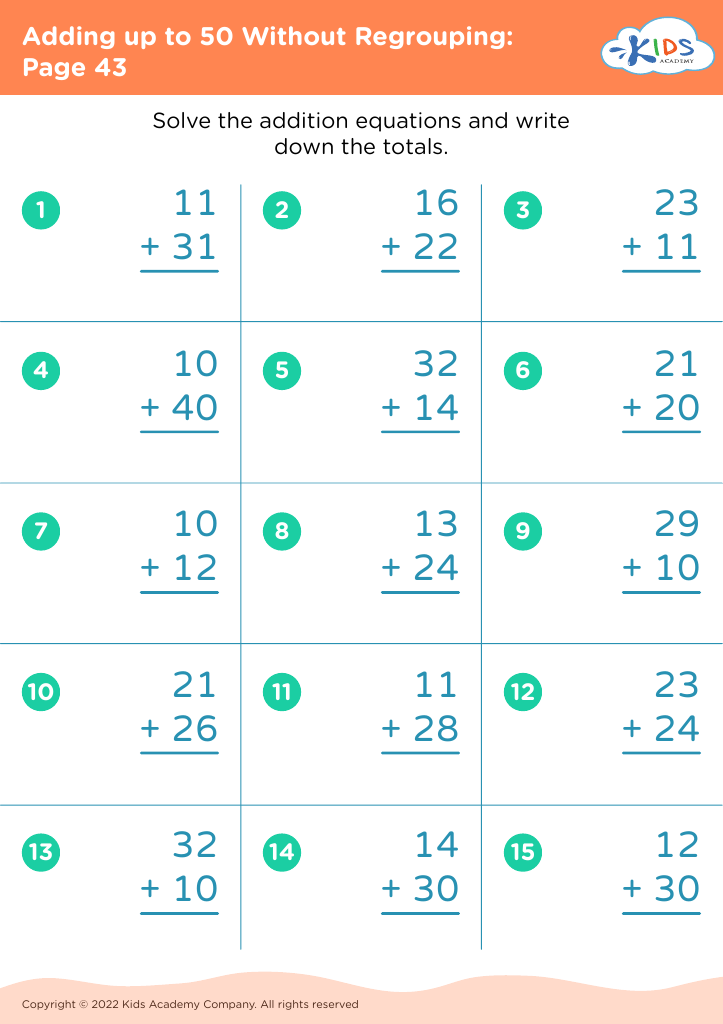
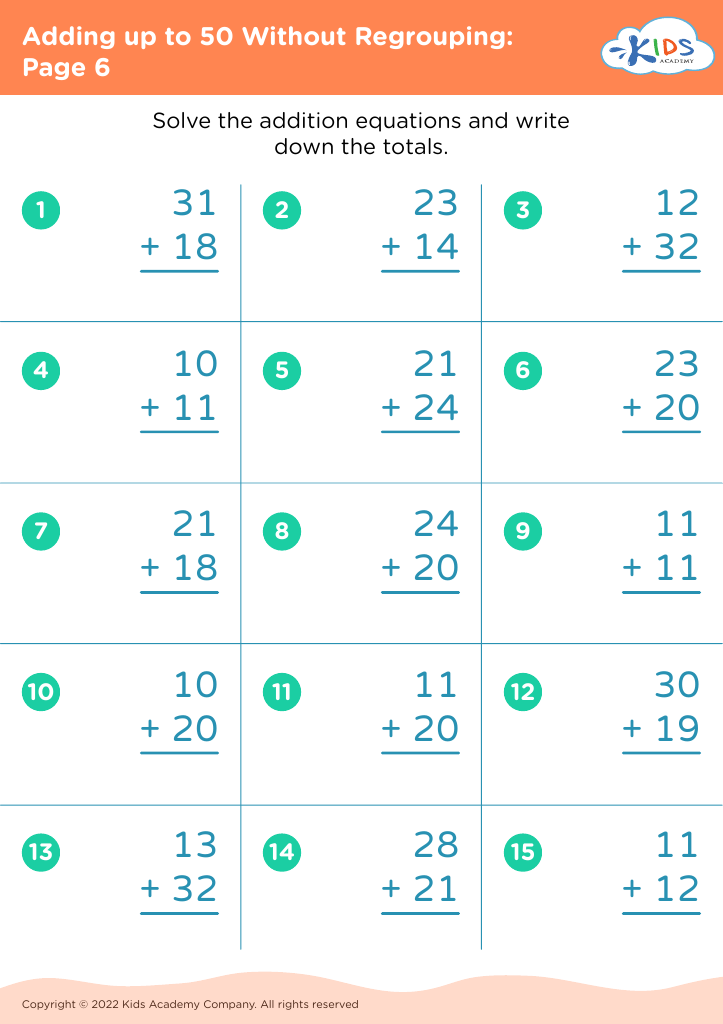
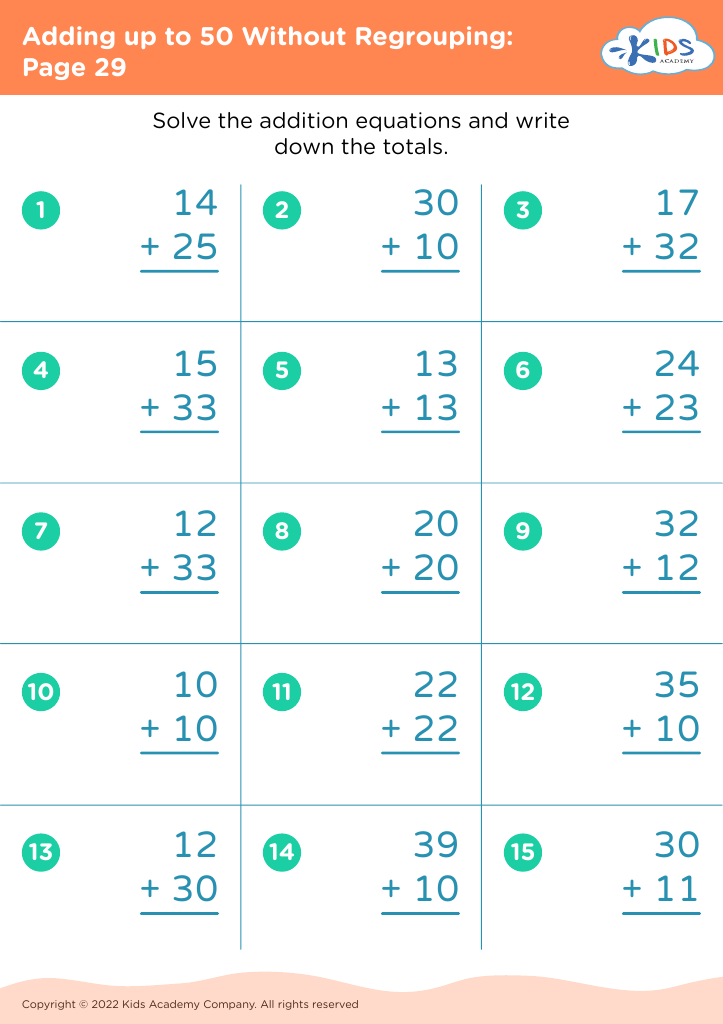
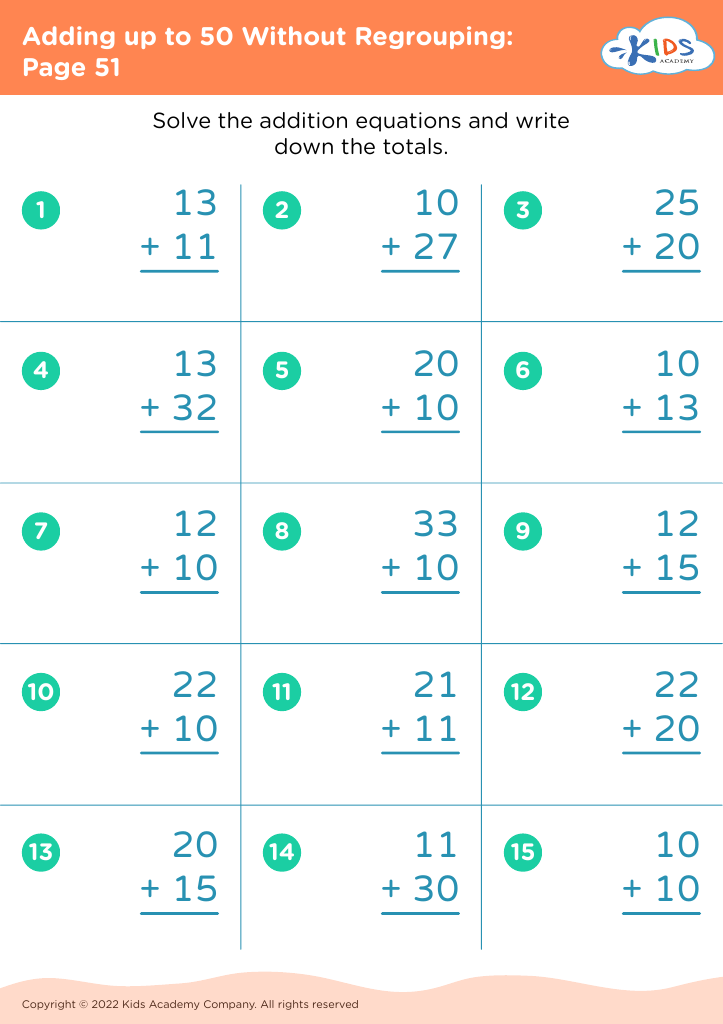
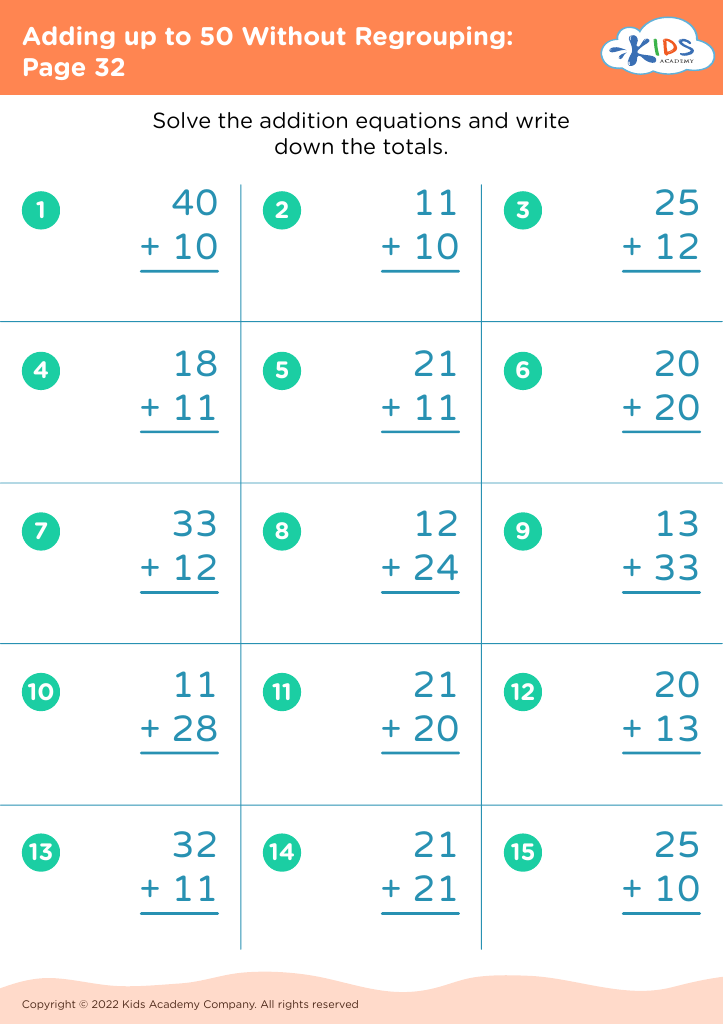


Identifying shapes and mastering basic addition without regrouping are foundational skills for young learners, making them essential for parents and teachers. Understanding shapes helps children develop spatial awareness, which is important not only in geometry but also in day-to-day problem-solving and creativity. As they recognize and name various shapes like circles, squares, and triangles, they build a vocabulary that enhances their communication skills. Engaging with shapes also fosters critical thinking, enabling children to categorize and differentiate between objects.
On the other hand, mastering addition up to 50 without regrouping allows children to build strong arithmetic skills early on. This skill strengthens number sense, promotes confidence in handling larger numbers, and prepares them for more advanced math concepts. Simplifying addition exercises enhances mental math abilities, encouraging children to solve problems quickly and accurately.
Together, these skills lay a strong educational foundation essential for future learning. They engage kids in hands-on activities, interactive games, and creative exploration, making learning enjoyable and effective. By focusing on these competencies, parents and teachers nurture well-rounded learners who will not only excel academically but also develop critical life skills in reasoning and navigation of the world around them.