Reading comprehension Adding up to 50 Without Regrouping Worksheets for Ages 3-8
3 filtered results
-
From - To
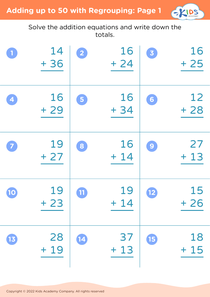
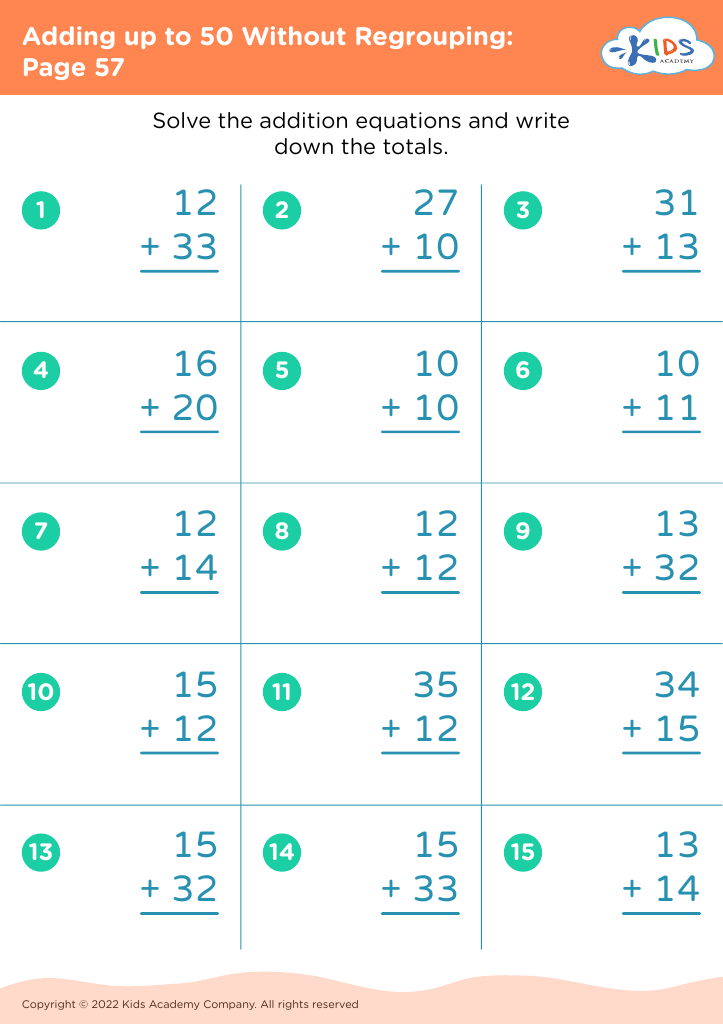
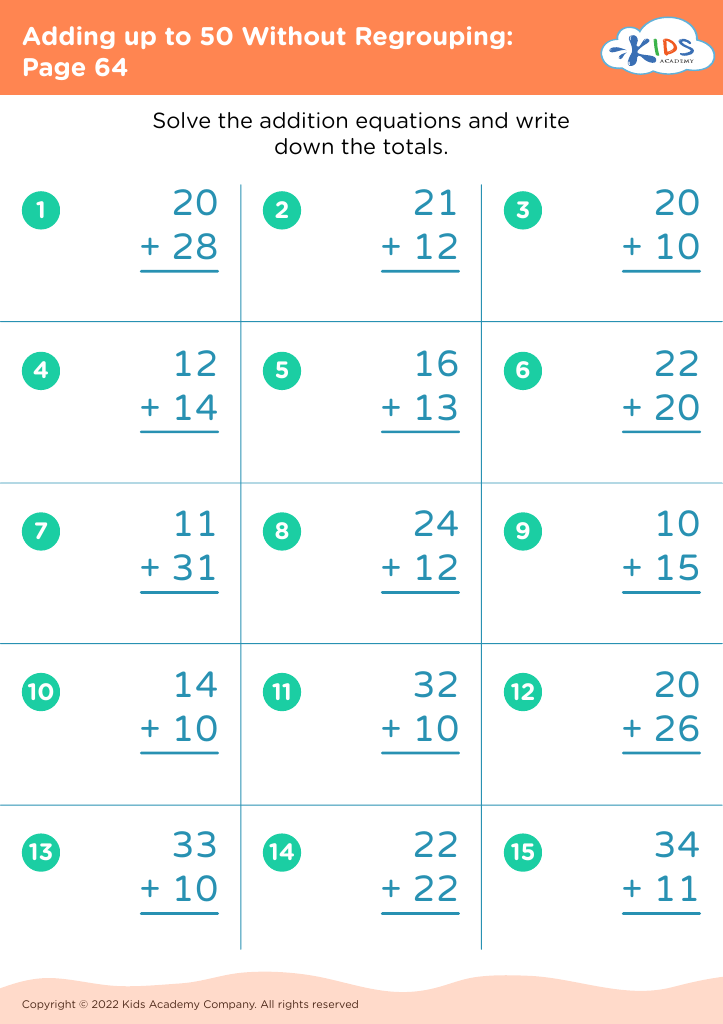
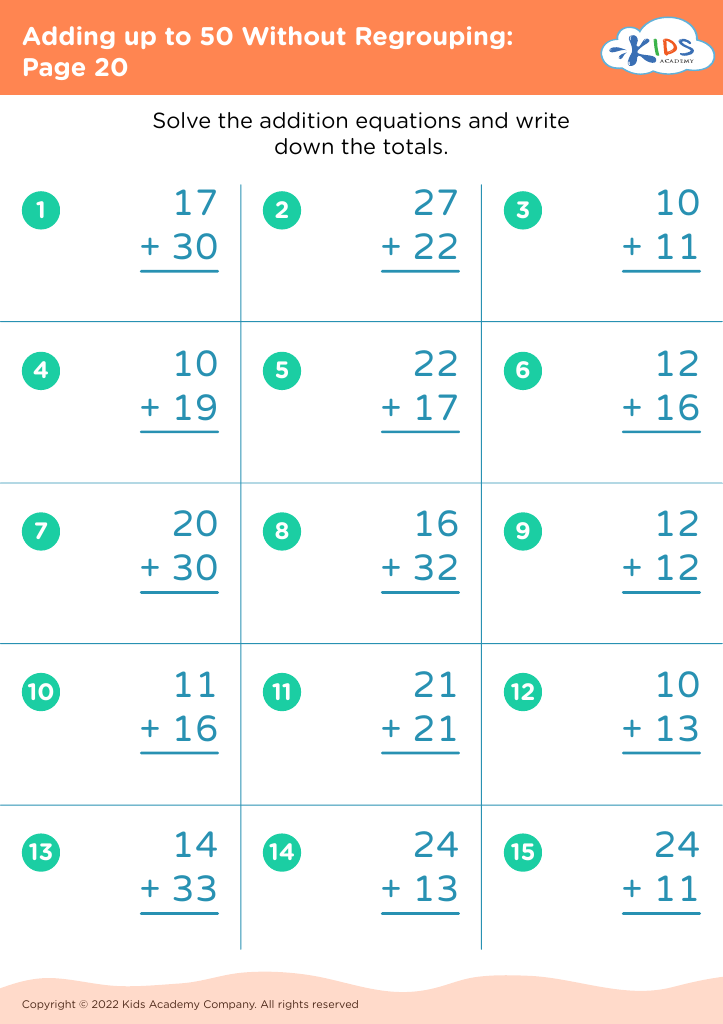
Welcome to our "Reading Comprehension Adding up to 50 Without Regrouping Worksheets" designed specifically for children ages 3-8! These engaging worksheets blend math and reading skills, helping young learners enhance their comprehension while mastering addition. Each activity encourages critical thinking as students solve addition problems without regrouping, reinforcing their understanding of numbers up to 50. Perfect for home or classroom use, these worksheets provide a fun way to promote literacy and numeracy skills together. Support your child's educational journey with our interactive activities that cater to their developmental needs, making learning both effective and enjoyable!


Reading comprehension and developing mathematical skills, such as adding up to 50 without regrouping, are essential for children aged 3-8. These foundational skills support overall academic success and foster critical thinking. When children grasp reading comprehension, they can understand and engage with stories, follow instructions, and express themselves clearly. This ability not only enhances their literacy but also boosts confidence in communication.
Similarly, mastering addition without regrouping provides a strong basis for future math concepts. It strengthens number sense and problem-solving skills, allowing kids to tackle more complex mathematical concepts as they advance. Both literacy and numeracy skills are interconnected; strong comprehension aids in understanding math word problems, fostering a holistic learning approach.
By focusing on these key areas, parents and teachers can play a pivotal role in nurturing lifelong learners. Engaging children through interactive reading sessions and fun math activities makes learning enjoyable, laying the groundwork for academic achievement. Moreover, these skills contribute to a child’s ability to navigate everyday life, preparing them for real-world challenges. Ultimately, investing in reading comprehension and math skills enhances a child's cognitive development and equips them with the tools necessary for success in school and beyond.