Recognizing shapes Adding up to 50 Without Regrouping Worksheets for Ages 3-8
5 filtered results
-
From - To
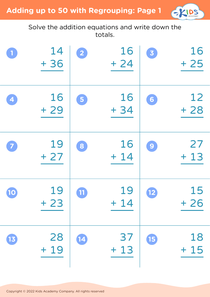
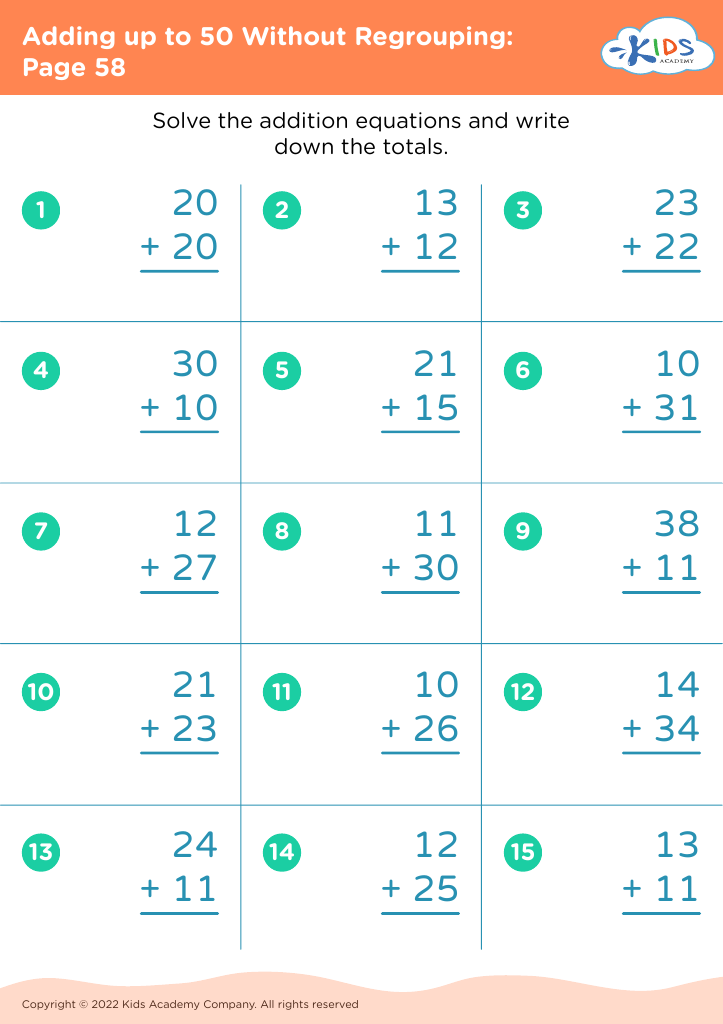
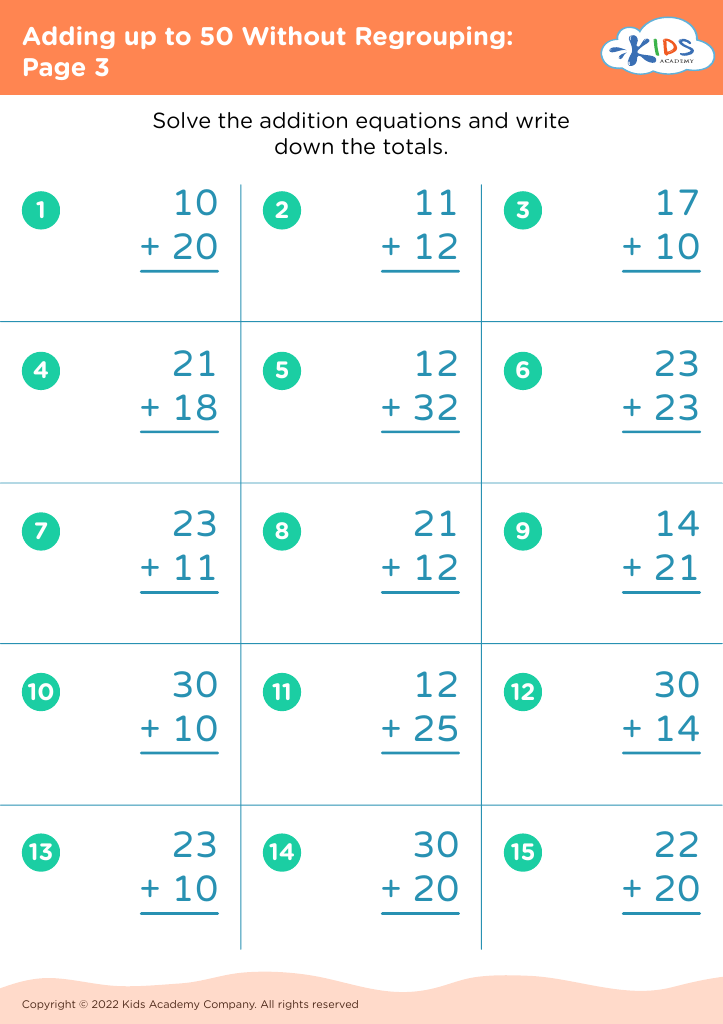
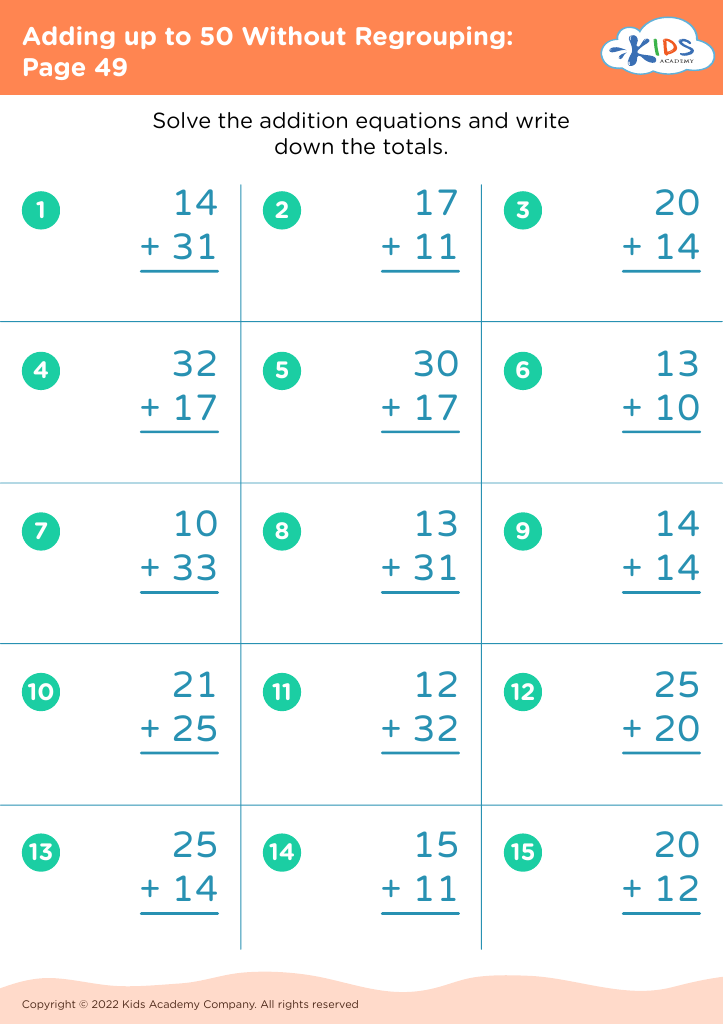
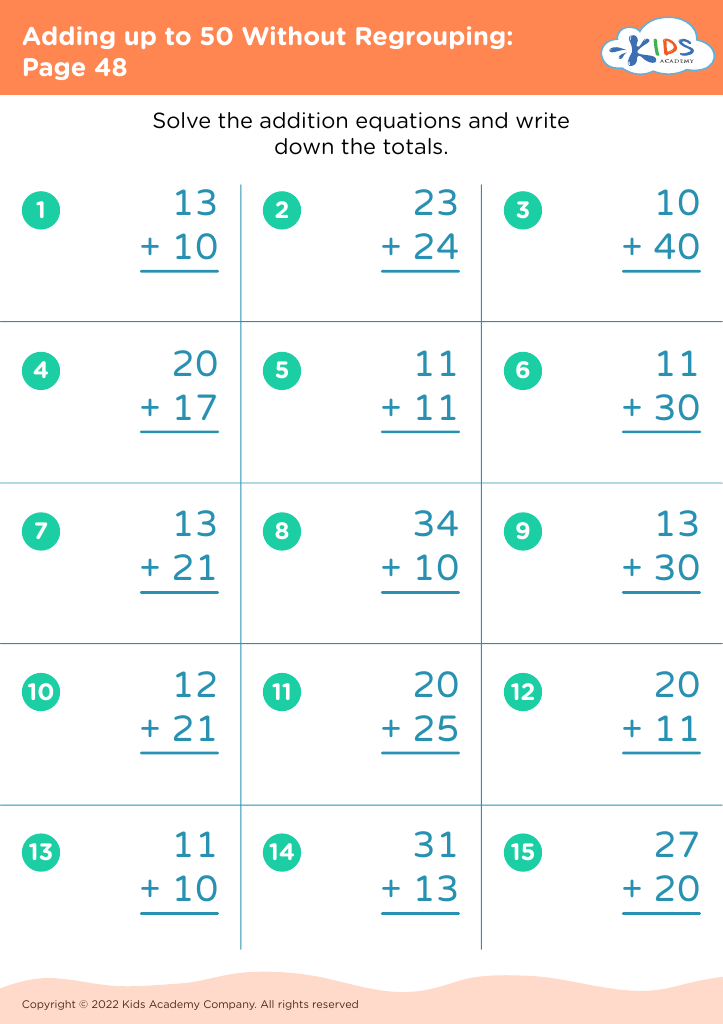
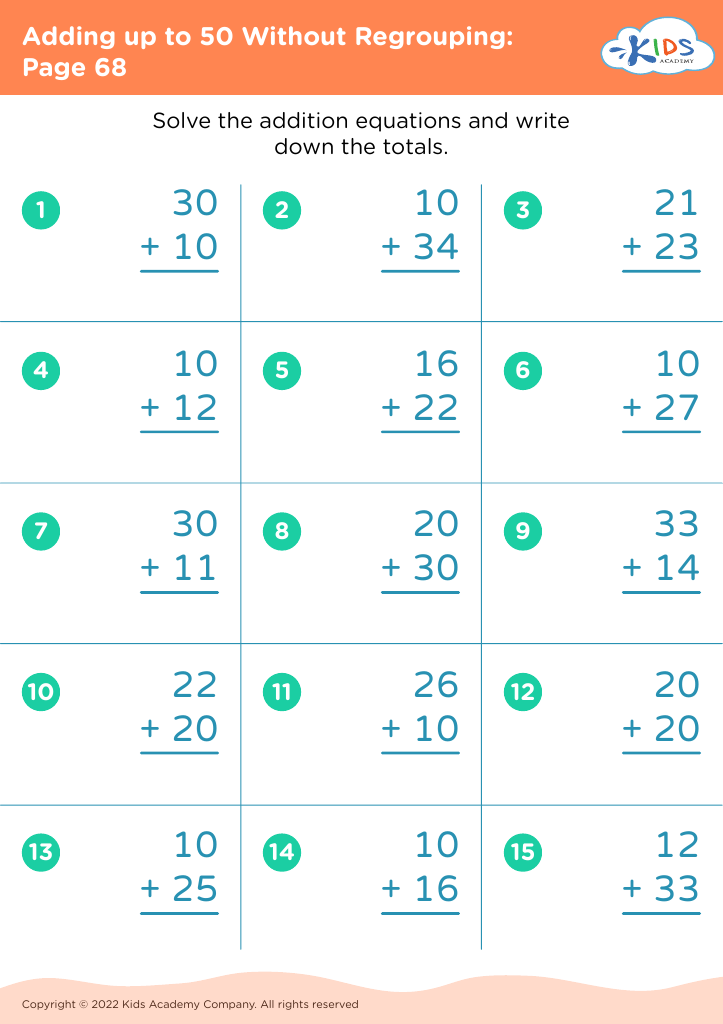
Our "Recognizing Shapes Adding up to 50 Without Regrouping Worksheets" for ages 3-8 combine foundational math skills with engaging shape recognition activities. These printable worksheets are designed to help young learners practice addition within 50, enhancing their number sense and arithmetic abilities without the complexity of regrouping. Each worksheet incorporates fun and educational shape identification tasks, ensuring an interactive learning experience. Perfect for home or classroom settings, these activities support fine motor skills, critical thinking, and a strong mathematical foundation, preparing children for more advanced concepts while keeping learning enjoyable. Explore our collection to boost your child's confidence and skills!


Recognizing shapes and learning basic addition are foundational skills in early childhood education, crucial for children aged 3-8. Parents and teachers should prioritize these for several compelling reasons. First, understanding shapes enhances spatial awareness and helps children make sense of the physical world. It’s a precursor to geometry and aids in recognizing patterns, which is fundamental for both mathematics and literacy. For example, distinguishing between a square and a triangle helps in alphabet recognition, as letters have distinct shapes.
Adding up to 50 without regrouping provides a solid introduction to basic math operations. This skill helps children understand the concepts of quantity and number sense, fostering an intuitive grasp of addition before the complications of carrying or regrouping are introduced. It builds confidence and lets children master simple operations, making the transition to more complex mathematics smoother.
Furthermore, these early math skills are linked to academic success in later years. Children who grasp these concepts early are more likely to find mathematics easier and more enjoyable down the road. Moreover, success in these areas fosters a positive attitude towards learning and school in general, setting the stage for a lifelong interest in academic pursuits. Therefore, investing time in teaching these concepts has long-lasting educational benefits.