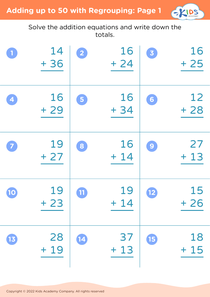
Understanding patterns Adding up to 50 Without Regrouping Worksheets for Ages 3-8
5 filtered results
-
From - To
Discover our engaging "Understanding Patterns: Adding Up to 50 Without Regrouping" worksheets, designed specifically for children aged 3 to 8. These worksheets help young learners recognize mathematical patterns and develop essential addition skills in a fun and interactive way. By focusing on sums up to 50, children will master foundational math concepts while gaining confidence in their abilities. Activities encourage critical thinking and pattern recognition through colorful visuals and stimulating exercises. Perfect for classroom use or at-home learning, these worksheets make math enjoyable and accessible for early learners. Start your child's mathematical journey today!
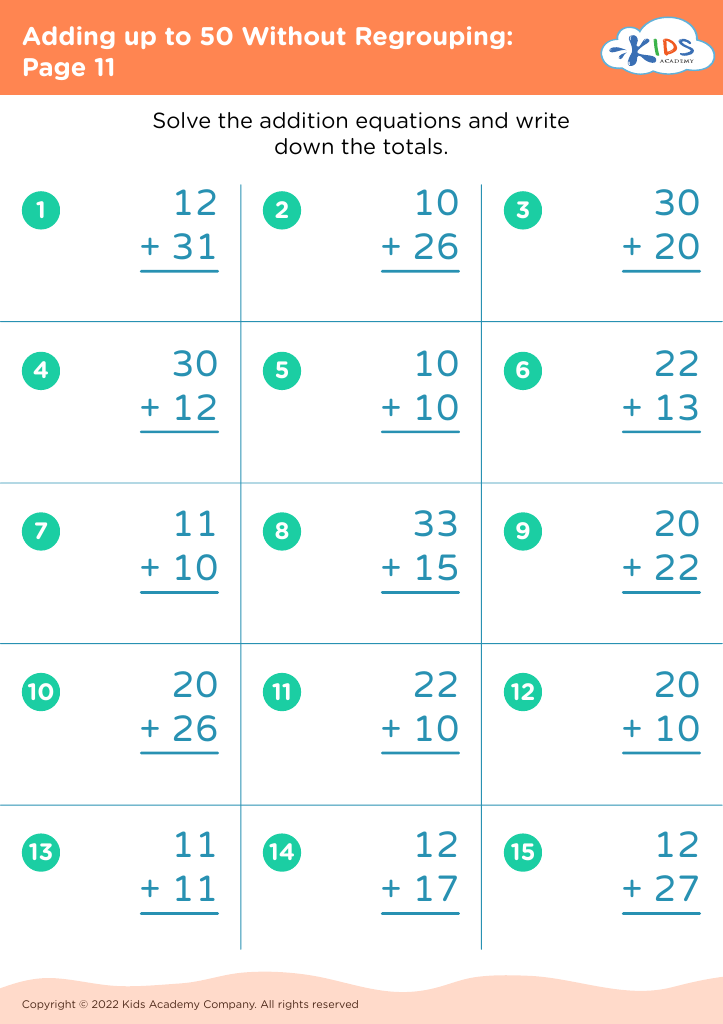
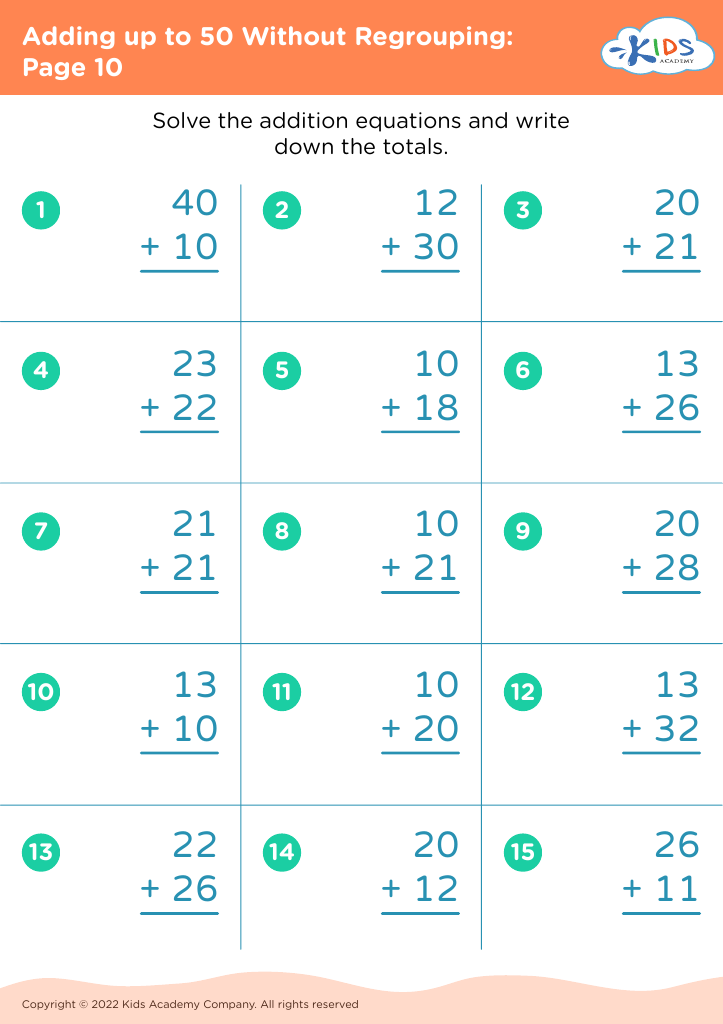
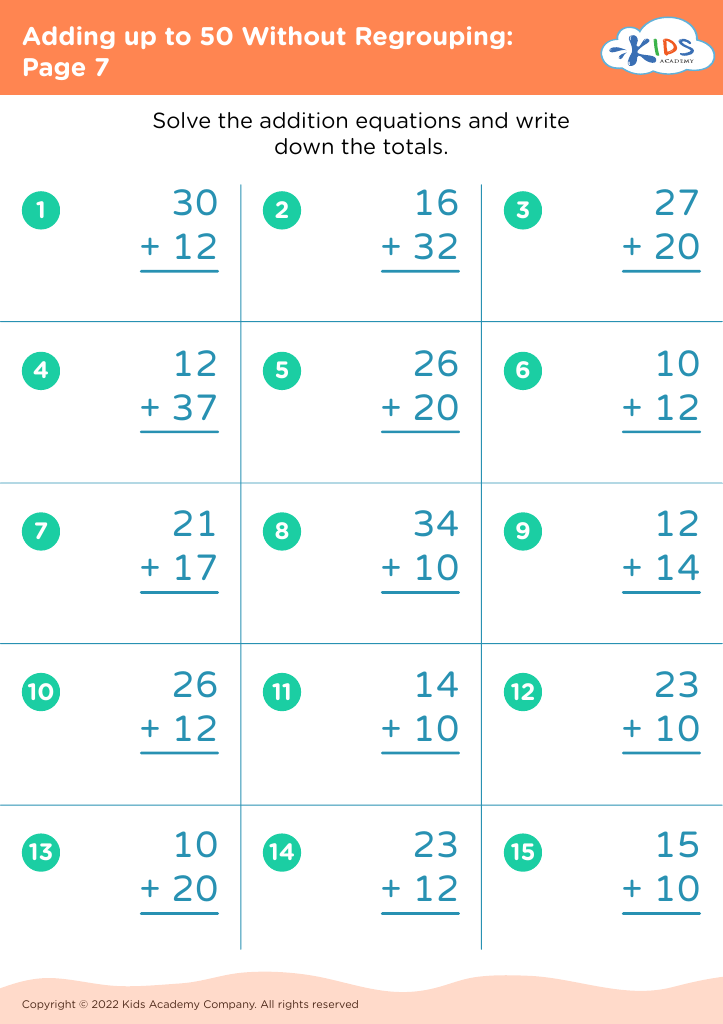
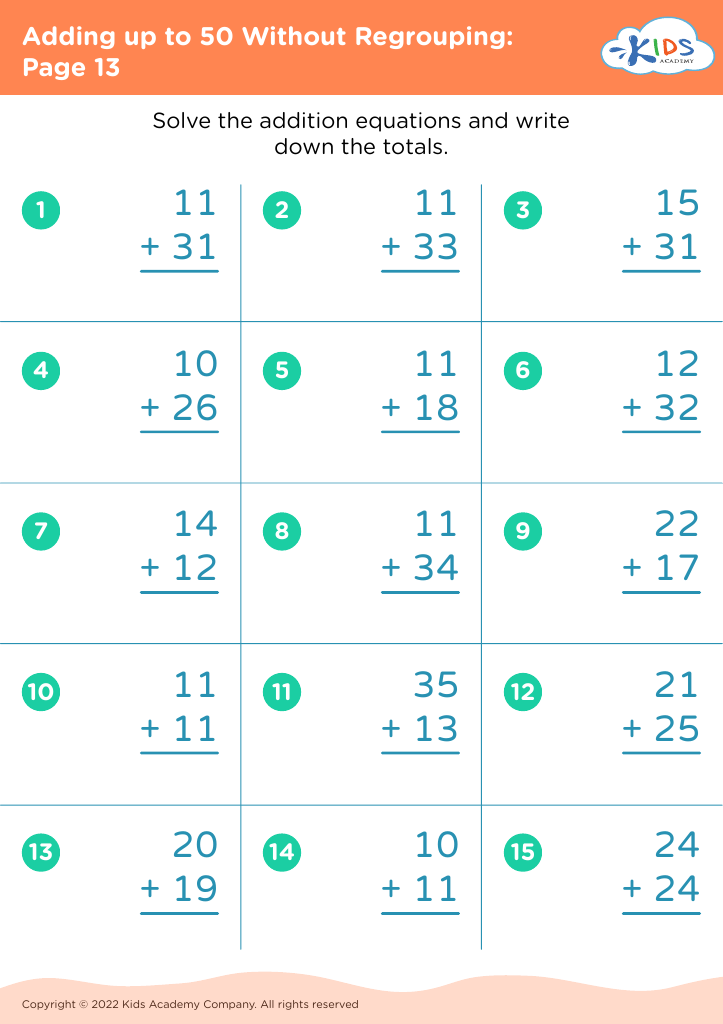
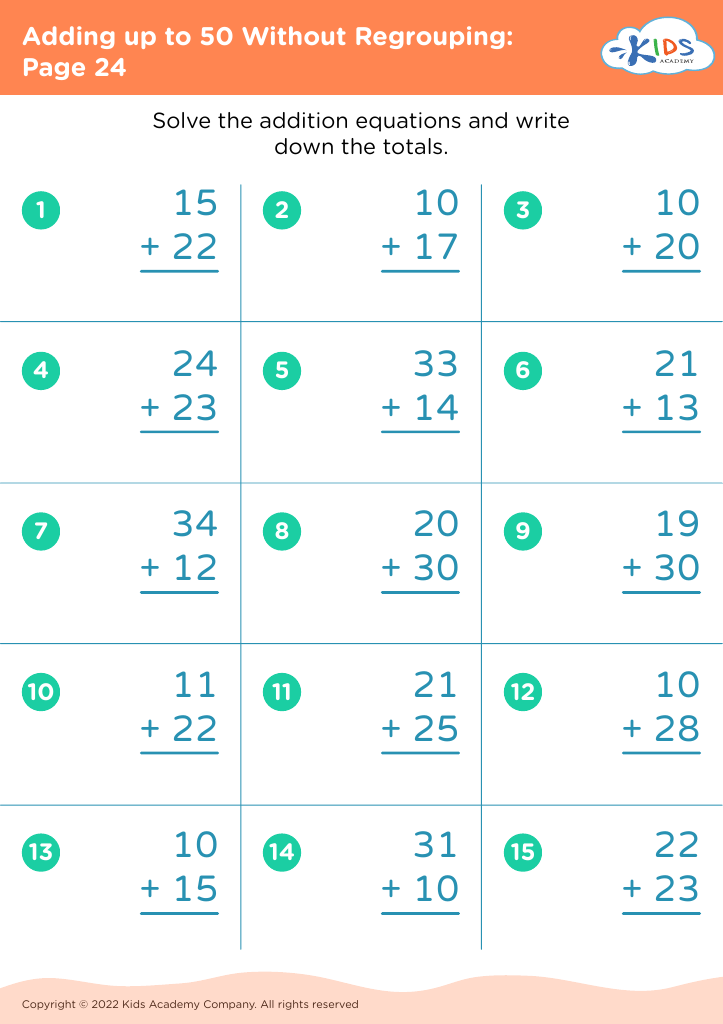


Understanding patterns and addition without regrouping, particularly adding up to 50, is a crucial skill for children ages 3-8. This developmental milestone fosters a foundational comprehension of mathematics that extends beyond simple computation. Learning to identify numerical patterns enhances critical thinking and problem-solving abilities. By recognizing patterns, children can better predict sequences, understand relationships between numbers, and develop fluency in addition, which prepares them for more complex math concepts later.
In an early educational setting, grasping this concept aids in the formation of cognitive connections, allowing children to relate mathematical ideas to real-world situations. It facilitates smoother transitions to advanced math topics, ensuring that students build on their knowledge progressively, reducing anxiety around numbers. Moreover, when teachers and parents emphasize the importance of these concepts through engaging activities, they promote a positive attitude toward math.
Additionally, the skill of adding without regrouping becomes particularly valuable as it encourages mental math strategies, diminishing reliance on calculators and fostering independence. This is beneficial in everyday life and instills confidence in young learners, ensuring they embrace mathematics with enthusiasm as they progress through their educational journeys. Overall, mastering such foundational skills is essential for academic success and lifelong learning.