Check out this FREE Trial Lesson on Addition & Subtraction for age 3-8!

Sorting Objects into 3 Categories

Favorites
With answer key
Interactive
  • 3-8
  • Fraction simplification
  • Addition & Subtraction
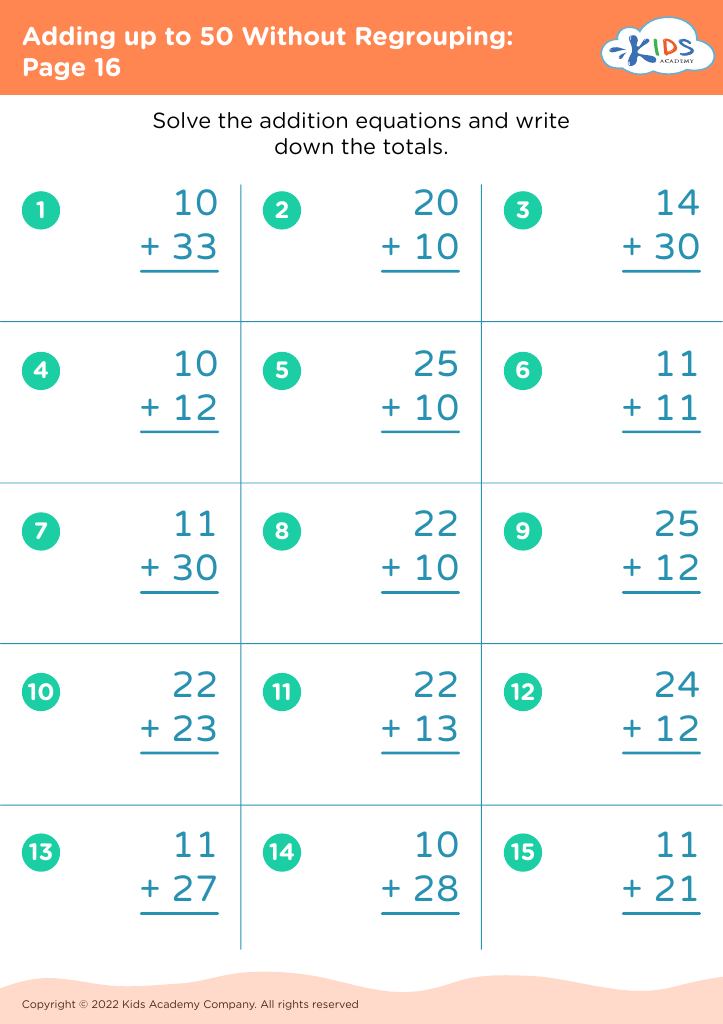
Adding up to 50 Without Regrouping: Page 16
Worksheet
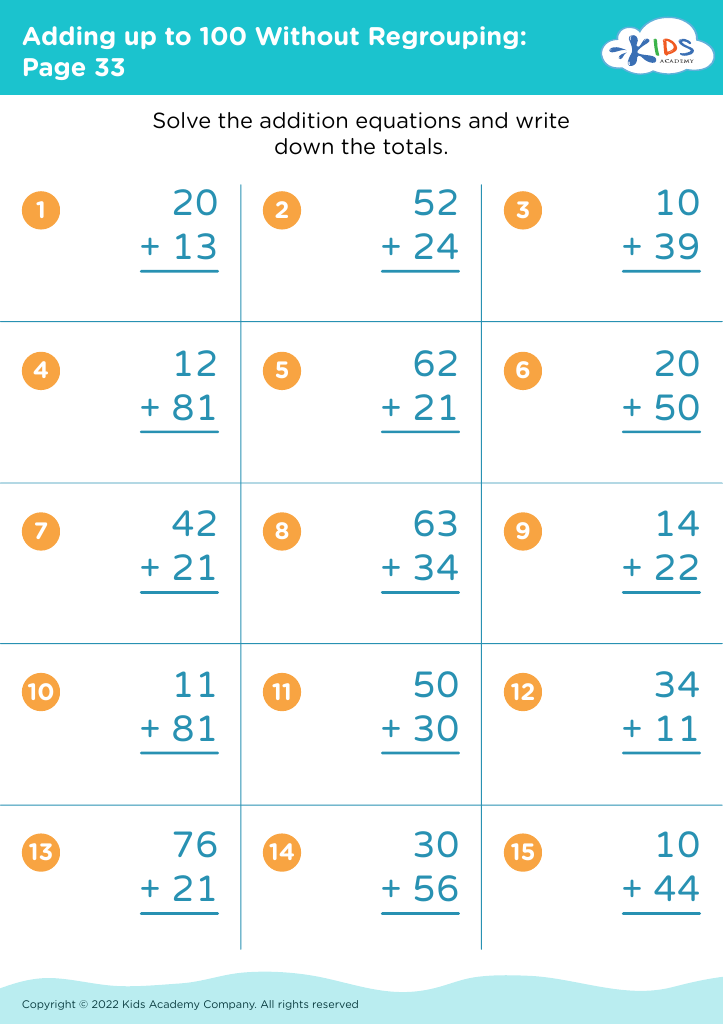
Adding up to 100 Without Regrouping: Page 33
Worksheet
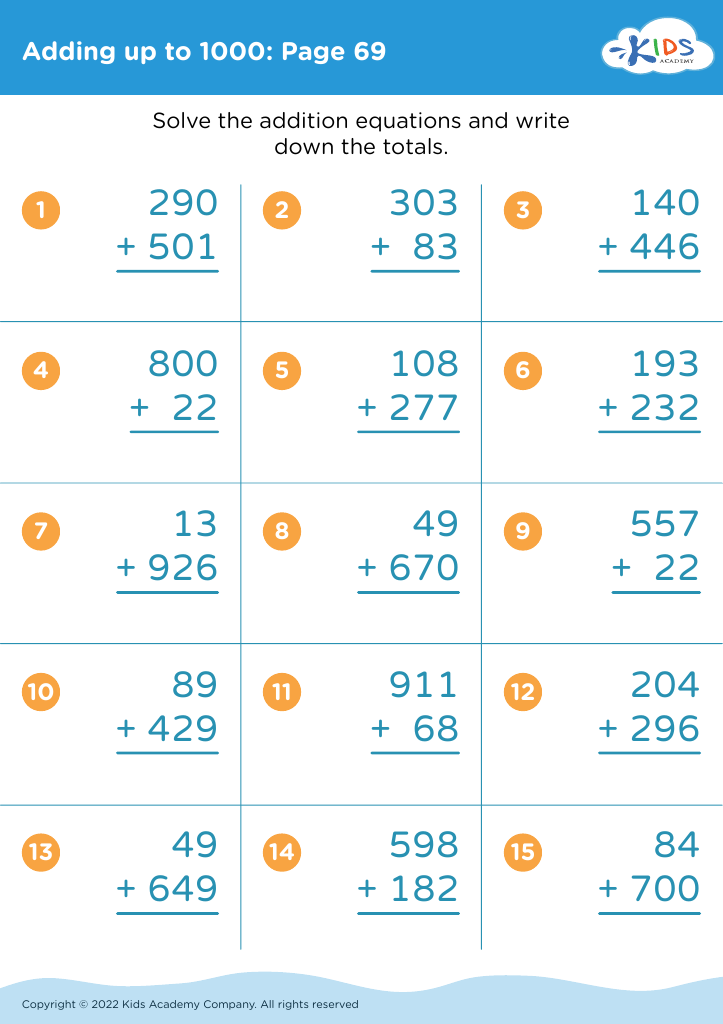
Adding up to 1000: Page 69

Adding up to 1000: Page 69

Adding up to 1000: Page 69
Worksheet
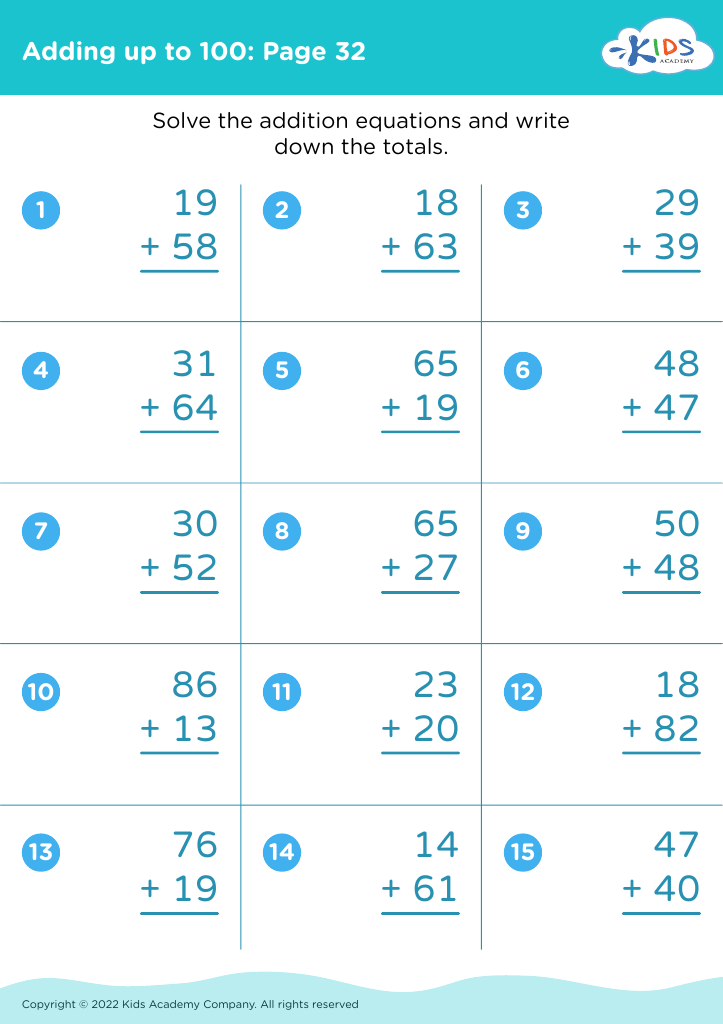
Adding up to 100: Page 32

Adding up to 100: Page 32

Adding up to 100: Page 32
Worksheet
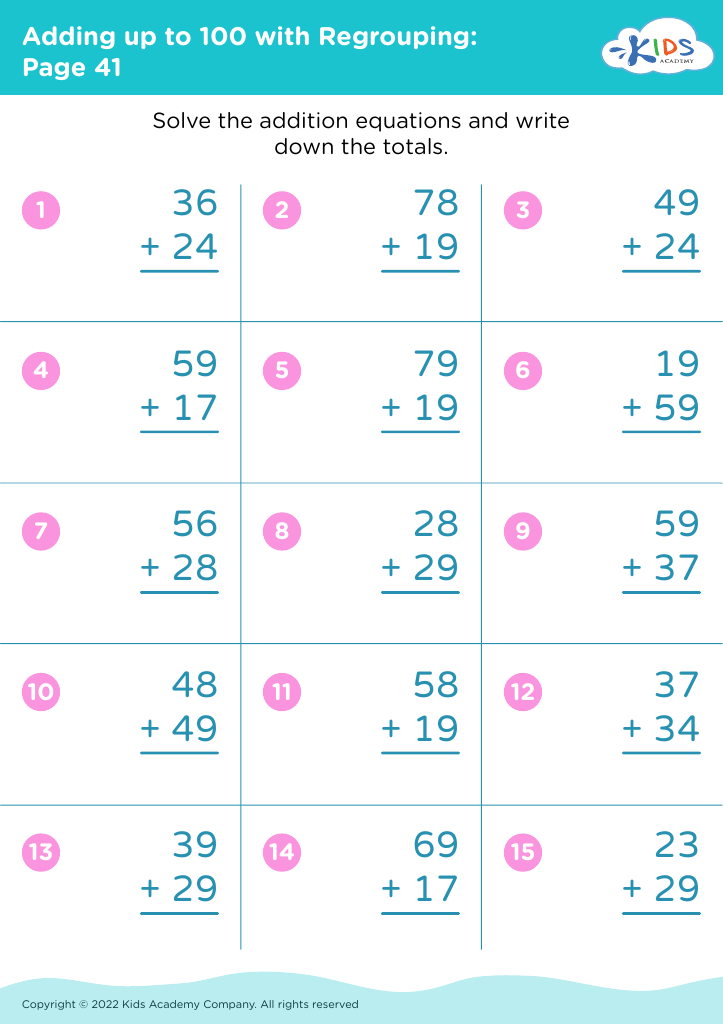
Adding up to 100 with Regrouping: Page 41
Worksheet
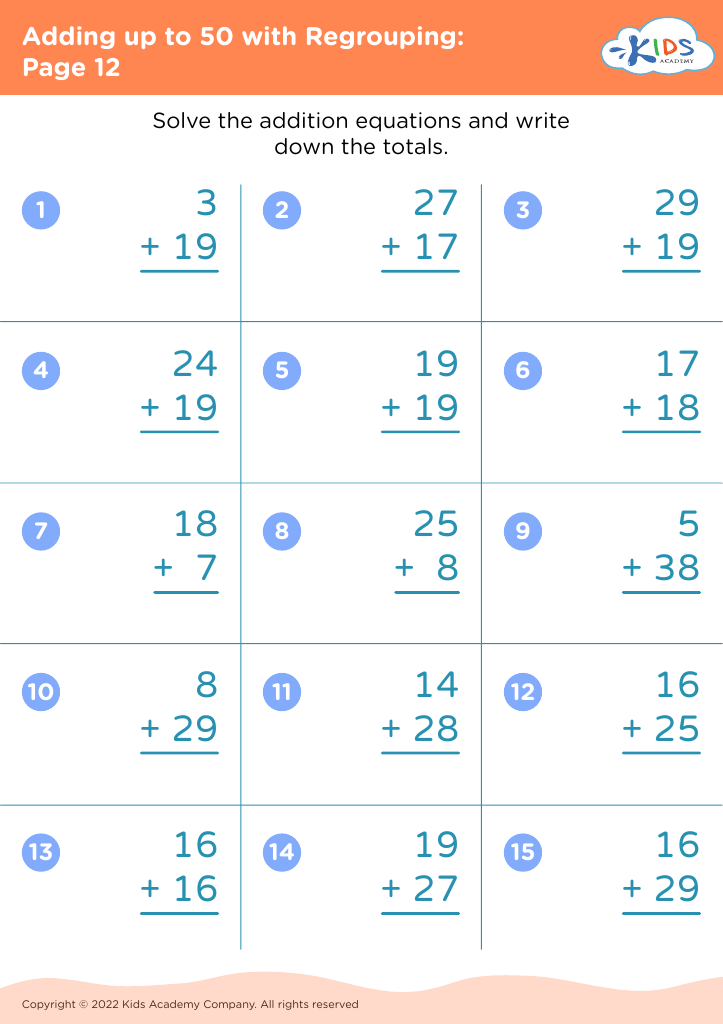
Adding up to 50 with Regrouping: Page 12
Worksheet
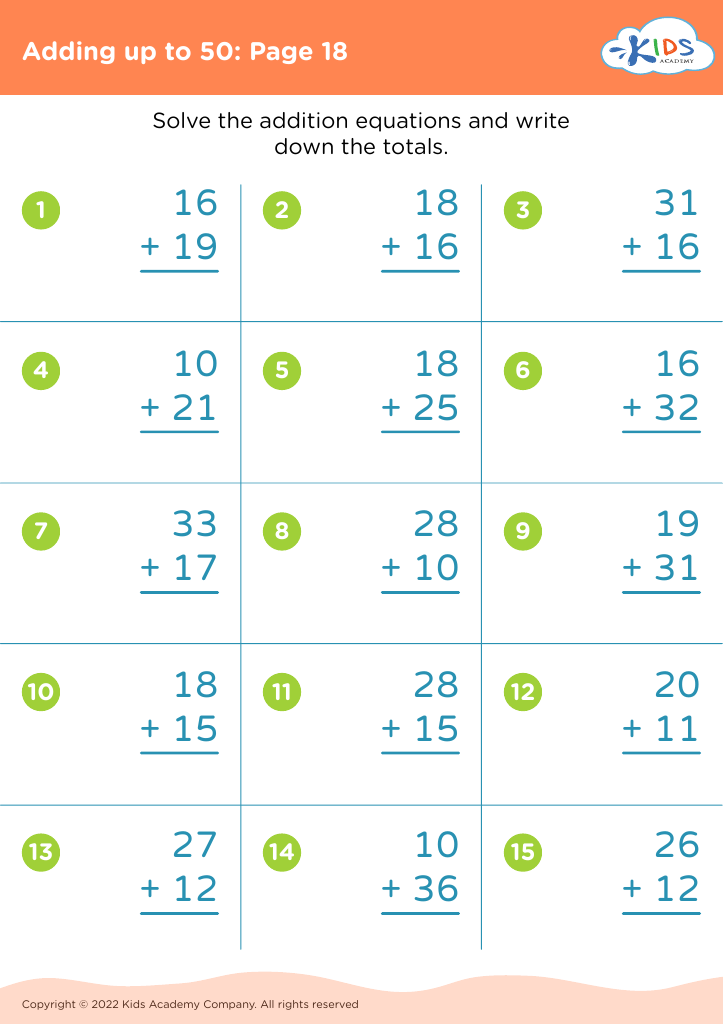
Adding up to 50: Page 18

Adding up to 50: Page 18

Adding up to 50: Page 18
Worksheet
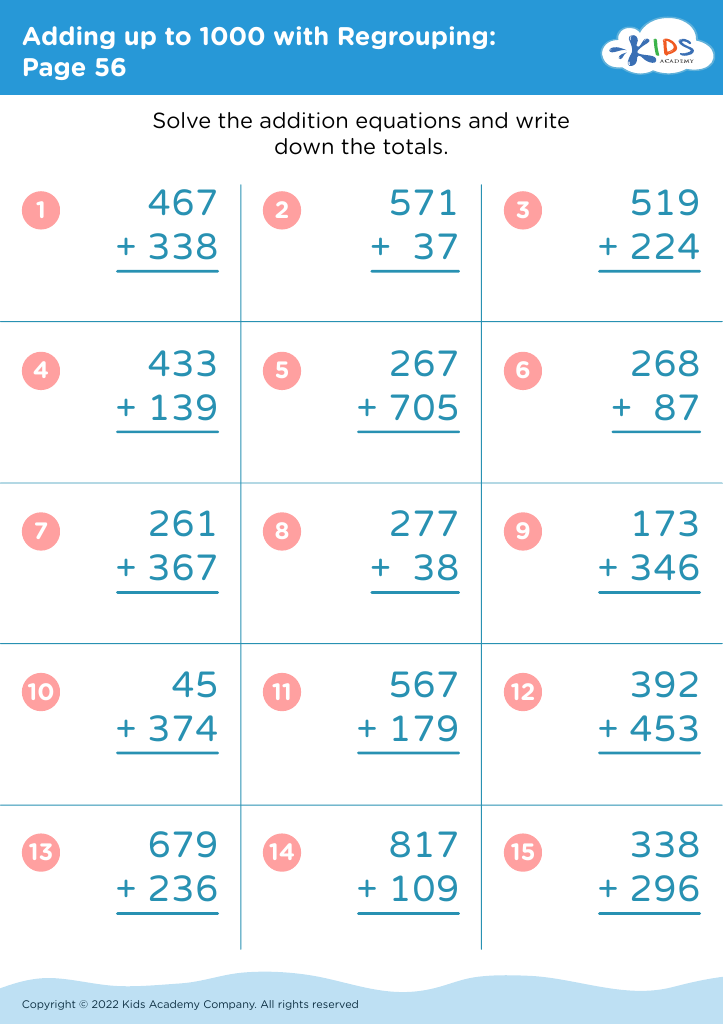
Adding up to 1000 with Regrouping: Page 56
Worksheet
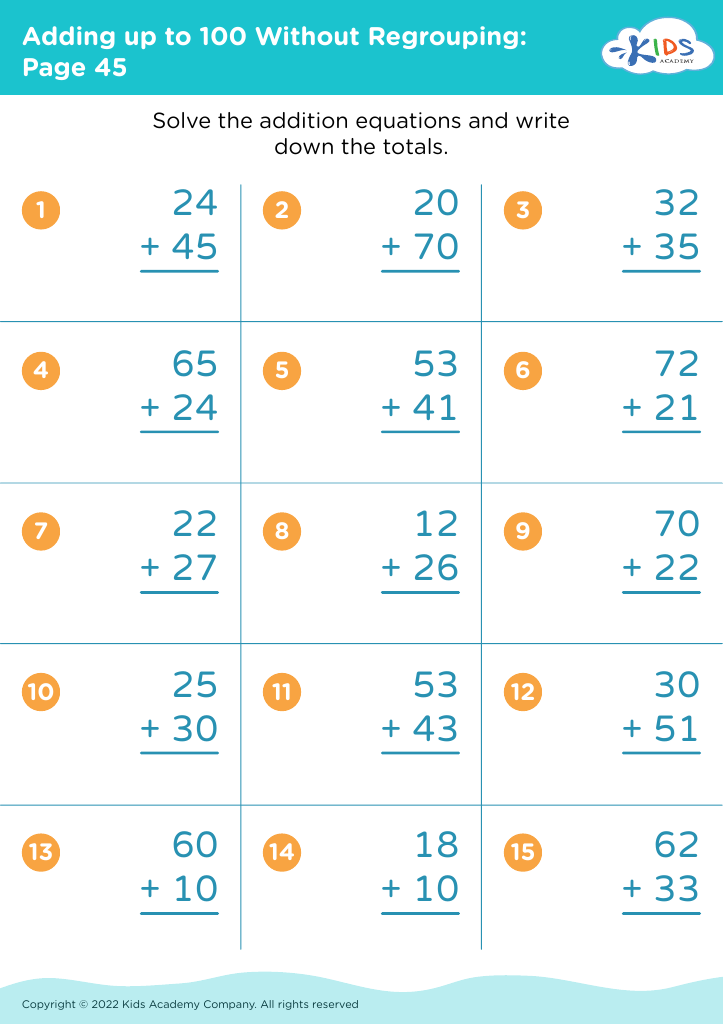
Adding up to 100 Without Regrouping: Page 45
Worksheet
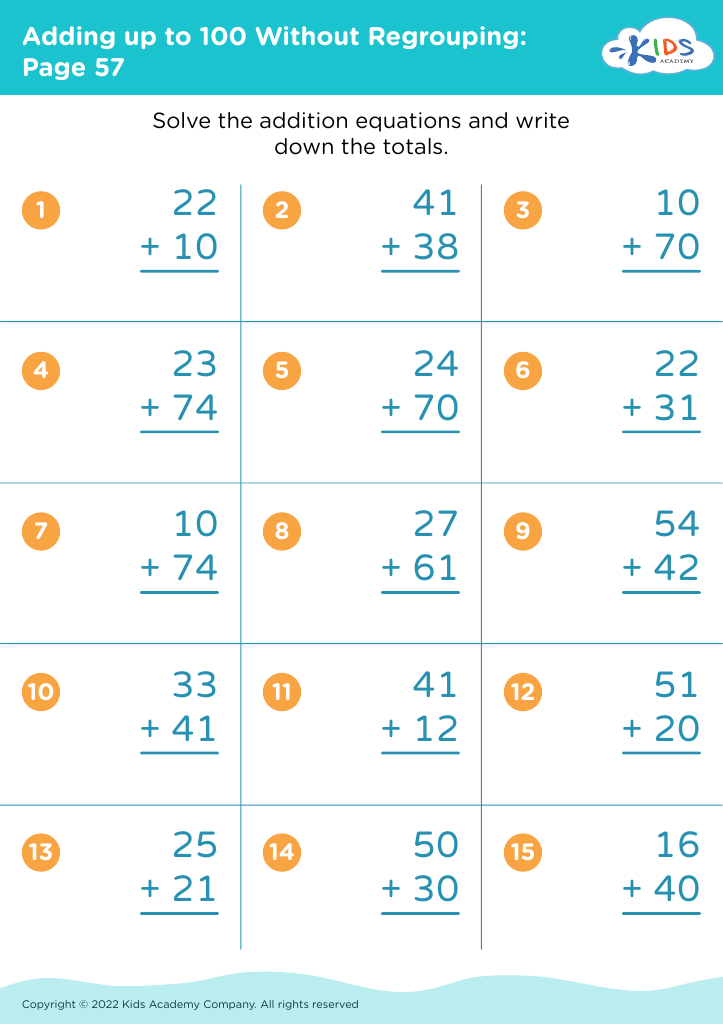
Adding up to 100 Without Regrouping: Page 57
Worksheet
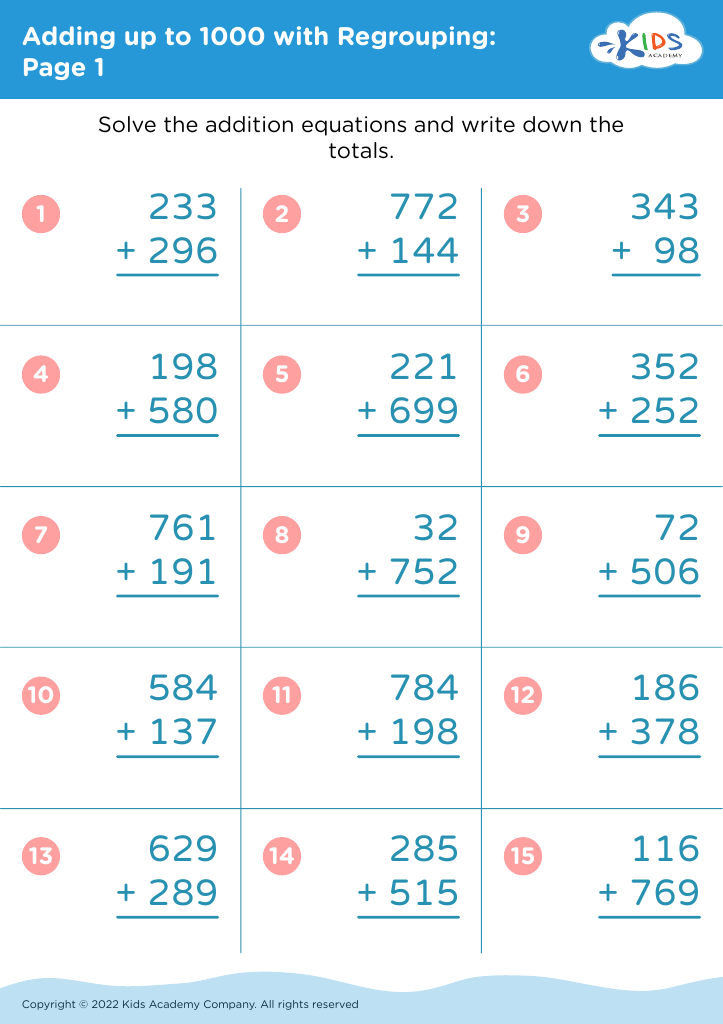
Adding up to 1000 with Regrouping: Page 1
Worksheet
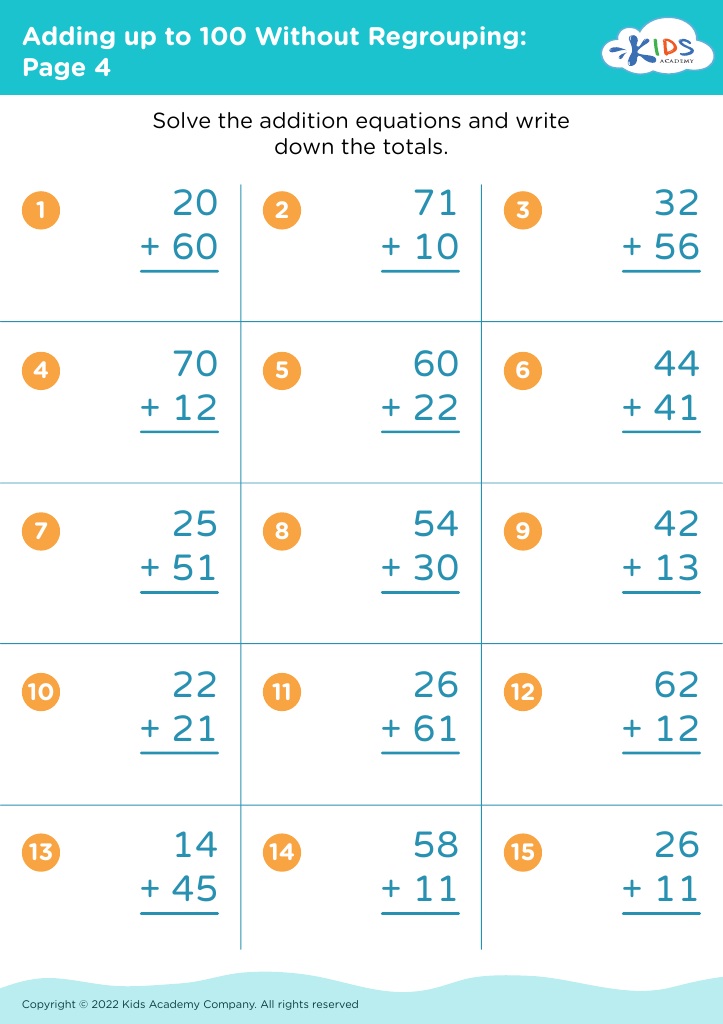
Adding up to 100 Without Regrouping: Page 4
Worksheet
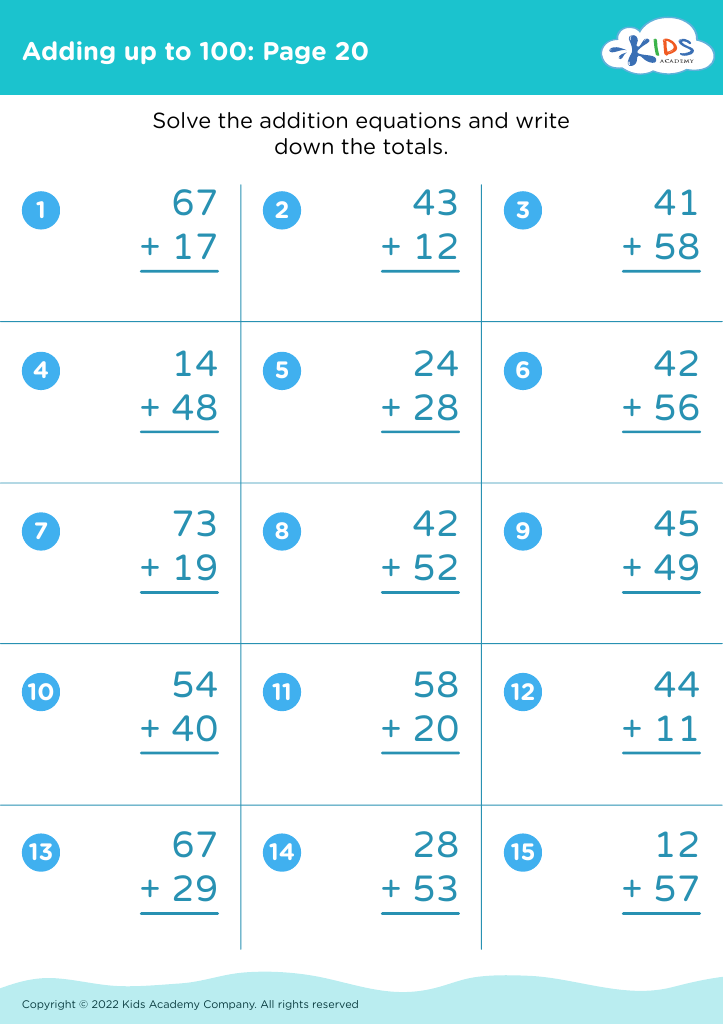
Adding up to 100: Page 20

Adding up to 100: Page 20

Adding up to 100: Page 20
Worksheet
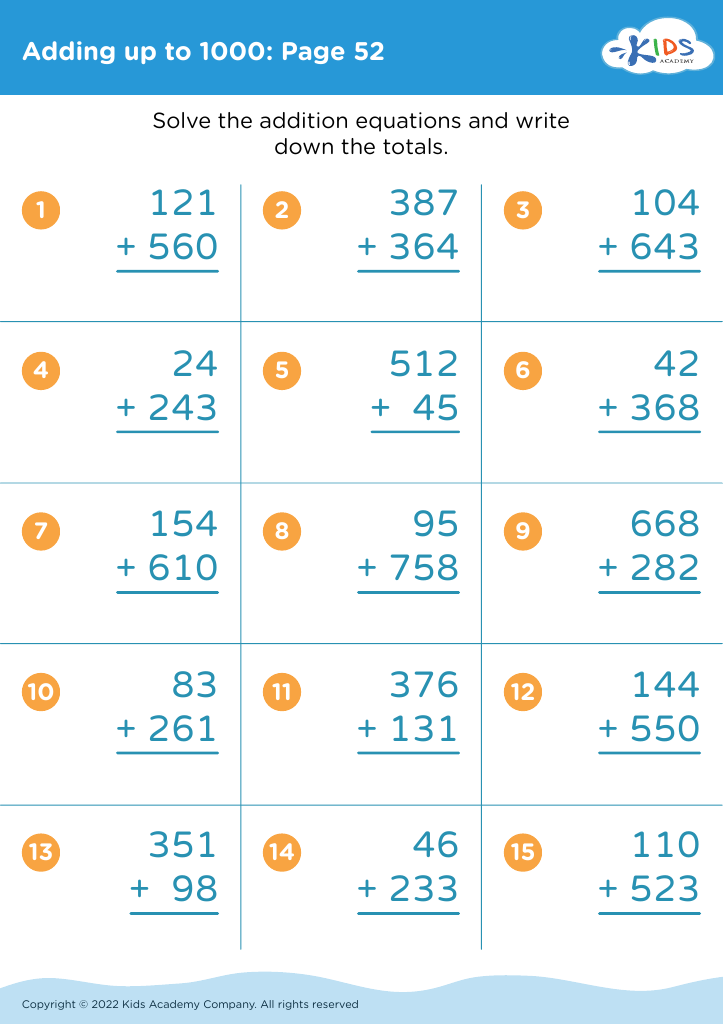
Adding up to 1000: Page 52

Adding up to 1000: Page 52

Adding up to 1000: Page 52
Worksheet
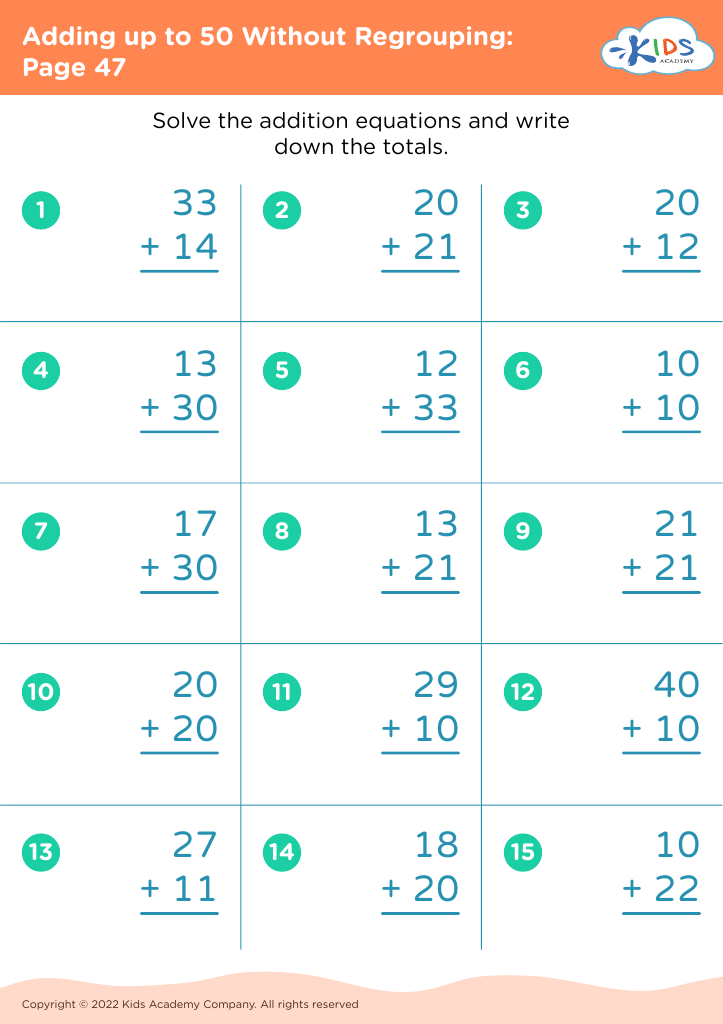
Adding up to 50 Without Regrouping: Page 47
Worksheet
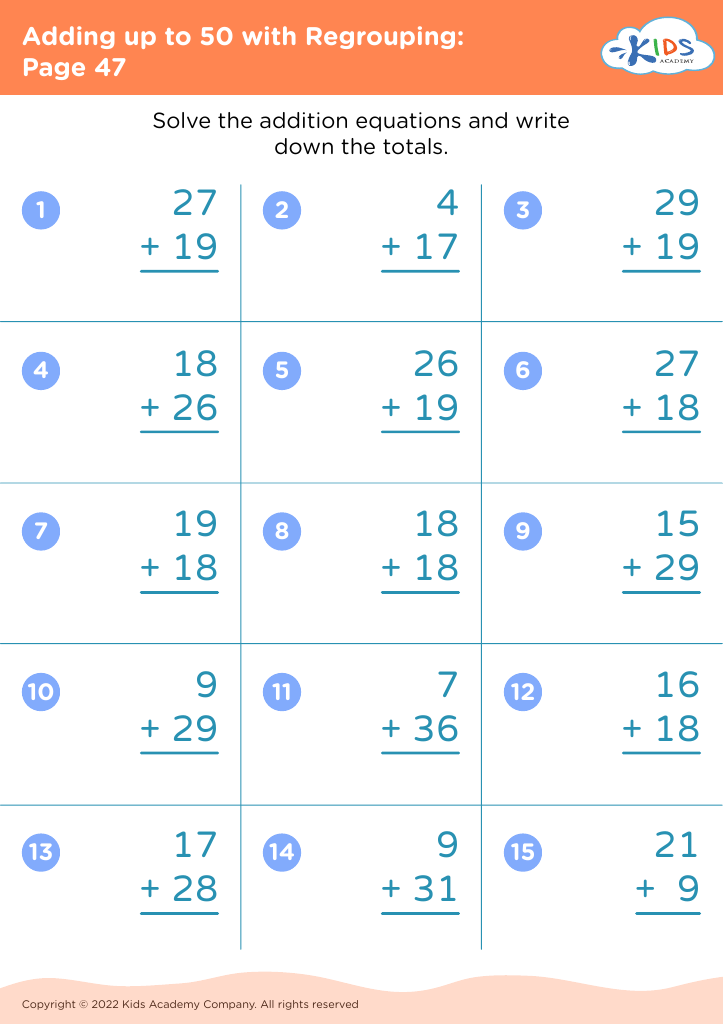
Adding up to 50 with Regrouping: Page 47
Worksheet
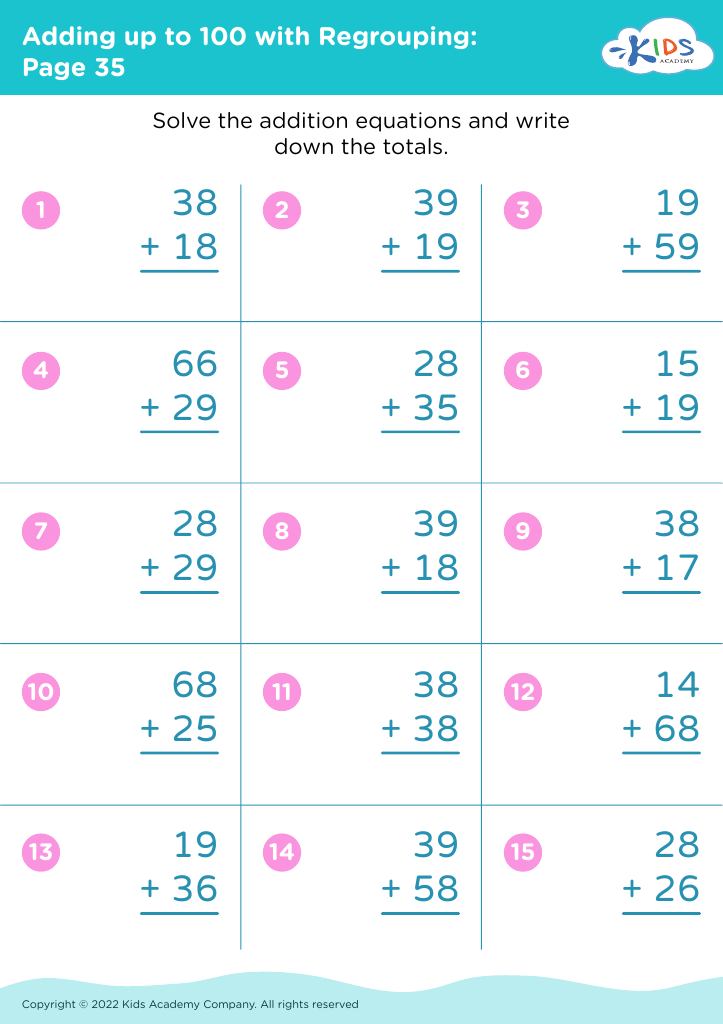
Adding up to 100 with Regrouping: Page 35
Worksheet
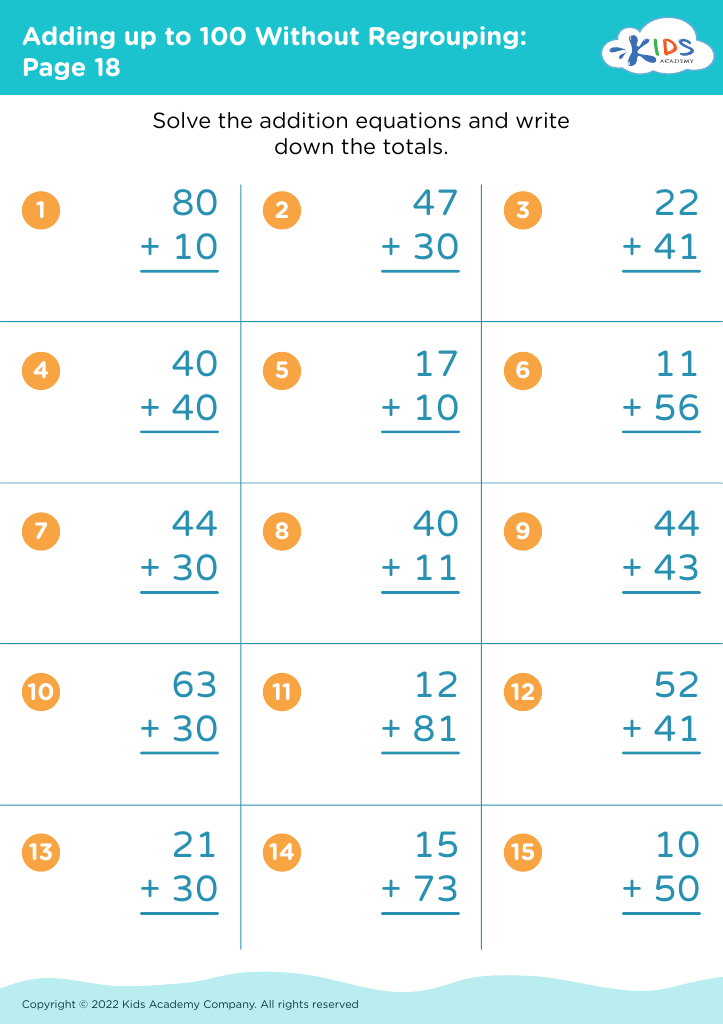
Adding up to 100 Without Regrouping: Page 18
Worksheet
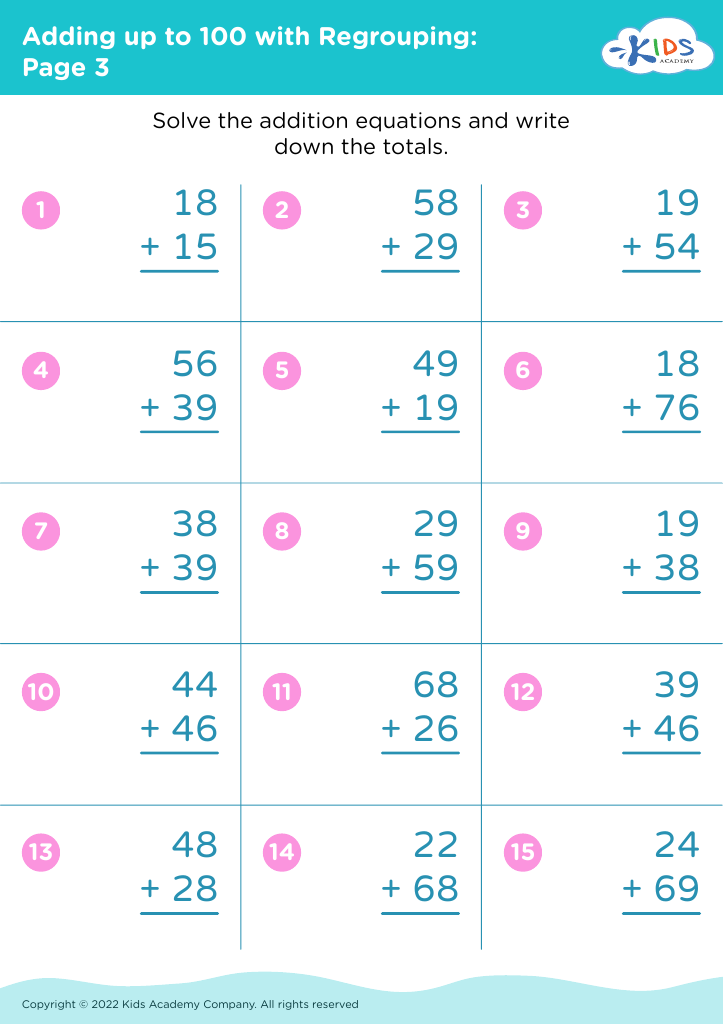
Adding up to 100 with Regrouping: Page 3
Worksheet
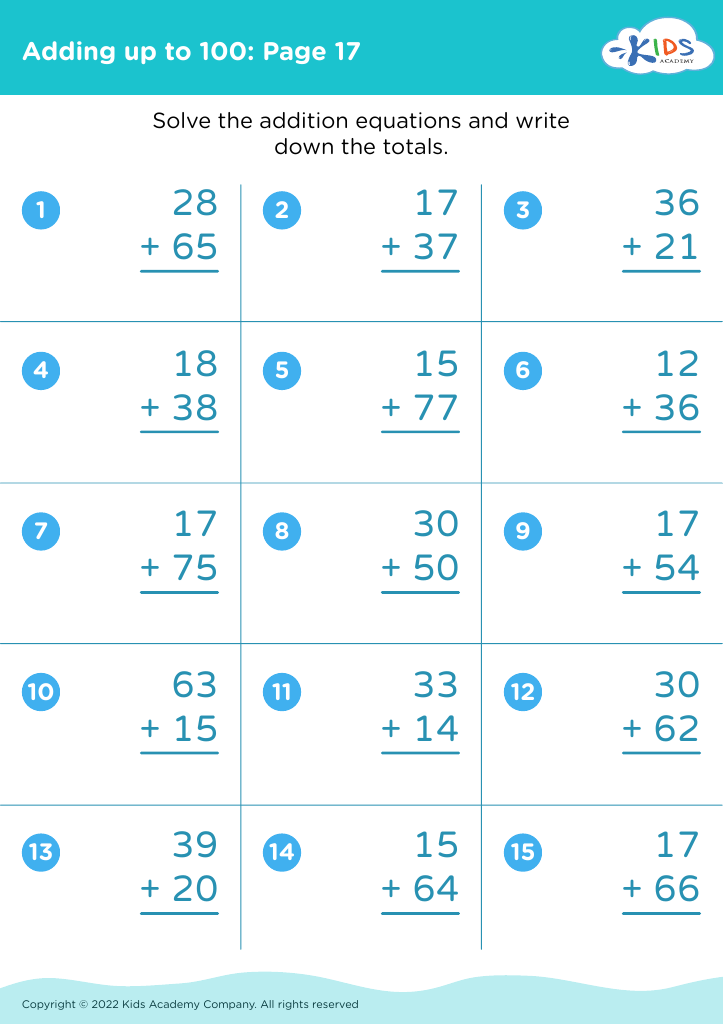
Adding up to 100: Page 17

Adding up to 100: Page 17

Adding up to 100: Page 17
Worksheet
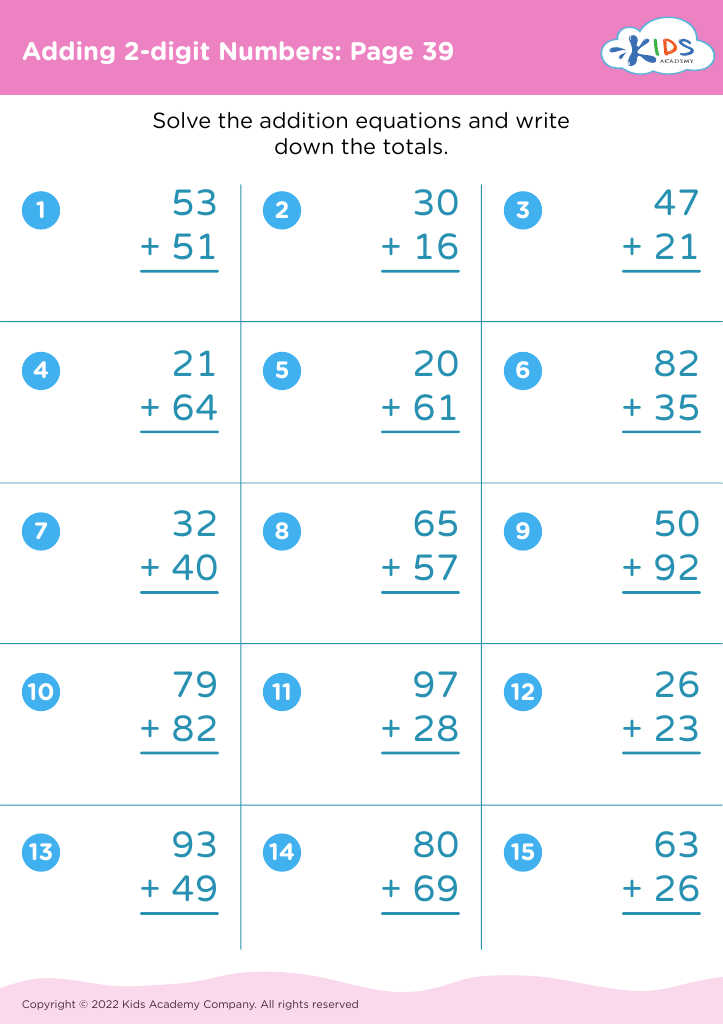
Adding 2-digit Numbers: Page 39

Adding 2-digit Numbers: Page 39

Adding 2-digit Numbers: Page 39
Worksheet
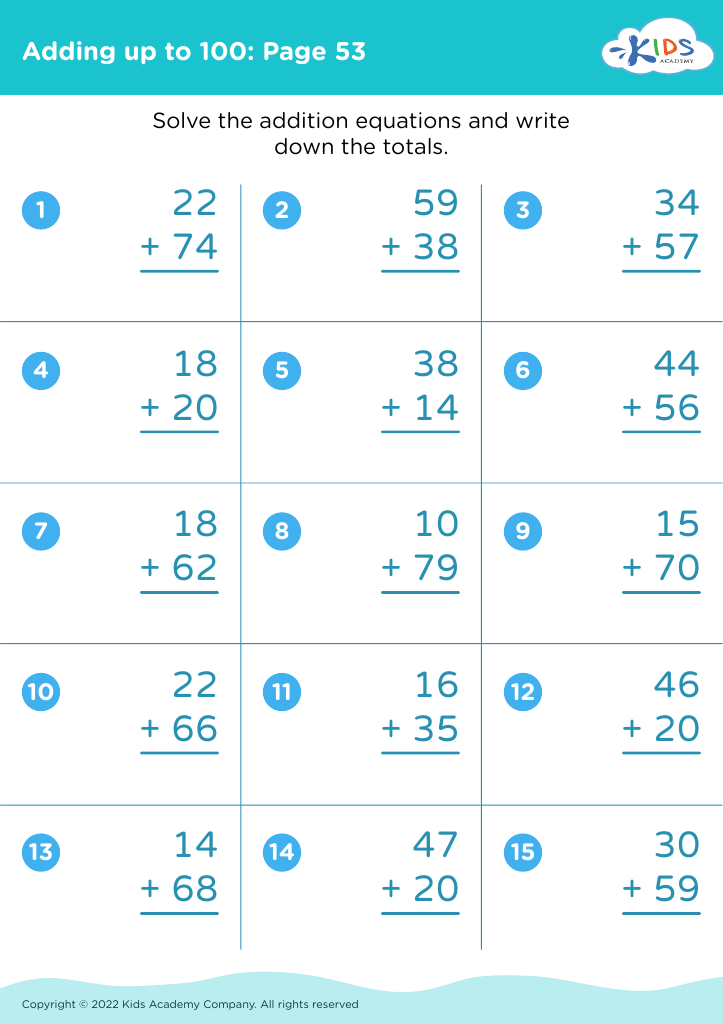
Adding up to 100: Page 53

Adding up to 100: Page 53

Adding up to 100: Page 53
Worksheet
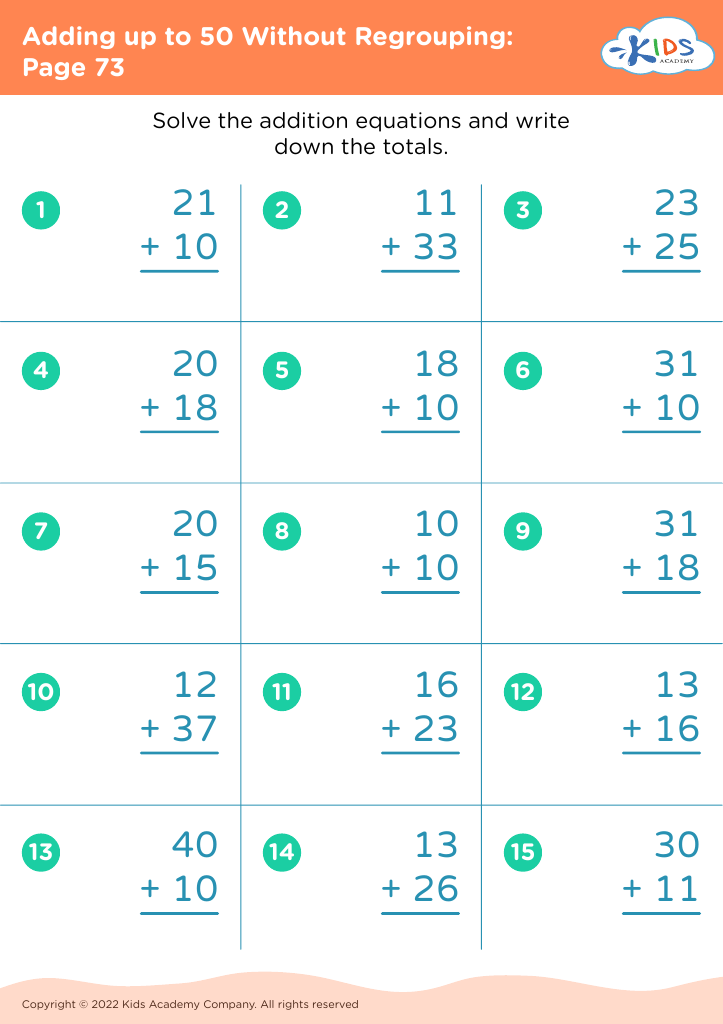
Adding up to 50 Without Regrouping: Page 73
Worksheet
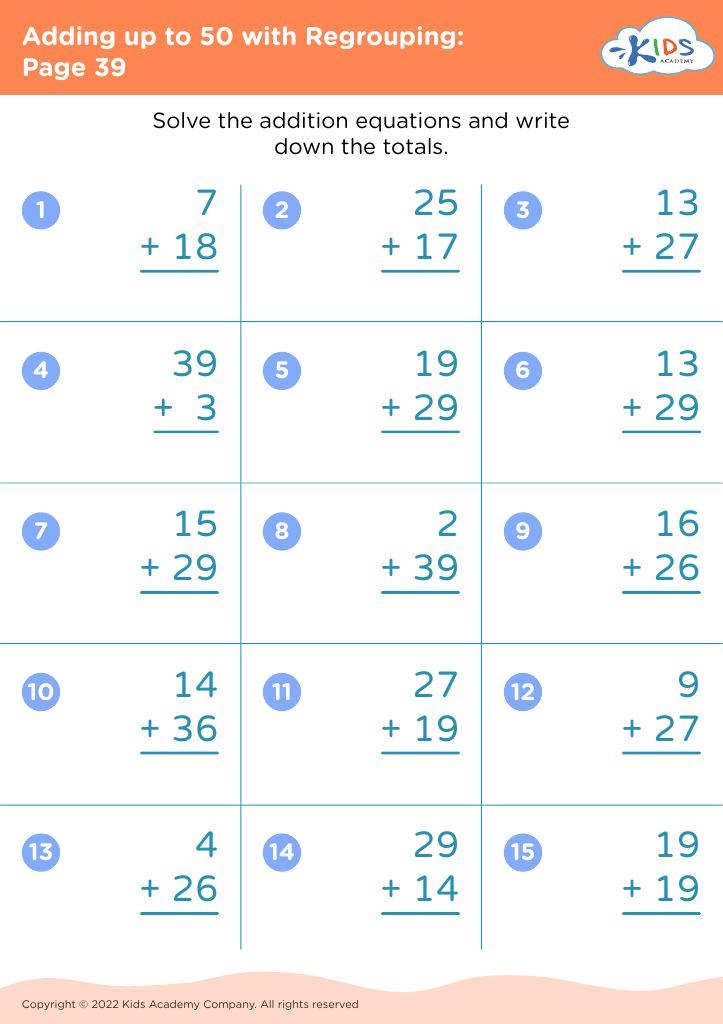
Adding up to 50 with Regrouping: Page 39
Worksheet


Understanding the basics of fraction simplification, addition, and subtraction is critically important for children aged 3-8, as it lays a strong foundation for their future mathematical learning and problem-solving skills. At this early age, their minds are highly receptive to new concepts, making it an ideal time to introduce the essential principles of fractions.

Engaging with fractions encourages children to develop their numerical sense and understand the part-whole relationship, which is a fundamental concept in mathematics. Simplifying fractions helps children to recognize equivalent fractions, fostering flexibility in thinking and a deeper understanding of numbers. Additionally, learning to add and subtract fractions boosts their ability to handle operations with real-world applications like measuring and dividing objects equally.

For parents and teachers, emphasizing these concepts supports overall cognitive development, enhancing logical reasoning and critical thinking skills. It ensures that children do not develop anxieties or aversions to math, making their educational journey more enjoyable and productive. Building these competencies early not only aids in mastering more complex math topics later on but also importantly nurtures confidence and the all-important sense of achievement each time a problem is solved correctly. Encouraging early math proficiency, including fraction skills, fosters a positive and lifelong relationship with learning and course deliveries.