Improving math skills Addition & Subtraction Worksheets for Ages 3-8 - Page 2
32 filtered results
-
From - To
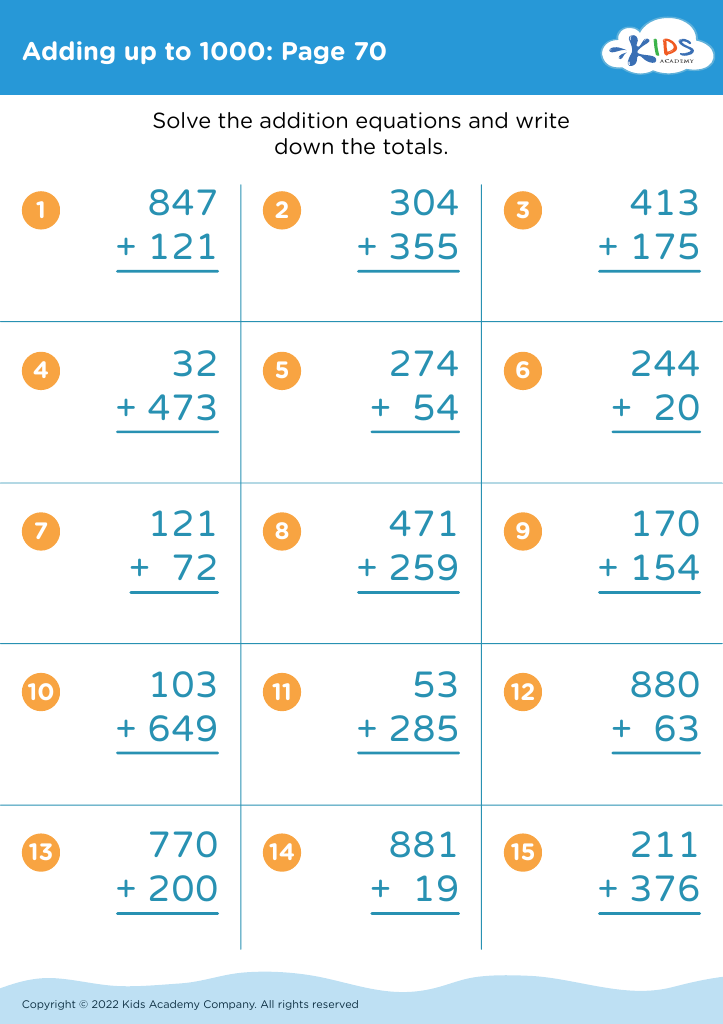
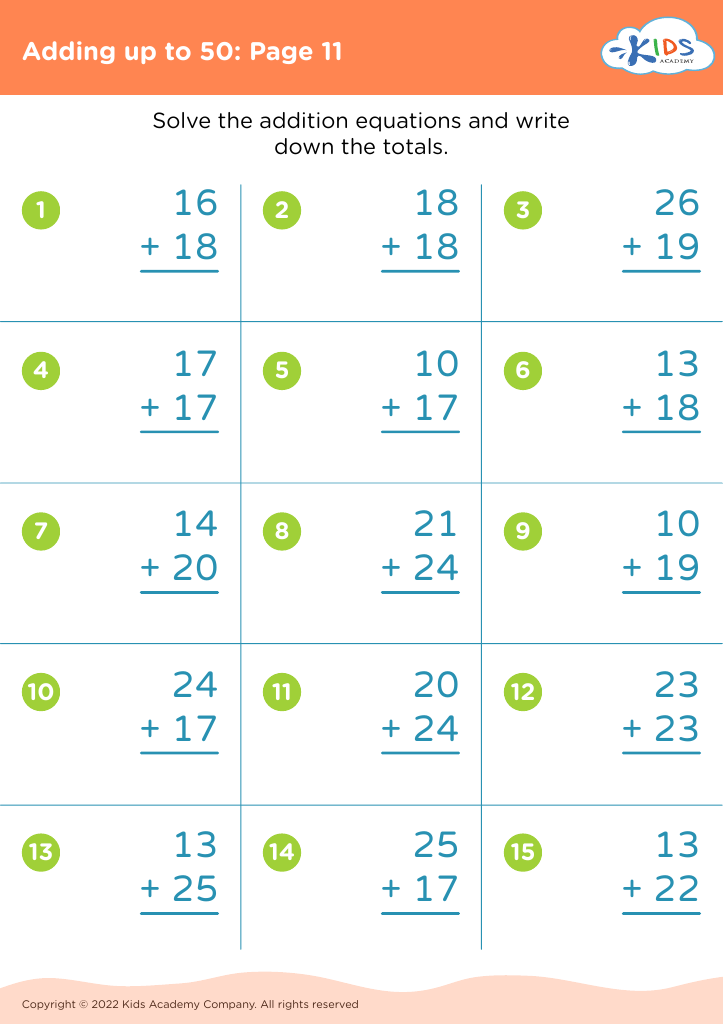
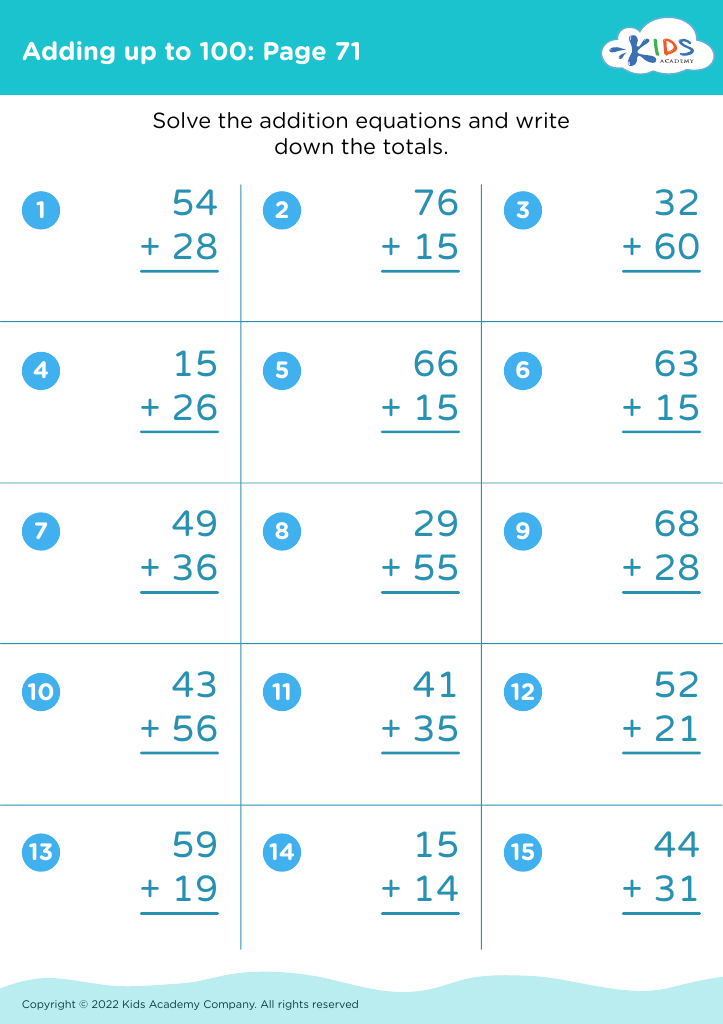
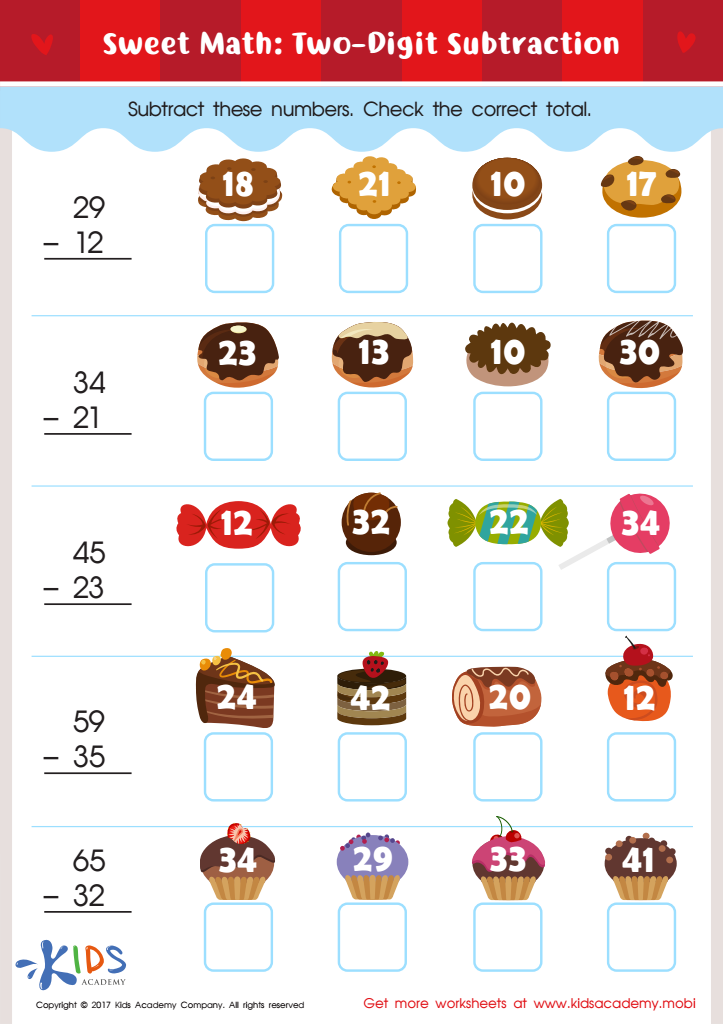
Two Digit Subtraction Worksheet
 Assign to My Students
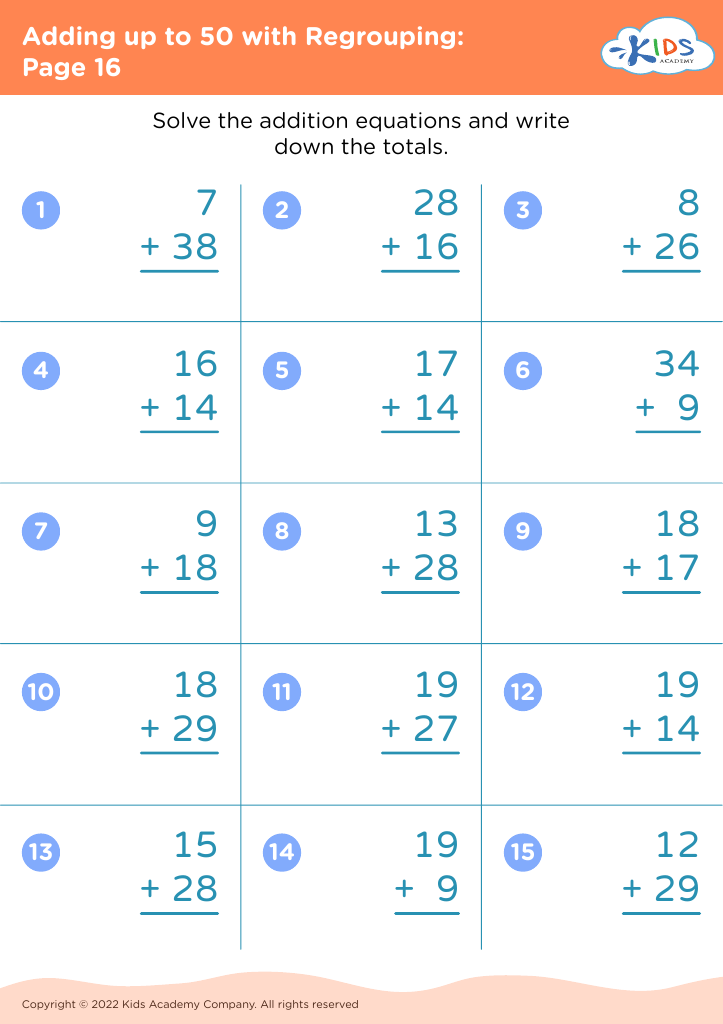
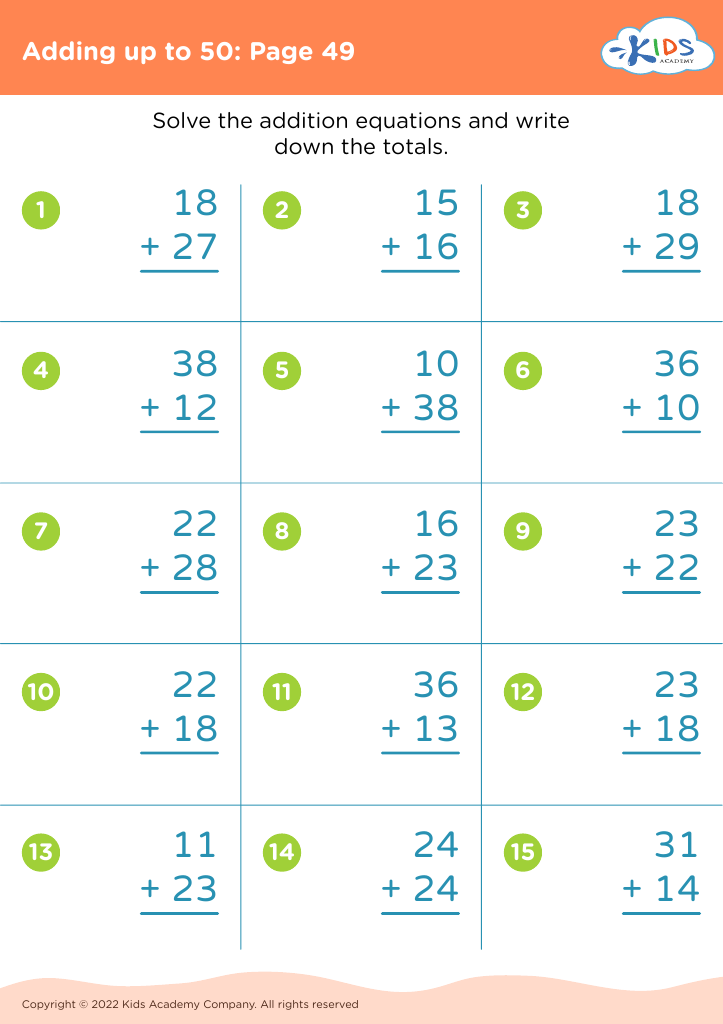
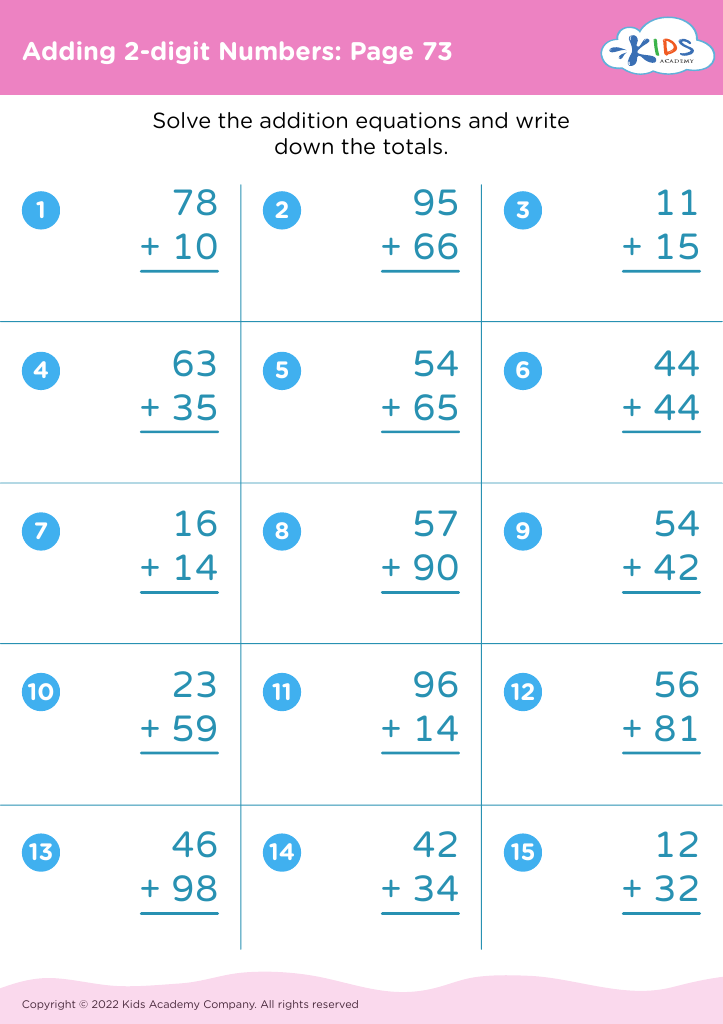
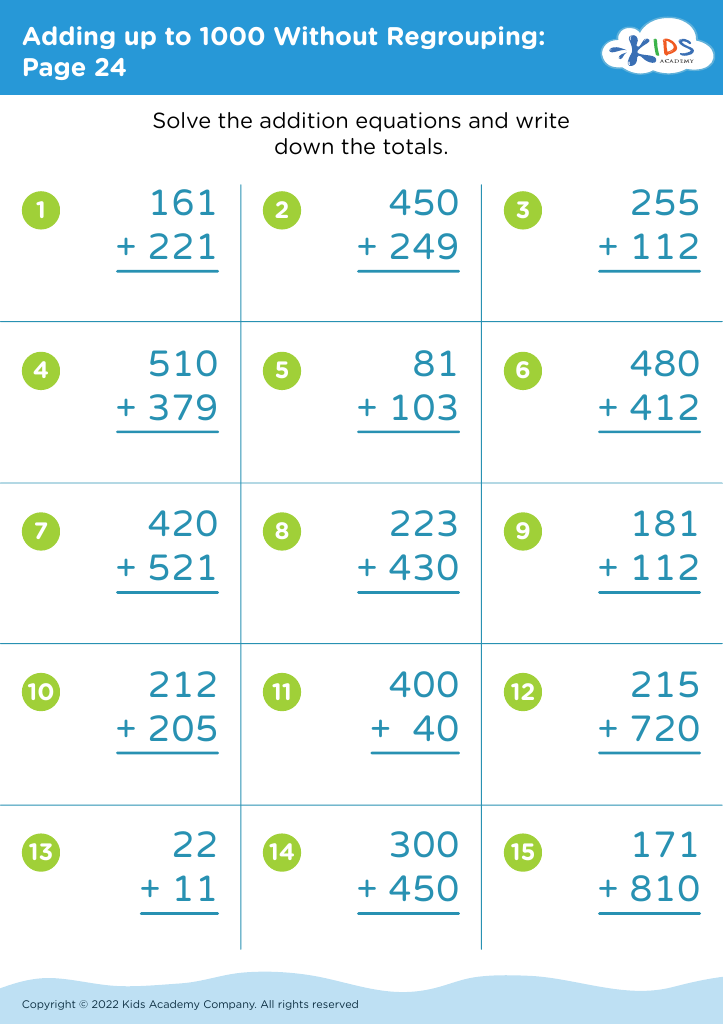








Improving math skills, specifically addition and subtraction, for children ages 3-8 is crucial due to several reasons. At this formative stage, children are highly impressionable and are rapidly developing cognitive abilities. Early math skills lay a foundational basis for more complex mathematical concepts that they will encounter in later years. Acquiring competence in addition and subtraction not only enhances their problem-solving skills but also fosters analytical thinking and logical reasoning.
Moreover, mastering these skills early on boosts a child's self-confidence and sets up a positive attitude towards learning mathematics. It helps them independently tackle everyday problems, such as sharing their toys or understanding the concept of time. Starting math education early also has psychosocial benefits; it embeds a sense of routine and discipline, which is instrumental for overall academic achievement.
Engaging children in math activities also encourages parental involvement, providing a special bonding time and an opportunity for positive reinforcement. Teachers, on the other hand, can monitor progress and address learning challenges promptly. Thus, prioritizing math skills for young children ensures they are not only academically prepared but also equipped for everyday life challenges, fostering their holistic development and setting the stage for future success.








