Learn addition Addition & Subtraction Worksheets for Ages 3-8
3 filtered results
-
From - To
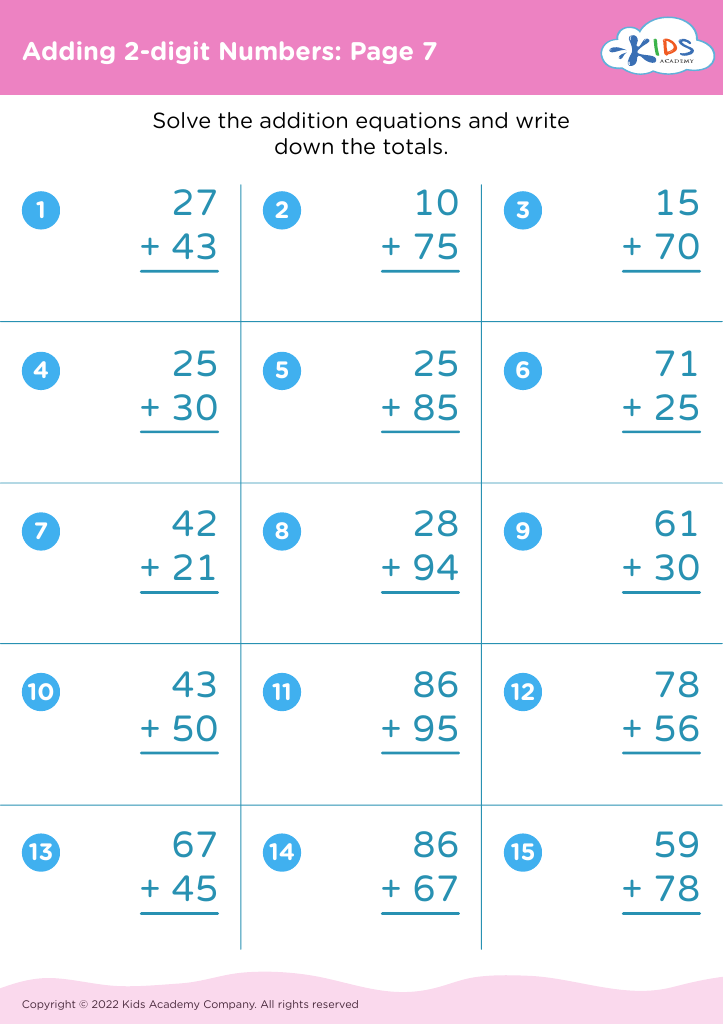
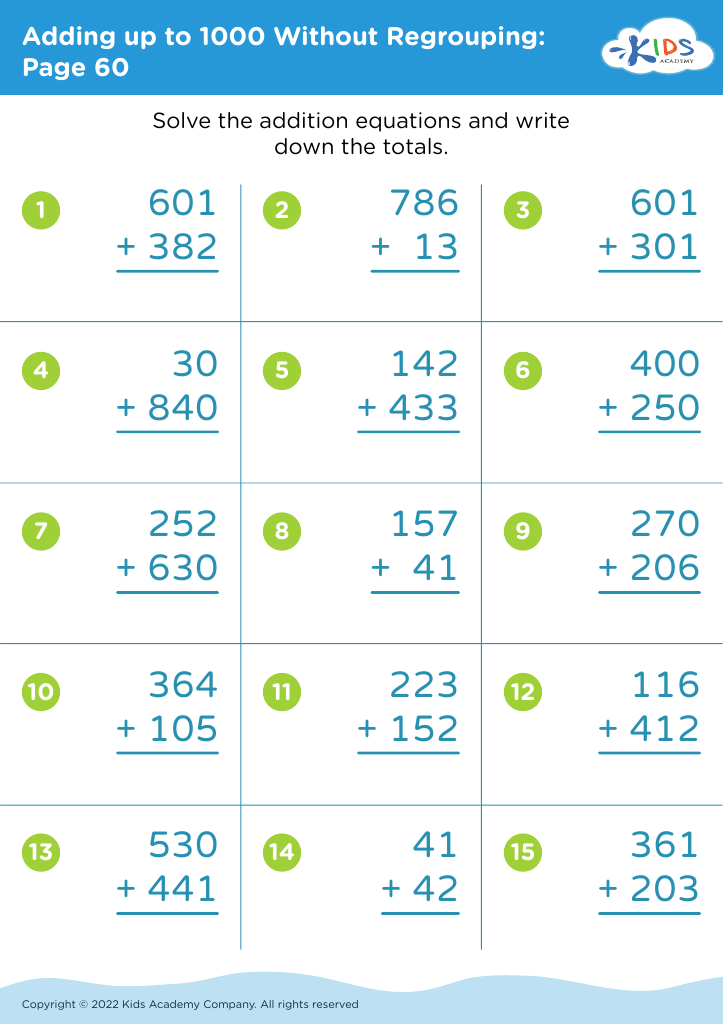
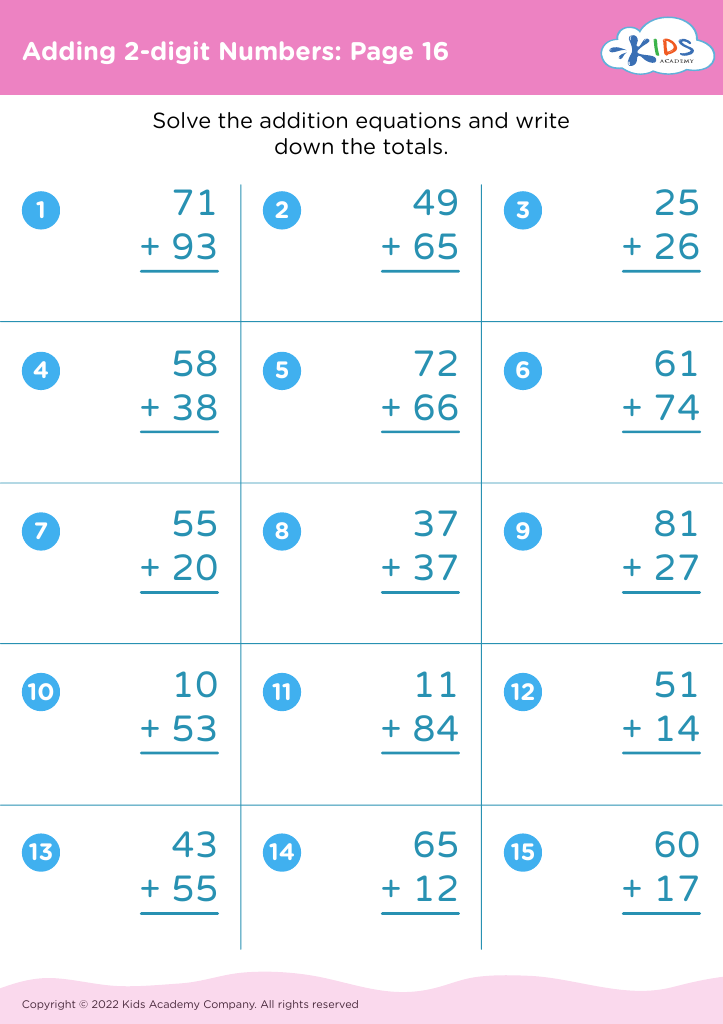
Explore our engaging "Learn Addition & Subtraction Worksheets" designed for children ages 3-8! These worksheets provide a fun and interactive way for young learners to master essential math skills. With colorful graphics and beginner-friendly exercises, kids will enjoy practicing basic addition and subtraction concepts. Each worksheet is crafted to build confidence and encourage a love for math, making learning enjoyable and stress-free. Ideal for home or classroom use, our resources align with early education standards to support learners as they embark on their mathematical journey. Start your child's adventure in math today with our vibrant and educational worksheets!








Understanding addition and subtraction is essential for children aged 3-8 as it forms the foundation for their mathematical skills and overall cognitive development. By learning these fundamental concepts early, children not only develop numerical fluency but also enhance their problem-solving abilities. Mastering addition and subtraction helps children grasp more complex mathematical concepts in the future, enabling them to tackle advanced subjects in school.
Moreover, these skills are critical for everyday life. From managing allowances to measuring ingredients while cooking, basic arithmetic is intertwined with real-world applications. Fostered through playful learning techniques, the journey into addition and subtraction is a fantastic way to engage young minds, enhancing their critical thinking and reasoning skills.
For educators and parents, investing time in teaching these skills cultivates a love for mathematics, reducing math anxiety that can develop later in life. It also promotes confidence in young learners as they master new skills, ultimately leading to a more positive attitude towards math education.
In summary, prioritizing addition and subtraction learning provides children with the tools they need for success, laying a solid foundation for future education and practical life applications. Exciting, engaging methods can make this learning adventure enjoyable for both children and adults.








