Nature appreciation Addition & Subtraction Worksheets for Ages 3-8
5 filtered results
-
From - To
Discover our engaging Nature Appreciation Addition & Subtraction Worksheets designed for children aged 3-8. These worksheets combine essential math skills with a love for the great outdoors, encouraging young learners to explore nature while mastering addition and subtraction. Each activity is infused with vibrant illustrations of plants, animals, and natural scenes, making learning enjoyable and meaningful. Our resources promote not just academic growth but also environmental awareness, fostering a deeper connection to the world around them. Perfect for parents and educators seeking creative ways to teach math, these worksheets will inspire a sense of wonder and curiosity in every child.
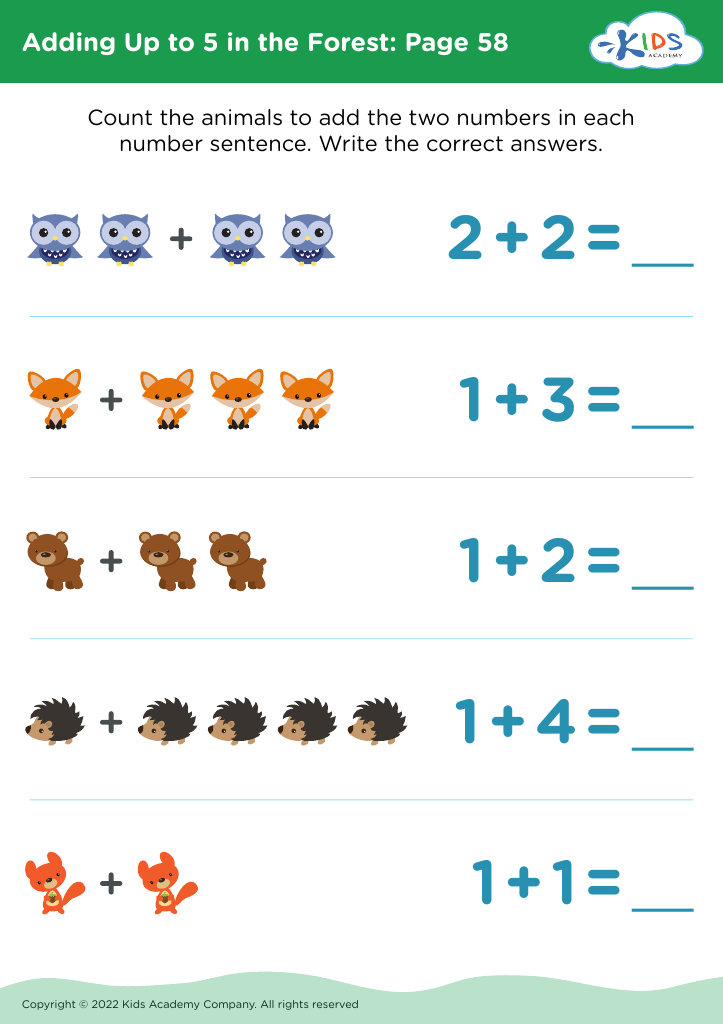
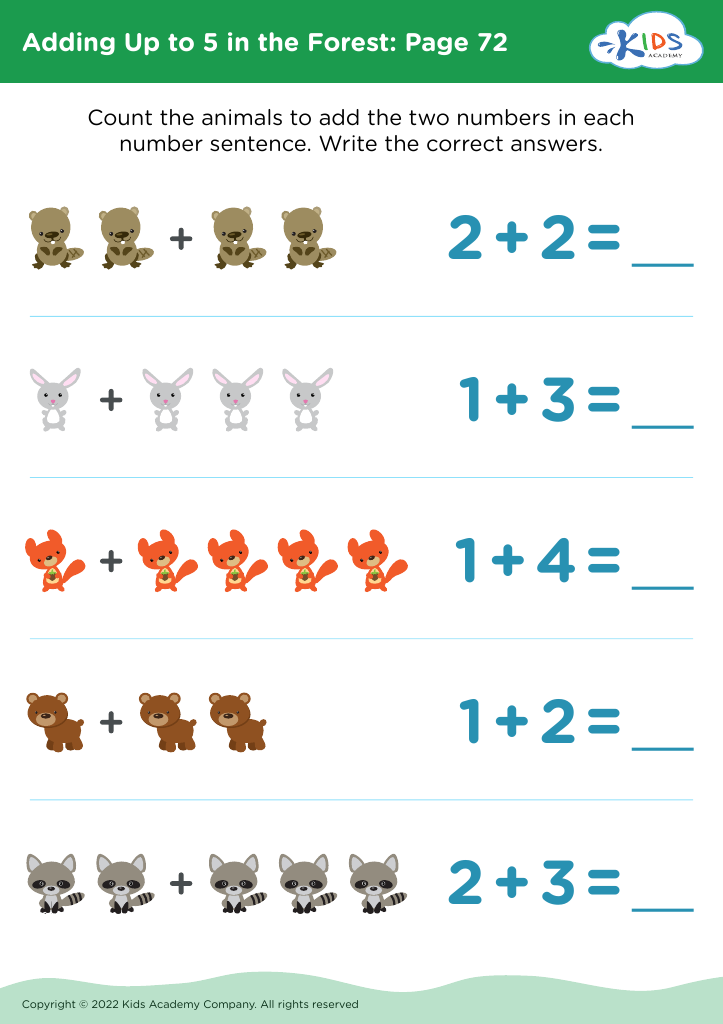
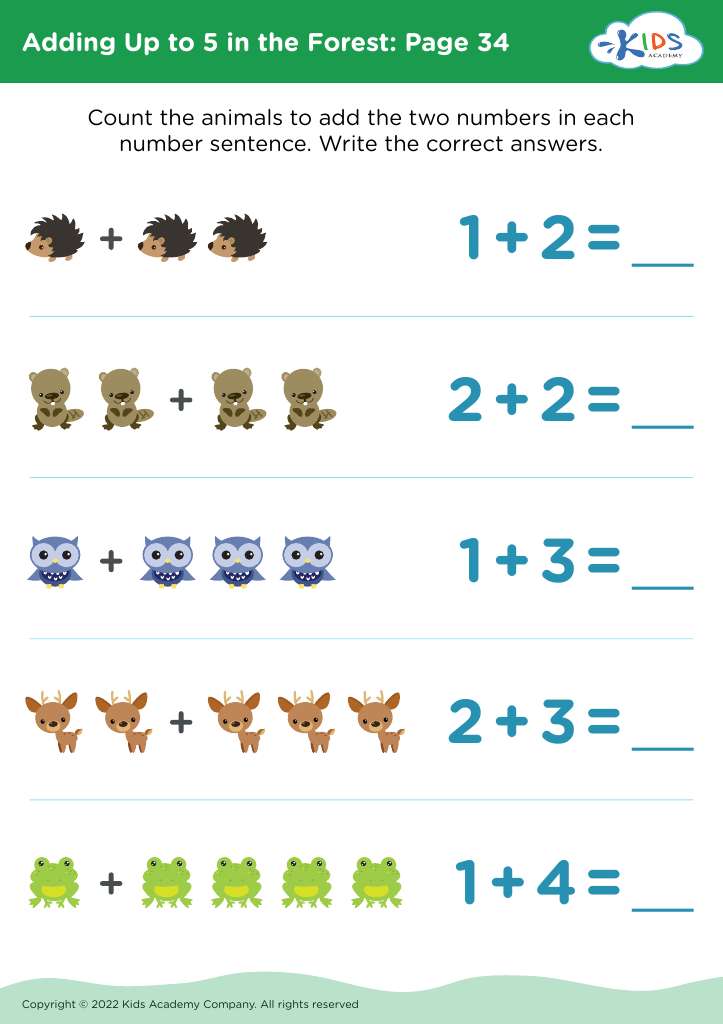
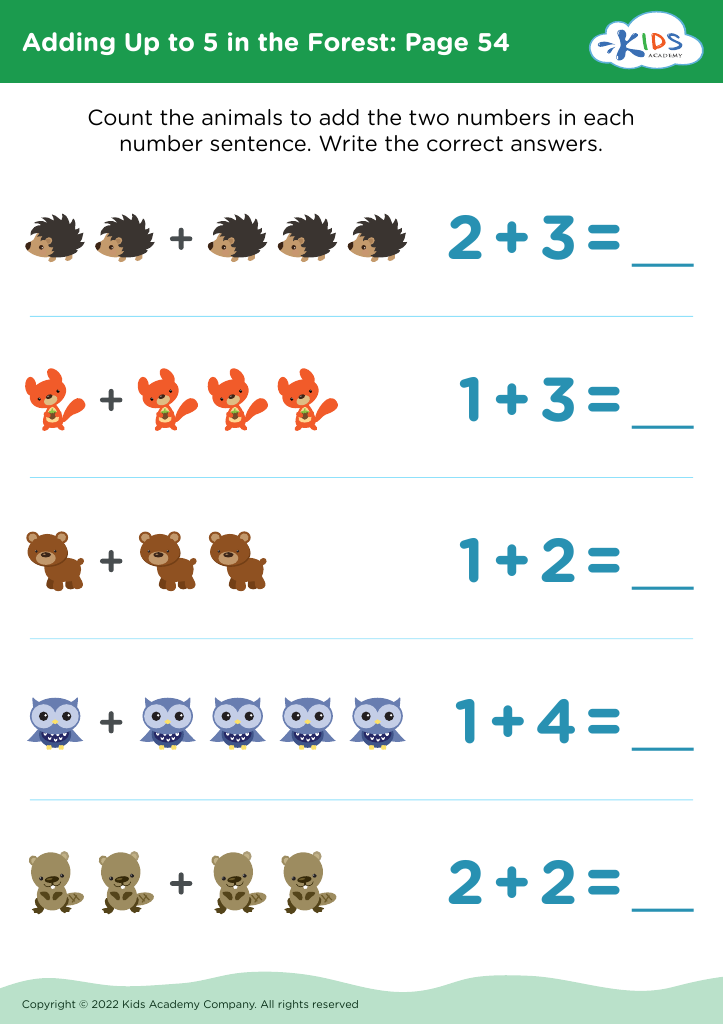
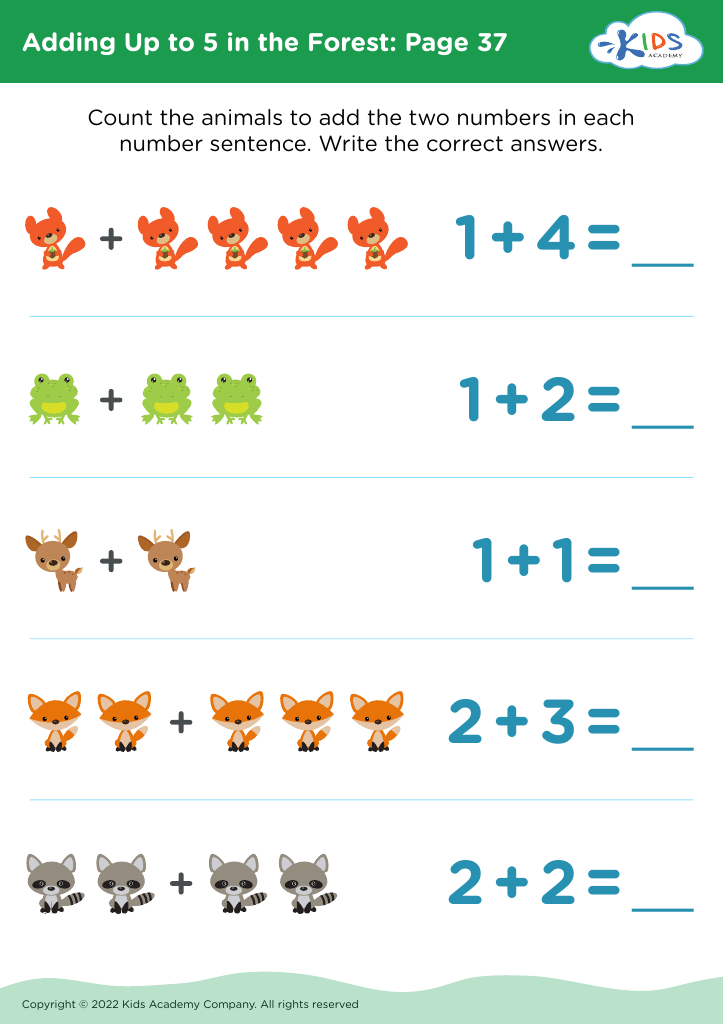








Parents and teachers should prioritize nature appreciation alongside teaching addition and subtraction to children aged 3-8 for several compelling reasons. First, integrating nature fosters a love for the environment, cultivating curiosity and observation skills essential for holistic learning. Nature-based math activities, such as counting leaves or rocks, provide tangible experiences that enhance understanding of basic concepts.
Second, children learn best through play and exploration, making outdoor settings ideal for engaging mathematics. By incorporating natural elements in learning addition and subtraction, children make connections between math and real-world applications, which deepens their comprehension. For instance, gathering and sorting natural objects can reinforce counting skills while fostering cooperative play.
Additionally, teaching children to appreciate nature builds their emotional well-being and responsibility towards the environment. Being outdoors can improve focus and cognitive function, creating a more conducive atmosphere for learning. Nature-based activities also promote physical activity, nurturing overall health.
Finally, nurturing an emotional connection to nature can play a critical role in developing critical thinking and problem-solving skills, which are vital for successful math comprehension. Combining nature appreciation with math instruction sets a foundation for well-rounded, engaged learners who value their world and the knowledge they are acquiring.








