
Basic math learning Addition Worksheets for Ages 3-8
3 filtered results
Difficulty Level
Grade
Age
-
From - To
Subject
Activity
Standards
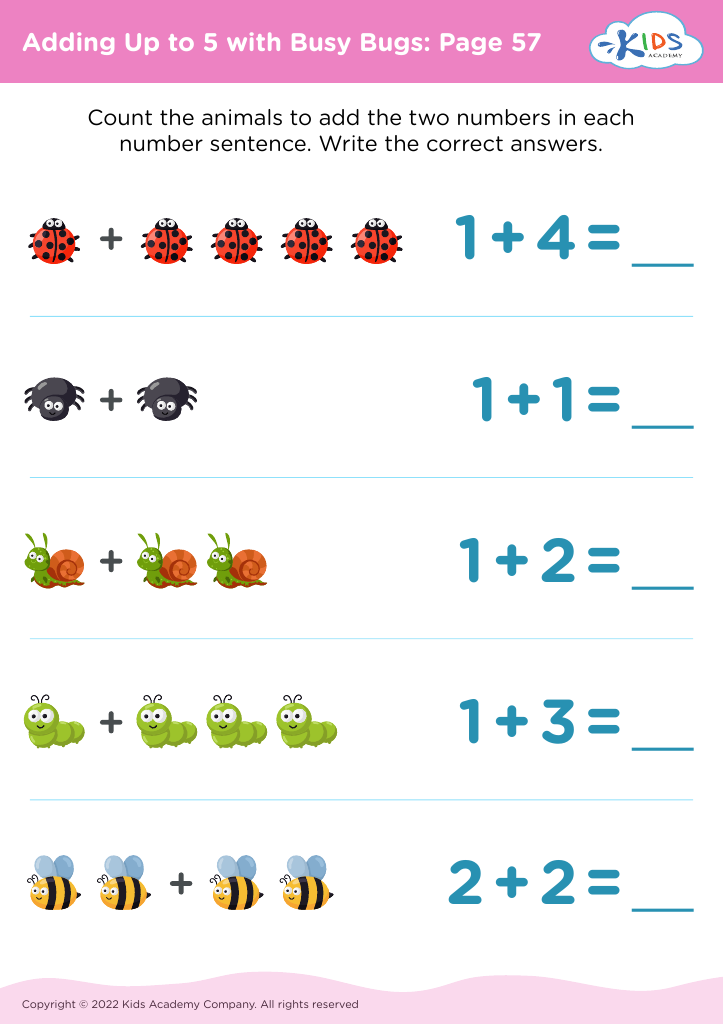
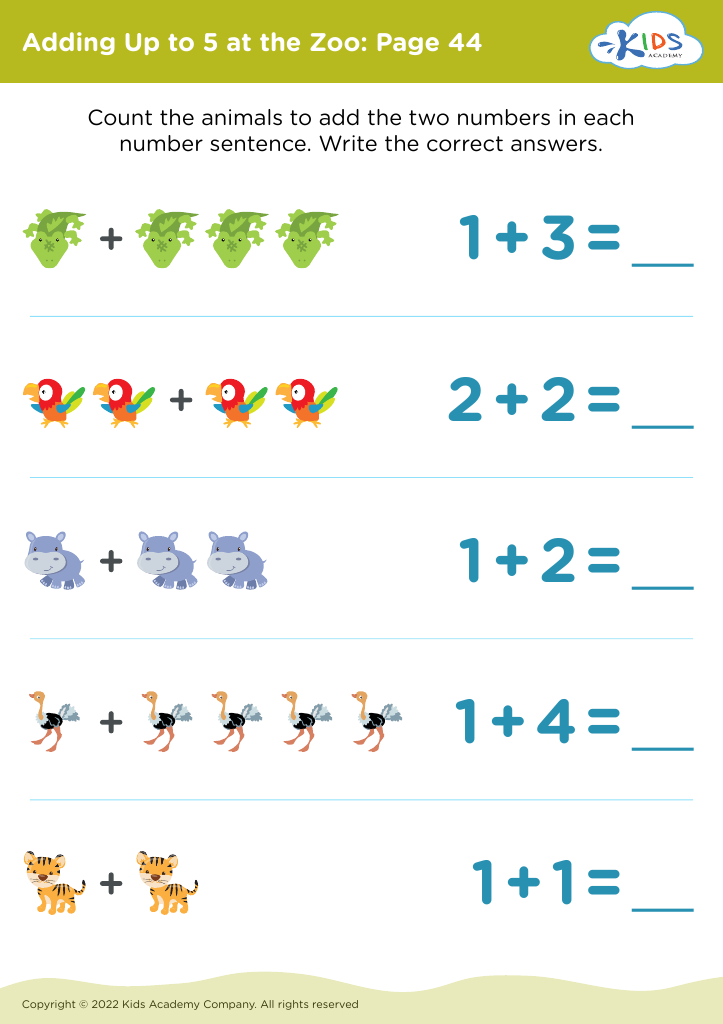
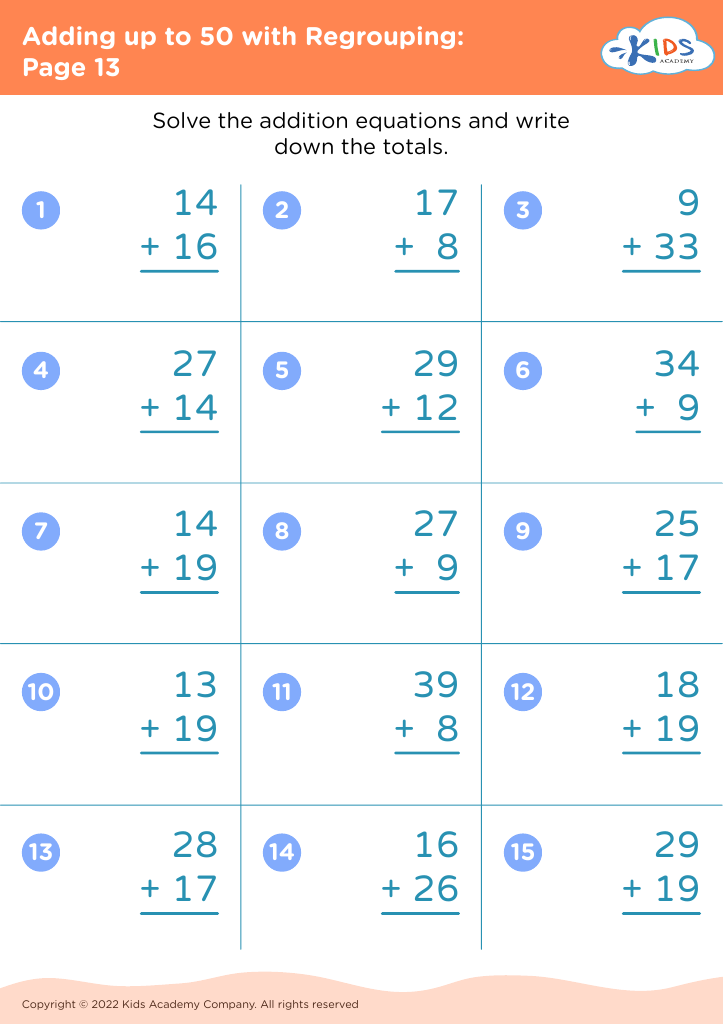
Discover our engaging Basic Math Learning Addition Worksheets designed specifically for children ages 3-8! These printable resources foster a love for learning while helping young learners grasp fundamental addition concepts. Each worksheet features fun illustrations and age-appropriate exercises to make math exciting and accessible. Whether in the classroom or at home, these activities support essential skill development, enhance problem-solving abilities, and build confidence in math. With varying difficulty levels, each worksheet adapts to your child's growing skills, making it easy to track progress. Spark curiosity and joy in math today with our printable addition worksheets! Perfect for early learners and confident mathematicians alike.
Favorites
With answer key
Interactive
Join Kids Academy for Free
Who is primarily going to use this learning content?








Parents and teachers should prioritize basic math learning, specifically addition, for children ages 3-8 for several compelling reasons. First, foundational skills in math lead to greater academic success later in life; early proficiency in addition fosters confidence and lays the groundwork for more complex mathematical concepts that children will encounter in elementary school and beyond.
In addition, learning addition promotes critical thinking and problem-solving skills, which are essential in everyday situations. Simple activities like counting toys or distributing snacks can make learning both practical and fun, engaging children in a meaningful way. Moreover, math literacy helps in developing cognitive skills that enhance overall learning and contribute to better performance in other subjects, including science and reading.
Additionally, children who master addition at an early age often experience reduced anxiety toward math later. By developing a solid understanding of numbers and operations, children can build self-esteem and foster a positive attitude toward learning.
Finally, involving parents in the learning process not only strengthens the parent-child bond but also creates opportunities for family interactions that reinforce learning at home. Ultimately, nurturing early mathematical skills, including addition, equips children with the tools they need for lifelong learning and problem-solving.








