Categorization skills Addition Worksheets for Ages 3-8
3 filtered results
-
From - To
Introducing our categorization skills addition worksheets, designed specifically for children ages 3-8! These engaging, educational resources help little learners practice essential addition skills while honing their ability to categorize and organize information. Packed with colorful graphics and fun math problems, our worksheets offer a perfect blend of learning and play to keep young minds interested. Each page encourages critical thinking and problem-solving, laying a solid foundation for math proficiency. Ideal for parents and teachers alike, these downloadable worksheets are a great way to support early math success and cognitive development. Start your child's math journey with us today!
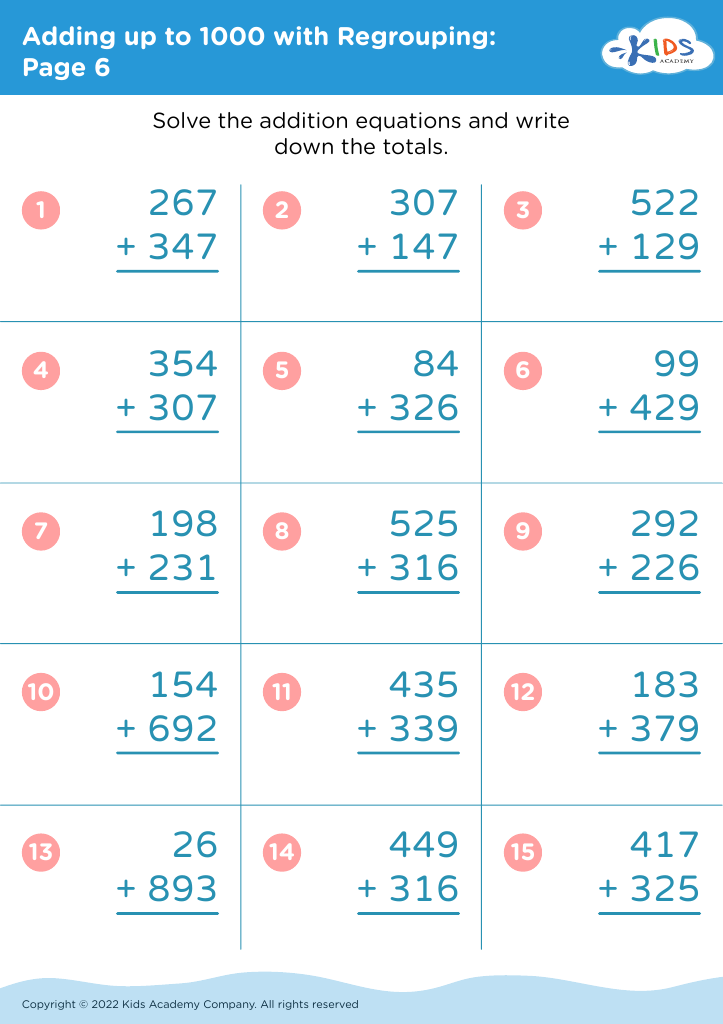
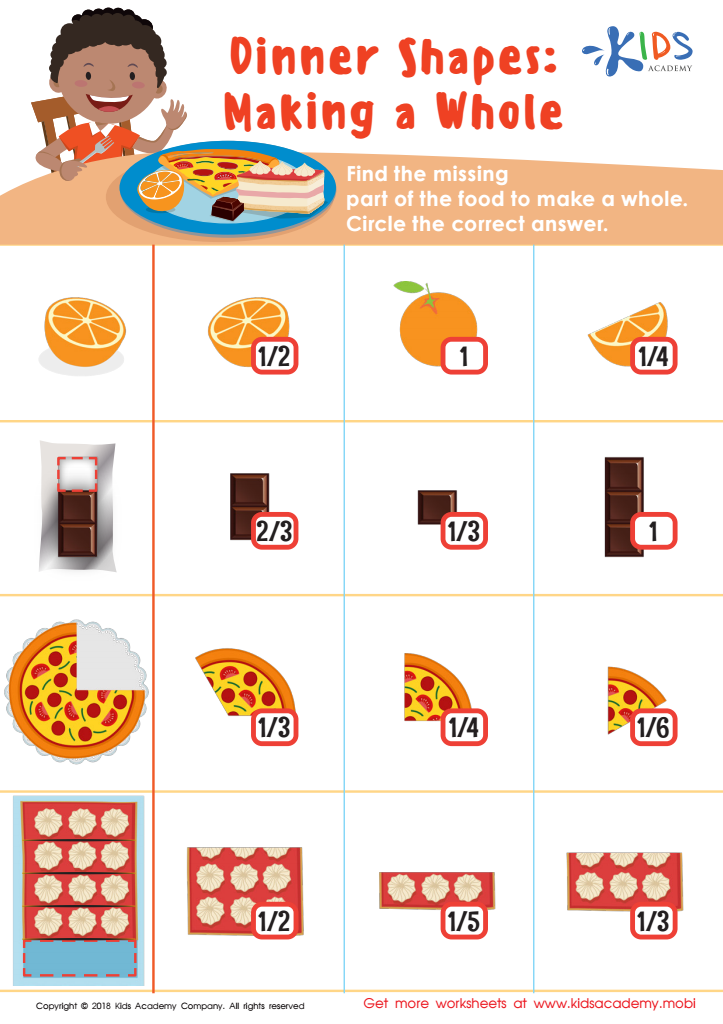
Dinner Shapes: Making a Whole Worksheet
 Assign to My Students
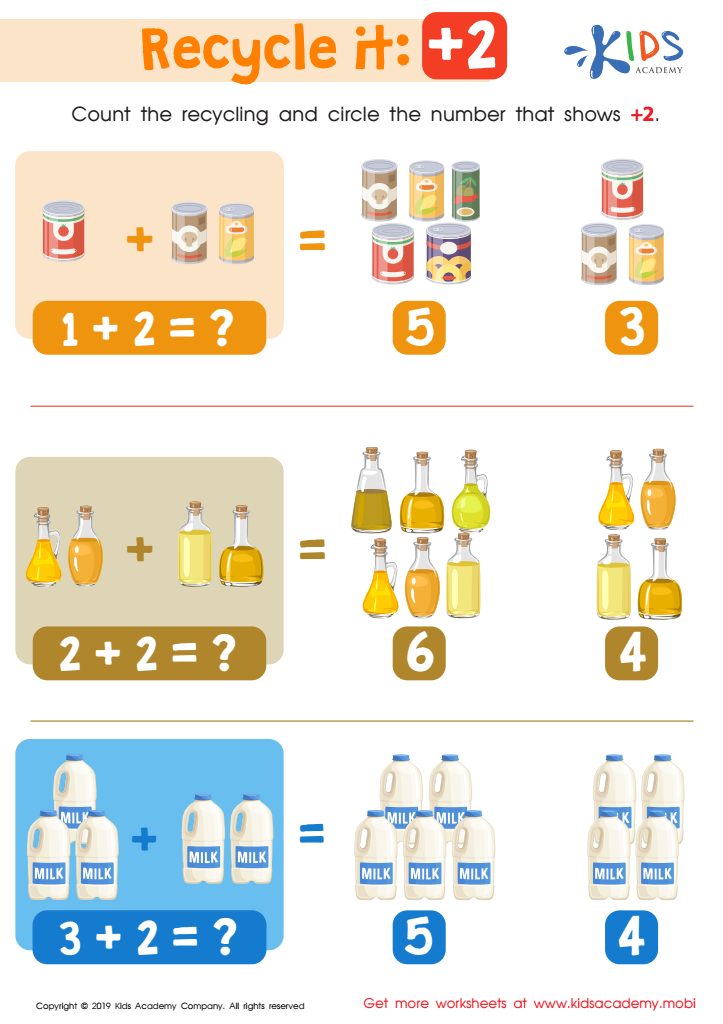
Recycle It: +2 Worksheet








Categorization skills are essential cognitive abilities that enable children to group objects, ideas, or information based on shared characteristics or properties. These skills lay the groundwork for complex thinking and sorting, each crucial in early childhood development. For ages 3-8, effective categorization fosters enhanced problem-solving, reasoning, and critical thinking.
Parents and teachers should be particularly attentive to developing these skills because they form the basis for learning more about mathematics, science, and language. When children can categorize efficiently, they can understand basic math concepts such as addition, where grouping objects becomes critical. By learning to cluster similar items and summarize key information, children simplify complex problems into manageable parts, facilitating easier and quicker learning.
Additionally, categorization assists in vocabulary expansion and language development. Learning to sort and label objects by attributes such as size or color strengthens communication skills and comprehension.
Furthermore, categorization boosts memory and makes retrieving information simpler, aiding in the development of primary academic competencies. Activities geared toward enhancing these skills—such as sorting blocks by shape or engaging in themed story times—are fun and interactive, making learning enjoyable and laying a strong, diverse educational foundation. Investing in these skills transforms children into keen learners, ready to excel in the comprehensive learning environment.








