
Enhancing observation skills Addition Worksheets for Ages 3-8
3 filtered results
Difficulty Level
Grade
Age
-
From - To
Subject
Activity
Standards
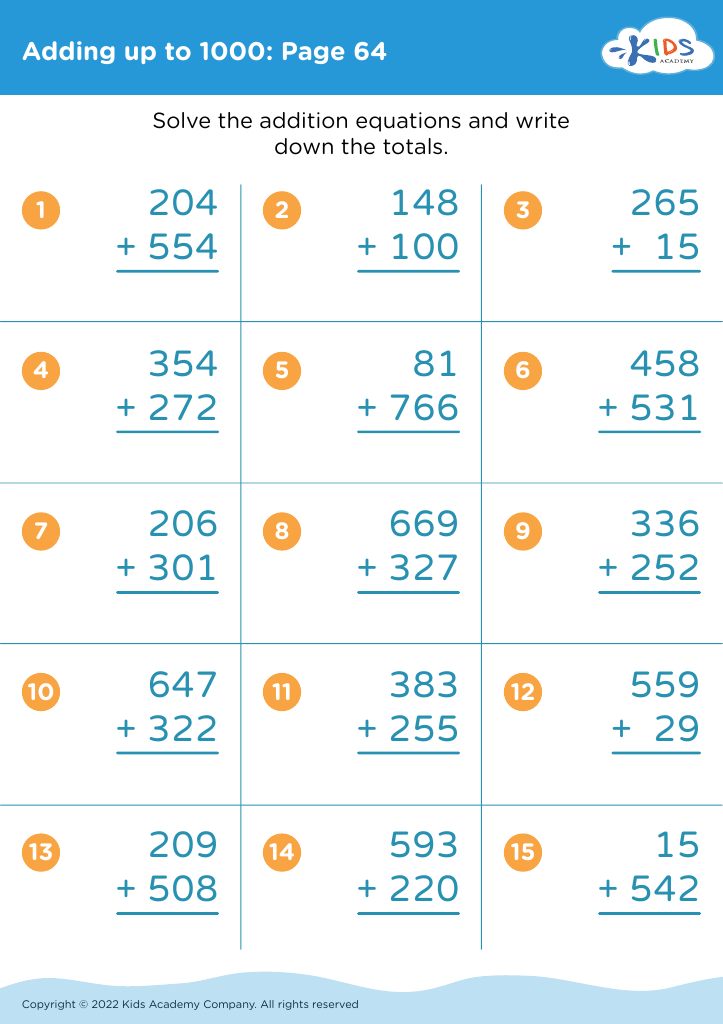
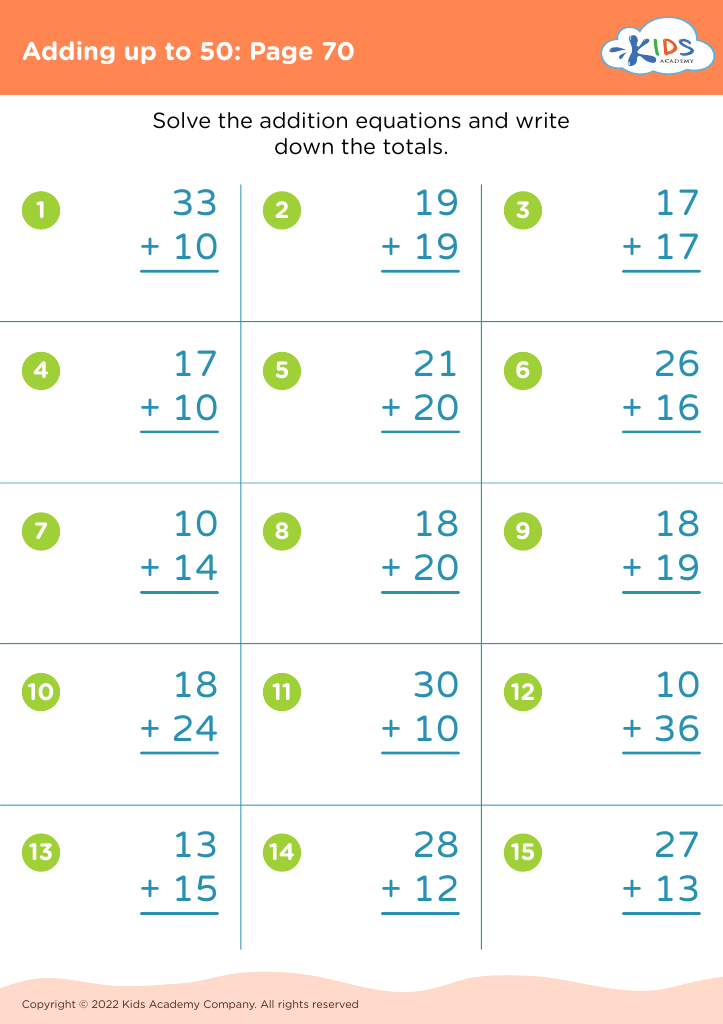
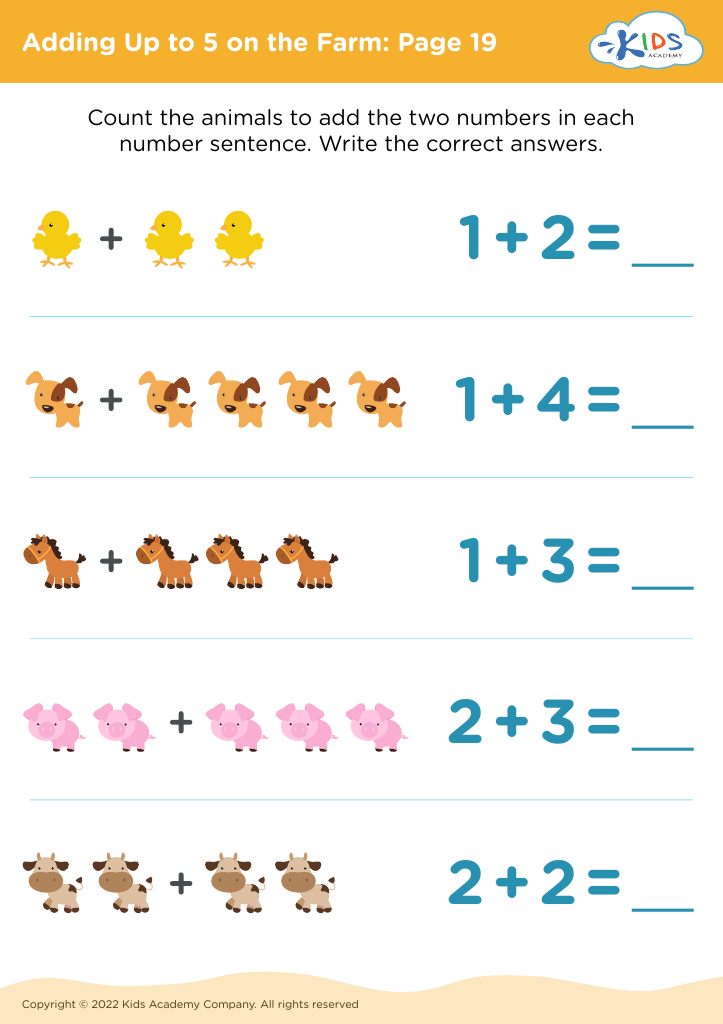
Enhance your child's observation skills with our engaging Addition Worksheets designed for ages 3-8! These thoughtfully crafted activities encourage kids to focus, analyze, and locate details, all while enjoying fun math problems. By integrating observation with addition practice, children develop critical thinking and improve their ability to concentrate. Our worksheets feature colorful images and interactive exercises that make learning enjoyable and effective. Ideal for home or classroom use, these resources bolster foundational math skills and inspire a love for learning. Give your little ones the tools they need to succeed in math by fostering sharp observation skills today!
Favorites
With answer key
Interactive
Join Kids Academy for Free
Who is primarily going to use this learning content?








Enhancing observation skills in children aged 3-8 is vital for their overall development and learning. These early years are critical as children begin to process and understand their surroundings. By honing observation skills, children learn to notice details, recognize patterns, and make connections, laying the foundation for critical thinking and problem-solving abilities.
For parents and teachers, fostering these skills not only improves academic performance but also boosts children’s confidence and independence. When children are encouraged to observe their environment closely, they develop a sense of curiosity and an intrinsic motivation to learn. This engagement with the world enhances their ability to comprehend and communicate effectively, which is essential for social interactions and emotional growth.
Moreover, strong observation skills contribute significantly to subjects like mathematics, especially in concepts such as addition. Children who can observe and appreciate quantities in their surroundings can apply this understanding to mathematical tasks more effectively. Educators can incorporate play-based learning and hands-on activities to make the development of these skills enjoyable and impactful.
In short, nurturing observation skills benefits children's cognitive and social development, making it crucial for parents and teachers to prioritize and integrate such practices into everyday learning experiences.








