Fine motor skills (writing) Addition Worksheets for Ages 3-8 - Page 2
38 filtered results
-
From - To
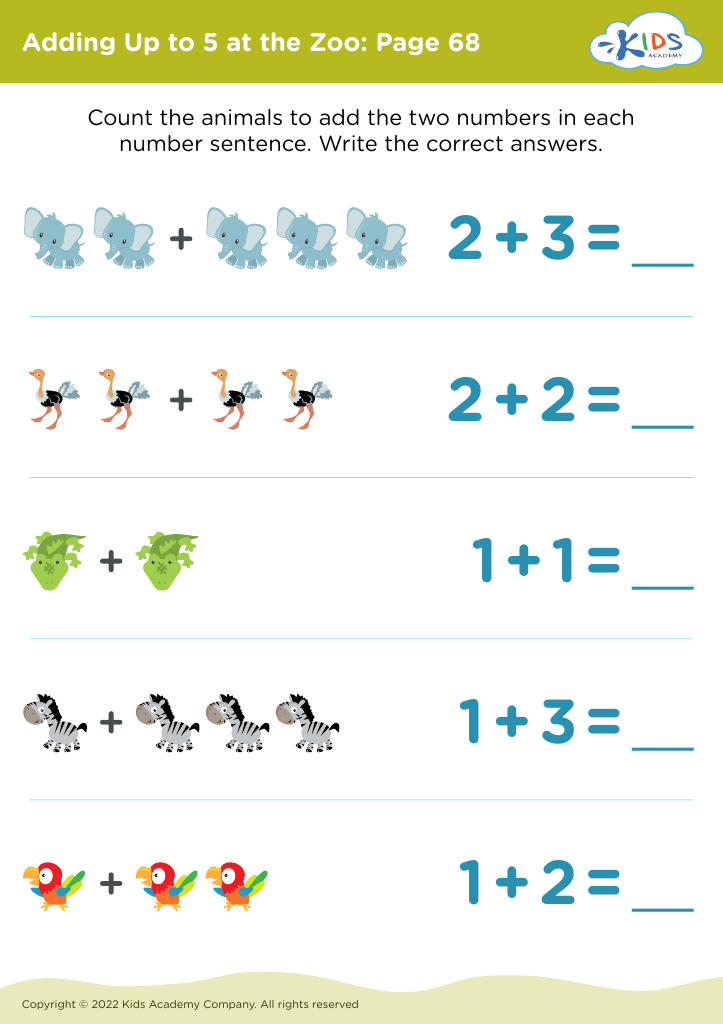
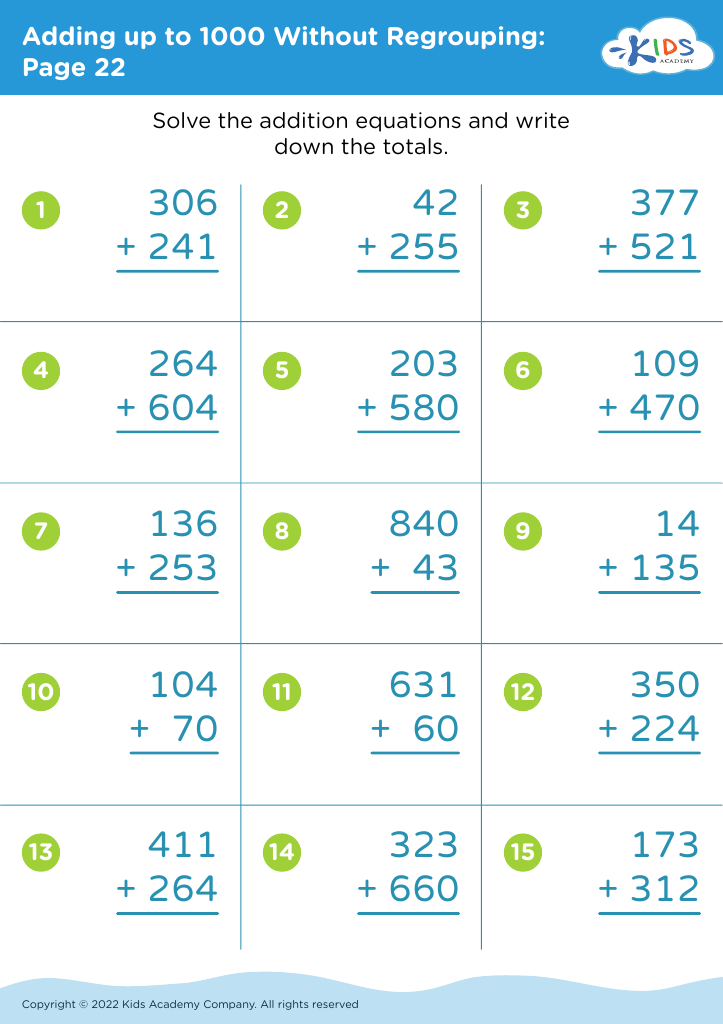
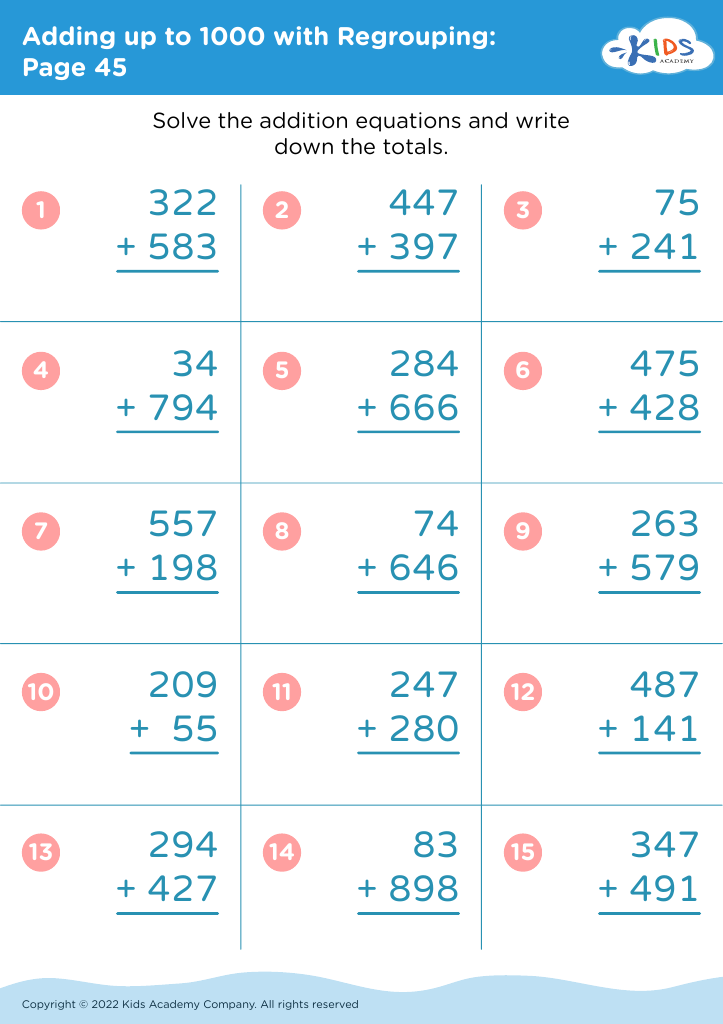
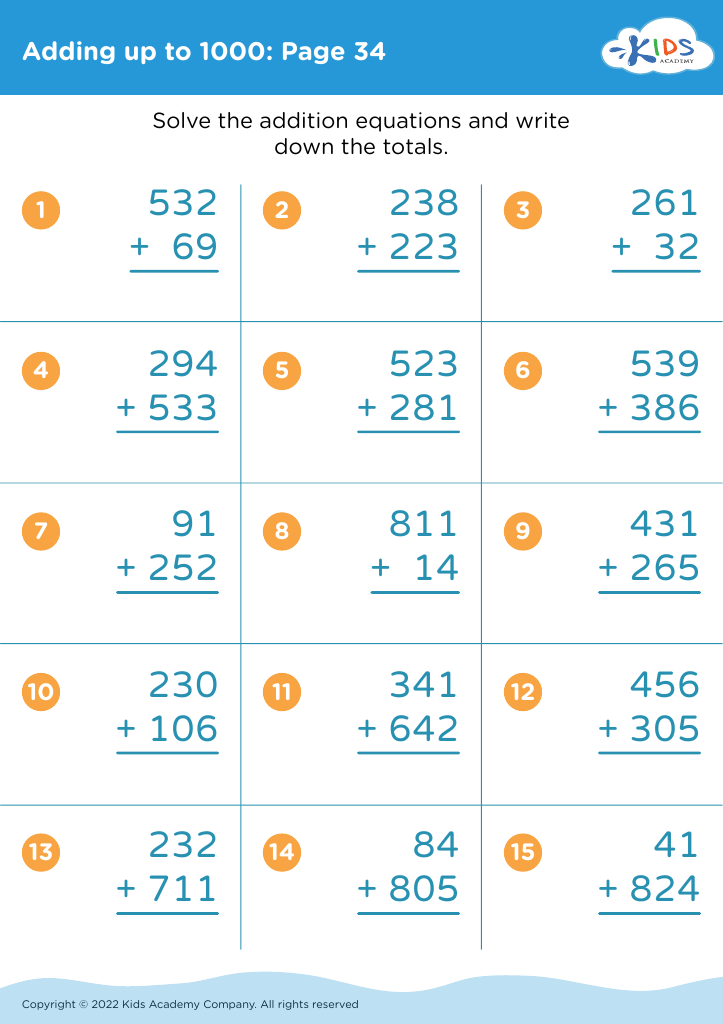


.jpg)





Fine motor skills are crucial for children's development, particularly in their early years. For children ages 3-8, these skills lay the foundation for success in writing and various everyday tasks. Fine motor skills involve the coordination of small muscles in the hands and fingers, which are essential for activities such as holding a pencil, cutting with scissors, and manipulating small objects.
Parents and teachers should prioritize the development of these skills because they directly influence academic readiness. Proficient writing allows children to express their thoughts, share ideas, and complete schoolwork effectively. As children progress in their education, strong fine motor skills contribute to increased confidence and independence in their learning endeavors.
Moreover, fine motor skills are linked to cognitive development. Engaging in activities that strengthen these skills, such as drawing, coloring, and building with blocks, not only enhances dexterity but also stimulates brain development, enhancing problem-solving abilities and creativity.
Additionally, children with well-developed fine motor skills may experience fewer frustrations during tasks involving writing and other academic activities, creating a positive learning environment. Ultimately, investing time in developing fine motor skills can better prepare young learners for future success both in and out of the classroom.








