
Observation skills Addition Worksheets for Ages 3-8
3 filtered results
Difficulty Level
Grade
Age
-
From - To
Subject
Activity
Standards
Elevate your child's math journey with our "Observation Skills Addition Worksheets," designed specifically for ages 3-8! These engaging worksheets not only enhance addition skills but also develop essential observation abilities. Children will learn to spot patterns, compare quantities, and recognize numbers, all while having fun. Our thoughtfully crafted activities encourage kids to explore mathematical concepts visually, fostering critical thinking and problem-solving skills. Perfect for at-home learning or classroom use, these printable resources support early education by making learning interactive and enjoyable. Help your young learners build a strong foundation in math with our vibrant and stimulating addition worksheets today!
Favorites
With answer key
Interactive
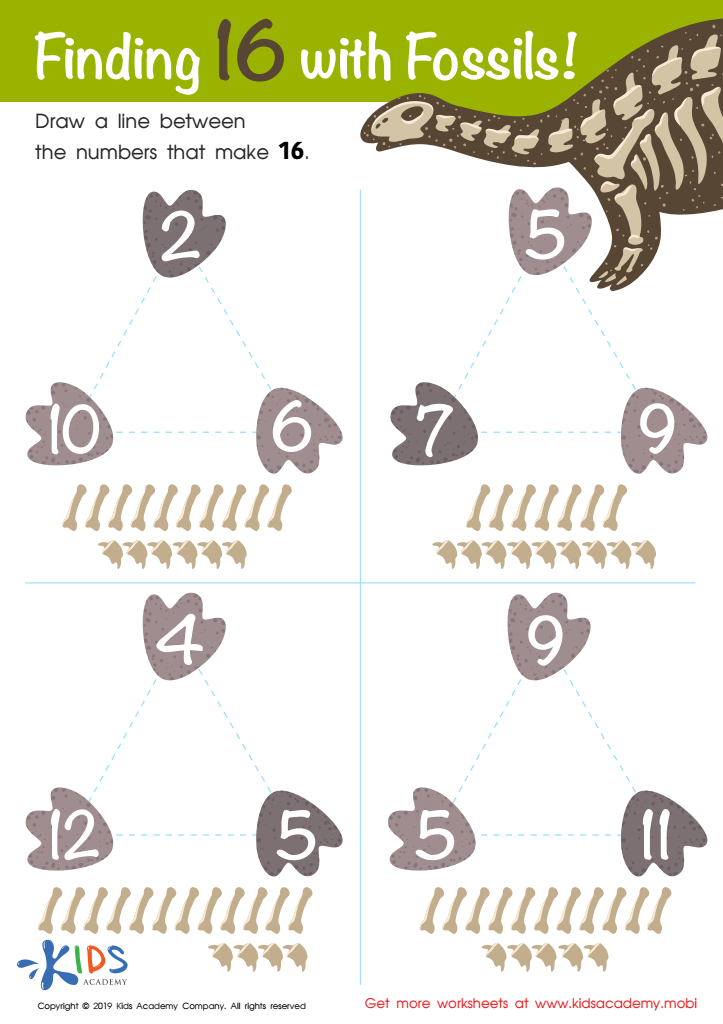
Finding 16 With Fossils Worksheet
Experts hunt for fossils, dig them up, and study them to learn more about past life forms - how they lived, what they looked like, and when they lived. Show kids the picture in this worksheet and point out the fossils. Help them count the bones and draw a line between the numbers that add up to 16 in each triangle.
 Assign to My Students
Finding 16 With Fossils Worksheet
Worksheet
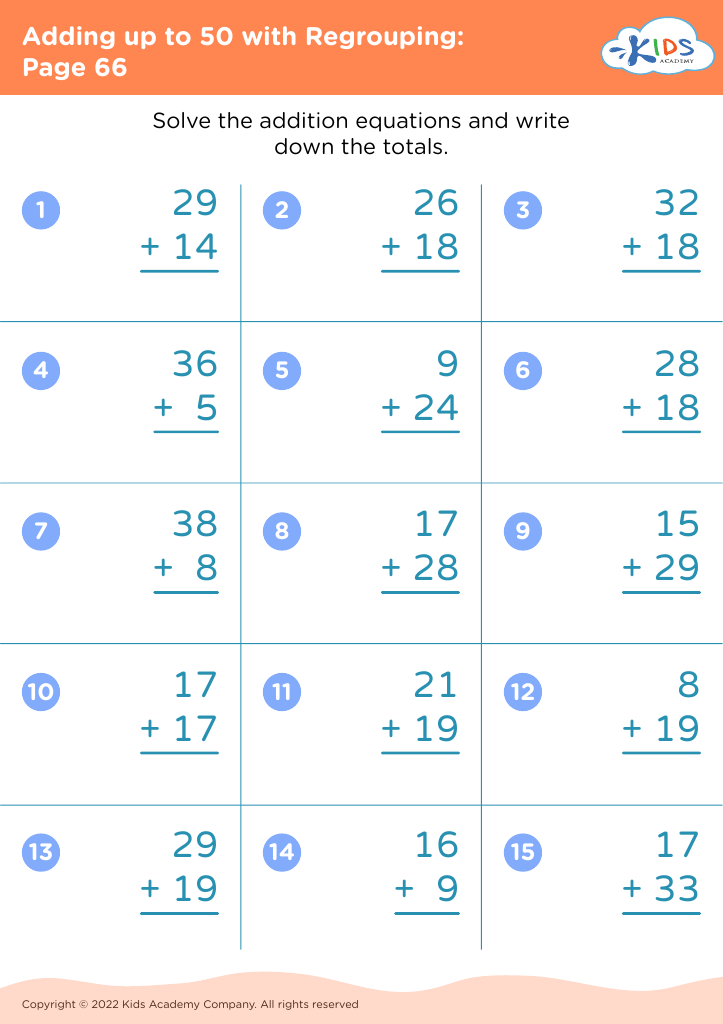
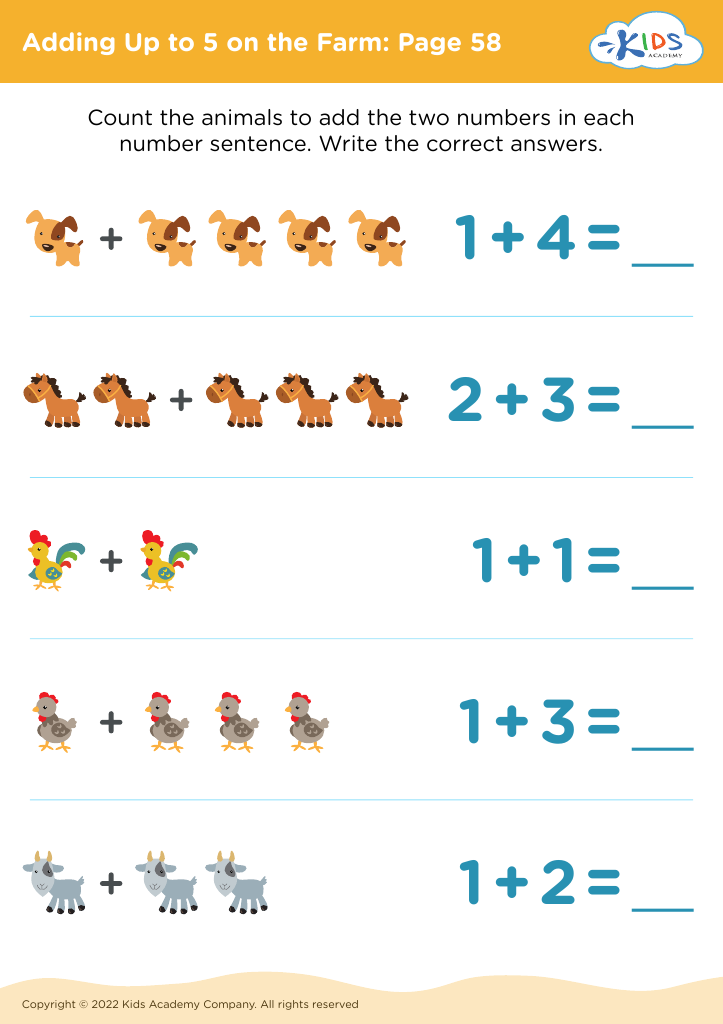
Join Kids Academy for Free
Who is primarily going to use this learning content?








Observation skills are crucial for children aged 3-8 as they lay the foundation for effective learning and social interaction. For parents and teachers, cultivating these skills enables a deeper understanding of a child's development and unique learning needs. Children learn through observation; they absorb information from their environment and the behaviors of peers and adults.
By sharpening their own observation skills, parents and teachers can identify a child's interests, strengths, and areas where they may need additional support. This awareness fosters personalized approaches that cater to each child's learning style, ultimately nurturing a more engaging and effective educational experience.
Additionally, strong observation skills encourage children to reflect critically on what they see. Integrating observation in daily activities enhances cognitive development and emotional intelligence, allowing children to navigate social situations better and empathize with others. Teaching children to observe their surroundings promotes curiosity, creativity, and critical thinking.
Furthermore, developing these skills from an early age empowers children to become lifelong learners. When parents and teachers model and reinforce observation, they equip children with the essential tools to explore the world confidently, leading to a more enriched and informed childhood experience. Observing becomes a gateway to discovery that shapes a child's educational journey.








