Practice counting Addition Worksheets for Ages 3-8
6 filtered results
-
From - To
Welcome to our Practice Counting Addition Worksheets for Ages 3-8! These engaging, age-appropriate worksheets are designed to help young learners develop essential counting and addition skills in a fun and interactive way. Our carefully crafted activities encourage children to practice recognizing numbers, counting objects, and grasping the concept of addition. Each worksheet offers vibrant illustrations and a variety of exercises tailored to various skill levels, ensuring that every child can learn at their own pace. Perfect for classroom use or at-home learning, these worksheets provide a wonderful resource for building confidence in math. Start your child’s math journey today!
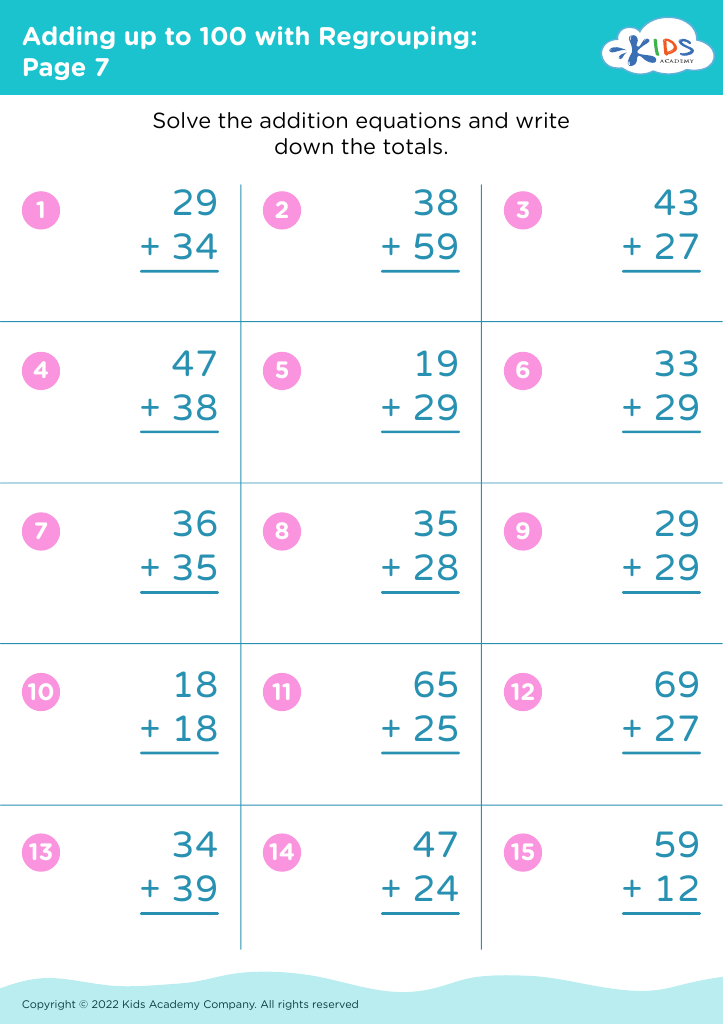
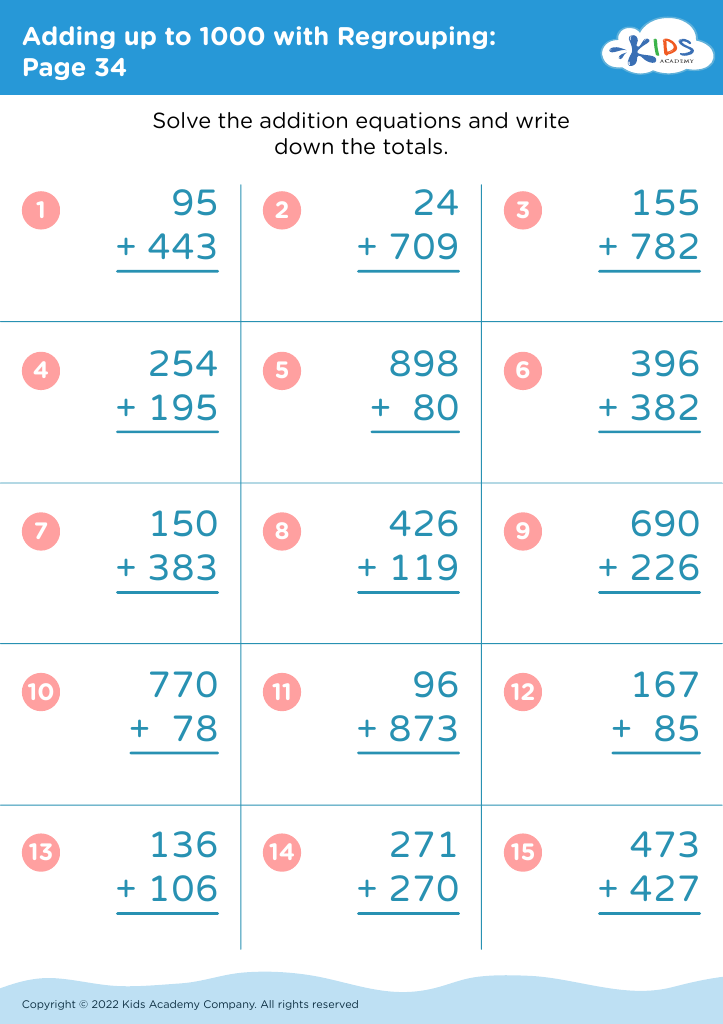
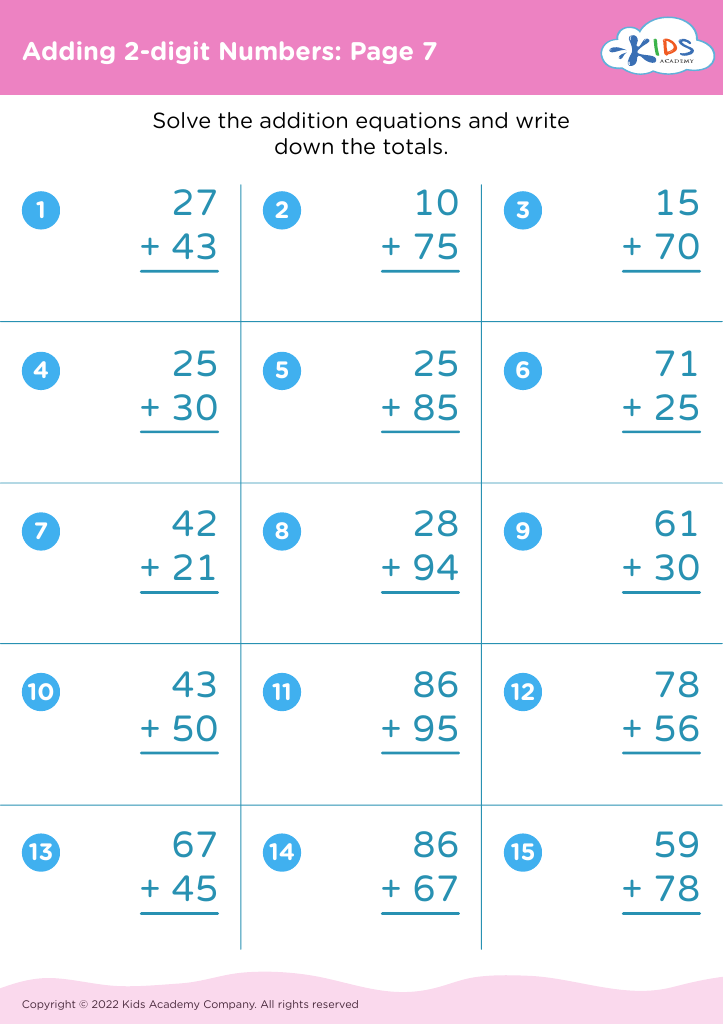
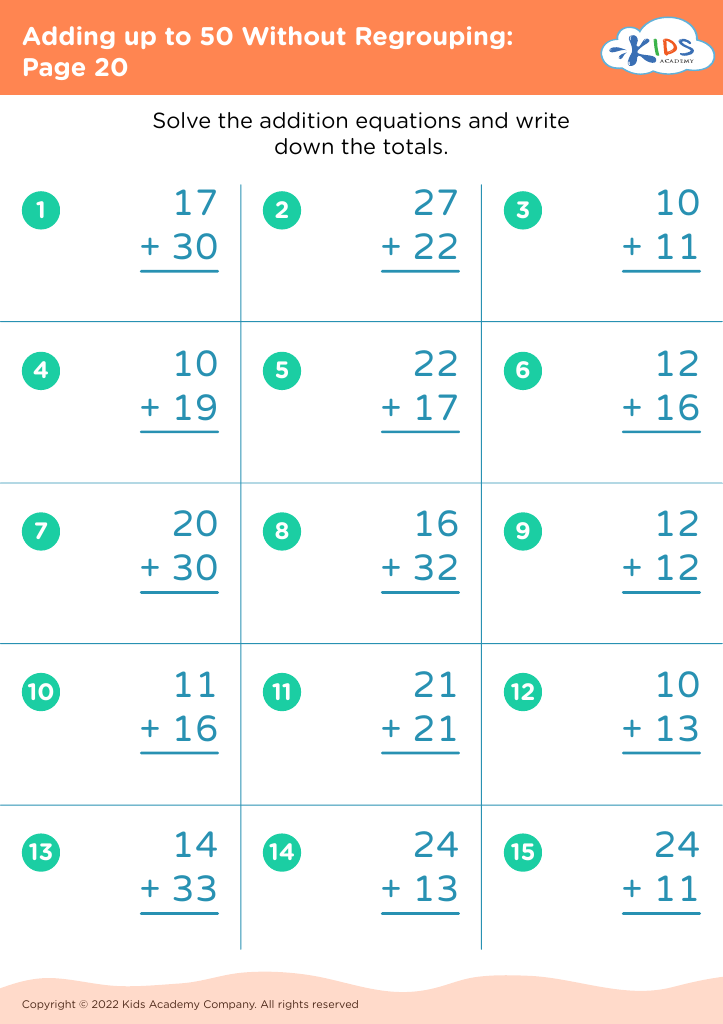
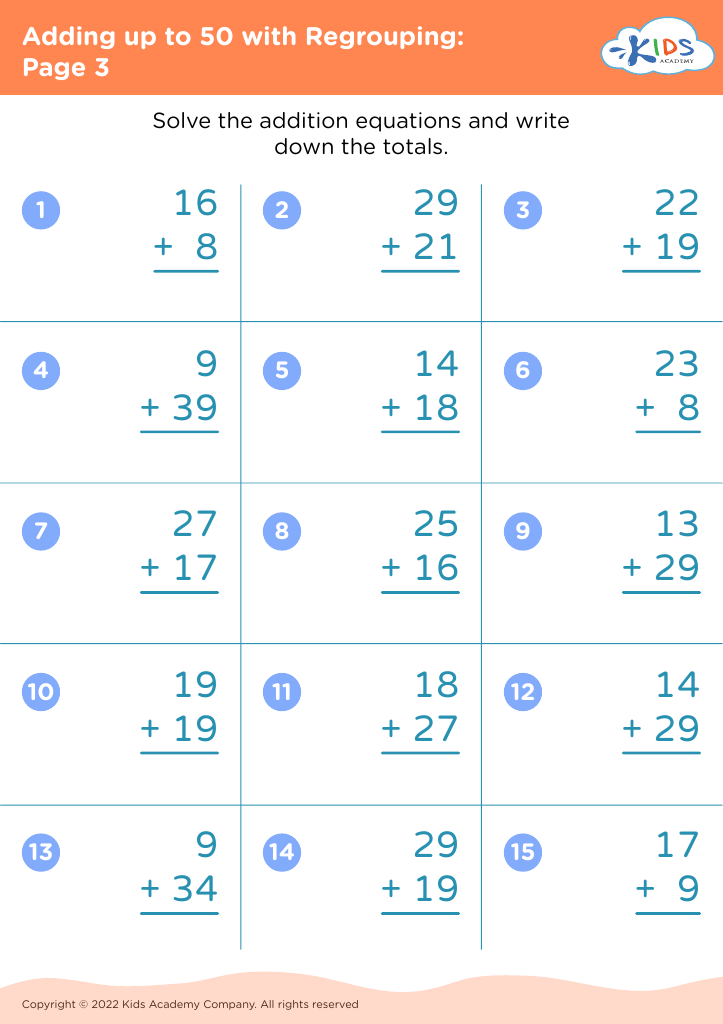
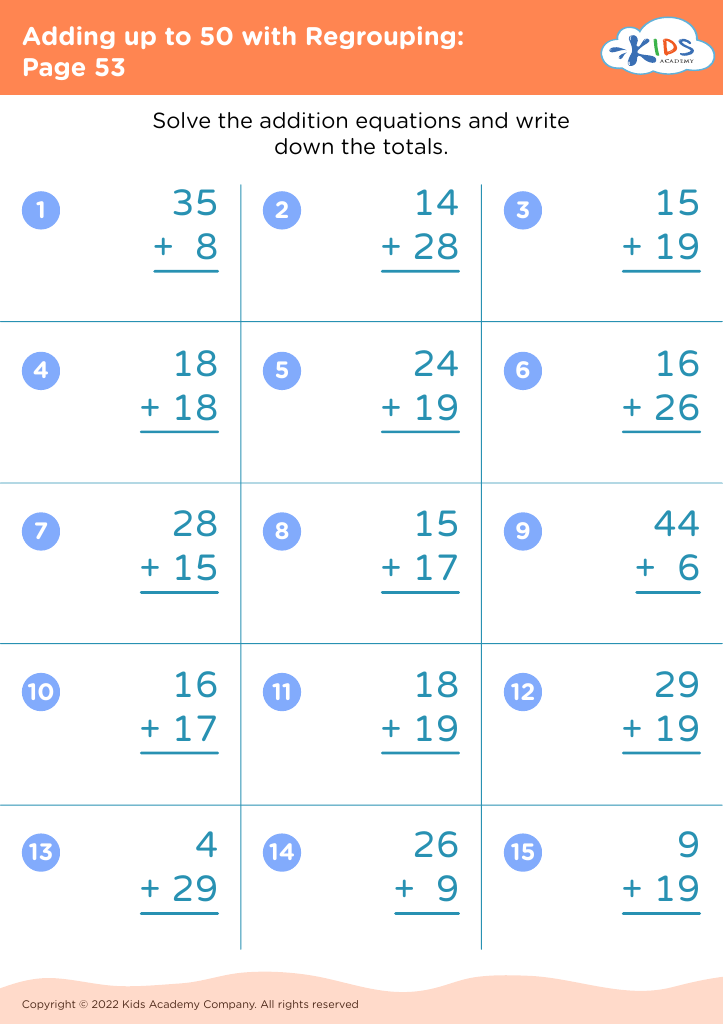








Practicing counting and addition for children aged 3-8 is crucial for several reasons. First, these foundational math skills help to develop a child's cognitive abilities, enhancing problem-solving and critical thinking. By mastering counting and basic addition, children can build confidence in their mathematical understanding, which sets a positive tone for more complex concepts later on.
Second, early exposure to math encourages a natural curiosity and love for learning. Engaging with counting games and simple addition challenges can turn learning into a fun and interactive experience, fostering a lifelong appreciation for academics.
Additionally, practicing counting and addition helps develop important social skills. Working collaboratively with peers during math activities can enhance communication, teamwork, and patience. These are essential skills that extend beyond mathematics and support overall social development.
Lastly, early math proficiency is linked to future academic success. Children who grasp early math concepts are more likely to excel in school, reducing the likelihood of gaps in understanding as they progress in their education.
Parents and teachers should prioritize counting and addition practice to promote enhanced cognitive skills, social interaction, and future academic achievement in young learners. A strong foundation in these areas supports children as they embark on their educational journeys.








