Understanding division Addition Worksheets for Ages 3-8
5 filtered results
-
From - To
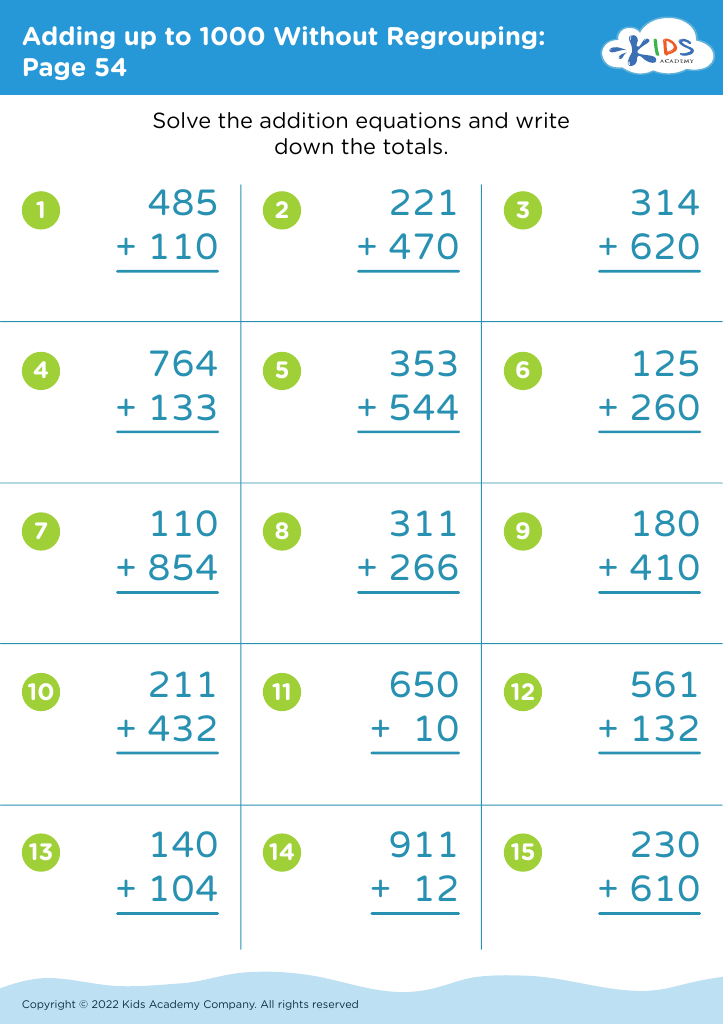
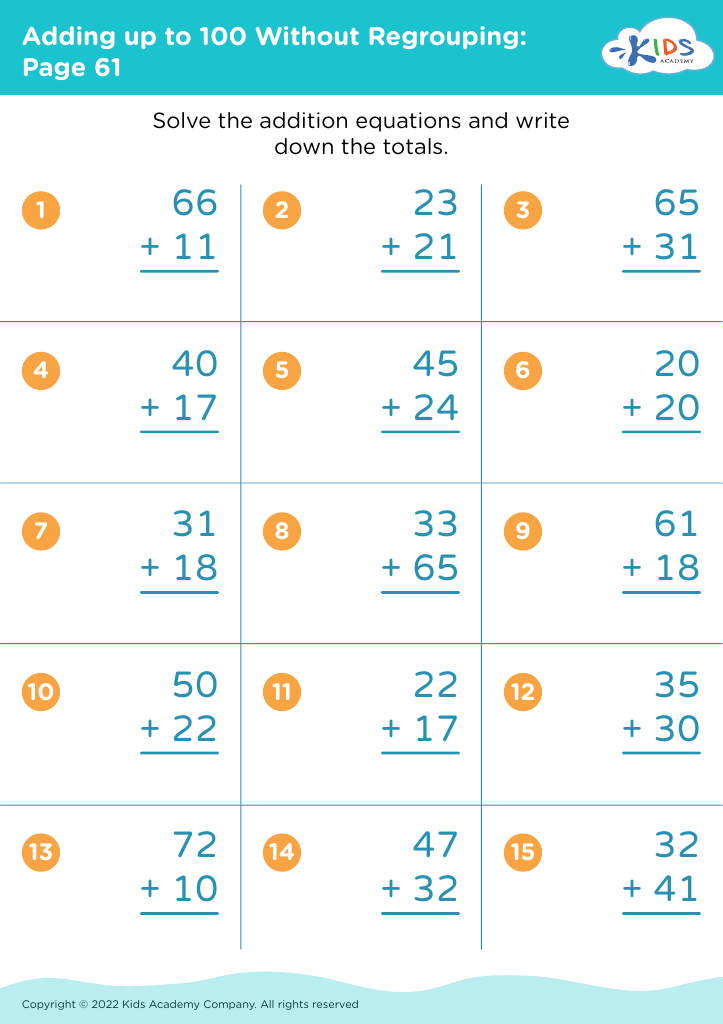
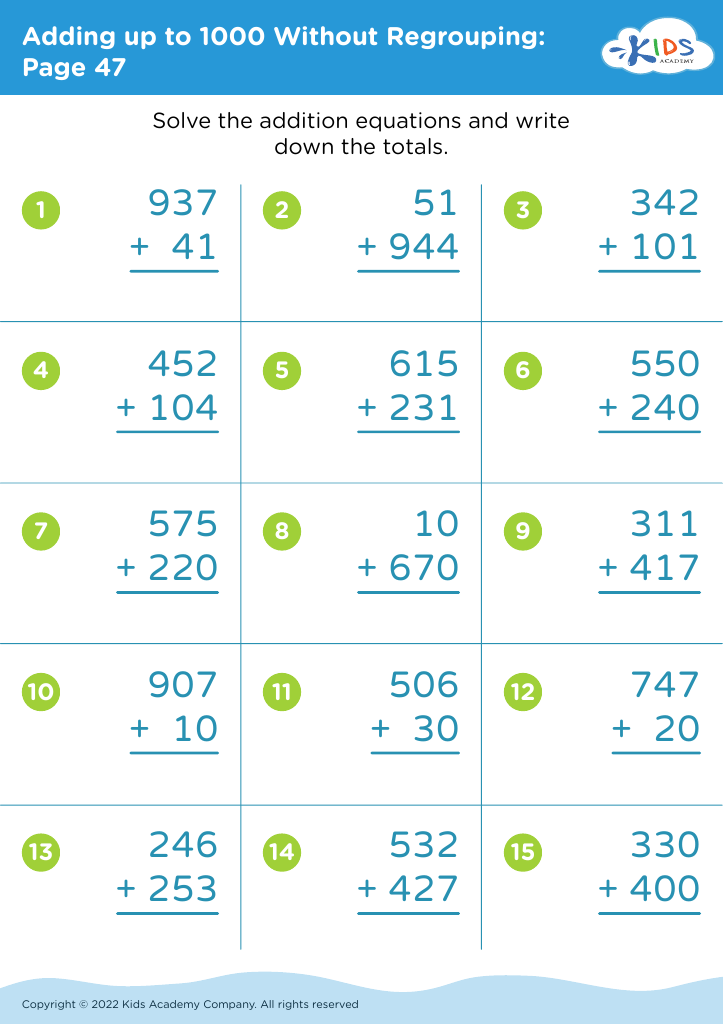
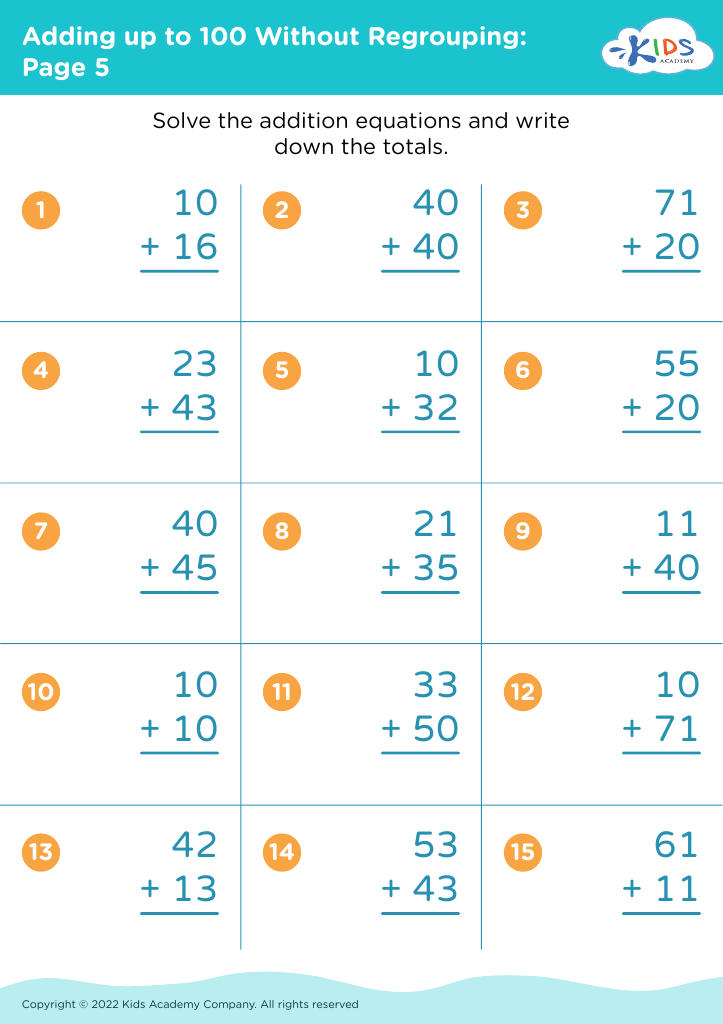
Discover engaging "Understanding Division Addition Worksheets" designed for children ages 3-8. These printable resources help young learners grasp fundamental math concepts through fun activities. By integrating division and addition, children develop a well-rounded mathematical foundation. Our worksheets include colorful illustrations and interactive exercises, making learning enjoyable and effective. Each Activity is tailored to promote critical thinking and problem-solving skills. Parents and educators can easily access these resources to support their child's educational journey. Whether in the classroom or at home, our worksheets encourage a love for math while reinforcing essential skills. Start building confidence in math today with our exciting worksheets!
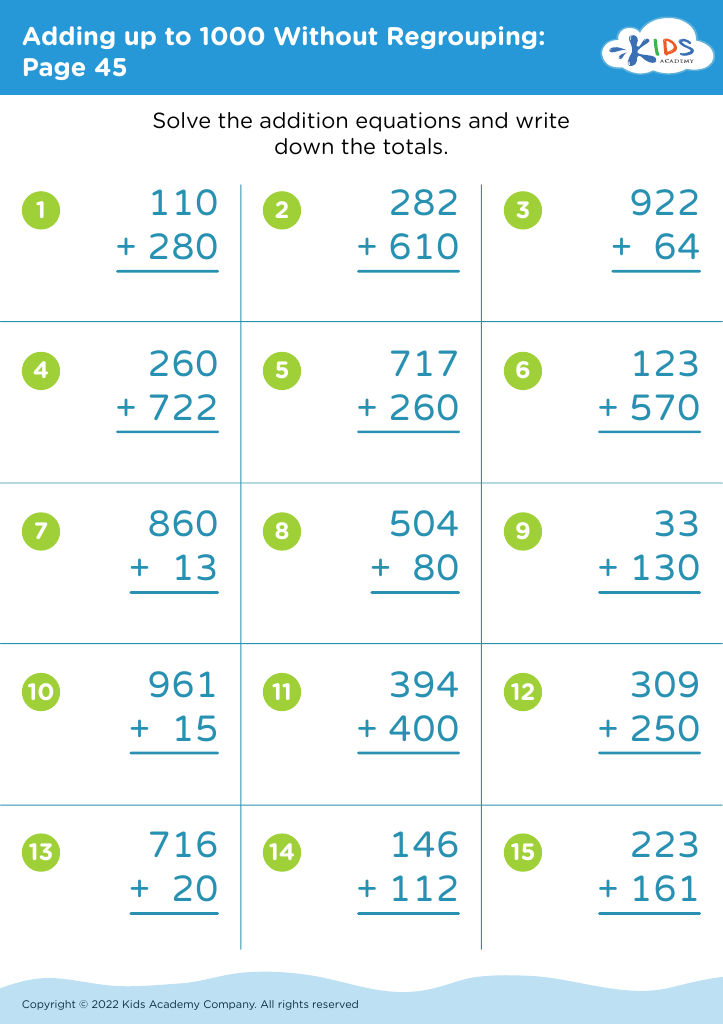



.jpg)




Understanding division and addition is fundamental for children ages 3-8, as these concepts form the foundation of their mathematical skills and overall cognitive development. At this age, children are naturally curious and eager to grasp logical ideas, making it an ideal time to introduce them to basic math concepts.
Addition, as a building block of arithmetic, helps children learn to combine quantities, fostering problem-solving skills. It enhances their ability to appreciate patterns, grasp sequences, and understand their environment quantitatively. With skillful guidance, children can internalize addition as a number-building tool, which is crucial for tackling more complex math later on.
Division, while more complex, is equally important for instilling a sense of fairness and resource sharing in young learners. Understanding division helps children develop critical thinking and perspective-taking by encouraging them to separate quantities into shares. It lays the groundwork for grasping advanced mathematical concepts, such as fractions, that will emerge in later educational stages.
When parents and teachers focus on both addition and division, they support overall development. By creating engaging and relatable activities that incorporate these concepts, they nurture a child's confidence in math, laying a solid foundation for lifelong learning and success.








