Understanding number sequence Addition Worksheets for Ages 3-8
3 filtered results
-
From - To
Welcome to our "Understanding Number Sequence Addition Worksheets" page, perfect for children aged 3-8! These engaging worksheets are designed to help young learners master number sequences and enhance their addition skills in a fun and interactive way. By guiding kids through various exercises, they'll build a solid foundation in basic math concepts while developing critical thinking and problem-solving abilities. Our resources cater to different skill levels, ensuring personalized learning experiences that foster confidence and enthusiasm for math. Explore our printable worksheets today and watch as your child becomes a number sequence pro, all while enjoying the joy of learning!
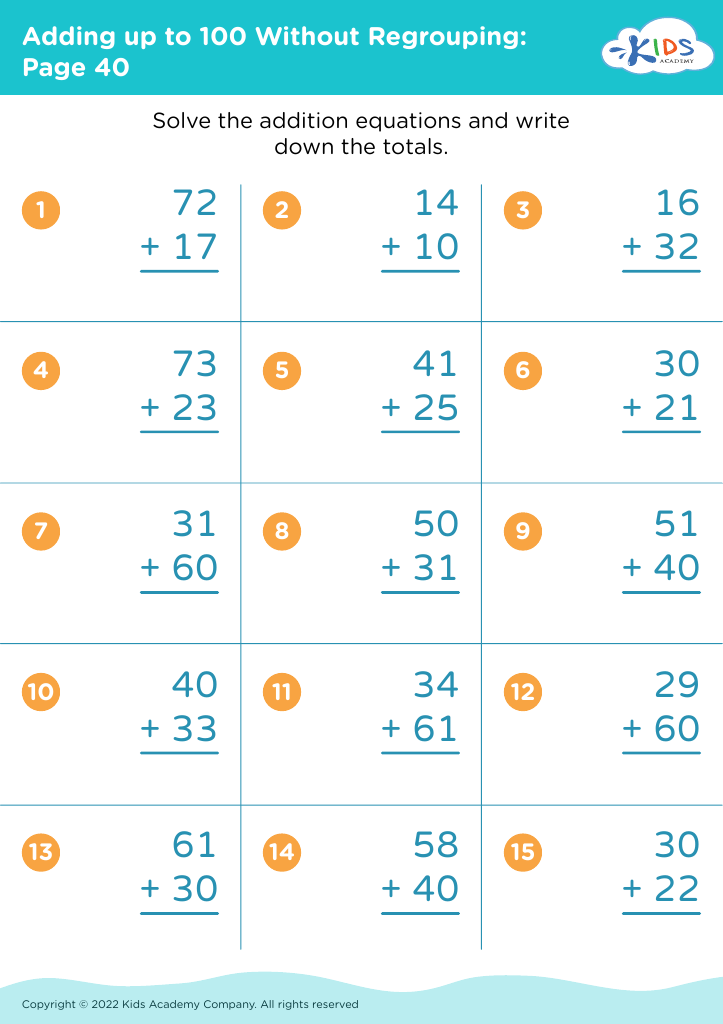
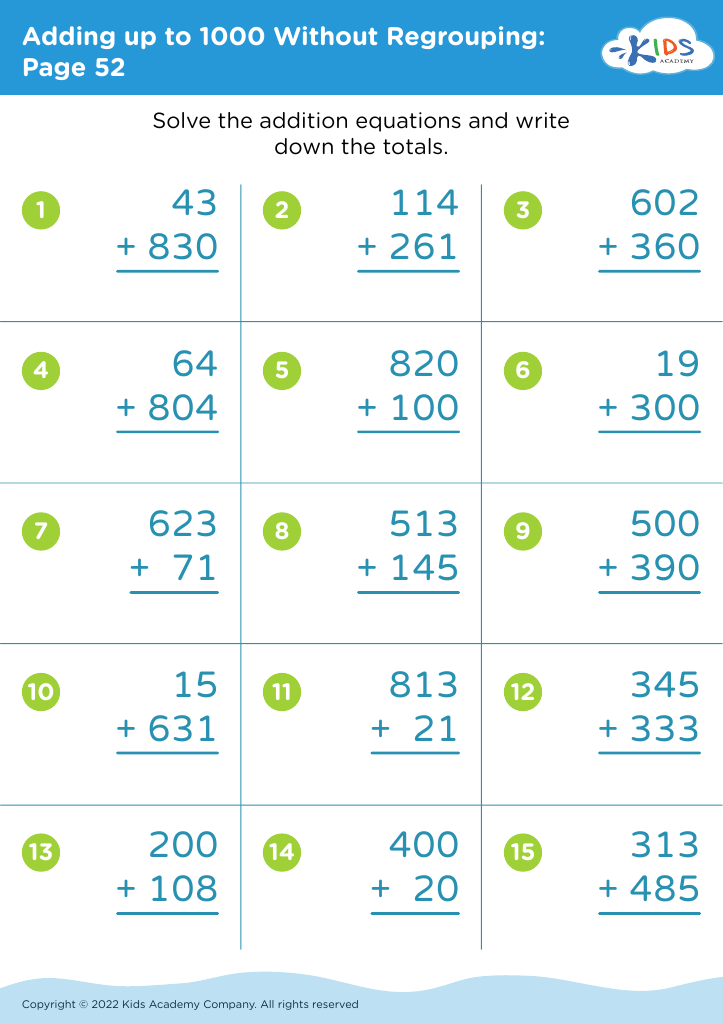
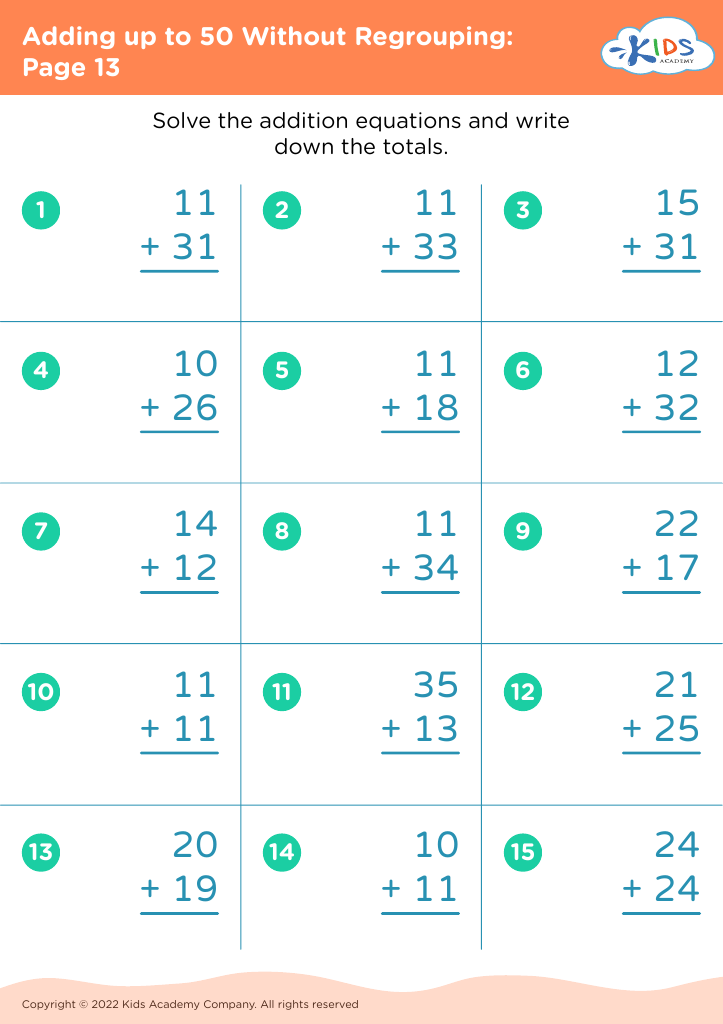








Understanding number sequences and addition is crucial for children aged 3-8 as these foundational skills underpin their mathematical development. During this critical stage, children are not just learning numbers but beginning to comprehend how they interact with one another. Careful engagement in number sequences helps them recognize patterns, which is essential for problem-solving and logical reasoning later on.
By mastering addition within these sequences, children develop early numeracy skills that are vital for their academic success. This knowledge also builds their confidence in math, transforming a subject often viewed as difficult into an area of interest. Furthermore, understanding number sequences enhances their ability to grasp more complex mathematical concepts introduced in later grades, fostering a smoother educational transition.
Parents and teachers should prioritize nurturing these skills because they cultivate critical thinking and a positive attitude toward learning. Encouraging engagement through interactive games or real-life applications can make these concepts enjoyable and relatable, laying a strong groundwork. Ultimately, a solid understanding of number sequences and addition empowers children, ensuring they are prepared for future challenges in mathematics and beyond. This investment of time and effort pays off by instilling a lifelong appreciation for math and enhancing overall cognitive abilities.








