Understanding numerical values Addition Worksheets for Ages 3-8
4 filtered results
-
From - To
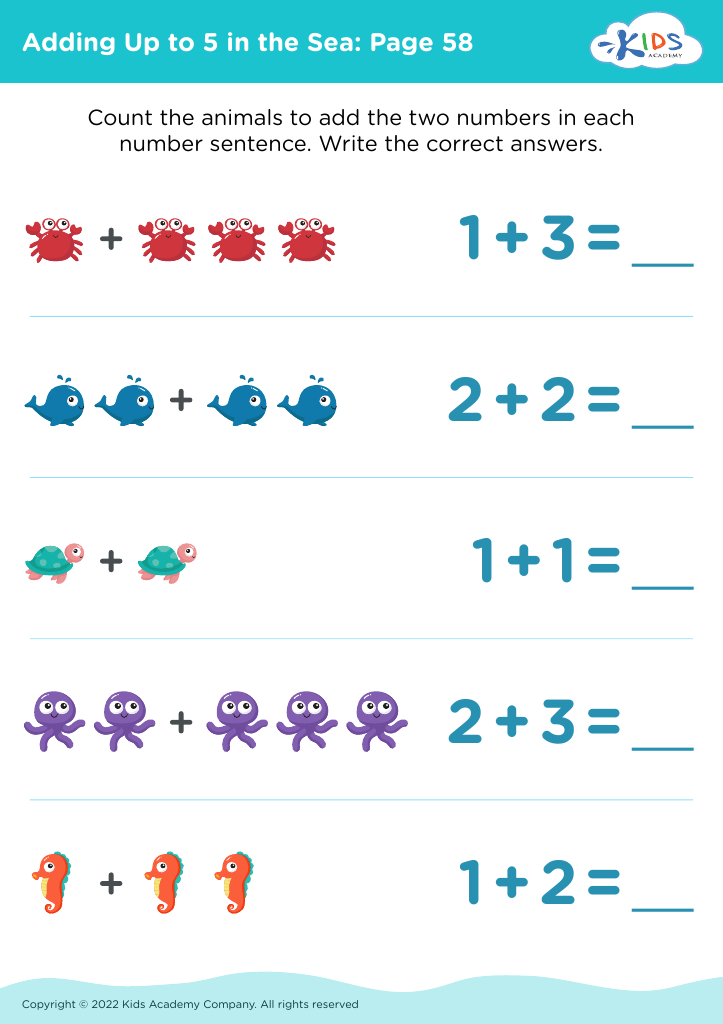
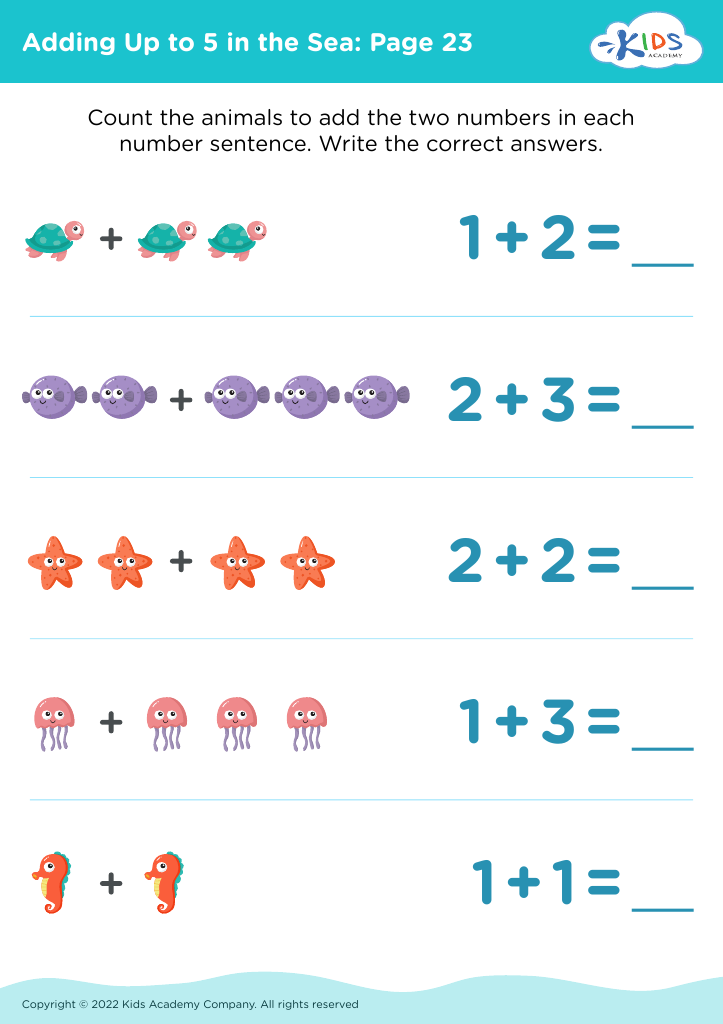
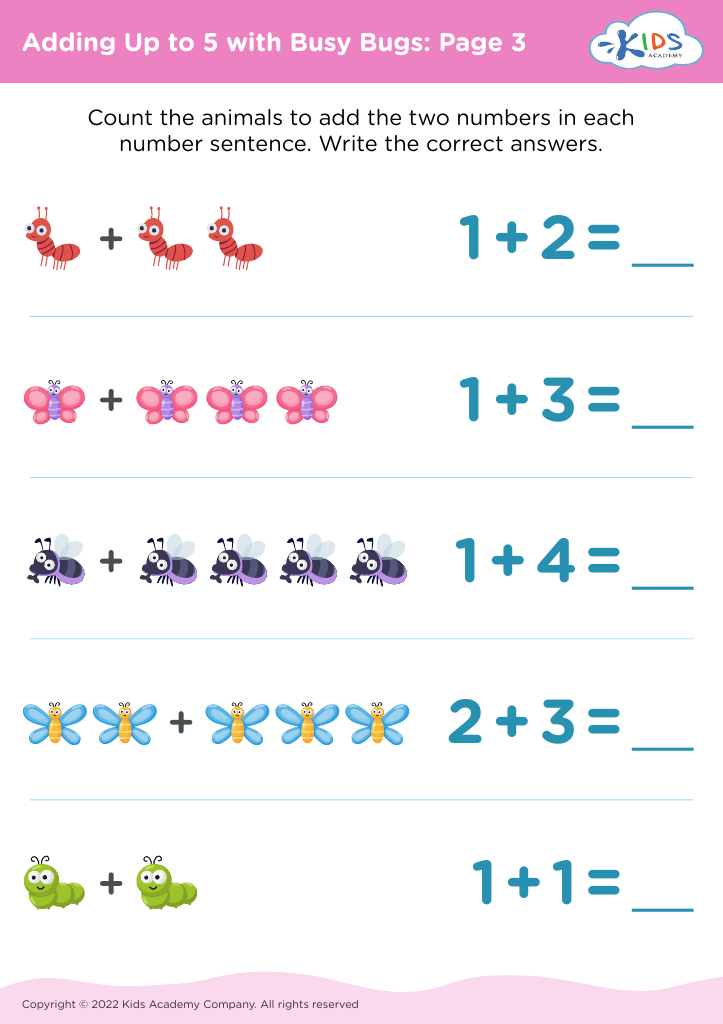
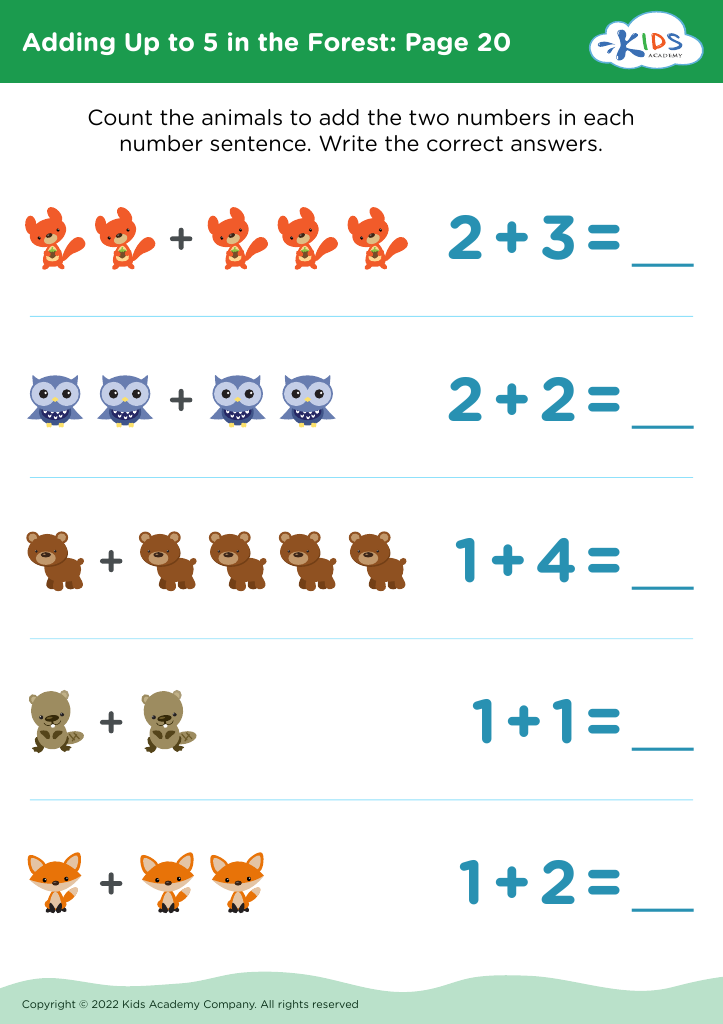
Welcome to our "Understanding Numerical Values Addition Worksheets" page, designed for children ages 3-8. These engaging worksheets provide a fun and interactive way to help young learners grasp the concept of numerical values through addition exercises. By using colorful illustrations and relatable scenarios, kids will connect numbers to real-life objects, making math both enjoyable and meaningful. Our worksheets promote essential skills in counting, number recognition, and simple addition. Perfect for classroom use or at-home learning, these resources ensure that your child builds a solid foundation in mathematics while boosting their confidence. Start exploring today and watch your child thrive!








Understanding numerical values and addition is crucial for children aged 3-8, as it lays the foundation for their future learning in mathematics and logic. During these formative years, children develop cognitive skills that will influence their academic journey, making it vital for parents and teachers to engage them in early math concepts.
At this age, children are naturally curious and learn through play and exploration. Teaching them about numbers and patterns, alongside the principles of addition, helps to enhance their problem-solving abilities, critical thinking, and spatial reasoning. Moreover, a solid grasp of numerical values fosters confidence and resilience during mathematical tasks, making them more inclined to tackle complex concepts as they progress.
Additionally, understanding addition helps in everyday contexts, from simple tasks like organizing toys to sharing snacks, providing practical applications that children can relate to. Engaging with numbers in an enjoyable and interactive way also supports language development, as children learn to articulate their thoughts and reason through problems.
Ultimately, by prioritizing numerical values and addition for young learners, parents and teachers can contribute to children's holistic development, ensuring they acquire vital skills that assist not just in math, but in various aspects of their lives.








