Visual representation comprehension Addition Worksheets for Ages 3-8
5 filtered results
-
From - To
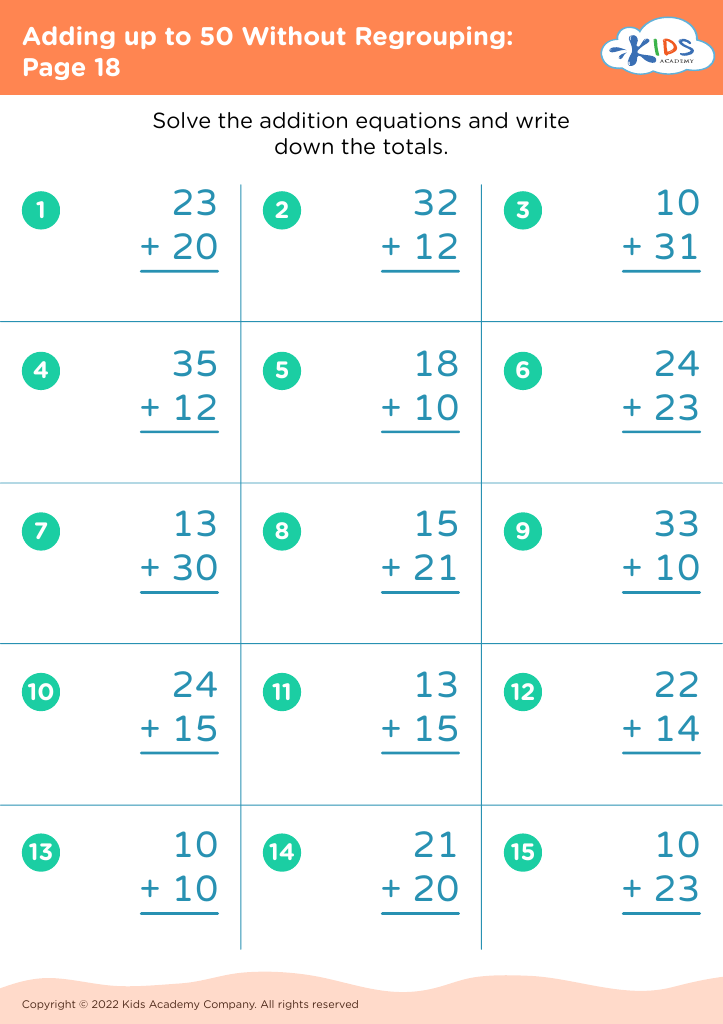
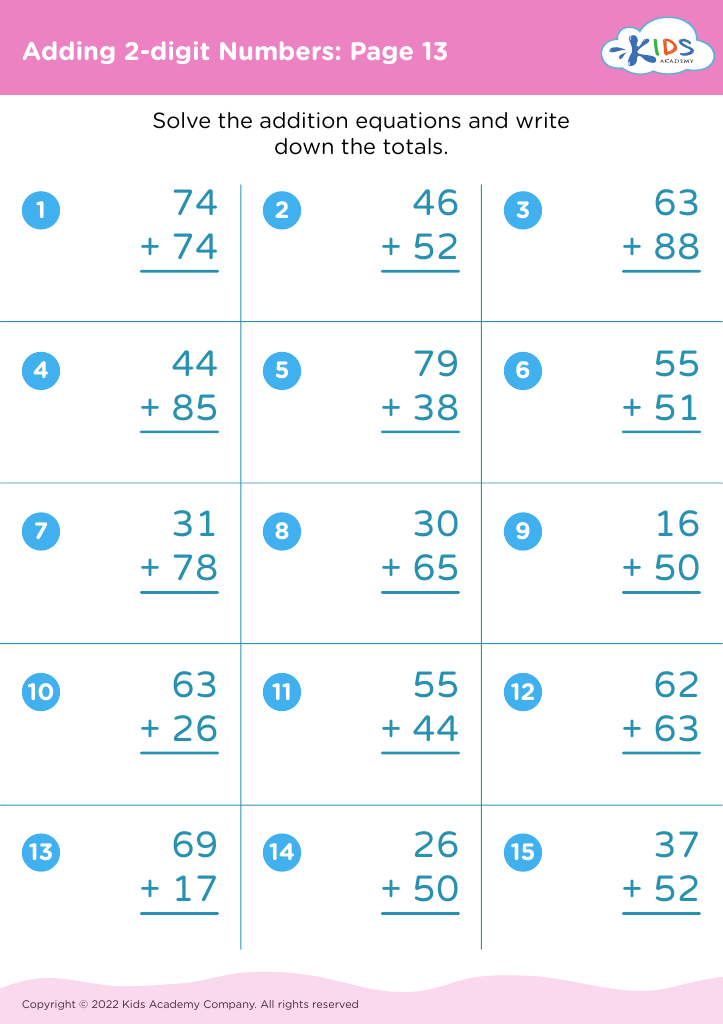
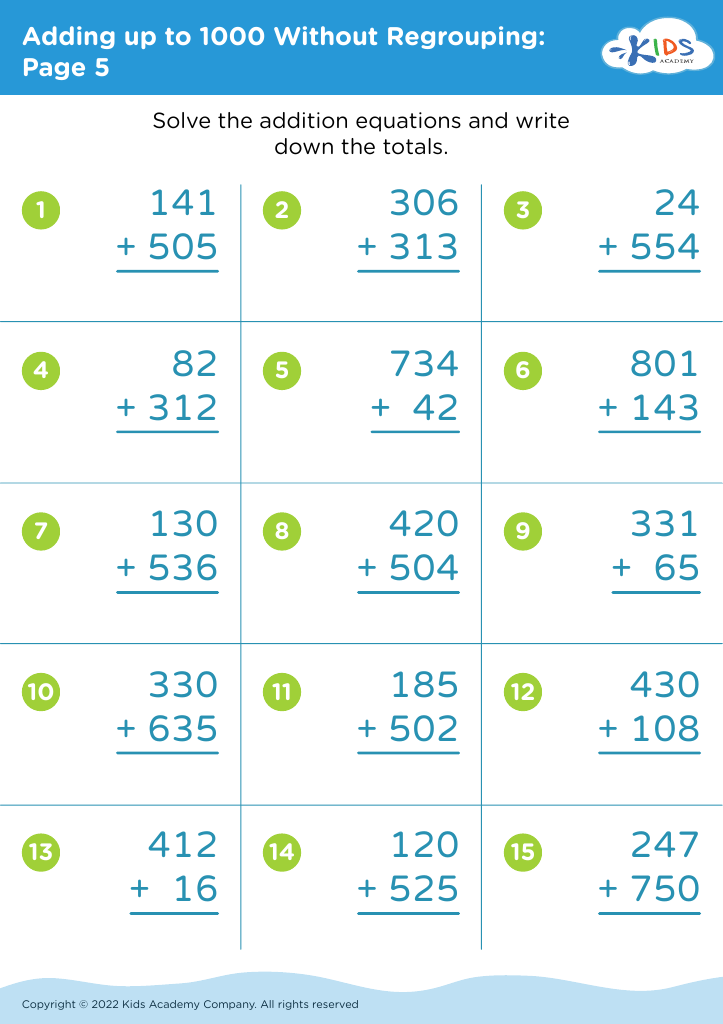
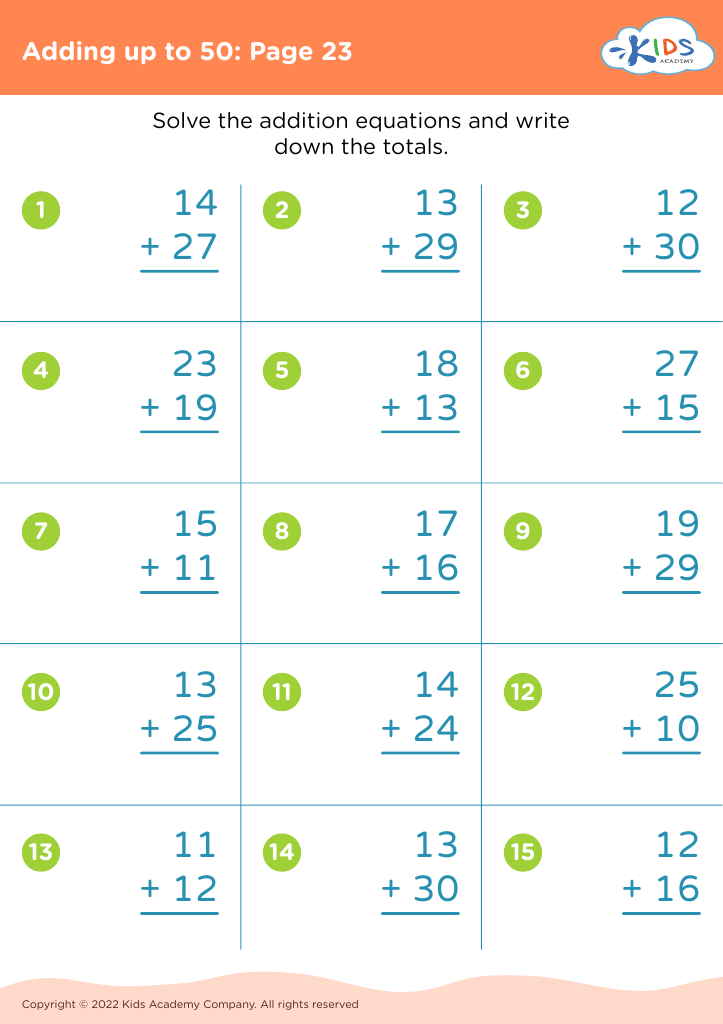
Explore our “Visual Representation Comprehension Addition Worksheets” designed for children aged 3-8. These engaging worksheets utilize vibrant visuals to enhance understanding of basic addition concepts. By associating numbers with images, kids can grasp the fundamentals of adding in a fun and interactive way. Ideal for both classrooms and home learning, these resources cater to diverse learning styles and help develop critical early math skills. Foster a positive attitude towards math and build a strong foundation for future learning. Give your child the tools they need to succeed with our visually stimulating and educational worksheets today!
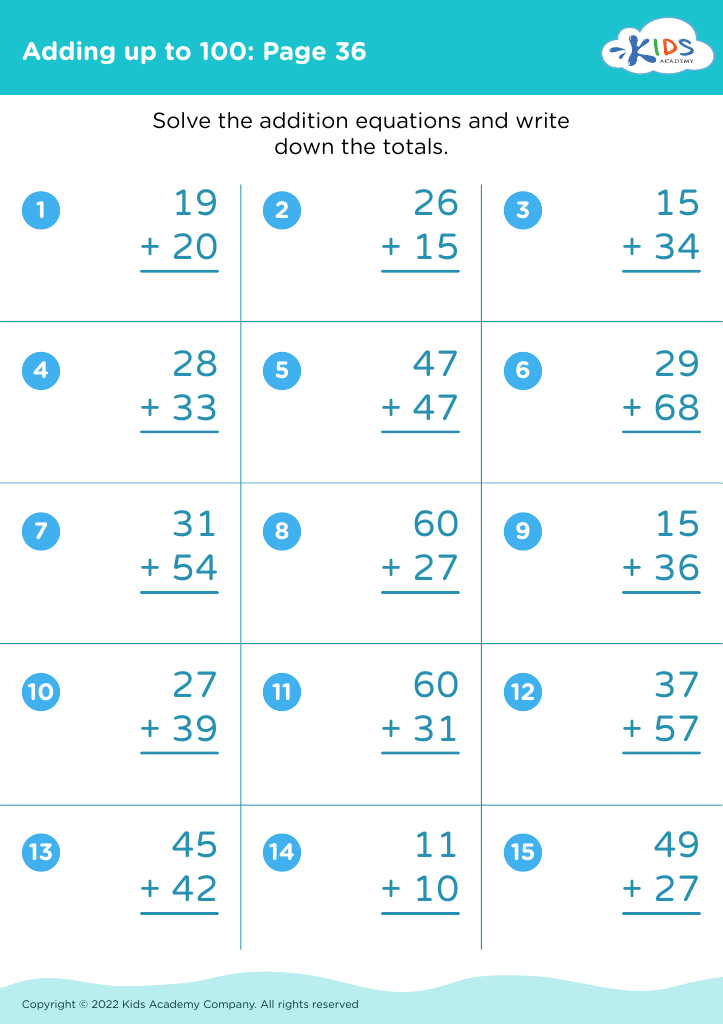








Parents and teachers should care about visual representation comprehension in addition for children aged 3-8 because it plays a critical role in building foundational math skills. At this young age, children learn best through visual aids, such as pictures, diagrams, and manipulatives. These tools help them grasp abstract mathematical concepts more concretely, making addition easier to understand.
Visual representations, such as number lines, blocks, or dot cards, allow children to see the relationships between numbers. This understanding nurtures problem-solving skills, encourages logical reasoning, and lays the groundwork for future math topics. Moreover, when children visualize addition, they are better able to engage with the material, leading to greater retention and enthusiasm for learning.
Additionally, fostering these skills at an early age can increase confidence in their mathematical abilities, reducing anxiety about math as they progress in their education. Engaging children with visual strategies enhances their ability to think critically and independently as they tackle more complex math challenges in the future. Thus, prioritizing visual representation in teaching addition not only benefits children cognitively but also instills a positive attitude toward learning, setting the stage for lifelong success in mathematics and related fields.








