Visualization skills Addition Worksheets for Ages 3-8
3 filtered results
-
From - To
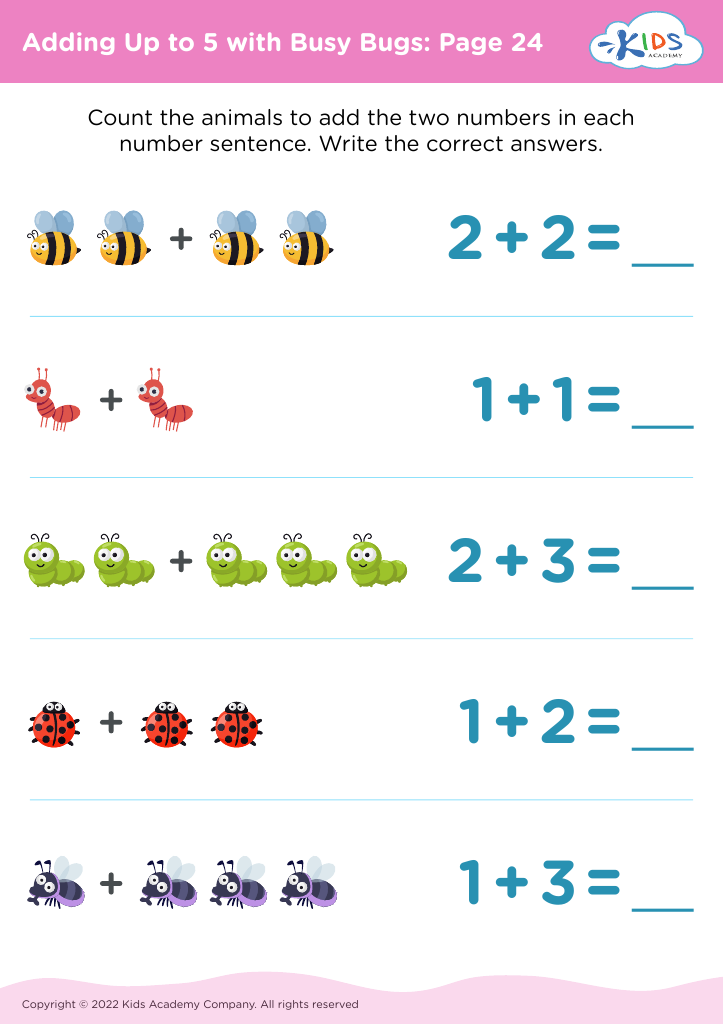
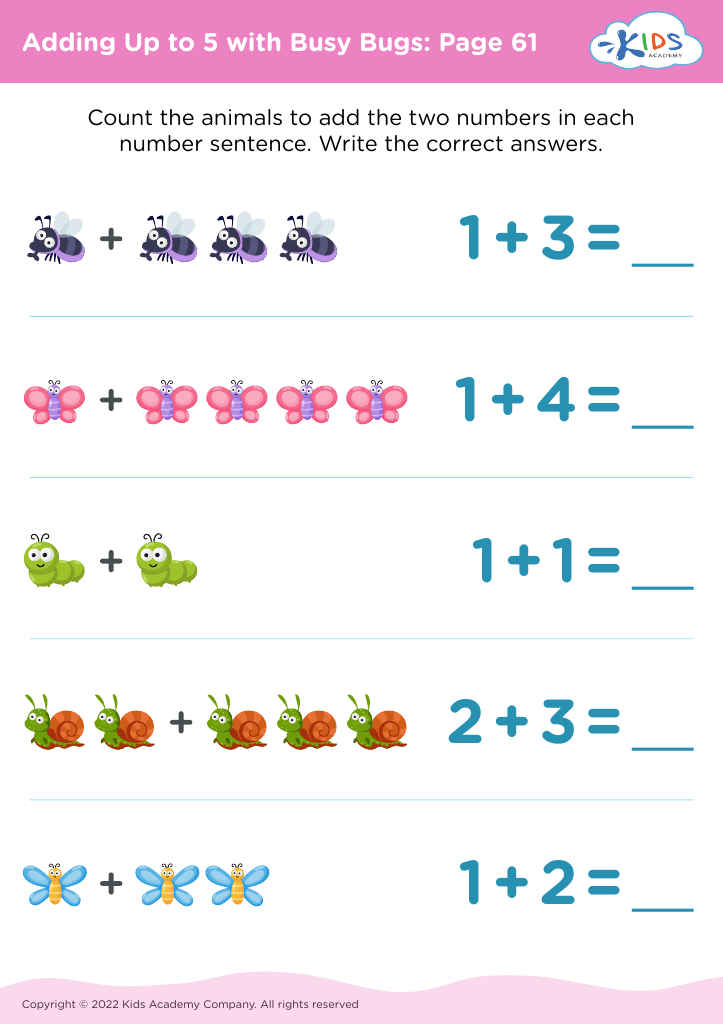
Our engaging Visualization Skills Addition Worksheets for Ages 3-8 make math fun and accessible! Designed to help young learners grasp basic addition, these worksheets use vibrant visuals to promote understanding and retention. Each activity encourages children to visualize numbers and their relationships, enhancing problem-solving skills. Perfect for early grade students, these printable resources cater to various learning paces and styles, providing a strong foundation for future math success. Whether used in the classroom or at home, our worksheets spark curiosity and build confidence, ensuring a positive math experience. Explore now and watch your child's math skills flourish!
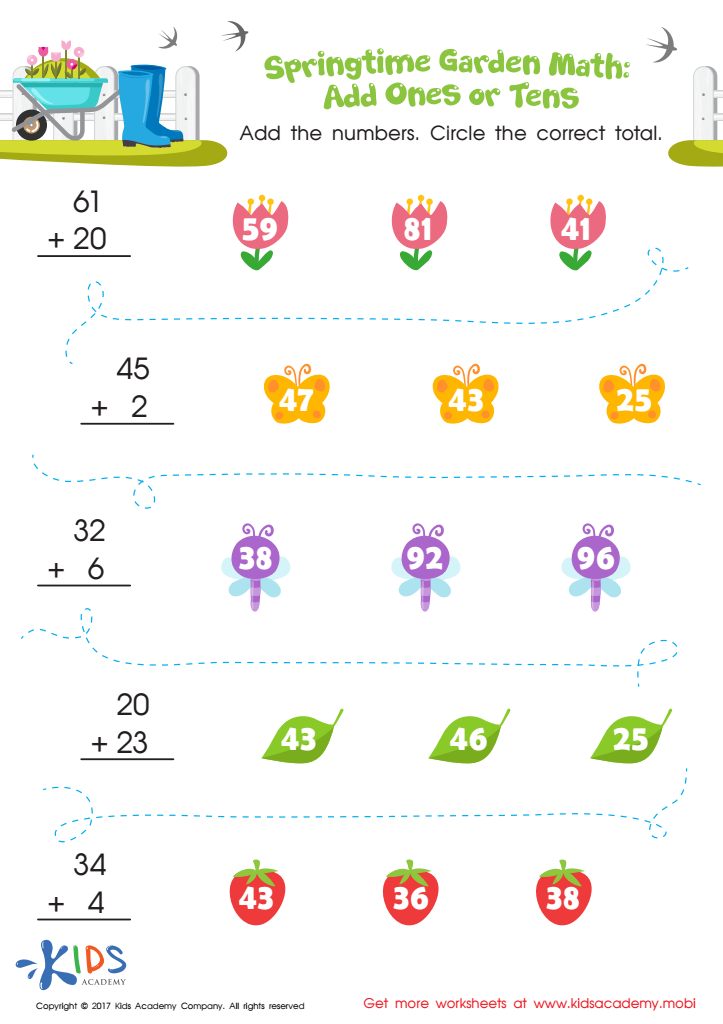
Springtime Garden Math Worksheet
 Assign to My Students








Visualization skills in mathematics, especially in addition, are crucial for children aged 3-8 as they lay the foundation for more advanced mathematical concepts and problem-solving abilities. This age range is a critical period for cognitive development, and fostering these skills can significantly enhance a child's ability to understand, interpret, and solve mathematical problems.
Firstly, visualization helps children grasp the concept of numbers and how they interact with each other. By visualizing addition, children can see how numbers combine and grow, making the abstract concept of addition more concrete. This can involve using physical objects like blocks or drawing pictures to represent mathematical problems, enabling children to connect numbers to real-world objects.
Additionally, strong visualization skills aid in developing spatial awareness and the ability to estimate and recognize patterns. These skills are not only fundamental in math but are also transferable to other subjects such as science and technology. Visualization boosts memory retention and helps children in remembering arithmetic facts, making the learning process more efficient and enjoyable.
Moreover, fostering these skills early encourages a positive attitude towards mathematics. Children who can visualize problems are often more confident and less apprehensive about tackling math challenges. This early positive experience can lead to sustained academic success and a lifelong appreciation for mathematics.
Hence, parents and teachers should prioritize developing visualization skills in young children to build a strong mathematical foundation, enhance cognitive development, and stimulate a lasting interest in learning.








