Vocabulary development Addition Worksheets for Ages 3-8
5 filtered results
-
From - To
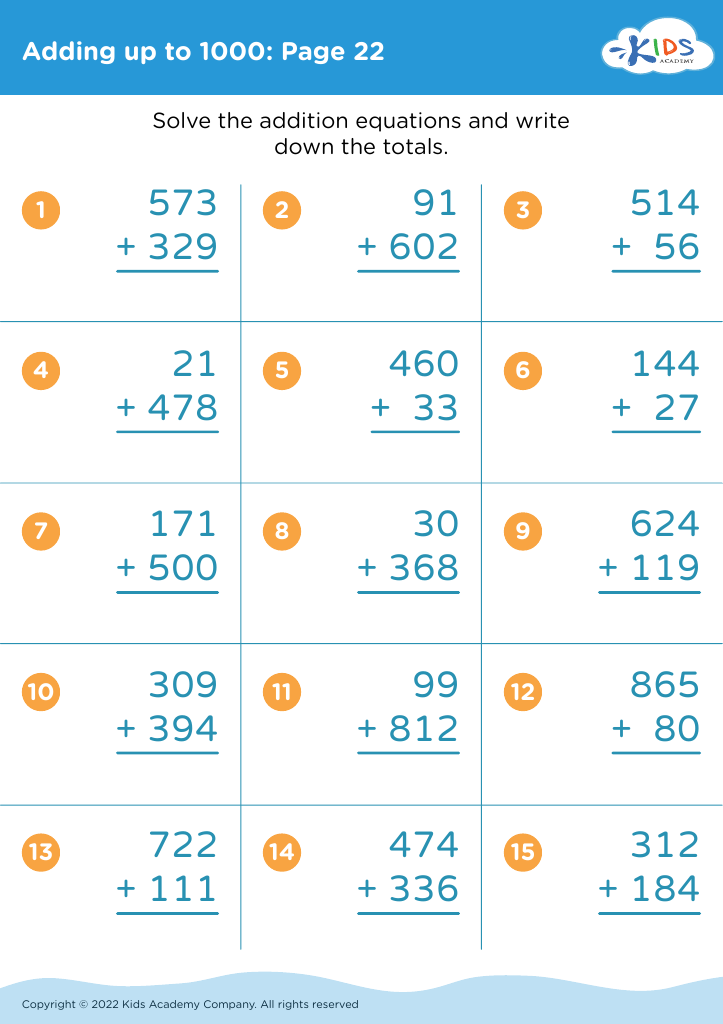
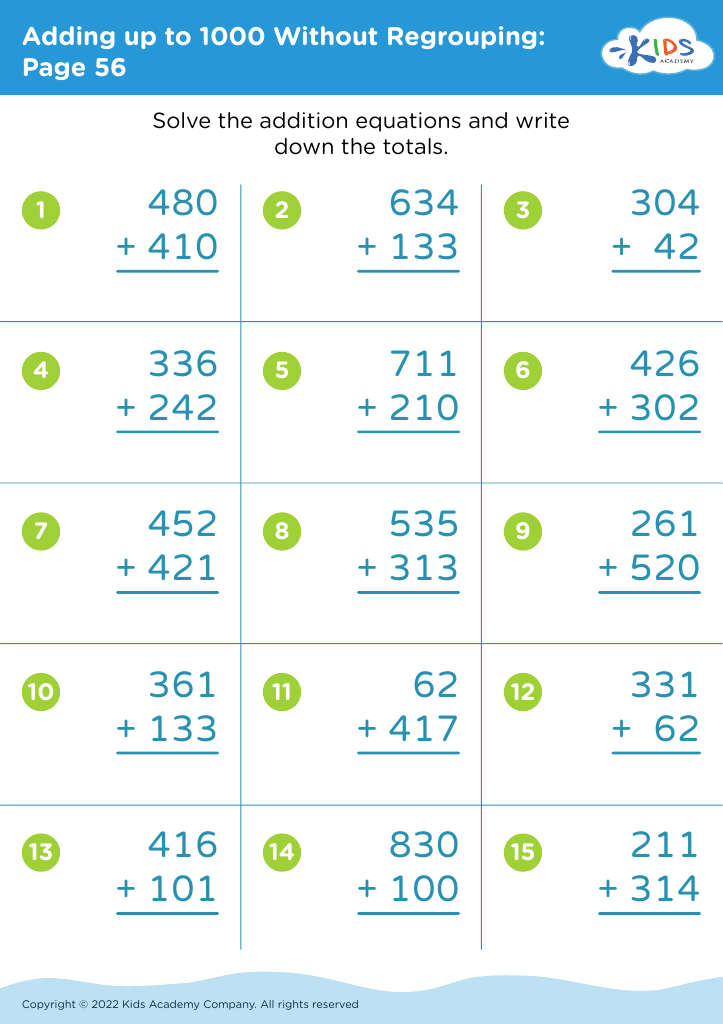
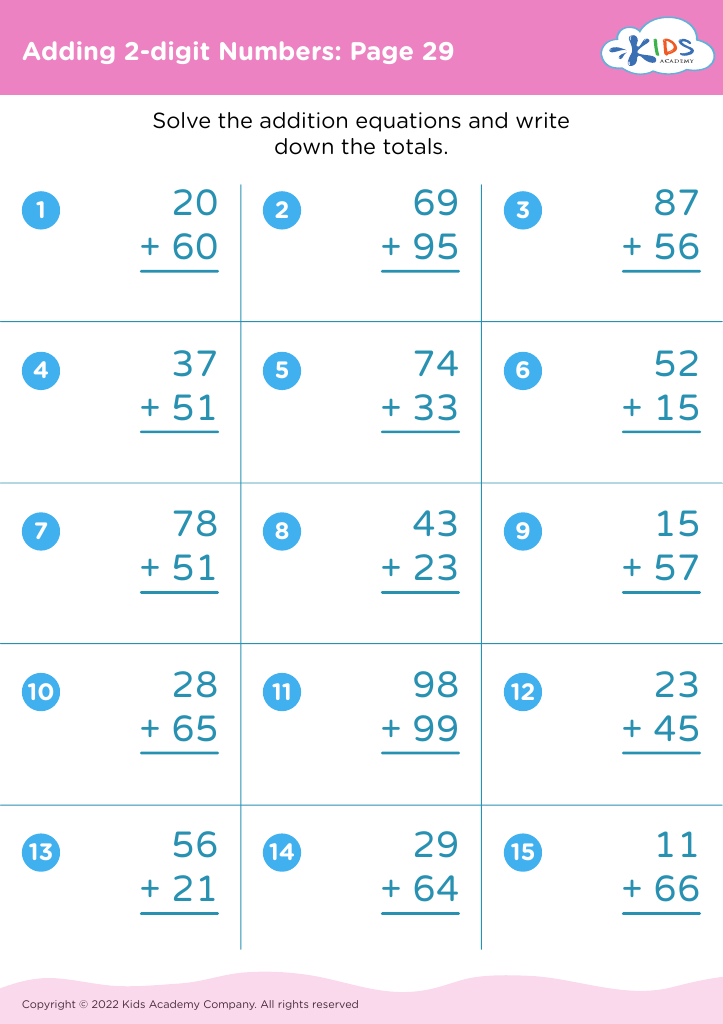
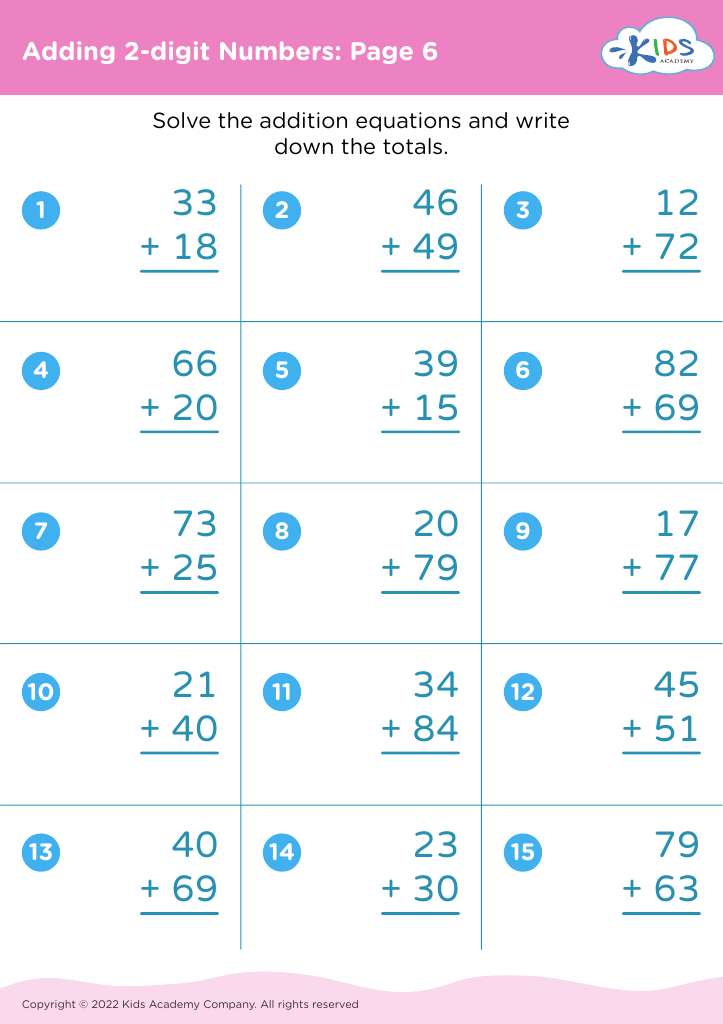
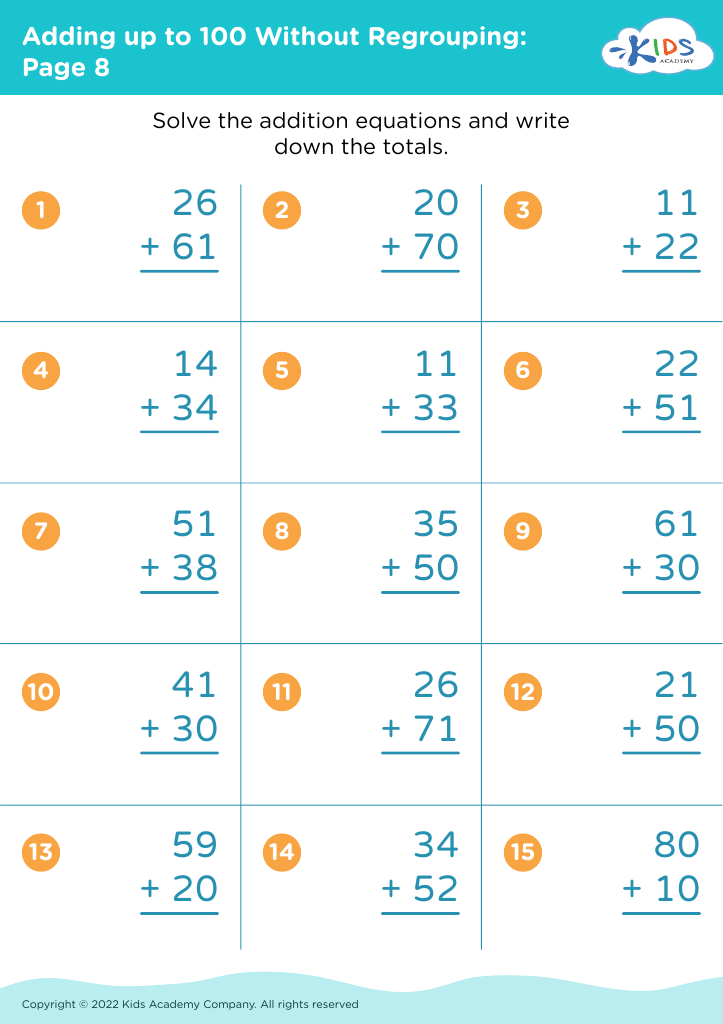
Enhance your child's vocabulary while introducing them to essential addition concepts with our engaging Vocabulary Development Addition Worksheets, designed for ages 3-8. These interactive worksheets combine math practice with language skills, ensuring a comprehensive learning experience. Young learners will explore mathematical terminology through fun exercises that promote both vocabulary enrichment and foundational addition skills. Perfect for parents and educators, these resources support individualized learning at home or in the classroom. As children solve problems and engage with words, they'll develop confidence in their math abilities, setting the stage for future academic success. Download this invaluable tool today and watch their learning soar!



.jpg)




Vocabulary development is crucial for children aged 3 to 8, as it lays the foundation for effective communication, literacy skills, and overall academic success. When parents and teachers prioritize vocabulary growth during these formative years, they enable children to express their thoughts, needs, and emotions more clearly. A rich vocabulary enhances reading comprehension, which is essential for learning across all subjects.
As children explore words and their meanings, they develop critical thinking skills, enabling them to make connections and understand concepts more deeply. Engaging children in conversations and exposing them to diverse vocabulary not only boosts their language skills but also fosters a love for language and learning. Interactive activities like storytelling, singing, and playing word games are effective ways to introduce new vocabulary in a fun and engaging manner.
Moreover, a strong vocabulary helps combat difficulties in school, reducing frustration and boosting confidence. Children with a well-developed vocabulary are more prepared to tackle challenges as they progress in their education. By nurturing vocabulary development, parents and teachers create a supportive environment that encourages curiosity, exploration, and growth, setting the stage for lifelong learning and success. Investing in vocabulary development today paves the way for a brighter future for our children.








