Mathematical reasoning Division Worksheets for Ages 3-8
4 filtered results
-
From - To
Explore our engaging Mathematical Reasoning Division Worksheets, designed for children ages 3-8! These interactive worksheets help develop essential division skills through fun activities that enhance critical thinking and problem-solving abilities. Our carefully crafted exercises encourage young learners to explore division concepts in an age-appropriate manner, making math enjoyable and accessible. Whether you're reinforcing classroom learning or seeking quality at-home practice, our worksheets provide the perfect balance of challenge and enjoyment. With colorful visuals and age-friendly content, kids will gain confidence in their mathematical skills while building a strong foundation for future learning. Download today and watch your child excel!
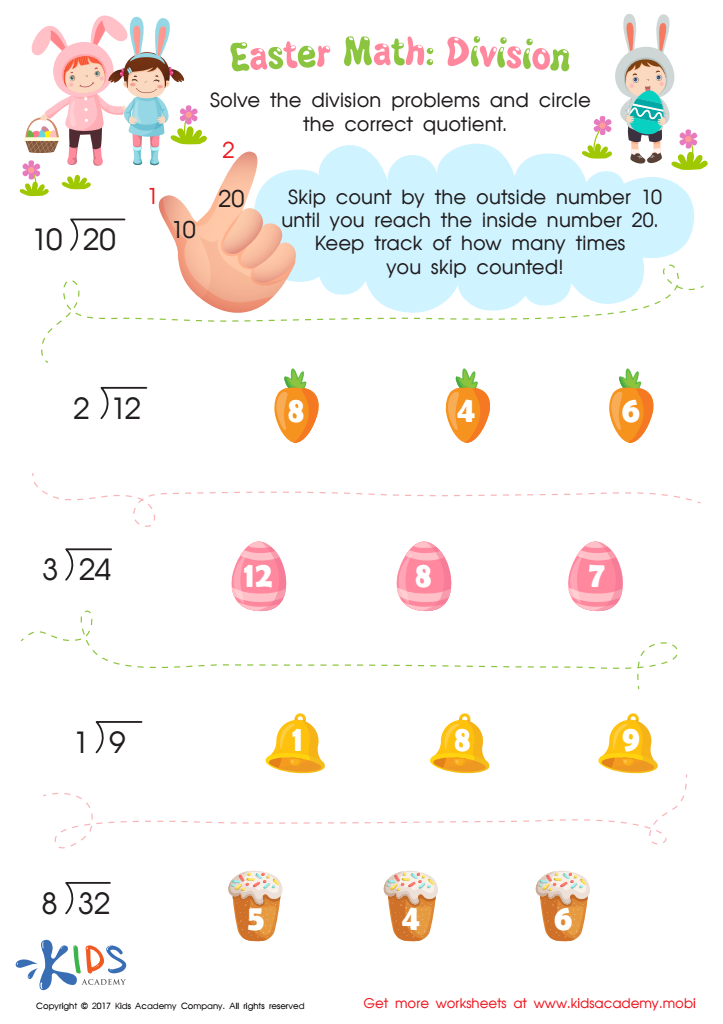
Division Worksheet
 Assign to My Students
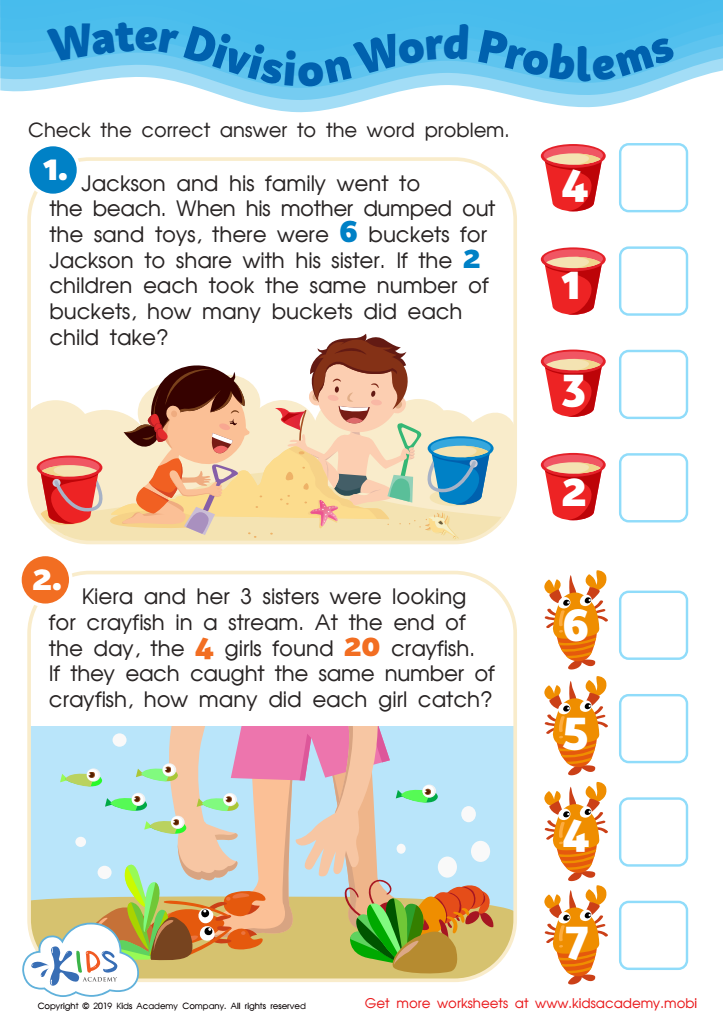
Water Division Word Problems Worksheet
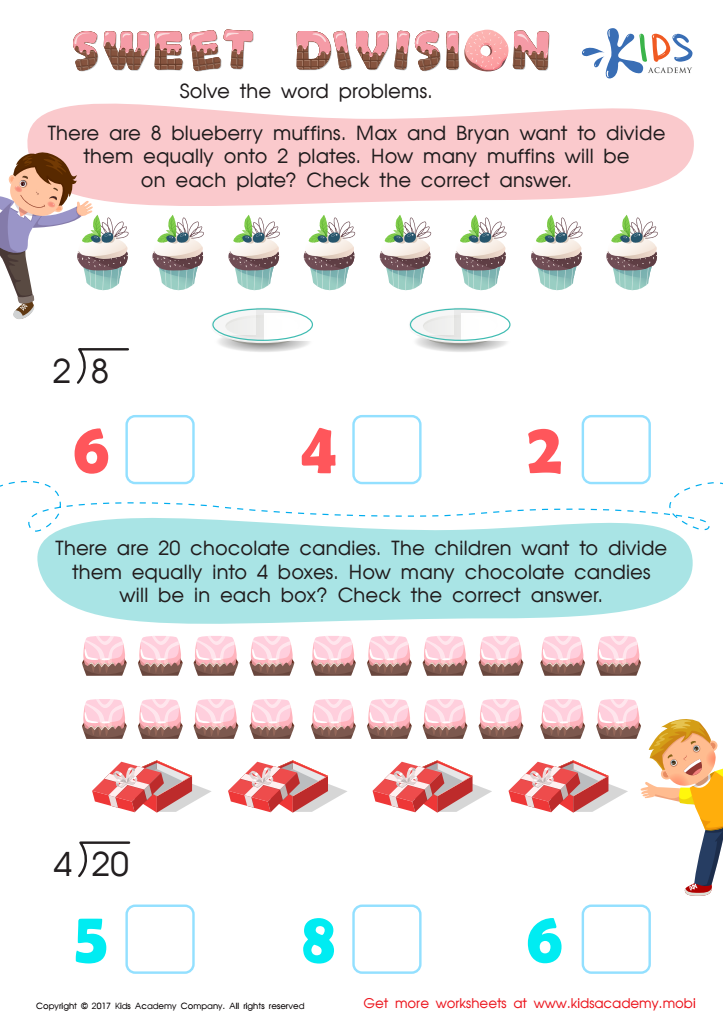
Division Word Problems Worksheet
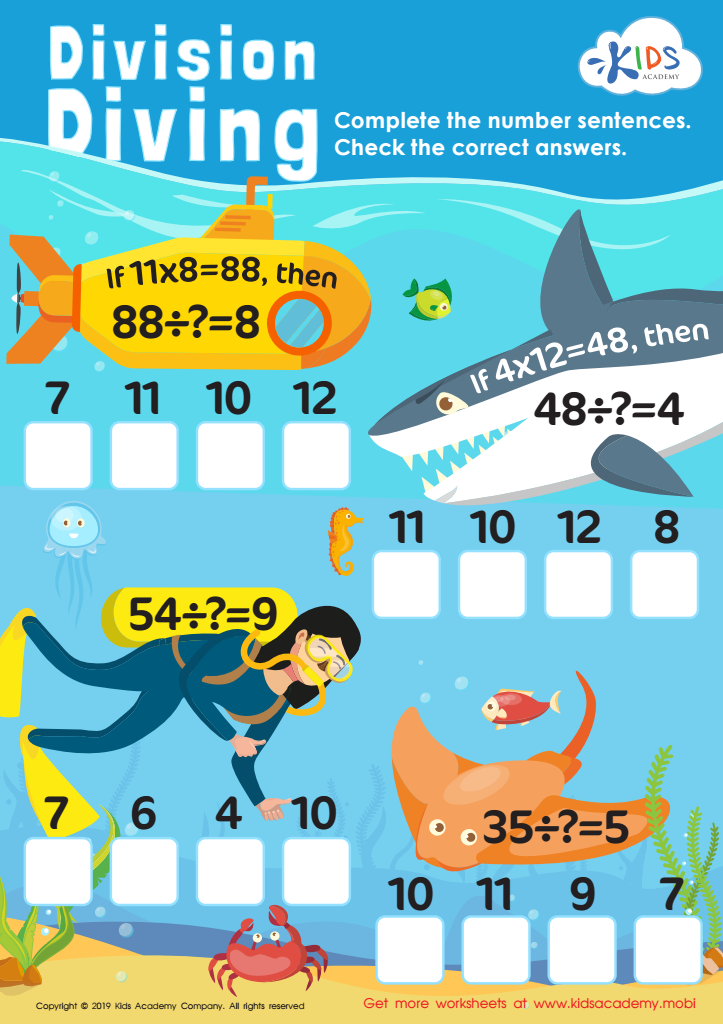
Division Diving Worksheet







Mathematical reasoning, particularly in division, is crucial for children's cognitive development and lifelong learning, especially for children aged 3 to 8. This foundational skill aids young learners in understanding the concept of sharing and partitioning, which promotes critical thinking, problem-solving abilities, and logical reasoning.
When parents and teachers prioritize mathematical reasoning in division, they help children develop a strong numerical sense. This foundation not only enhances their calculations but also empowers them to explore more complex mathematical concepts as they grow. Engaging in reasoning activities—like sharing objects or evenly distributing items—makes division meaningful and relatable.
Additionally, fostering division skills through mathematical reasoning encourages children to articulate their thought processes. For teachers and parents, facilitating discussions about how to arrive at an answer invites exploration and advances their understanding, encouraging a growth mindset—an essential aspect of learning.
Moreover, establishing these early skills directly influences children's confidence and enjoyment of math, reducing math anxiety as they progress through school. Overall, promoting mathematical reasoning in division equips children with critical skills that extend far beyond the classroom, laying the groundwork for future academic and life successes. By prioritizing these early experiences, adults can play a pivotal role in shaping proficient mathematicians.








