
Addition up to 5 Math Worksheets for Ages 3-8
4 filtered results
Difficulty Level
Grade
Age
-
From - To
Subject
Activity
Standards
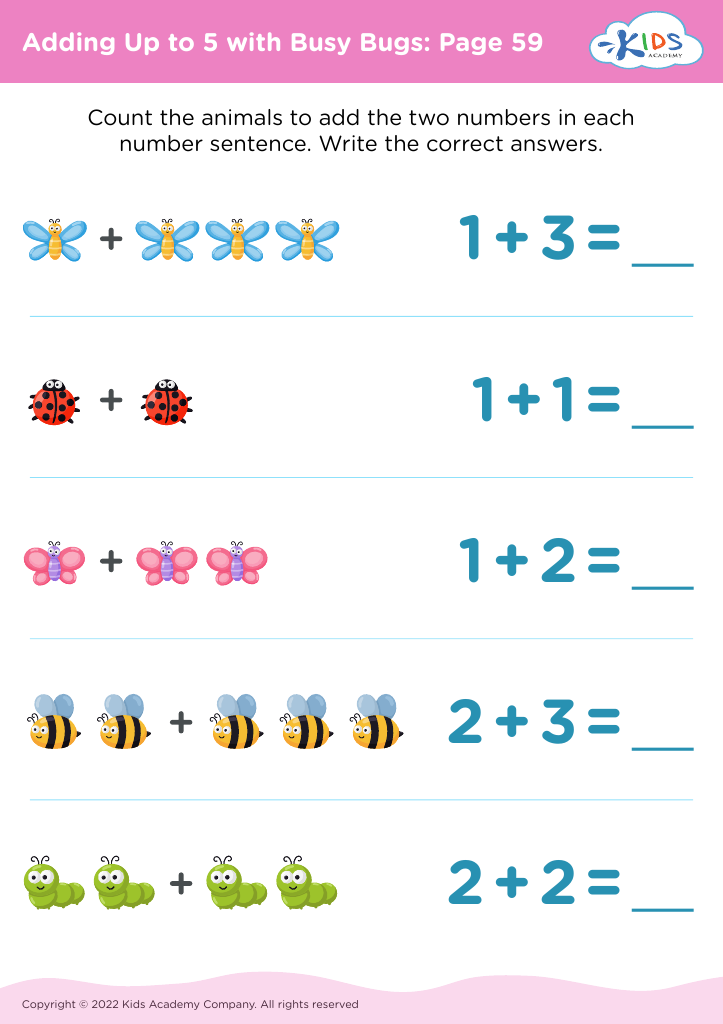
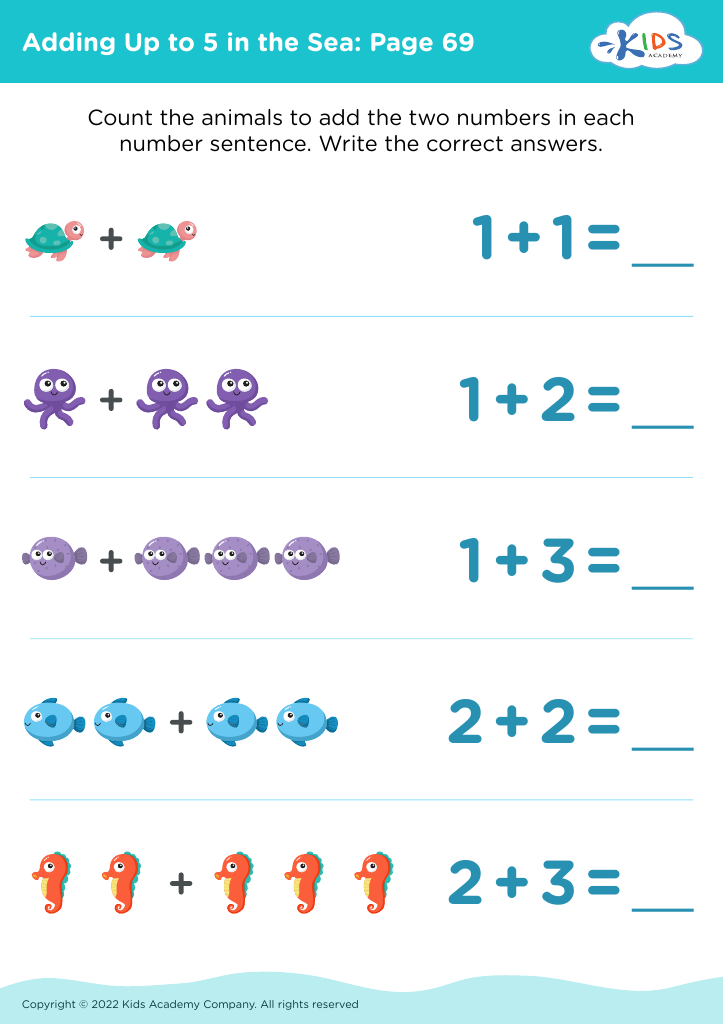
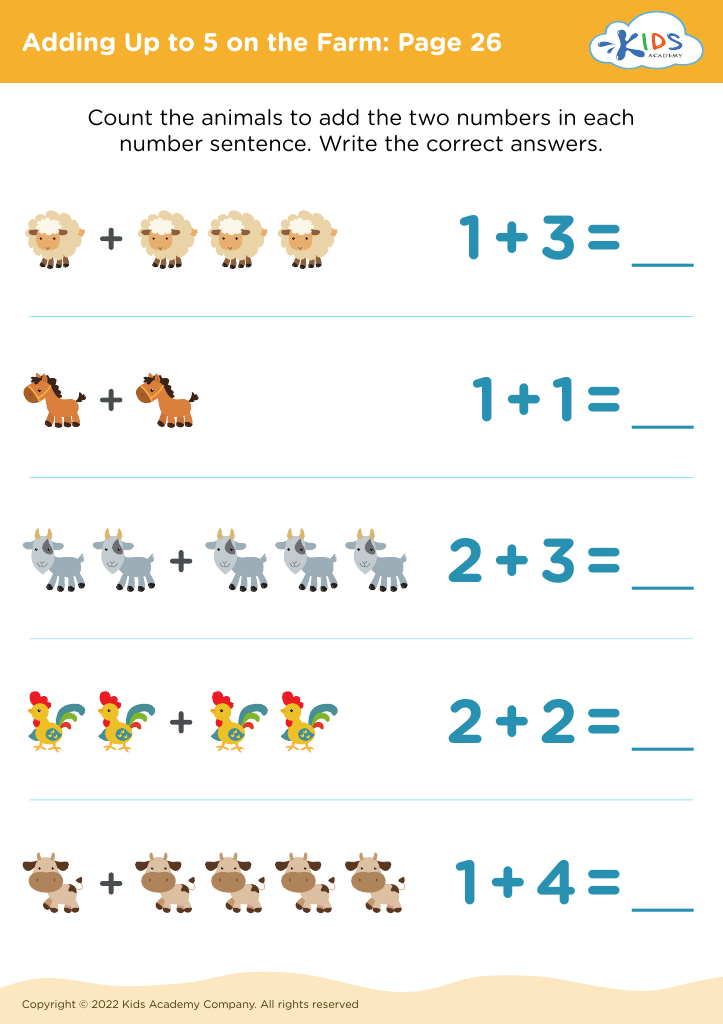
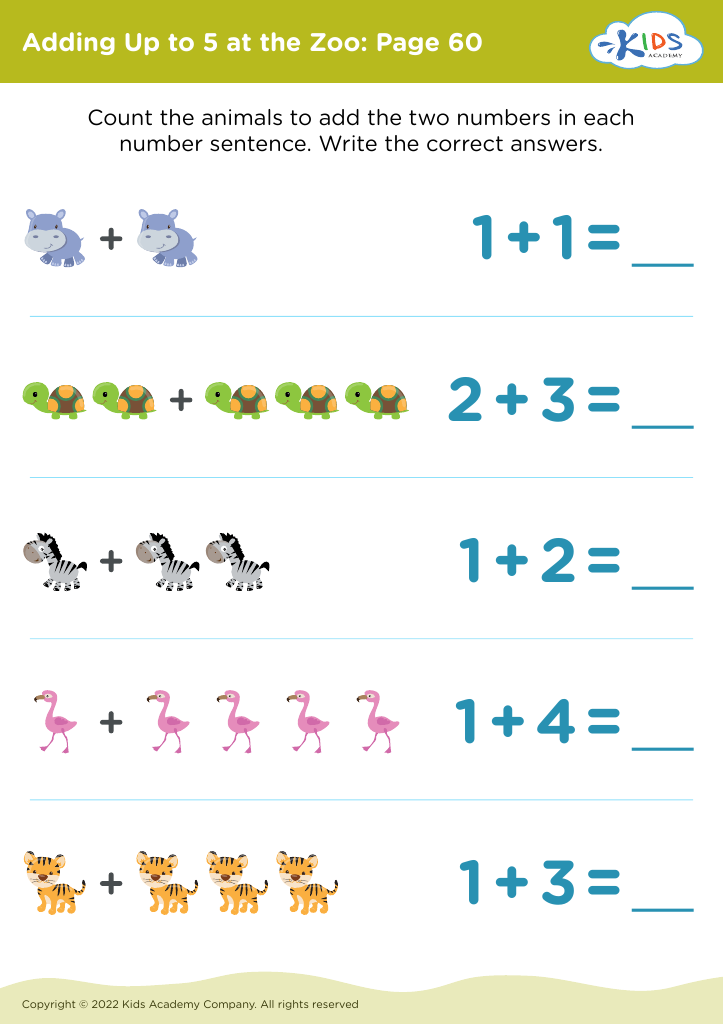
Explore our engaging "Addition up to 5 Math Worksheets" designed specifically for children aged 3 to 8. These worksheets are perfect for fostering early math skills in a fun and interactive way. Tailored to capture young learners' imagination, each activity encourages counting, number recognition, and basic addition techniques. From colorful visuals to playful themes, worksheets appeal to children's interests while building foundational math competencies. Parents and educators will appreciate these easily accessible resources, which promote learning through play. Download your free worksheets today and watch your child's confidence in addition soar as they embark on their math journey!
Favorites
With answer key
Interactive
Join Kids Academy for Free
Who is primarily going to use this learning content?








Teaching addition up to 5 to children aged 3-8 is crucial for their early mathematical development. This foundational skill not only introduces basic number concepts but also enhances cognitive abilities, problem-solving skills, and critical thinking. Understanding addition fosters number sense, allowing children to recognize patterns and relationships between numbers, which is vital as they progress to more complex mathematical operations.
Parents and teachers play a significant role in cultivating a child’s positive attitude toward math. Engaging in addition activities can create fun and interactive learning opportunities, resulting in increased confidence and a love for learning. Early mastery of addition lays the groundwork for future success in math by developing skills such as counting, recognizing quantities, and understanding basic math vocabulary.
Furthermore, addition helps children develop essential life skills like decision-making and logical reasoning. When children practice addition through games, songs, and real-life situations, they not only learn math concepts but also enhance social skills and creativity.
By prioritizing early addition skills, parents and teachers contribute to holistic development, ensuring that foundational math skills are established, setting children on a path for further academic success and daily functionality in the world around them.








