Basic math abilities Math Worksheets for Ages 3-8
3 filtered results
-
From - To
Unlock your child’s potential with our Basic Math Abilities Worksheets for Ages 3-8. At Kids Academy, we offer a collection of engaging and educational worksheets designed to build foundational math skills. Perfect for early learners, these activities cover counting, addition, subtraction, shapes, patterns, and more. Each worksheet is crafted to make math fun, fostering a love for learning while boosting confidence. Ideal for parents and educators looking to provide a strong math foundation, our resources cater to various learning styles and needs. Start today and watch your child's math abilities flourish, turning challenges into triumphs!
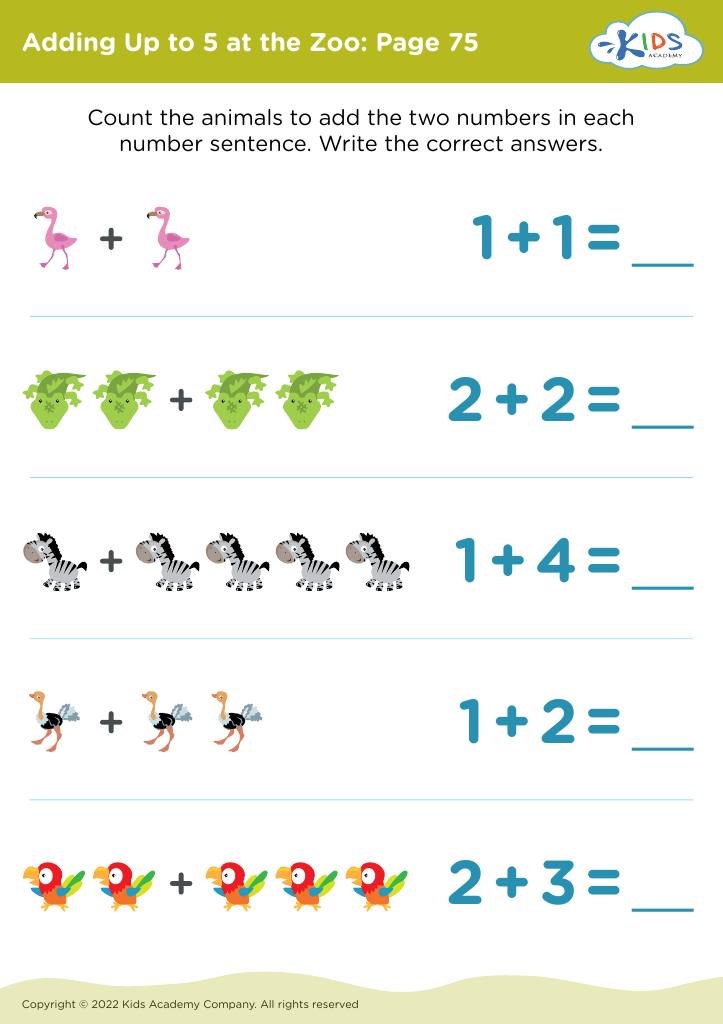
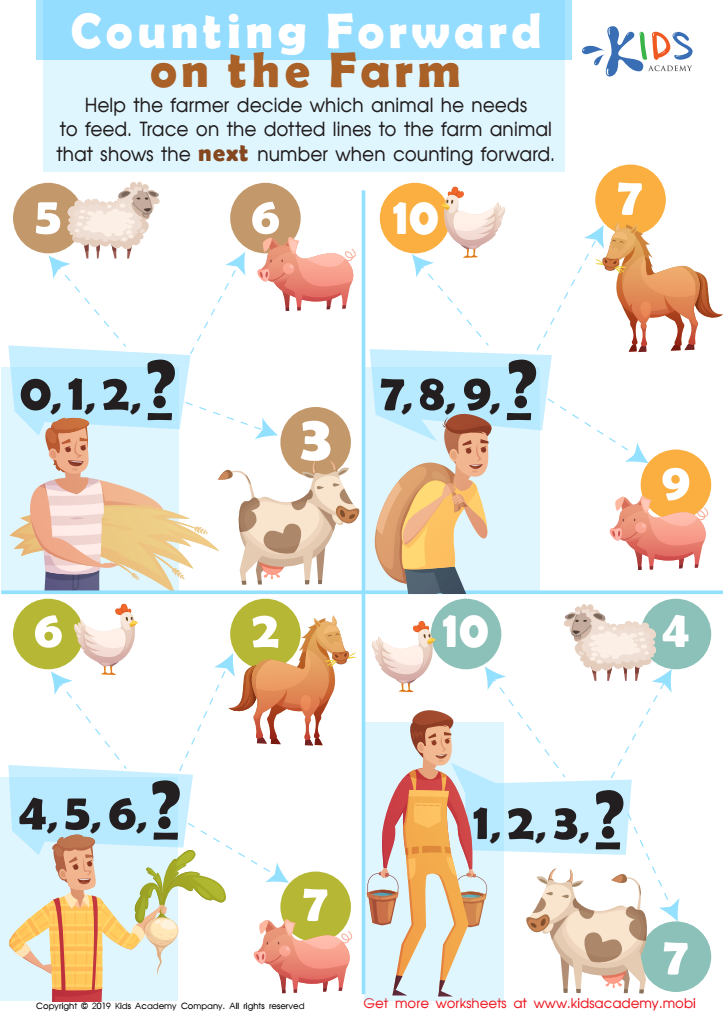
Counting Forward On the Farm Worksheet
 Assign to My Students
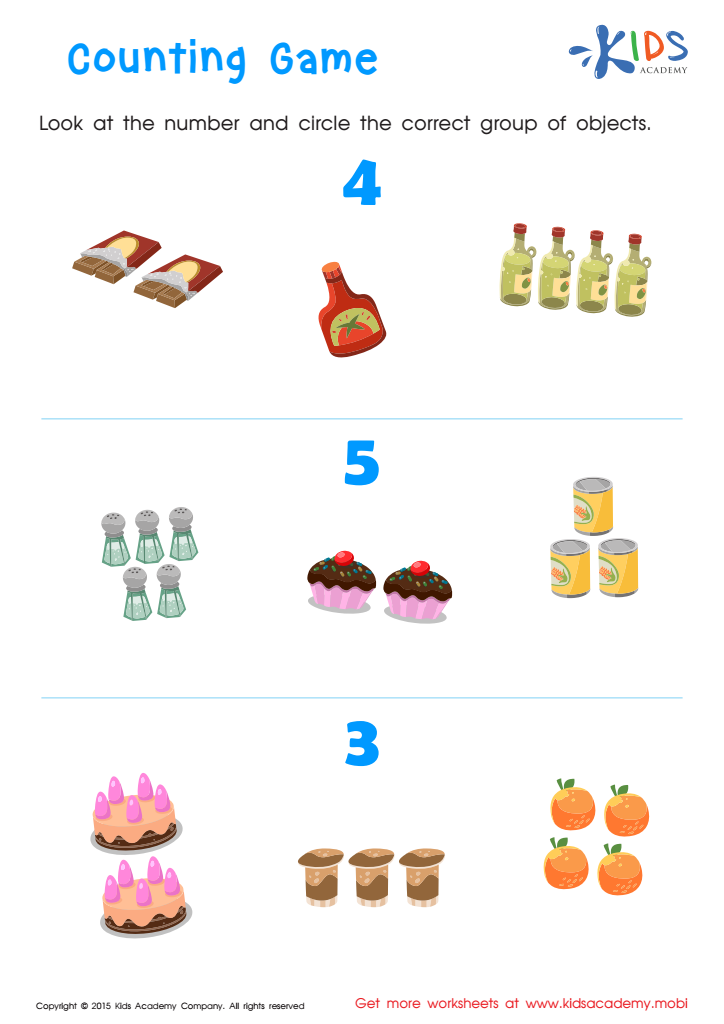
Counting Worksheet








Basic math abilities for children aged 3-8 are crucial as they form the foundation for future learning and everyday problem-solving. At this age, children’s brains are exceptionally receptive to absorbing foundational concepts, which can significantly impact their cognitive development. Fostering early math skills, such as counting, pattern recognition, and basic operations, enhances their understanding of more complex math concepts later in life.
Parents and teachers have a pivotal role in nurturing these skills through interactive and engaging activities. For example, counting objects during playtime or identifying shapes in the environment can make learning feel less like a chore and more like a natural part of exploration and discovery. Research shows that children with strong early math skills are better prepared for school, displaying higher academic achievement not only in mathematics but across a range of subjects since math enhances logical thinking, sequencing, and critical thinking abilities.
Furthermore, positive reinforcement and an enjoyable learning atmosphere can alleviate math anxiety, a common issue that affects many learners in later years. Ensuring children develop a solid and enjoyable relationship with math from a young age can lead to greater confidence, perseverance, and a lifelong love for learning, providing them with valuable skills necessary for everyday life and future professional opportunities.








