Basic Math knowledge Math Worksheets for Ages 3-8
3 filtered results
-
From - To
Discover essential math skills for young learners with our "Basic Math Knowledge Worksheets" designed for ages 3-8! These engaging worksheets help children develop crucial numeracy abilities, including counting, addition, and subtraction. Catered to preschool and early elementary students, our activities foster a love for math through fun, interactive exercises. Each worksheet is crafted to enhance cognitive development and build a solid foundation in mathematics. With beautiful visuals and kid-friendly layouts, your child will enjoy exploring numbers and solving problems. Perfect for home or classroom use, these worksheets provide valuable practice to ensure your little one's math success! Explore our collection today!
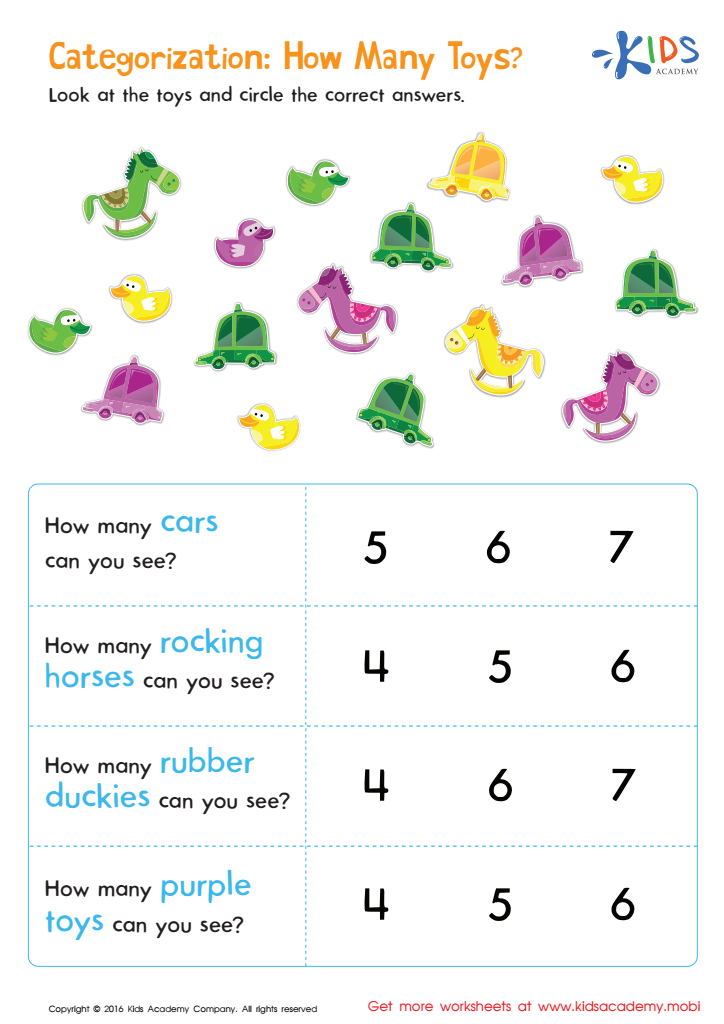
Classifying Toys by Type and Color Sorting Worksheet
 Assign to My Students
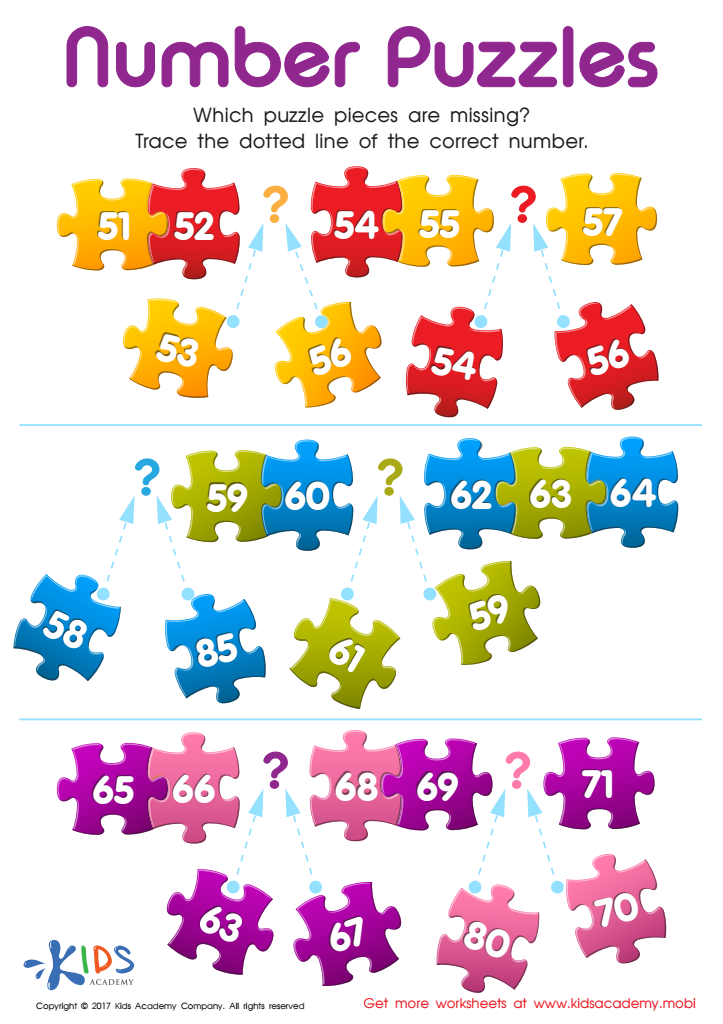
Number Puzzles Worksheet



.jpg)


Basic math knowledge is fundamental for children aged 3-8, laying the groundwork for future academic success and essential life skills. At this early stage, children develop number sense, learning to recognize numbers, understand quantities, and grasp basic operations like addition and subtraction. This early exposure fosters critical thinking and problem-solving skills, which are increasingly important in a rapidly evolving world.
Moreover, engaging with math helps stimulate cognitive development and enhances communication skills, as children learn to describe their thought processes and solutions. Math activities can be enjoyable and interactive, promoting positive experiences with learning.
Parents and teachers play a vital role in nurturing children’s attitudes toward math. Positive reinforcement and involvement can build confidence, making children more likely to embrace challenges in later years. Additionally, foundational math skills are essential in everyday life, enabling children to manage finances, understand time, and engage in logical reasoning.
In short, investing time in basic math for young children cultivates essential skills, promotes a positive mindset towards learning, and sets the stage for lifelong learning and confidence. Both parents and teachers should prioritize and incorporate math activities in their interactions with children to ensure they thrive academically and personally.








