
Enhancing vocabulary Math Worksheets for Ages 3-8
4 filtered results
Difficulty Level
Grade
Age
-
From - To
Subject
Activity
Standards
Unlock the world of math language with our "Enhancing Vocabulary Math Worksheets" designed specifically for ages 3-8! These engaging worksheets foster essential vocabulary skills through interactive math concepts. Children will connect words with numbers as they explore shapes, measurements, and basic operations while enriching their language abilities. Fun illustrations and age-appropriate exercises make learning enjoyable and effective, promoting both mathematical and linguistic development. Whether at home or in the classroom, our resources provide a solid foundation for young learners to articulate their math understanding. Download now to enhance your child's vocabulary and ignite a passion for numeracy!
Favorites
With answer key
Interactive
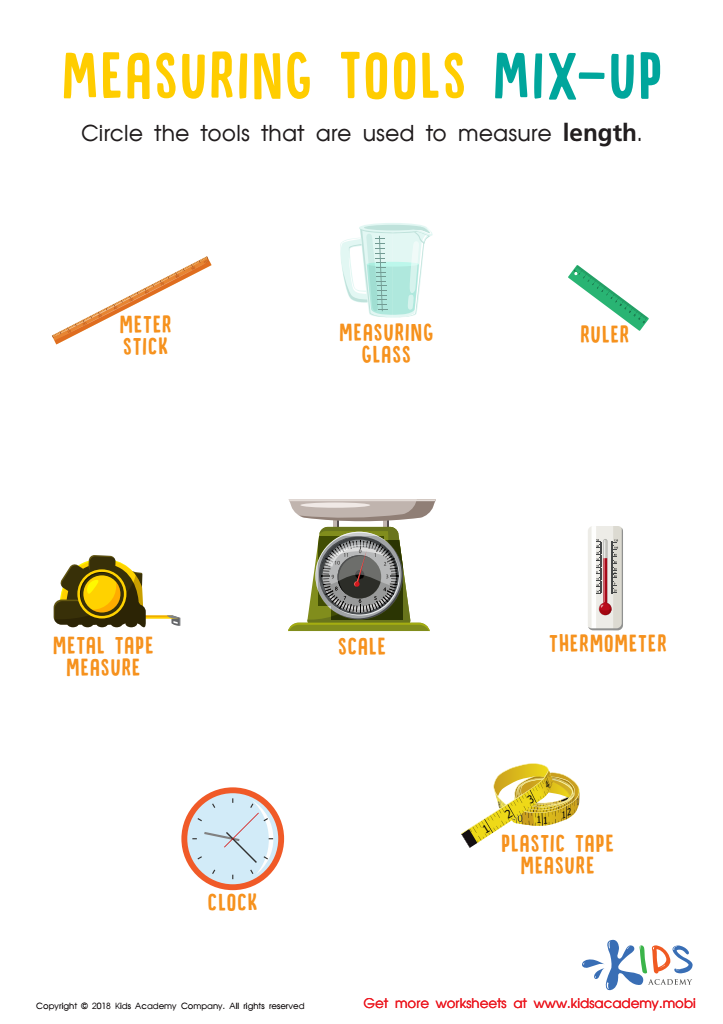
Measuring Tools Mix–up Worksheet
Test your child's knowledge of measuring instruments! In this worksheet, have them identify which items are used for measuring length. Talk through the items with them, then ask them to circle the right answer. Use this PDF to challenge your child and learn more about measuring tools.
 Assign to My Students
Measuring Tools Mix–up Worksheet
Worksheet
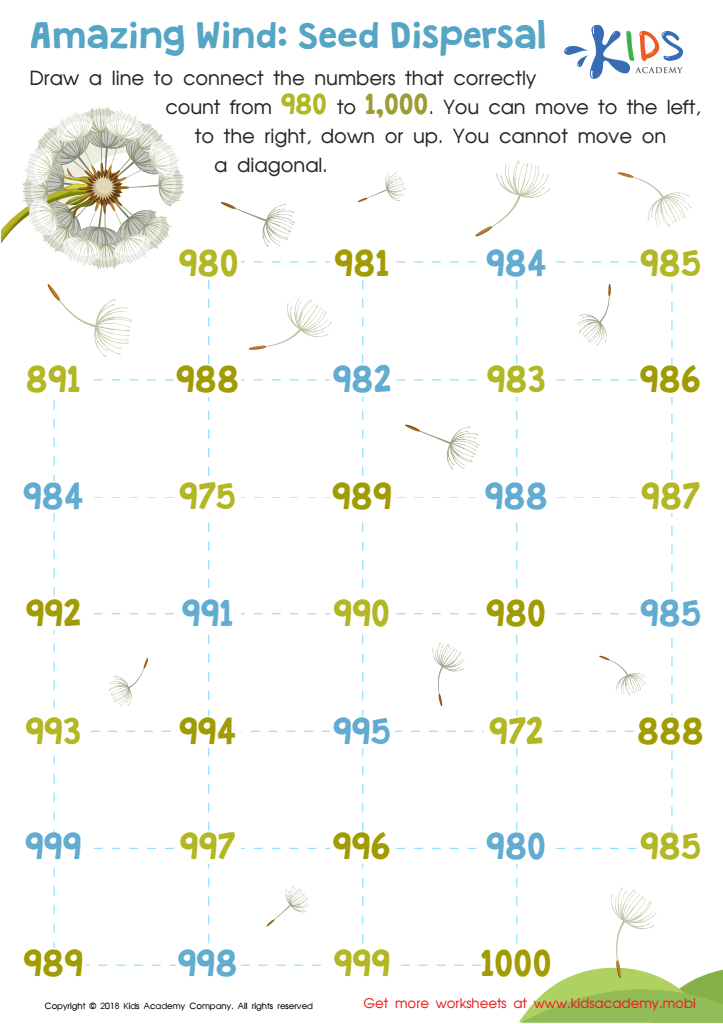
Amazing Wind: Seed Dispersal Worksheet
Let your child have fun and practice math skills with this worksheet! They'll use traceable lines to disperse a dandelion's seeds, building number sense, sequencing, fine motor, and hand-eye coordination. Discern between similar numbers and strengthen reasoning skills as they enjoy the familiar activity of blowing the seeds away.
Amazing Wind: Seed Dispersal Worksheet
Worksheet
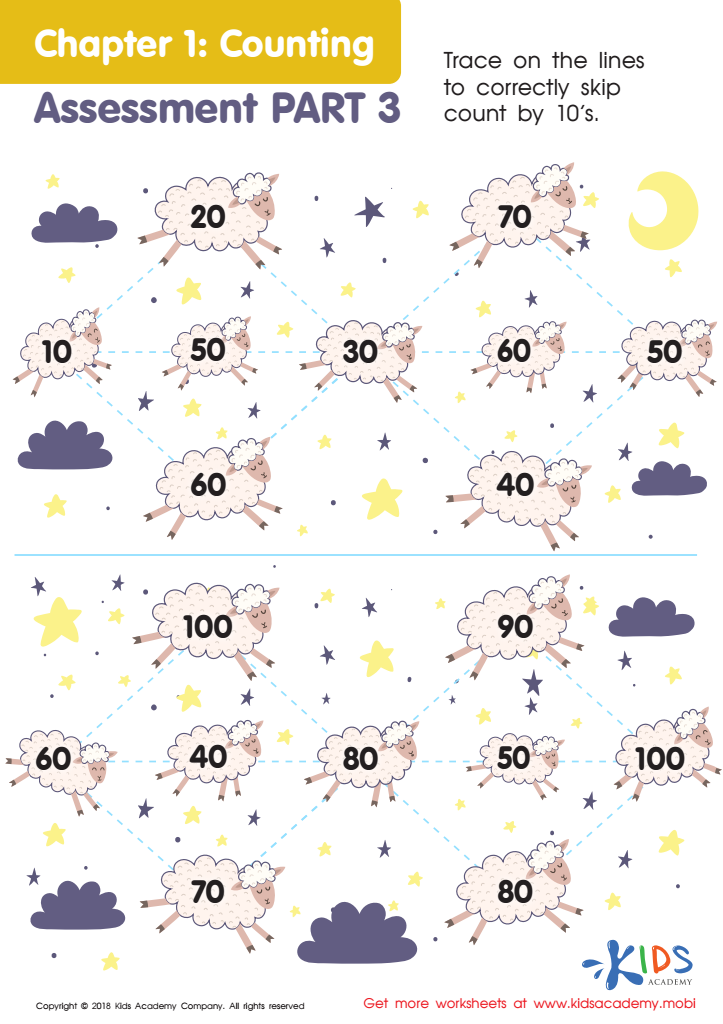
Counting: Assessment 3 Worksheet
This worksheet is great for assessing your child's counting skills. It's a bit more challenging than the usual 'count to fifty' exercises. Have them trace the lines and skip count by 10's to help them learn counting in tens.
Counting: Assessment 3 Worksheet
Worksheet
Join Kids Academy for Free
Who is primarily going to use this learning content?







Enhancing vocabulary in math for children ages 3-8 is crucial for their overall cognitive development and future academic success. Early introduction to mathematical language, such as "add," "subtract," "more," and "less," helps children build a strong conceptual foundation. Understanding these terms allows young learners to grasp mathematical concepts more effectively and encourages their ability to communicate about numbers and quantities.
Moreover, rich mathematical vocabulary supports critical thinking skills. When children learn to articulate their reasoning, they develop a deeper understanding of problem-solving processes. This language acquisition fosters a positive attitude toward mathematics, reducing anxiety in later years and promoting confidence in their abilities.
In early childhood, play-based activities that incorporate math vocabulary create engaging learning experiences. Whether through games, stories, or hands-on activities, these approaches make abstract concepts tangible and fun. Parents and teachers who focus on enhancing math vocabulary also empower children to integrate math into real-life situations, promoting a dynamic learning environment.
Ultimately, by prioritizing early math vocabulary, parents and educators set the stage for lifelong mathematical fluency, enabling children not just to succeed in school, but to become critical thinkers and adept problem-solvers in all areas of life.








